







Why Does Central American Coffee Lead With Costa Rica?
Costa Rica's coffee exports reached 29,147 bags in November 2020, up nearly 85 percent from 15,796 bags a year earlier, the sixth straight month of growth. Favorable weather, careful estate management during the pandemic, and steady international demand drove the rise. The Venecia variety featured here is a natural Caturra mutation with stronger disease resistance and higher yield.
This Venecia micro-lot comes from the Tarrazu region at 1,700 to 1,800 meters, graded SHB and processed as black honey. Venecia trees take about three years to bear fruit and produce larger cherries with better rain resistance. Such qualities matter on a Central American coffee farm, where disease and weather pressure shape both volume and cup quality.
Costa Rica's coffee exports have shown strong performance recently, with export volume surging nearly 85% year-on-year in November 2020. This was driven by favorable weather, meticulous estate management during the pandemic, and robust demand in the international market. This article focuses on the Venecia variety from Costa Rica's Diamond Series, a natural mutation of Caturra with stronger disease resistance and high-yield characteristics. Front Street Coffee brings this micro-lot from the Tarrazu region, processed with black honey, at an altitude of 1700-1800 meters, grade SHB. We will provide an in-depth analysis of Venecia's varietal origins, the Diamond Series' selection philosophy, the unique craft of black honey processing, along with Front Street's roasting curve, cupping report, and brewing parameters, presenting coffee enthusiasts with a specialty coffee that is rich in flavor and prominent in sweetness.
Latest News from Costa Rica's Coffee Regions
According to Costa Rican government statistics, the country's coffee exports reached 29,147 bags (60 kg each) in November 2020, a sharp increase of nearly 85% compared to 15,796 bags in the same period last year. This marks the sixth consecutive month of growth. The export growth is mainly attributed to three factors: favorable weather conditions boosting production, effective maintenance of coffee estates during the COVID-19 pandemic, and sustained strong demand for Costa Rican coffee in the international market.
Main Article Introduction
Perhaps many of you are still unfamiliar with the Venecia coffee variety. When it comes to varieties grown in Central American coffee regions, the first that come to mind are usually Caturra and Catuai. The Venecia that Front Street introduces in this article is a plant selected from Caturra with stronger disease resistance and higher yield, a natural mutation of Caturra.
FrontStreet Coffee — Costa Rica Diamond Series Venecia Coffee Beans
Region: Costa Rica Tarrazu
Variety: Venecia
Processing Method: Black Honey
Altitude: 1700-1800M
Grade: SHB
Coffee Bean Variety
Venecia
Venecia is a variety 100% selected from Caturra, with stronger disease resistance and higher yield, a natural mutation of Caturra. These coffee trees exhibit higher productivity, larger fruits, and greater resistance to rain. Venecia trees take three years to begin bearing fruit, with medium-to-large bean size and hard parchment. During growth, they have high nutrient requirements, are typically planted on estates above 1200 meters altitude, and have relatively limited annual production.
The history of discovery and cultivation of the Venecia coffee variety is not long. iCAFE began selection research on this variety in 1991 in the Turrialba, Coto Brus, and Perez Zeledon regions of Costa Rica. After years of comparison, it was found that Venecia from the Perez Zeledon region had richer flavor, as well as more outstanding yield and resistance to pests and diseases. Through cupping, FrontStreet Coffee found that compared to Caturra and Catuai from the same region, Venecia has more complex flavor layers, more fragrant aroma, higher acidity, and better body.
Diamond Series
The concept of the Diamond Series originates from the highest grade in wine. The team mainly collects high-quality micro-regional selections provided by various coffee farmers in Costa Rica, then organizes cupping for each micro-lot to select the batches with the most outstanding flavor, as the most prestigious series among coffee micro-lots.
Black Honey Processing Method
Honey Negro/BLack Honey
The Costa Rica Diamond Series that Front Street sourced uses black honey processing. First, the screened coffee cherries are put into a depulper to remove the skin, retaining the complete mucilage layer. What distinguishes black honey processing from other honey processes is that it retains the complete mucilage, with the aim of allowing the sugars in the mucilage to fully transfer into the coffee beans, thus requiring a longer drying time.
Due to the longer drying time, direct sunlight is not suitable; the beans can only be placed in a cool, ventilated area for slow drying. The drying process typically lasts 18 to 25 days, during which constant monitoring is required to prevent over-fermentation and mold issues. This processing method carries higher risk and may result in loss of freshness of the green beans. Finally, the coffee is dried to around 11% moisture content, then bagged and stored until the parchment is removed just before export shipping. Front Street believes that generally, the more mucilage retained, the richer the final flavor and the higher the sweetness of the coffee.
FrontStreet Coffee Roasting Record
Roaster Yangjia 800N semi-direct fire, roasting amount 480g. Preheat the drum to 180°C and charge, adjust heat to 130, open airflow to 3, turning point at 1'36", maintain heat; at 118°C keep heat unchanged, open airflow to 3.5, at 145°C lower heat to 110, keep airflow unchanged. At 5'45" turn yellow, grassiness disappears, entering dehydration phase, at 173°C lower heat to 80, open airflow to 4.
At 8'35" dehydration complete, bean surface shows wrinkles and dark patches, toast aroma turns to coffee aroma, signaling the prelude to first crack, at this point listen carefully for the sound of first crack. At 9'25" first crack begins, open airflow fully to 5, lower heat to 50. Post-first-crack development time 1'50", drop at 197.4°C.
FrontStreet Coffee Cupping Report
Dry Aroma: Fermented aroma
Wet Aroma: Nuts, fermented aroma
Flavor: Nuts, fermented wine aroma, cream, caramel, citrus
FrontStreet Coffee Brewing Notes
Dripper: Hario 01
Dose: 15g
Ratio: 1:15
Water Temperature: 91°C
Grind Size: Medium-fine grind (78% passing through Chinese standard No. 20 sieve)
FrontStreet Coffee staged extraction method: First, use 30g of water to fully wet the coffee bed into a 'hamburger' shape for 30s bloom, then proceed to the second stage. In the second stage, at 57s on the timer, pour water to 125g, then stop and wait for the water level to drop to 2/3 of the coffee bed before pouring the third stage. In the third stage, at 1'45" on the timer, pour water to 225g. Total extraction time is 2'01".
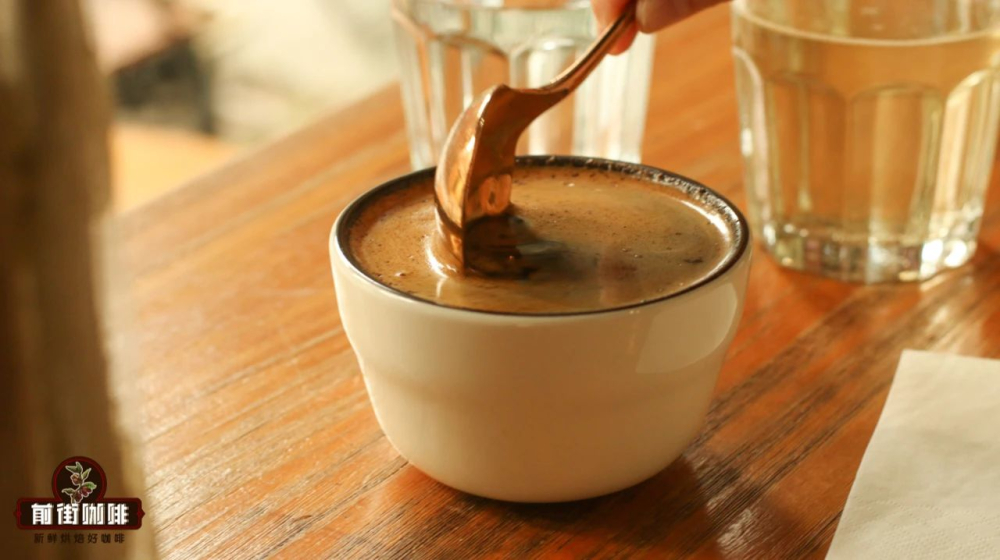
Brewing Flavor: At high temperature, citrus acidity and fermented wine aroma; as temperature changes, cream aroma; caramel sweetness in the aftertaste; relatively clean and balanced mouthfeel.
For more specialty coffee beans, please add private WeChat FrontStreet Coffee, WeChat ID: kaixinguoguo0925
The above content is compiled by CoffeeHunters, a coffee news website.


