







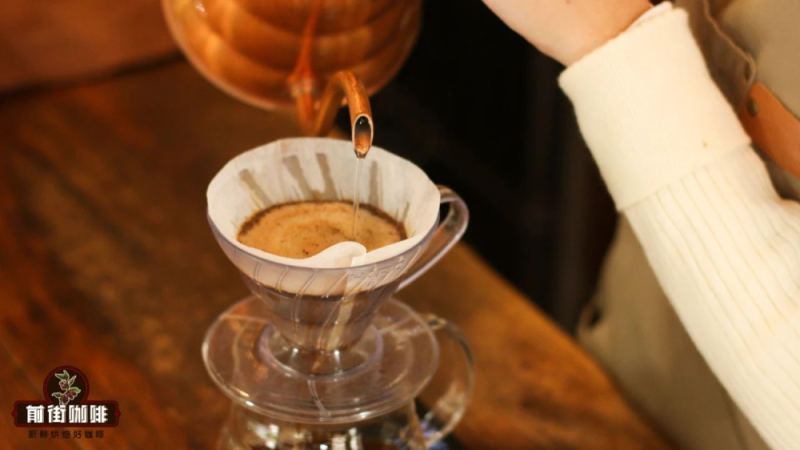
How Do You Brew Yirgacheffe Coffee With a V60?
The V60's 60-degree cone and spiral inner ribs guide water toward the center and speed up flow, so grind size, coffee-to-water ratio, water temperature, pouring technique, and total extraction time decide the final cup. A three-stage pour over Gutingding beans from Ethiopia's yirgacheffe region releases citrus acidity, berry sweetness, and tea-like notes rather than a bland result.
Hario set the 60-degree angle after repeated testing so grounds converge centrally and water keeps enough contact time with the coffee. Because the V60 is one of the faster drippers, a coarser grind and controlled pours help avoid over-extraction. Understanding what does bright acidity mean in coffee makes it easier to taste when the citrus note is clear and balanced.
Many coffee enthusiasts encounter this confusion: despite using the same V60 dripper, the brewed coffee always lacks complexity. In fact, from the freshness of the coffee beans to the grind size, and then to the coffee-to-water ratio, water temperature control, and pouring technique, every detail directly affects the final flavor expression. Based on the practical experience of Front Street Coffee, this article systematically outlines the structural characteristics and brewing key points of the V60 dripper, and combined with the Gutingding coffee from the Yirgacheffe region in Ethiopia, demonstrates how to fully release the citrus acidity, berry sweetness, and tea-like notes through a three-stage brewing method.
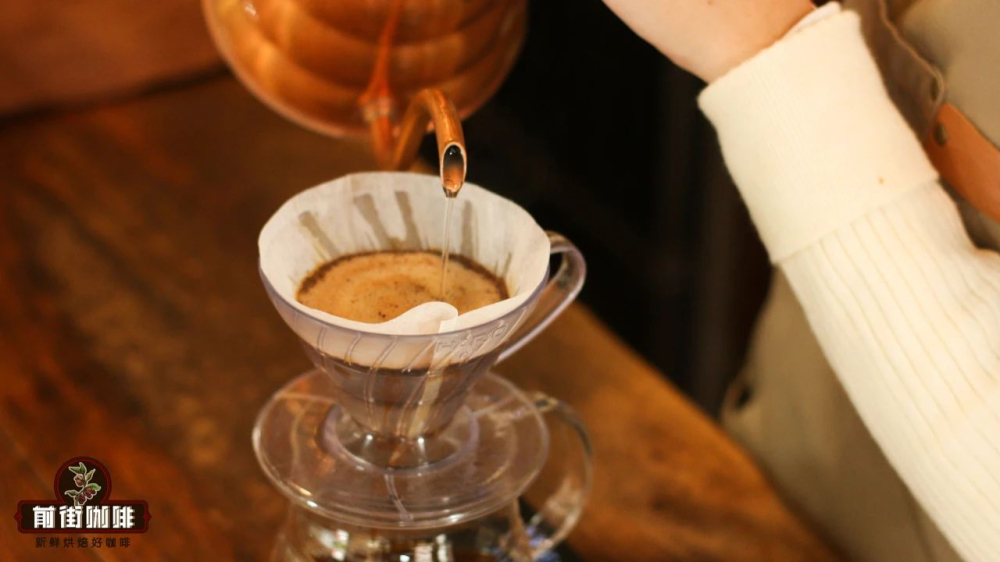
At Front Street Coffee, one of the most common questions customers ask is: "I use a V60 at home too, so why does my coffee taste so bland?" In response to such questions, Front Street's baristas usually troubleshoot the reasons one by one from several dimensions: the freshness of the coffee beans, grind size, coffee-to-water ratio, water temperature, pouring technique, and total extraction time. This time, Front Street Coffee will provide a systematic overview of knowledge related to V60 brewing and share it with everyone.
V60 dripper
The V60 dripper, launched by the Japanese company Hario, can almost be regarded as a classic tool that nearly every pour-over beginner owns. The name V60 simply refers to the 60-degree angle of its conical body, a very straightforward naming method. This 60-degree value is not set arbitrarily, but is an angle determined by Hario after repeated testing. It allows the coffee grounds to converge toward the center, and when pouring, the water flow also naturally concentrates toward the center of the dripper, thereby ensuring sufficient contact time between water and coffee grounds to achieve the ideal extraction effect.
Principle of the V60 dripper
The V60 dripper also has an important structural feature, namely the spiral ribs on the inner wall of the cup. These ribs extend from the bottom of the cup all the way to the rim, serving a flow-guiding function, keeping enough space between the filter paper and the cup wall, making the water flow more smoothly and relatively quickly. Among many types of drippers, the V60 is one of the faster-flowing ones. In addition, the ribs of the V60 are arranged clockwise. If the pouring is also done clockwise, the water flow will be smoother; conversely, pouring counterclockwise will reduce the flow rate to some extent. The larger outlet hole at the bottom of the cup is also designed to speed up the water flow.
After understanding these characteristics of the V60 dripper, let us look one by one at the key factors mentioned earlier: freshness, grind size, coffee-to-water ratio, water temperature, technique, and time.
Coffee bean freshness
The freshness of coffee beans directly affects the quality of the final cup. If roasted coffee beans are stored for too long, their flavor and aroma will gradually be lost. Front Street believes that the best tasting period for freshly roasted coffee beans is within 30 days; after more than 30 days, as carbon dioxide continues to be released, aroma molecules also decrease; and beans more than two months from the roasting date often brew into a dull and flat taste.
Grind size
The finer the coffee is ground, the more easily the coffee bed accumulates at the bottom of the filter paper, increasing the resistance to water flow, slowing the flow rate, and correspondingly lengthening the extraction time. In this case, the extraction yield is higher, and the coffee tastes stronger, even developing off-flavors such as woody notes.
Conversely, the coarser the grind particles, the larger the gaps in the coffee bed, the smaller the surface area of coffee grounds that hot water can contact, the lower the resistance, the faster the drip rate, and the lower the extraction yield, so the flavor is naturally weaker.
Front Street Coffee's recommendation is: use a grind size like fine granulated sugar for medium-light roasted beans (EK43s grinder setting 9–10); for medium-dark roasted beans, use a grind size like coarse granulated sugar (EK43s grinder setting 10–11).
Coffee-to-water ratio
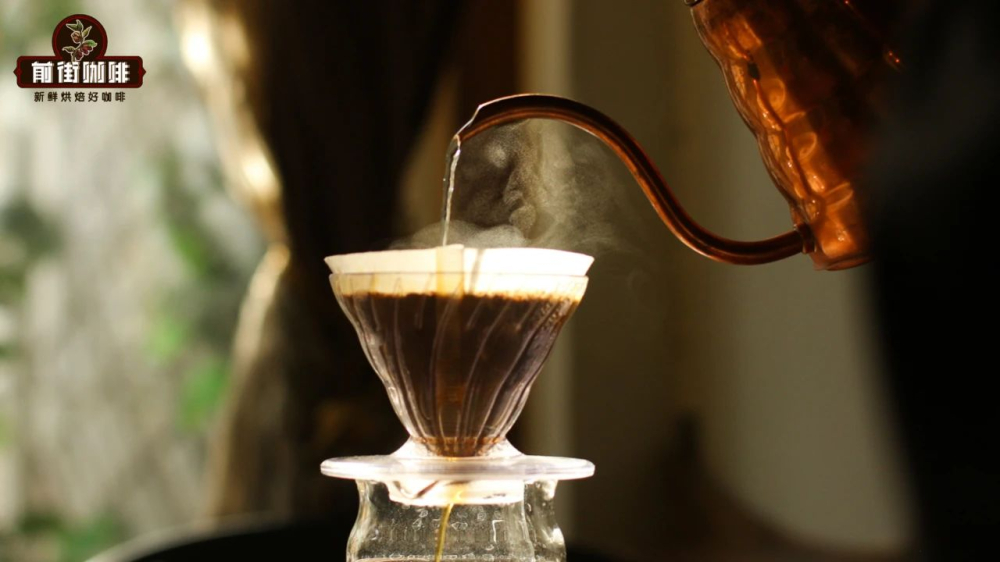
The following is the correspondence between pour-over coffee water-to-coffee ratios and taste based on the SCA Golden Cup extraction theory:
[Strong taste] 1:10–1:11 (that is, the Golden Cup standard of 1:12.5–1:13.5)
[Moderate taste] 1:12–1:13 (that is, the Golden Cup standard of 1:14.5–1:15.5)
[Light and refreshing] 1:14–1:16 (that is, the Golden Cup standard of 1:16.5–1:18.5)
When the ratio of coffee bean grams to brewing water falls within the range of 1:14.5–1:15.5, it is easiest to reach the golden range of a Golden Cup extraction yield of 18%–22% and a concentration of 1.15%–1.35%. This is precisely why Front Street Coffee always recommends brewing at 1:15.
Brewing water temperature
Front Street Coffee recommends: use a water temperature of 90–91 degrees Celsius for medium-light roasted coffee beans, and 88–89 degrees Celsius for medium-dark roasted coffee beans.
On the premise of keeping the grind size unchanged, if the brewed coffee has bitterness, burnt notes, or astringency, you can try lowering the water temperature to adjust it; on the contrary, if it tastes bland, it means that a large amount of flavor substances remain in the coffee grounds and have not been extracted, so you can consider appropriately increasing the water temperature.
The aroma and flavor presented by a suitable water temperature combined with good extraction should be positive and pleasant. For example, the acidity will be very rich, with a sweet-and-sour sensation of plum or stone fruits, and the overall cleanliness, clarity, and transparency will all be excellent. Specific flavors can be identified relatively clearly, the acidity is delicate and vivid, even reminding one of a certain fruit or even wine, and the finish left in the mouth is lasting and memorable.
Brewing technique
When brewing with the V60 dripper, Front Street Coffee usually uses a three-stage pouring method. Here, Front Street Kenya Little Tomato is used as a demonstration.
For the first stage, blooming, use twice the weight of the coffee grounds in water, that is, 30 grams of water for a 30-second bloom. The so-called bloom refers to the process in which coffee grounds are wetted after contact with water. This is the starting point for coffee cells to begin releasing flavor molecules. After wetting the coffee grounds, stop pouring. Continue pouring only after the carbon dioxide has been completely released and the coffee bed no longer expands, so that a better extraction effect can be obtained.
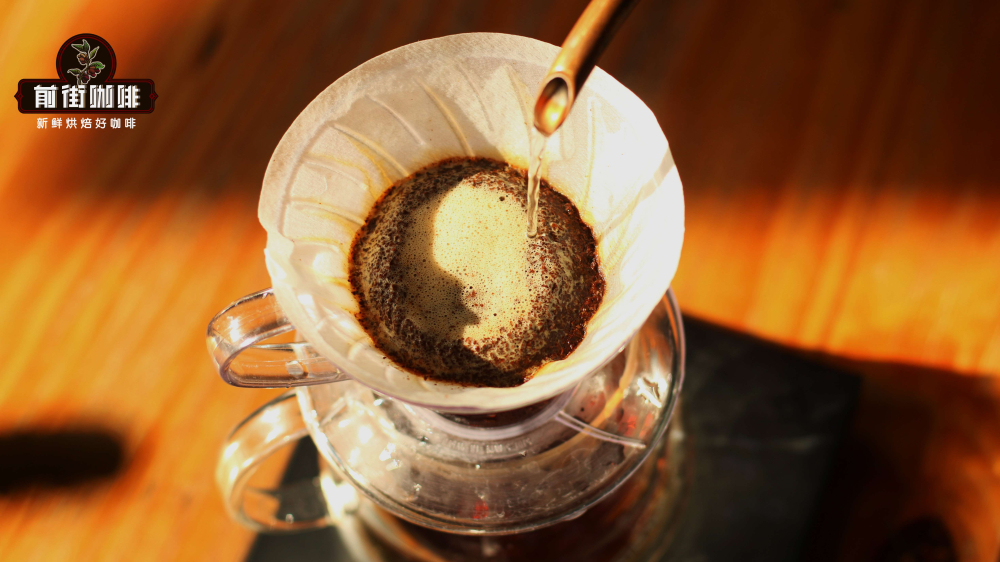
The second and third stages of extraction refer to the process in which soluble substances in the coffee cells dissolve into the hot water. About 70% of a coffee bean is insoluble cellulose, while the other 30% is soluble flavor molecules, which dissolve in order according to molecular size after contact with water. The first to be released are small-molecule substances, including acidity and aroma, such as floral notes and citrus acidity; next are medium-molecule sweetness, such as fruity sweetness, honey sweetness, and brown sugar sweetness; and finally the large-molecule bitter and roasted notes. The reason coffee can present different layers of taste is precisely due to this dissolution order.
Brewing time
Throughout the entire extraction process, the aroma and taste brought by the early stage are the richest and the concentration is the highest. As extraction progresses to the later stage, the taste and aroma gradually weaken. At the same time, the amount of water poured also affects the total extraction time. If the pouring volume is large, the water will flow down quickly, and the extraction time will naturally be shortened. When serving, Front Street habitually uses 15 grams of coffee and a 1:15 coffee-to-water ratio, with the brewing time controlled within 2 minutes to 2 minutes 30 seconds, so that over-extraction or under-extraction is less likely to occur.
Next, Front Street uses a V60 dripper to brew a Front Street Gutingding from Yirgacheffe, Ethiopia, to see the actual flavor performance.
Region: Yirgacheffe Gedeo Zone
Altitude: 1900-2300m
Variety: Heirloom
Processing method: Washed
Grade: G1
Front Street Coffee brewing parameters
Water temperature: 90–91 degrees Celsius
Grind size: EK43s setting 10 (fine granulated sugar size)
Coffee-to-water ratio: 1:15
Front Street brewing technique: In the first stage, pour 30 grams of water for a 30-second bloom, then pour 95 grams (the electronic scale shows about 125 grams), and finish pouring at about 1 minute; wait until the water level drops to two-thirds of the coffee bed, then pour the remaining 100 grams (the electronic scale shows about 225 grams), and finish pouring at about 1 minute 40 seconds. Dripping is completed at 1 minute 55 seconds to 2 minutes. Remove the dripper, and extraction is finished.
Brewed flavor: The entrance presents a bright citrus-like acidity, with the fullness of berry juice and a clear oolong tea note.
The above content is compiled by CoffeeHunters, a coffee news website.


