







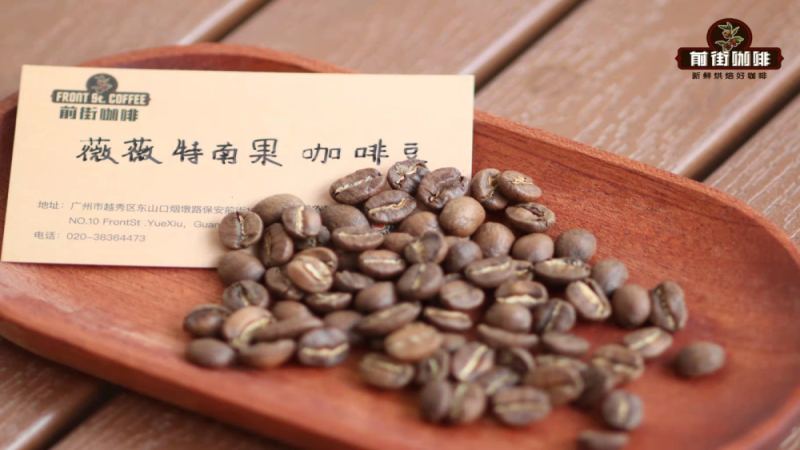
What defines Huehuetenango coffee flavor and processing?
Guatemala's Huehuetenango region grows coffee in a dry, high-altitude setting that gives the cup softer acidity, a solid mouthfeel, and a faint smoky note. The washed process used there supports that profile. Compared with Ethiopian washed Yirgacheffe, the fruit acidity is gentler and less sharply floral, which makes the regional character easier to pick out in a side-by-side tasting.
Guatemala sits on high-altitude volcanic terrain, and those conditions suit coffee well. Its Strictly Hard Bean lots are known for plump beans and balanced acidity. Coffee bean processing choices, altitude, and local climate together shape the flavor, and comparing Huehuetenango with La Flor shows how much individual estates and regions can differ within one country.
The Huehuetenango region of Guatemala is known for its dry climate, high-altitude terrain, and distinctive smoky flavor, making it a specialty region coffee lovers must not miss. This article takes you through the region's terroir conditions, washed processing flow, and the brewing parameters and flavor performance recommended by Front Street Coffee. It also compares the flavor differences with La Flor coffee to help you more clearly identify the individual characteristics of Guatemalan coffee. Whether you prefer bright fruit acidity or rich smokiness, this content can provide you with practical reference and purchasing advice.
Have you ever had coffee with a smoky aroma? Don't you find it quite interesting that coffee can naturally carry this kind of flavor? Front Street Coffee has two beans that present a smoky quality, both from Guatemala: Huehuetenango and Guatemalan La Flor.
When first encountering Guatemalan Huehuetenango, many people confuse it with Ethiopian washed Yirgacheffe, or La Flor with Ethiopian Red Cherry, because they all carry a bit of fruit acidity. But after careful tasting, you can tell them apart: Ethiopian coffee has brighter floral notes and sharper acidity, while Guatemalan acidity is softer, with a more solid mouthfeel and a hint of the region's characteristic smokiness.
Coffee produced in Guatemala ranks among the world's finest. The country sits on high-altitude volcanic terrain, and volcanic regions happen to be ideal environments for growing coffee. Compared with other coffees, tasters favor the spicy mixed flavors found here. The local Strictly Hard Bean is especially rare good stock, with plump beans, a pleasant mouthfeel, and balanced acidity. In addition, Guatemala's giant coffee beans have also drawn much attention.
Guatemalan Antigua coffee beans are not only smooth on the surface, high in hardness, and excellent in quality, but also offer a wonderful combination of richness and sweet acidity, plus a wisp of smokiness that further highlights their depth and mystery.
Guatemala is located in the center of North and South America and holds a pivotal geographical position in Central America. The country covers about 108,899 square kilometers, and its terrain can be divided into highland volcanoes, lowland tropical forests, the volcanic sand coastal plains of the Pacific coast, and virgin land along the Caribbean coast. The Sierra Madre of Central America runs east-west through Guatemala, occupying about two-thirds of the country, with 34 volcanoes within its borders. Rivers and lakes dot the land, while equatorial forests and plains jungles cover vast areas. There are also undeveloped volcanic beaches along the Pacific and Caribbean coasts.
Guatemala Climate
Guatemala lies in the tropics. The northern and eastern coastal plains have a tropical rainforest climate, while the southern mountains have a subtropical climate. The year is divided into wet and dry seasons, with May to October as the wet season and November to April of the following year as the dry season. The narrow, fertile flatlands along the Pacific coast have a tropical climate. The central highlands are also Guatemala's cultural center. At elevations of 1,300 to 1,800 meters, temperatures are mild year-round, with daily temperatures between 18 and 28°C, while higher areas tend to be cold in January and February.
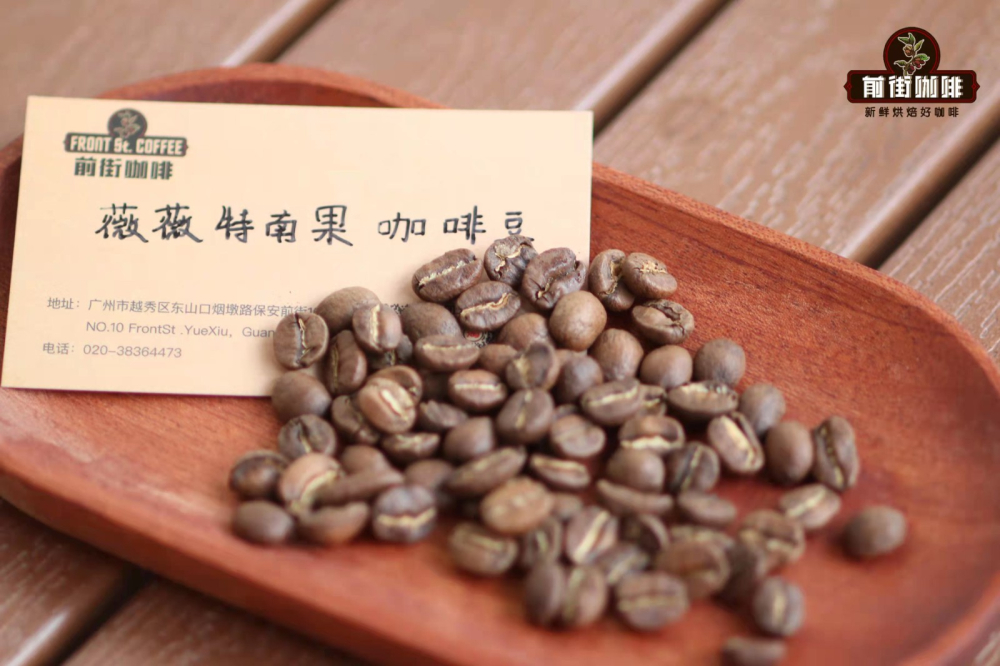
Annual precipitation is 2,000 to 3,000 millimeters in the northeast and 500 to 1,000 millimeters in the south. Guatemala has a high average altitude, and its coffee belt is distributed above 1,500 meters, between 14 and 16 degrees north latitude, where it is easiest to grow Strictly Hard Beans. All are washed processed, and 45% are specialty grade, a fairly high proportion, with a small amount of Robusta as well.
Among Guatemala's three major non-volcanic coffee regions, the Huehuetenango highlands are the driest and highest in altitude. The dry hot winds from the Tehuantepec Plateau in Mexico protect coffee in this area from frost, and coffee can be planted on plots up to 2,000 meters (6,500 feet). Because the area is remote, all coffee farmers must process their own coffee. Fortunately, the region has countless streams, so small processing plants can be set up almost anywhere.
Nearly 98% of Guatemala's coffee is grown under shade, and most is Arabica. Guatemala has a high average altitude, and its coffee belt is distributed above 1,500 meters, between 14 and 16 degrees north latitude, where it is easiest to grow Strictly Hard Beans.
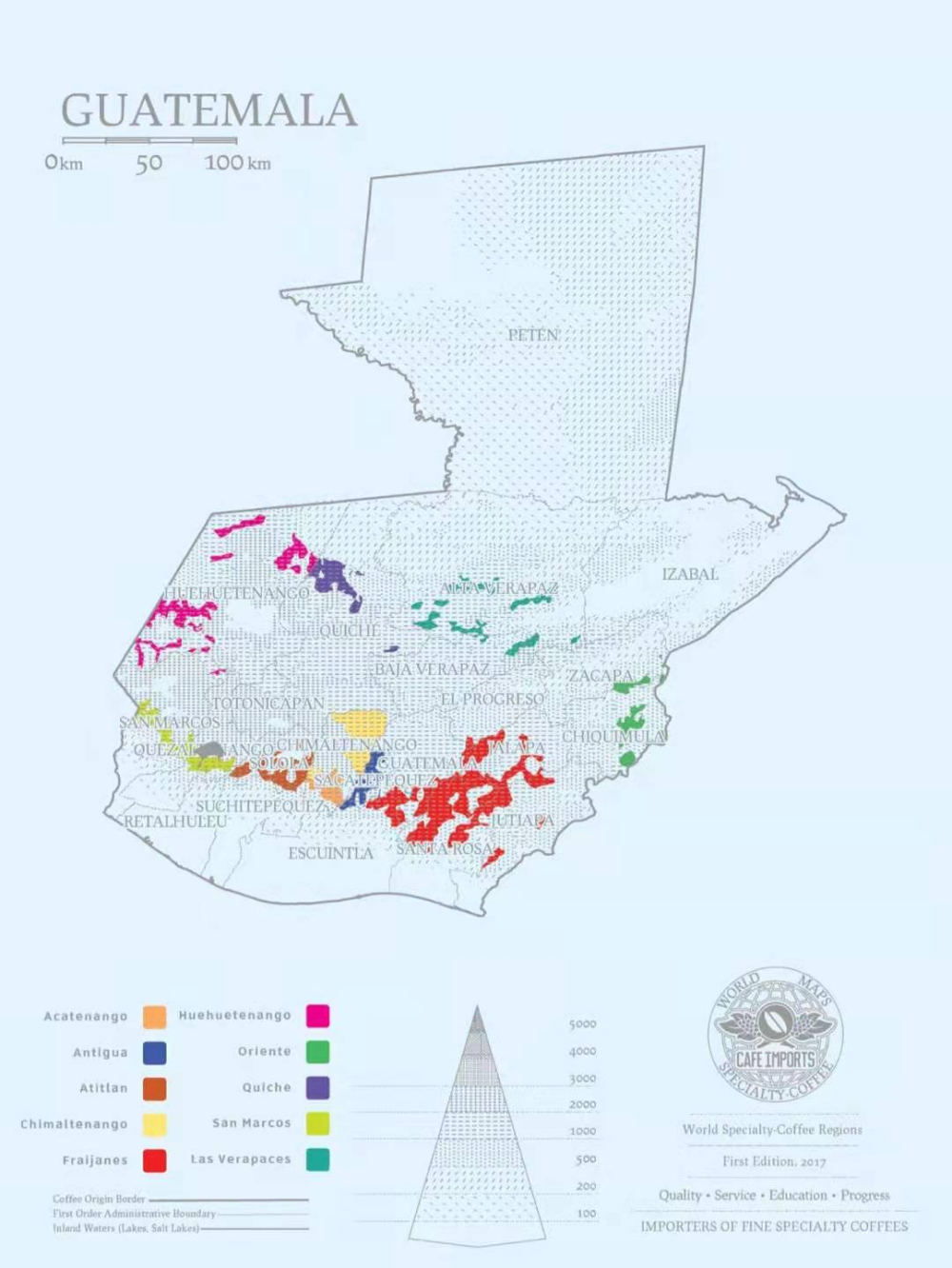
Guatemala's coffee-growing regions include: Antigua, Huehuetenango, Copán, San Marcos, Atitlán, Acatenango, Fraijanes, and New Oriente.
[Antigua]
The Antigua region is internationally recognized as Guatemala's most popular coffee-producing region. The soil in this region is rich in nutrients, which come from minerals deposited after eruptions of nearby volcanoes. The still-active Fuego volcano continues to deposit new minerals, keeping the soil fertile. Fertile soil, abundant rainfall, and stable temperatures have made Antigua coffee world-famous. For example: Front Street's Guatemalan La Flor coffee.
[Huehuetenango]
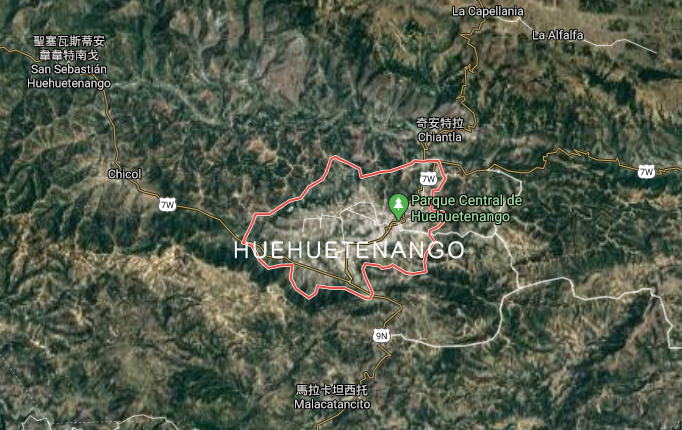
Huehuetenango is an important coffee-producing region in Guatemala, and its name is also quite interesting in pronunciation. It comes from Nahuatl and means "place of the ancients (or ancestors)." Among Guatemala's three non-volcanic regions, Huehuetenango is the highest and also the driest. Although the altitude here exceeds 2,000 meters, with steep jagged peaks and narrow valleys, the region still receives warm winds from the mountains of the Tehuantepec plain in Mexico, allowing coffee here to grow at high altitudes without being damaged by frost.
Huehuetenango is an extremely remote high-mountain terrain, which forces coffee producers in the region to process coffee beans on their own. Fortunately, the area has countless rivers and streams, allowing local growers to set up coffee processing plants almost anywhere.
In addition to rich chocolate flavors, Huehuetenango coffee also carries aromas of pear, apple, and cinnamon. These elements combine into a delicate, smooth, syrup-like mouthfeel, gradually revealing gentle notes of toasted cedarwood and caramel. Most have a profile of strong body and intense aroma, but sometimes they can be very gentle, with a long finish and rich layers. Some coffee estates are situated among mountain ranges, and their unique microclimates help the coffee develop even more diverse flavors.
Guatemalan Huehuetenango Coffee Bean Processing Method
Because Guatemala has many rivers and lakes, and the Huehuetenango region is rich in mountains, rivers, and water resources, with a dry climate but abundant water, and because the region also has complete water infrastructure, its coffee mostly uses washed processing.
Washed Processing Flow
1. Harvesting . Ripe coffee cherries are first initially sorted to remove impurities and defective beans, and floaters are screened out. Up to this point, it is the same as the natural method.
2. Depulping . Fresh cherries are sent into a pulping machine to remove the skin and pulp. Unripe cherries are screened out at this stage because their pulp is difficult to separate. After passing through the pulper, what remains is mucilage, parchment, and seeds.
3. Fermentation to remove mucilage. The seeds with mucilage still attached after depulping are moved into fermentation tanks. Although it is called the washed method, it does not actually wash away the mucilage; instead, the mucilage is removed through biological decomposition during fermentation. The fermentation process lasts about 16 to 36 hours, during which it must be stirred frequently to speed up the separation of mucilage from the seeds. Washed fermentation produces acidic substances such as citric acid, malic acid, and acetic acid. These acids penetrate the green beans, making washed beans more acidic than natural beans. Only after fermentation is complete does the real washing take place—rinsing the beans clean again.
4. Drying . After washing is completed, the beans still need to be sun-dried or machine-dried to reduce moisture content to 12%. Because the washed method has already removed the pulp, there is no need to worry about mold as easily during drying as with the natural method. The dried parchment green beans are also not as hard as natural beans that still contain pulp and skin, so they can be hulled with a hulling machine to obtain green beans.
Front Street Brewing Parameters for Guatemalan Huehuetenango Coffee:
In order to bring out Huehuetenango's medium fruit acidity, berry-like character, and the regional flavor notes of lemon peel and smokiness, Front Street Coffee's roaster uses a medium-light roast for Huehuetenango. For brewing, a Hario V60 is chosen. Because the V60 dripper has a relatively fast flow rate, it can make the extracted coffee's flavors clearly layered with obvious aroma.
Front Street uses a V60 dripper, a 1:15 coffee-to-water ratio, medium grind (about the size of coarse granulated sugar / 80% passing through a Chinese No. 20 standard sieve), and 91°C water temperature.
Use staged extraction, blooming with twice the amount of water as the coffee grounds, that is, 30 grams of water for a 30-second bloom. The reason a bloom is needed is to allow the coffee grounds to release internal carbon dioxide gas, thereby making the later stages of extraction more stable. Pour in a small stream in circles until 125 grams, then pause, continue pouring until 225 grams and stop. After the water in the dripper has dripped through, remove the dripper. Start timing from the beginning of pouring; the extraction time is 2'00". Next, pick up the entire cup of coffee and swirl it evenly, then pour it into a cup for tasting.
Flavor Characteristics of Front Street Guatemalan Huehuetenango Coffee: Citrus and berry acidity, black chocolate aroma in the middle, and a slight smoky note in the finish.
Flavor Characteristics of Front Street Guatemalan La Flor Coffee: Noticeable citrus acidity, juicy acidity, rich floral notes, pleasant sweetness, medium body, with a slight caramel note and smokiness in the aftertaste. Overall pure, gentle, smooth in texture, balanced in flavor, and lively with varied layers.
Front Street Coffee Brewing Suggestions:
Regarding coffee brewing, Front Street has always believed that the freshness of coffee beans has a great impact on coffee flavor. Therefore, the coffee beans shipped by Front Street Coffee are all within 5 days of the roast date. Front Street's roasting philosophy is "freshly roasted good coffee," so that every customer who places an order receives the freshest coffee. The resting period for coffee is about 4-7 days, so by the time customers receive it, it is at its best flavor.
For friends who need ground coffee, Front Street warmly reminds you: once coffee beans have been ground in advance, there is no need for further resting, because during transportation, the pressure produced by carbon dioxide inside the package can also make the coffee flavor rounder, so you can immediately brew a cup after receiving the ground coffee. However, ground coffee needs to be brewed promptly, because after coffee grounds contact air, they oxidize relatively quickly. In other words, the coffee's flavor will dissipate more quickly, and the coffee will not taste as good. Therefore, Front Street recommends buying whole beans and grinding fresh before brewing, so you can better taste the coffee's flavor.
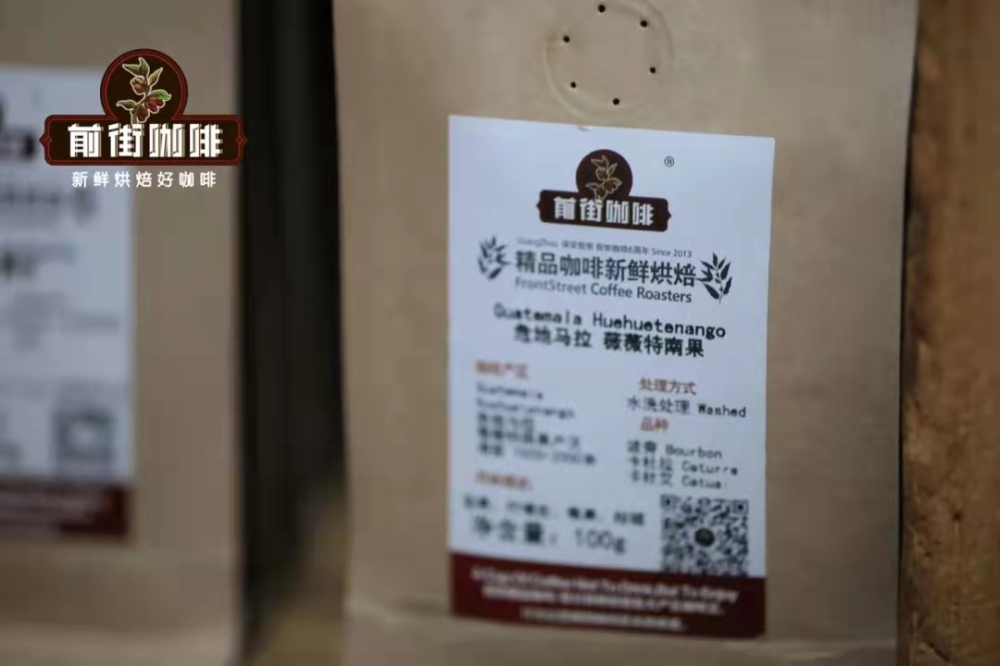
Coffee from every place has its own characteristic flavor. In order for more coffee friends to taste coffee flavors from around the world, Front Street Coffee offers more than fifty single-origin coffee beans from various producing countries, fully satisfying coffee friends' love for and exploration of coffee. Of course, if you are not sure what kind of taste you like, that is no problem either. Front Street also has 9 everyday beans, all representative coffees from various producing countries, such as: Ethiopian washed Yirgacheffe coffee, Panama Boquete Geisha coffee, China Yunnan Yunnan small-bean coffee, Colombia Huila coffee, and so on. The value for money is very high, making them very suitable choices for coffee friends just starting out!
For professional coffee knowledge exchange and more coffee bean information, please follow Coffee Workshop (WeChat public account: cafe_style)
For more specialty coffee beans, please add the private WeChat of Front Street Coffee, WeChat ID: qjcoffeex
The above content is compiled by CoffeeHunters, a coffee news website.


