







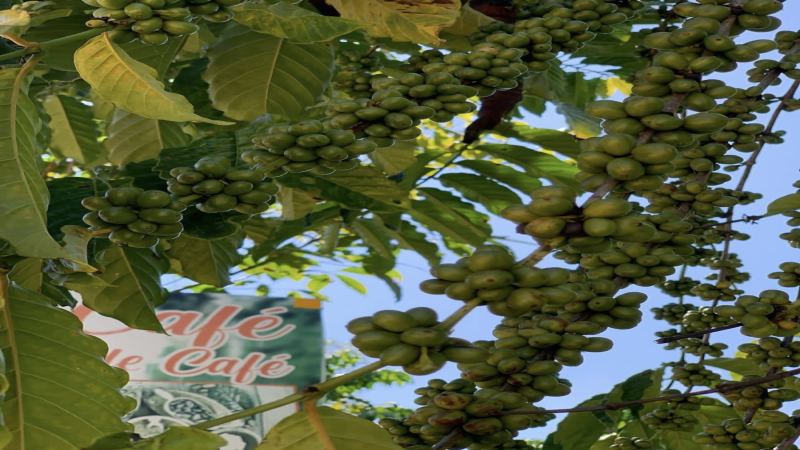
How did Dominica coffee develop across five growing regions?
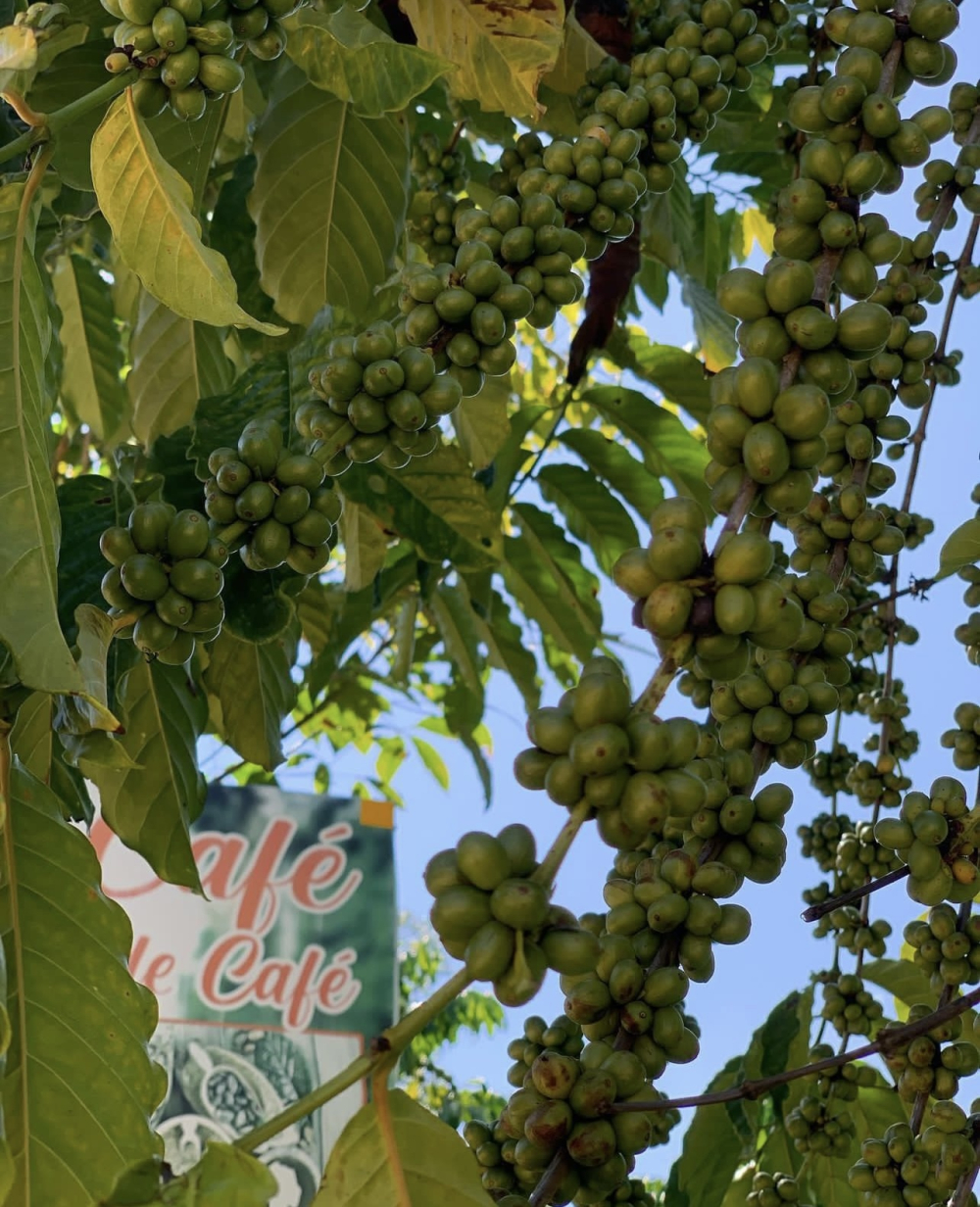
Dominican coffee has been grown since 1735, when the crop was introduced to Hispaniola under Spanish rule. Five production regions now define the country: Barahona, Cibao, the Central Mountains, Neyba and Valdesia. Each has distinct terroir, and washed processing gives the beans fresh acidity and a plump body. Typica and Caturra dominate the planting structure.
By the late 18th century coffee ranked second only to sugar among Dominican agricultural exports, and both crops relied on slave labor until slavery ended in 1791. Production took firmer root between 1822 and 1844, especially in Valdesia in the southern mountains, which had become a leading area by 1880. Coffee from the Caribbean island continues to reflect that history.
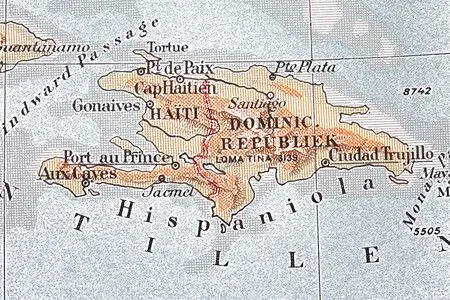
The Dominican Republic is located in the eastern part of the Caribbean island of Hispaniola, sharing the island with Haiti. With its fertile soil, abundant rainfall, and high mountain terrain, it has nurtured a uniquely styled island coffee. Since coffee was introduced in 1735, the country has experienced the end of slavery, the rise and fall of production regions, price crises, and government support, gradually forming a planting structure dominated by Typica and Caturra. The five major production regions—Barahona, Cibao, the Central Mountains, Neyba, and Valdesia—each possess distinct terroir characteristics, and washed processing gives the beans fresh acidity and plump body. This article will systematically review the development trajectory, regional varieties, processing methods, and current state of the industry of Dominican coffee, taking you on an in-depth look at this Caribbean coffee-producing country.
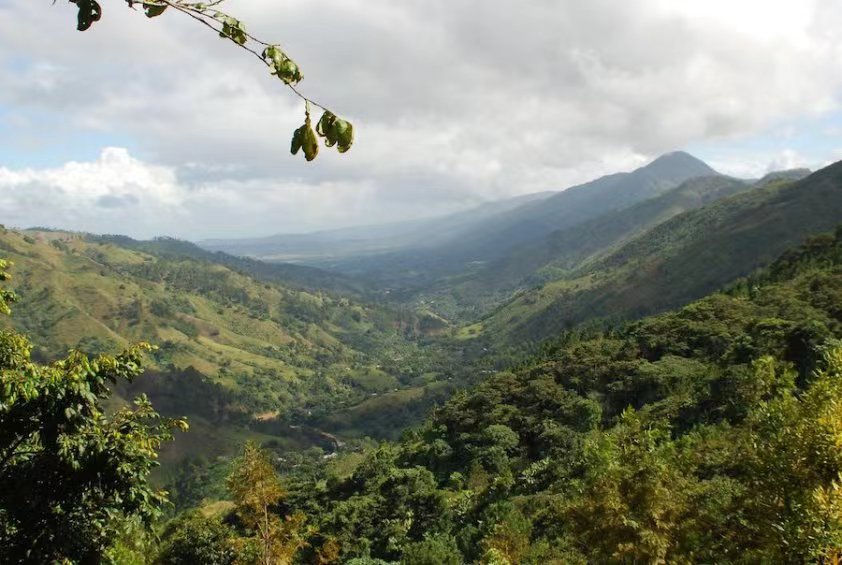
The Dominican Republic is situated on the eastern side of Hispaniola in the Caribbean's Greater Antilles, sharing the island with Haiti. To the south it faces the Caribbean Sea, while to the north it meets the Atlantic Ocean. The northern and eastern parts of the country are covered by a tropical rainforest climate, while the southwest exhibits tropical savanna climate characteristics. The average annual temperature remains between 25 and 30°C, with an average annual rainfall of approximately 1,350 mm. Thanks to fertile soil, abundant rainfall, and numerous high-altitude mountains, the region possesses superior natural conditions for developing coffee cultivation.
History of Dominican Coffee Development
In 1735, coffee was introduced to Hispaniola, then under Spanish rule—the area that is now the Dominican Republic. It is presumed that the earliest coffee plantations may have appeared in the hills around BahorcoPanzo near Neyba, and from there gradually spread to the other three major mountain regions. By the late 18th century, coffee had risen to become the Dominican Republic's second most important agricultural product after sugar. However, both sugar and coffee cultivation relied heavily on slave labor, a situation that did not end until slavery was abolished in 1791.
The true establishment of Dominican coffee production took root between 1822 and 1844, particularly in the Valdesia area of the southern mountains. By 1880, this region had become the core of the country's coffee manufacturing. Starting in 1956, the Dominican Republic began selling coffee from specific production regions overseas, mainly involving the three regions of Bani, Ocoa, and Valdesia. In the 1960s, farmers in these regions gradually organized themselves, and in 1967 they established processing plants. But by the end of the 20th century, coffee prices fell drastically and became unpredictable, and a large number of coffee farmers switched to planting legumes or avocados. Only a few persisted in coffee cultivation, waiting for prices to recover.
Afterward, the government established the Coffee Commission (CODOCAFE), responsible for managing and guiding the coffee industry. Through multiple parallel measures such as agricultural technology improvement, organic certification, quality monitoring, and coffee farmer cooperatives, it not only promoted national economic development and environmental protection, but also, due to the significant improvement in coffee farmers' living conditions, advanced natural resource conservation under strong policy support, forming a virtuous cycle in the coffee industry. Unfortunately, however, the Dominican Republic has a relatively large domestic coffee consumption, and currently 60% of domestic production is used for self-sale, with only 40% exported.
Coffee Production Regions and Planted Varieties
Barahona: This production region is located in the southwestern Dominican Republic, with coffee mainly cultivated around the Bahoruco mountain range. Although the planting altitude is not particularly high, the lower latitude and abundant sunshine still yield excellent coffee quality, with the aroma of island coffee and a mild taste. The altitude range is between 600 and 1,300 meters, mainly planting Typica (80%) and Caturra (20%).
Cibao: This area is located in the northern Dominican Republic, in the river valley between the Northern Cordillera and the Central Cordillera. The altitude is between 400 and 1,500 meters, mainly planting Typica (90%) and Caturra (10%).
Central Mountains: This is the highest mountain range within the Dominican Republic, with altitudes between 600 and 1,500 meters. The coffee beans produced in this region are plump, with excellent acidity, a richer taste, and a fruity sweet aftertaste. Mainly planting Typica (30%), Caturra (65%), and Catuai (5%).
Neyba: Located in the southwestern Dominican Republic, coffee is mostly cultivated in the Neyba mountain area at altitudes of 700 to 1,400 meters. This may be the earliest coffee planting region, mainly planting Typica (50%) and Caturra (50%).
Valdesia: This production region is the most well-known coffee-producing area in the Dominican Republic, granted the status of a designated appellation (Santo Domingo, the old national name of the Dominican Republic), and enjoys a good reputation, thus able to command higher prices. The altitude is between 500 and 1,100 meters, mainly planting Typica (40%) and Caturra (60%).
Processing Methods
The harvesting of Dominican coffee mostly relies on manual picking and selection, with washed processing as the main method and only a small portion using natural processing. As a result, the coffee flavor is relatively fresh, the beans are plump, and the acidity is excellent.
The specific process of washed processing is as follows: first, pour the harvested fruit into a tank for flotation, removing unripe berries. Next, use a machine to remove the pulp while retaining the mucilage, and at this point place the beans in a tank to ferment for 18 to 36 hours to break down the mucilage. After fermentation is complete, move the beans into a washing channel and introduce continuously flowing fresh water, pushing them back and forth to wash the coffee beans until smooth and clean through the force of friction and water flow. Subsequently, dry the washed coffee beans until the moisture content drops to about 12%. Finally, hand them over to the factory for hulling. Coffee beans processed in this way have a fresh and elegant flavor, plump body, and excellent acidity.
Current State of the Dominican Coffee Industry
Currently, the Dominican Republic still mainly cultivates Typica and Caturra, which together account for 99%, with a small amount of Bourbon, Pacas, Mundo Novo, and Villa Sarchi as well. Thanks to the island's unique microclimates and terrain conditions, local growers use a relay approach so that coffee can be harvested somewhere throughout the four seasons. Coffee beans are currently mainly exported to Puerto Rico, followed by Italy, Japan, the United States, and France.
The above content is compiled by CoffeeHunters, a coffee news website.


