







What makes Mandheling different from other Arabica varieties?
Mandheling is the signature coffee of Sumatra, Indonesia, and only Arabica beans grown on the island qualify for the name. The beans run two grades larger than common coffee, are usually roasted dark, and show low acidity with a thick, full body and a sweet, lingering finish. Lintong Mandheling and PWN Golden Mandheling are the two main versions sold.
Arabica took root in Indonesia through colonial-era planting, and Sumatra's wet-hulled processing, shaped by local conditions and resources, gives Mandheling its distinctive profile. The variety's large screen size, modest dry fragrance and heavy roast mean it is often misread, yet its place among Arabica coffee varieties is secure and it has no direct substitute.
Mandheling is the most iconic coffee from the Sumatra region of Indonesia, but many people are not clear about what variety it actually belongs to, nor do they understand how Arabica took root in Indonesia. This article will sort out the origin definition, historical context, and variety composition of Mandheling, compare the Lintong Mandheling and PWN Golden Mandheling sold by Front Street Coffee, and finally include Front Street Coffee's brewing suggestions, helping coffee enthusiasts gain a more complete understanding of this "irreplaceable" classic coffee.
For professional coffee knowledge exchange and more coffee bean information, please follow Coffee Workshop (WeChat public account: cafe_style)
For more specialty coffee beans, please add the private WeChat of Front Street Coffee (FrontStreet Coffee), WeChat ID: qjcoffeex
There is a type of coffee bean for which it is hard to say exactly what makes it good, yet you simply cannot find a substitute. Its particle size is two grades larger than common beans, destined never to be the most eye-catching one on the bar. It does not have the stunning, crowd-pleasing aroma performance of Huakui, and its roast level is often so dark that the original appearance is almost unrecognizable.
It appears very frequently, yet its presence is inversely proportional to that, and even at the moment you first smell the dry fragrance, it is hard to associate it with the word "outstanding." It carries a history of being neglected and misinterpreted. Its unique processing method embodies the wisdom of using local resources, yet ultimately it could not escape the cycle of coexisting advantages and disadvantages.
It is the famous yet often misunderstood by many friends, produced in the Sumatra region of Indonesia— Mandheling coffee beans . Front Street Coffee (FrontStreet Coffee) has always been a supporter of Mandheling coffee. Its low acidity and thick, full-bodied flavor give people a sense of steadiness and reliability, and the sweet aftertaste in the finish lingers in the memory for a long time.
Where do Mandheling coffee beans come from?
Mandheling coffee originates from Indonesia, the world's largest archipelagic country. However, not every coffee bean produced in Indonesia can be called Mandheling. Only Arabica coffee beans grown on the Indonesian island of Sumatra qualify to be called Mandheling coffee.
Indonesia has a typical tropical rainforest climate, with an average annual temperature of about 25 to 27 degrees Celsius, no obvious seasonal differences, and abundant rainfall, with annual precipitation reaching 1600 to 2200 millimeters. Sumatra combines altitude advantages, sufficient rainfall, the fertility of volcanic soil, and a warm, humid climate, providing a very ideal growing environment for Arabica coffee varieties.
The ins and outs of how Arabica coffee beans were introduced to Indonesia
At the end of the seventeenth century, the Dutch East India Company transplanted Arabica plants from India to Jakarta on the island of Java. Thanks to the suitable climate and soil, Arabica quickly spread to Sumatra to the northwest of Java and Sulawesi to the northeast. In 1880, leaf rust broke out on a large scale in Java, and Arabica plants withered in vast numbers, so the Dutch switched to planting the more disease-resistant Robusta, thereby stabilizing Indonesia's coffee industry.
To this day, Robusta remains the pillar of Indonesian coffee, accounting for ninety percent of the country's coffee production, mainly distributed in low-altitude areas such as Java. The more elegant-flavored Arabica coffee beans are concentrated in northern Sumatra, Sulawesi, and the higher-altitude production areas of Java. Although the output of these specialty coffees accounts for only 10% of Indonesia's total coffee production, the reputation accumulated by high-quality Arabica beans such as Mandheling and Golden Mandheling has made Indonesian coffee famous in the specialty coffee field for decades.
The variety classification of Mandheling coffee
Mandheling coffee belongs to Arabica coffee and originated in the Mandailing region near the Bukit Barisan Mountains in North Sumatra. What we now call Mandheling refers to Typica or other variant coffee beans grown in the mountainous areas around Lake Toba.
Currently, Front Street Coffee (FrontStreet Coffee) sells two types of Mandheling coffee beans. One is Timtim variety Mandheling coffee beans from the Lintong production area of Sumatra, and the other is Ateng variety Front Street PWN Golden Mandheling coffee beans from the Gayo Mountain production area of Aceh, Sumatra.
Tim tim (Timor) is a natural hybrid of Arabica and Robusta. It was discovered on the island of Timor in the 1940s and was widely planted because of its natural disease resistance. In the Americas, this variety is called Hybrido de Timor, or Tim Tim for short; in Indonesia, it is also called Bor Bor.
Ateng (Catimor) is a variety produced by the natural hybridization of Tim and Caturra, and its name comes from the Aceh Tenggah region. It was introduced to Java in 1928 and later spread to Sumatra. Because it was widely planted in the Aceh Tenggah region, locals called it Ateng.
What is the difference between Lintong Mandheling and PWN Golden Mandheling coffee ?
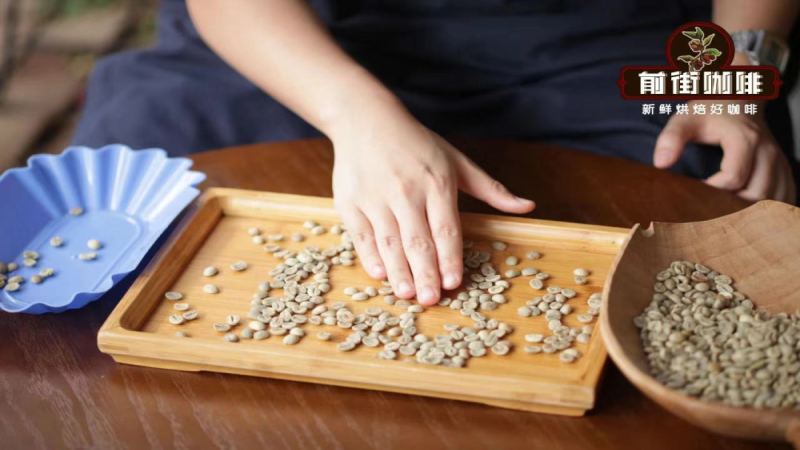
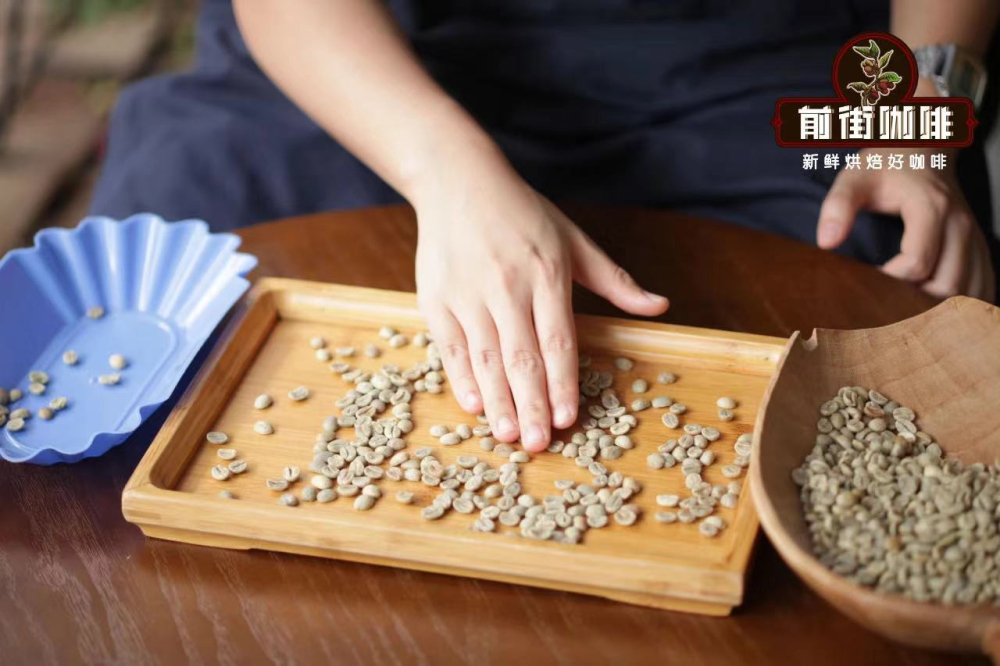
The most core difference between the two lies in the green bean sorting stage. After PWN Golden Mandheling coffee beans are harvested and dried, they must undergo at least three rounds of purely manual sorting to ensure that the coffee bean size reaches 18 mesh or above and that there are no more than 3 defective beans (based on a 300g green bean sample), belonging to the highest grade G1. PWN has a darker green color and a neat, flat bean shape. Through cupping comparison, Front Street Coffee (FrontStreet Coffee) found that Golden Mandheling coffee beans that have undergone multiple rounds of manual sorting are cleaner and brighter on the palate, with more prominent sweetness and aroma.
Although the sorting process for Mandheling coffee beans from the Lintong production area is not as strict and meticulous as that of the PWN company, its flavor performance is already sufficient to represent the Sumatra production area of Indonesia. Therefore, Front Street Coffee classifies Lintong production area Mandheling coffee beans under the "Front Street Coffee (FrontStreet Coffee) Staple Bean Series." The significance of the staple series is to allow all consumers to taste the flavor characteristics of a coffee production area at the highest cost-effectiveness.
Brewing suggestions for Mandheling coffee
In terms of brewing, Front Street Coffee (FrontStreet Coffee) recommends using freshly roasted coffee beans, as this is the best way to experience the coffee's rich flavors. The coffee beans sent out by Front Street Coffee (FrontStreet Coffee) are all within 5 days after roasting, because Front Street deeply understands that freshness has a huge impact on flavor and hopes that every customer who places an order receives the coffee in the freshest possible condition.
Because the roast level of Front Street Coffee (FrontStreet Coffee) Mandheling coffee beans is on the darker side, flavor compounds are easily extracted during brewing, so Front Street recommends using a coarser grind size and a lower water temperature.
At the same time, in order to obtain a mellow mouthfeel, Front Street recommends using a dripper with an immersion function, such as the KONO dripper. Pair with a medium-coarse grind (the size of coarse granulated sugar, with a 70% passing rate through the Chinese No. 20 standard sieve), a water temperature of 88 degrees Celsius, and a 1:15 coffee-to-water ratio for extraction.
Specific brewing method: pour 30g of water in the first stage and let it bloom for 30 seconds; in the second stage, pour in a circular motion with a small stream of water until 125g, and when the water level in the coffee bed drops to half, pour again, continuing to pour in a circular motion with a small stream of water until 225g. Wait for all dripping to complete. The total extraction time is about 2 minutes and 10 seconds.
The above content is compiled by CoffeeHunters, a coffee news website.


