







How Do You Control Cold Brew Coffee Extraction?
Cold brew coffee is an extraction method, not a specific iced drink: low-temperature water slowly dissolves flavor molecules from the grounds. Because cold water extracts far less efficiently than hot water, four variables decide the result: steeping time, bean condition, stirring technique and filtration precision. Control all four and the cup lands balanced in acidity and sweetness with a clean mouthfeel.
The basic setup is simple: combine cold or room-temperature water with coffee grounds in a sealed container, rest it in the refrigerator for several hours, then filter out the grounds. Global consumer interest in cold brew has kept climbing. If the same beans and parameters still produce a thinner cup at home than in a shop, the difference usually sits in one of those four variables, so check each in turn.
In recent years, global attention on cold brew coffee in the consumer market has continued to climb, yet considerable confusion still surrounds this category. Cold brew is essentially an extraction method, not a specific form of iced drink—it refers to the process of slowly dissolving flavor molecules from coffee grounds using low-temperature water as the medium. Compared with hot water brewing, cold brew's extraction efficiency is greatly reduced due to the constraints of water temperature, so time, bean condition, stirring technique, and filtration precision must all be controlled to obtain a cup of iced coffee with balanced acidity and sweetness and a clean mouthfeel. Front Street Coffee, drawing on in-store practical experience and comparative experiments, has identified four key variables affecting cold brew flavor, along with operation suggestions that can be replicated at home, for coffee enthusiasts to check item by item.
For more specialty coffee knowledge, please follow the WeChat public account: Front Street Coffee (FrontStreet Coffee)
In recent times, global demand for cold brew coffee in the consumer market has shown a notable upward trend, and at the same time, some blurred boundaries and underexplored areas have emerged regarding the conceptual definition of cold brew coffee. Cold brew coffee actually describes an extraction path, not a type of iced drink. In professional circles, cold brew is clearly defined as: a cup of coffee liquid obtained by dissolving flavor molecules using low-temperature water. So what conditions exactly influence the flavor of such a cup of coffee? Front Street Coffee will explain around this question today, and also share the recipe commonly used in stores with everyone.
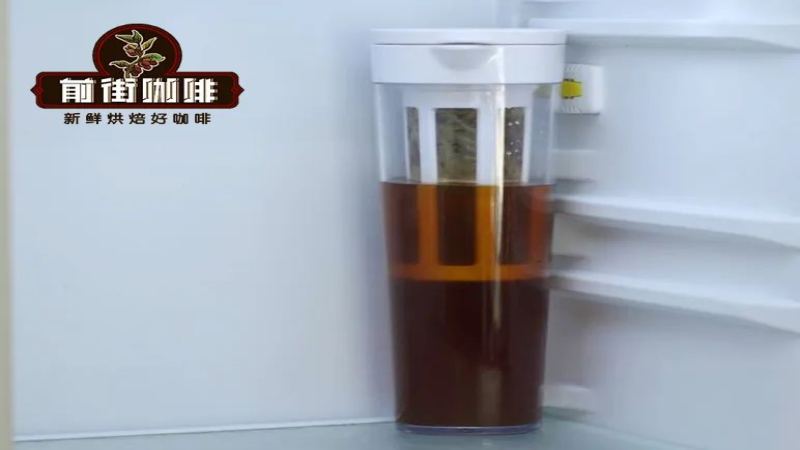
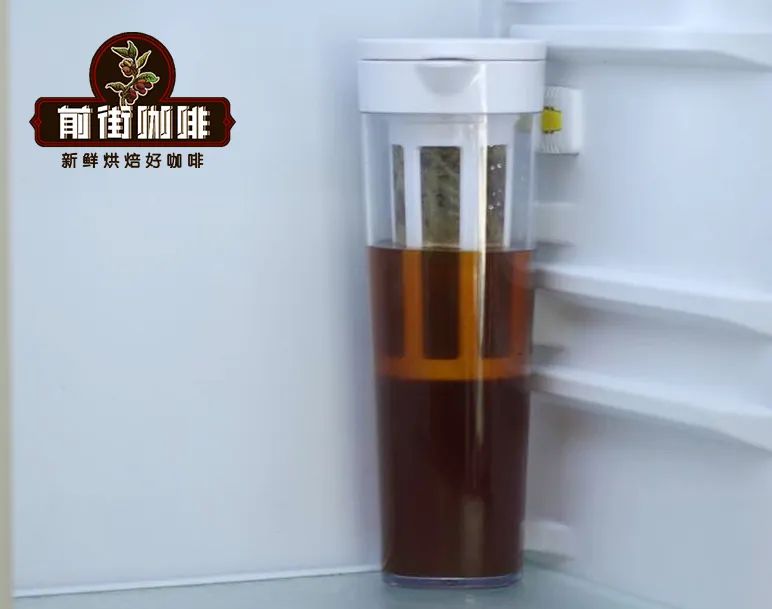
Unlike the everyday method of brewing with hot water, the core operation of cold brew is to mix cold or room-temperature water with coffee grounds, let it sit in a low-temperature environment for several hours, then filter out the grounds, finally obtaining iced coffee liquid. A bag of beans, a clean sealed container, water, and a refrigerator are enough to achieve cold brew freedom at home.
However, some friends may encounter confusion during实际操作: even when using the same coffee beans and copying the parameters exactly, the cold brew they make at home just isn't as rich and sweet as the cup from the shop. Where exactly is the problem? Front Street has compiled the following easily overlooked points; those making it at home can compare item by item to see if the crux lies therein.
1. Steeping time should not be less than 8 hours or more than 18 hours
In the pour-over system, water temperature and time are two variables that are especially valued. Water is the core medium of brewing, and its temperature directly affects extraction efficiency; too high or too low will shift the coffee's taste. Similarly, if time is drawn out too long, over-extraction easily occurs; too short, and extraction may be insufficient. Cold brew deals only with low-temperature water at 4-10°C throughout, and the extraction speed is extremely slow, so the steeping time must be extended to prompt more aromatic substances to release, allowing sugars and organic acids and other components to dissolve more thoroughly; the resulting coffee will also be more balanced in acidity, sweetness, and body. Generally speaking, the recommended steeping time for cold brew coffee falls between 8 and 18 hours.
Front Street previously conducted a set of cold brew controlled experiments with time as the sole variable, steeping equal amounts of ground Butterfly coffee for 4 hours, 10 hours, 16 hours, and 24 hours respectively. The results showed: the 4-hour cup had almost no aroma and a thin mouthfeel close to water; the cold brew steeped for a full 24 hours had a slight bitterness on entry, showing signs of over-extraction; while the 10-hour and 16-hour groups performed most prominently in flavor, with the former leaning refreshing and the latter thicker and richer.
If you worry about not remembering the time, you can also borrow Front Street's hassle-free approach: start steeping between 7-9 PM the night before, and filter out the grounds the next morning between 7-9 AM as well; in this way, the time falls within the relatively safe range of 10-14 hours.
2. Coffee beans that are too fresh can also affect extraction
In many high-temperature brewing scenarios, the freshness of the roast date is often a priority condition for many people, because beans beyond their peak flavor period will have noticeably diminished aroma—this is already common consensus. In addition, gas release can also let us make an intuitive judgment about bean freshness, such as the crema state of espresso, the degree of swelling during blooming, etc.; these phenomena also indicate that the coffee is at its fullest stage of aroma expression.
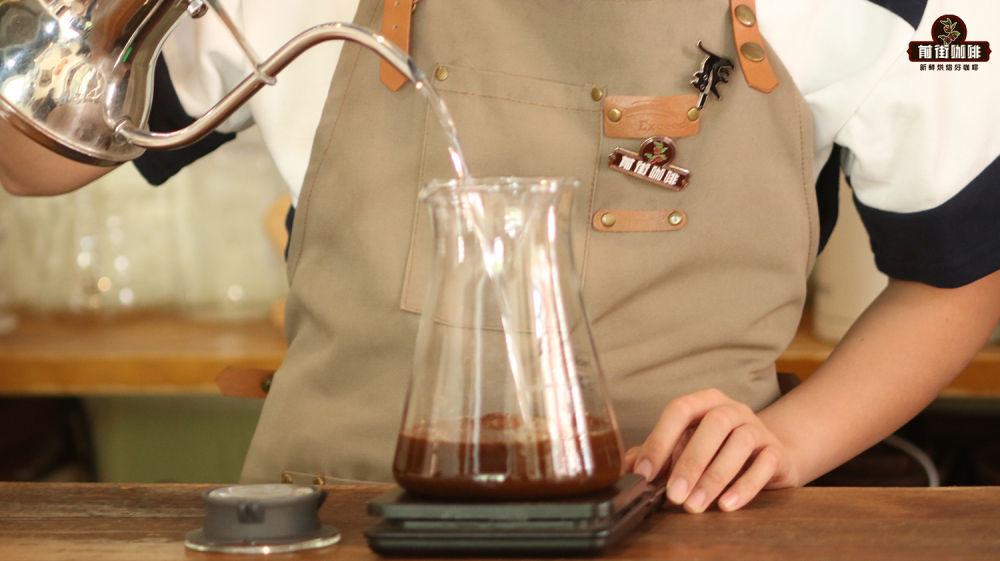
Coffee beans are continuously heated in the roasting drum; freshly roasted beans have accumulated a large amount of carbon dioxide inside, and to extract the deeper aromatic compounds, these gases must first be released. Cold brew itself is a relatively static extraction process, and low-temperature water also suppresses gas escape to a certain extent, so it is not hard to imagine that coffee brewed with "fresh beans" can easily end up under-extracted. If you are not in a hurry to drink it right away, Front Street suggests choosing coffee beans with a roast date of more than 10 days for steeping, which is more conducive to making a cup of cold brew full of aroma.
3. Stir thoroughly both before and after extraction
Many beginners, to save trouble, pour in the water and immediately cover the lid and put it in the refrigerator. The coffee grounds may look wet on the surface, but in fact some parts have not touched water at all, and those dry grounds naturally did not participate in extraction. In addition, after sitting overnight, the vast majority of particles have settled to the bottom of the container; if you pour it out to filter directly at this point, chances are you will only get the upper portion of very light-colored liquid, and the taste will naturally not be good. Therefore, when making cold brew, the step of "stirring" is indispensable.
According to Front Street's experience, if you are using a relatively large-capacity pot, before extraction you can use a stirring rod or a long-handled spoon to mix the coffee grounds and water evenly, then put it in the refrigerator; after taking it out, stir it a few more times before filtering. If you are using a sealed water bottle, just tighten the lid and gently shake it up and down to mix evenly.
4. Filter out the grounds thoroughly for a better cold brew mouthfeel
There is quite a variety of equipment that can be used to filter out coffee grounds, such as the filter mesh that comes with a cold brew pot, metal filters, filter paper, flannel filter cloth, and so on. Different devices have different pore structures, and the particle sizes they can intercept naturally differ as well.

Taking the cold brew pot used by Front Street as an example, its filter mesh has a pore size of 245 mesh, a fineness that already counts as a relatively high level, but fine particles and very fine particles still pass through. If secondary filtration is not done at this point, a layer of flocculent oil sheen will float on the liquid surface. The flavor when drinking is not much different from after filtration, but the rough granular sensation left on the tongue when swallowing is quite obvious, and after finishing, some visible grounds will settle at the bottom of the cup.
To obtain a better drinking experience, Front Street will use denser filter paper to strain it once more; this not only effectively intercepts very fine particles but also removes more than 80% of the condensed oils. After filtering out the grounds, Front Street will also seal the cold brew coffee liquid and refrigerate it for 3-4 hours, allowing the flavor substances to further settle and mature. After this step, the cold brew's entry flavor will be very full, the mouthfeel clearer, and the acidity more transparent.
The above content is compiled by CoffeeHunters, a coffee news website.


