







What Makes Typica Coffee Different in Yunnan?
Yunnan coffee comes mainly from four producing areas in the southwest: Pu'er, Baoshan, Dehong, and Lincang. Coffee reached the province in 1904, when a French missionary brought seeds from Vietnam to Zhukula Village in Binchuan County, Dali, where high altitude, a mild climate, and fertile soil suited the plant. Small-bean Yunnan coffee is known for a bright aroma and a rich body that is not bitter.
The Typica variety matters because most Yunnan coffee is Catimor, so Typica plots are comparatively rare. Typica is an older arabica type with lower yields and taller trees. One example is Front Street Coffee's self-built estate in Lincang, where Typica is processed using the natural method, and the company also publishes brewing suggestions for those beans.
Coffee culture is becoming increasingly popular in China, and Yunnan, as the core coffee-producing region in the country, is gradually entering the public eye. The movie "Coffee or Tea?" helped more people understand that China can also produce specialty coffee, and Yunnan small-bean coffee has become a shining calling card with its fragrant yet not harsh, rich yet not bitter characteristics. However, not all of Yunnan is suitable for growing coffee; the true main producing areas are concentrated in the southwestern part, with Pu'er, Baoshan, Dehong, and Lincang being the most well-known. This article will go through the planting history and flavor characteristics of these four major producing regions one by one, and delve into the differences between the Catimor and Typica varieties, while also introducing Front Street Coffee's specific practices and brewing suggestions for its self-built estate in Lincang, where Typica is processed using the natural method.
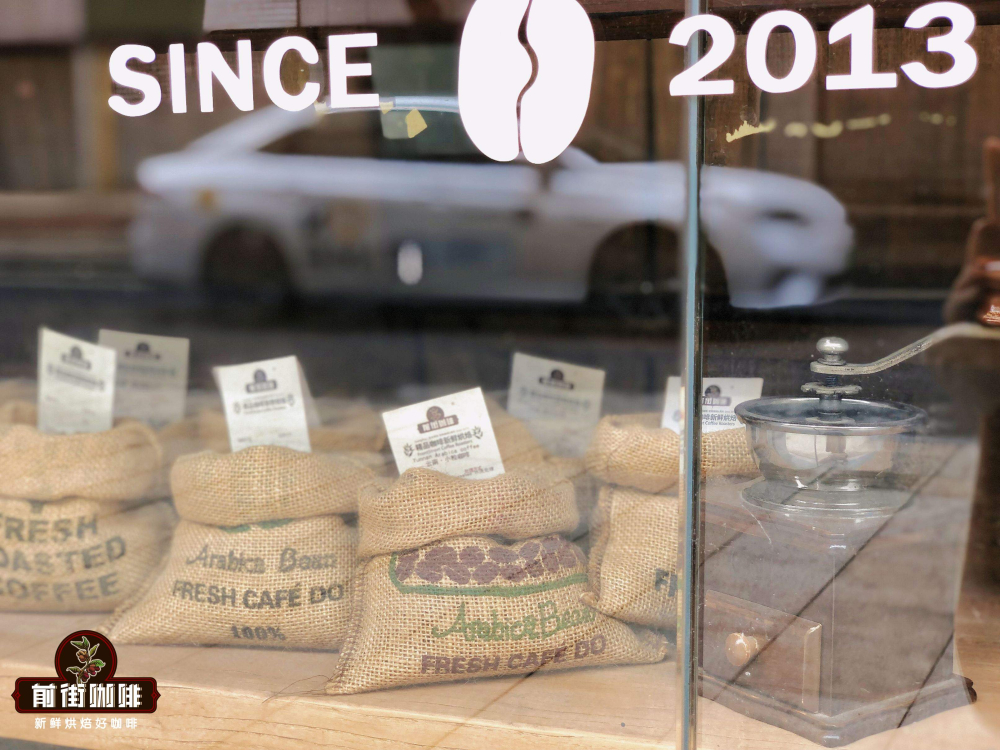
As coffee gradually becomes an indispensable beverage in young people's daily lives, all kinds of coffee shops have opened all over the streets and alleys. Walking into any shop, more and more consumers realize that the origin of coffee beans is not limited to overseas; China itself also has regions suitable for growing coffee.
After the movie "Coffee or Tea?" was a hit in China, it helped more viewers understand that China also has places that produce specialty coffee. Yunnan small-bean coffee, with its bright aroma that is not harsh and its rich body that is not bitter, has become a representative calling card for Yunnan small-bean coffee to show to the outside world.
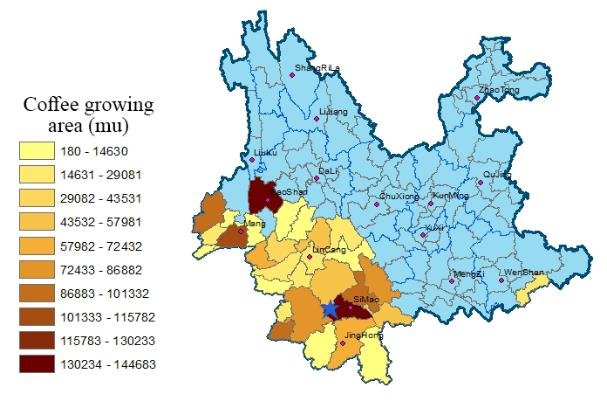
In fact, although Yunnan is vast, not all land is suitable for planting coffee. The growing areas for Yunnan coffee beans are mainly concentrated in the southwestern part. So, what are the more well-known coffee-producing regions in Yunnan Province? Next, Front Street will go through them one by one for everyone.
In 1904, a French missionary entered Yunnan from Vietnam to preach, and at the same time introduced coffee cultivation. He brought coffee seeds into the valleys of Yunnan, or more precisely, to Zhukula Village in Binchuan County, Dali County. The local altitude is relatively high, the climate is relatively mild, and the soil is fertile, providing ideal growing conditions for this crop that is not easy to cultivate. To this day, some varieties can still be traced back to these earliest plants.
At present, the main coffee-growing areas in the region are Pu'er, Baoshan, Dehong, and Lincang.
【Pu'er】
If you are a tea lover, especially a lover of Pu'er tea, then you must be familiar with this name, because this tea is named after the city of the same name. But in recent years, Pu'er is not only the tea capital of Yunnan, but has also become the coffee capital of Yunnan. Most crops are concentrated in this region, and the coffee beans produced here rank among the top in quality across the entire province of Yunnan. Facts have proven that Pu'er is also an important coffee distribution center.
【Baoshan】
The main variety of Yunnan coffee is Arabica, which locals call Yunnan small-bean coffee. Baoshan began large-scale coffee cultivation around 1950. At that time, the Yunnan coffee beans produced in Baoshan were smaller in bean size than similar beans from other producing regions in the world, with a mild flavor, a slight sweetness, and moderate bitterness. The small-bean coffee produced in Lujiang County was even rated as first-class on the London market in the late 1950s.
【Dehong】
Dehong is one of the earliest regions in China to introduce coffee cultivation and has long enjoyed the reputation of being the hometown of Chinese coffee. In the mid-1910s, the region introduced small-bean coffee from Myanmar for cultivation. By the 1950s, large-scale commercial cultivation began, and it gave birth to China's first local coffee brand—Hougu. In addition, Dehong also has China's largest coffee seed gene bank.
【Lincang】
Lincang borders Pu'er to the east, Dali to the north, Baoshan to the west, and Myanmar to the southwest. The Tropic of Cancer passes through its southern part, making it truly a pearl on China's southwestern border. Lincang's average annual temperature is between 16 and 17 degrees Celsius, with a mild climate, a clear distinction between dry and rainy seasons, abundant sunshine, and complex and diverse terrain. Its unique geographical location and climatic conditions have attracted the attention of many coffee companies. Front Street Coffee (FrontStreet Coffee) took a fancy to Lincang at first glance and established its own coffee estate here, where the oldest Arabica varieties are grown.
Today, Yunnan specialty coffee has its own place on the menus of many independent coffee shops. However, if you look carefully into the coffee varieties, you will probably find that many Yunnan specialty coffees use Catimor beans. Friends who are new to coffee may not yet understand the characteristics of the Catimor variety.
Yunnan Province began large-scale commercial cultivation in the 1950s, but at that time coffee beans were mainly used to supply foreign markets, such as the Soviet Union. Because the taste and flavor of Yunnan small-bean coffee at that time were unique, it was even rated as first-class on the London market in the late 1950s. However, at that time China's coffee market had not yet opened up, and most Chinese people had only heard of coffee but did not know what coffee actually tasted like, so Yunnan became one of the raw material producing areas for coffee.
As the reform and opening-up policy gradually advanced, more foreign-funded enterprises entered mainland China, and Yunnan, as an important specialty coffee growing region, naturally attracted the attention of international coffee brands. Brands such as Nestlé and Starbucks successively established a presence in Yunnan, and Yunnan provided them with large amounts of raw materials.
In order to obtain large quantities of raw materials from a single origin, promoting the cultivation of new varieties became an inevitable choice, and this new variety was exactly what is now known as Catimor. Catimor carries Robusta genes, has strong resistance to coffee leaf rust, and its yield is three times that of Typica.
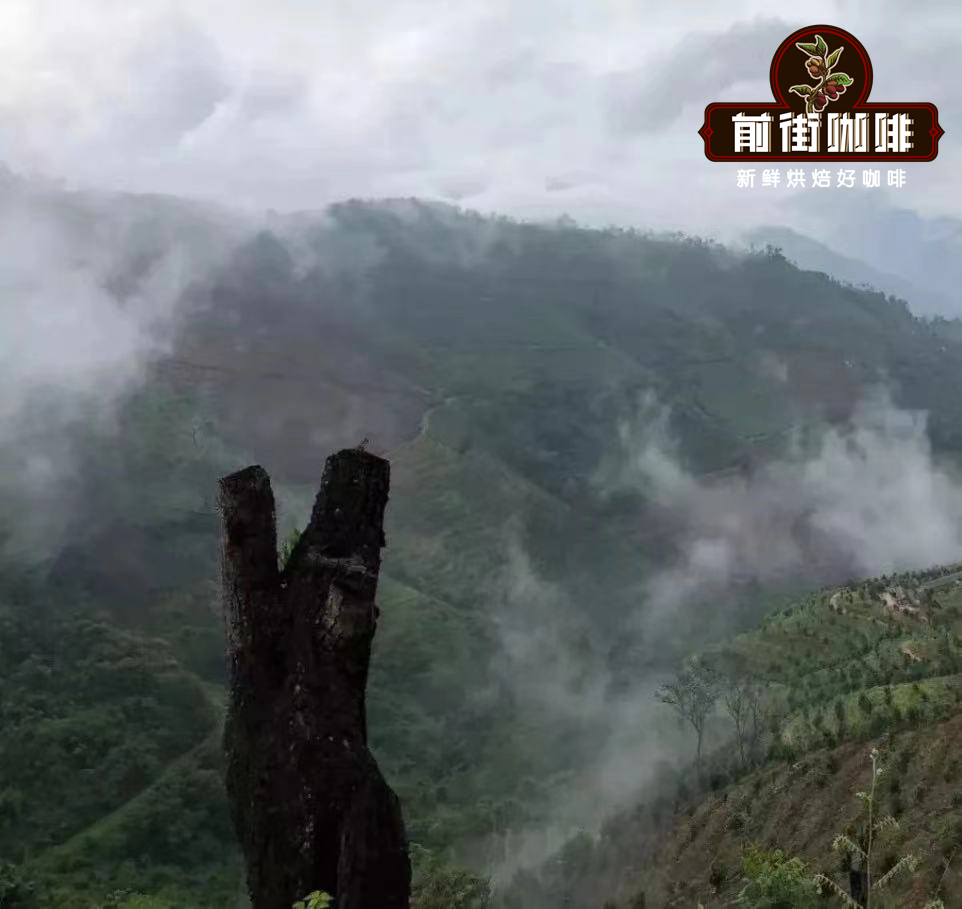
At the time, coffee farmers did not understand the differences in coffee bean varieties and flavor characteristics; they only knew that increased yield meant doubled income. So they cut down the elegantly flavored Typica and switched to planting higher-yielding Catimor.
Catimor can indeed bring higher yields and is easier to manage, with less need to worry about the interference of leaf rust and other growing conditions. However, because it carries Robusta genes, its flavor more or less inherits the characteristics of Robusta, and sometimes bitter notes or even earthy, fishy notes appear. Taiwanese specialty coffee master Han Huaizong once described this variety as having a "devil-like aftertaste."
In order to pursue the most original flavor of Yunnan specialty coffee, Front Street Coffee (FrontStreet Coffee) planted the oldest and most original Arabica variety—Typica—on its own estate.
The top leaves of the Typica coffee tree are bronze-colored, and the beans are oval or slender-pointed. It has an elegant flavor, a clean taste, and overall balance, and has strict requirements for growing altitude. Because of its excellent flavor performance, it once won countless praises for Yunnan small-bean coffee and is recognized as a specialty coffee variety.
Front Street Coffee (FrontStreet Coffee) Front Street 2013 Yunnan Typica
Producing Region: Lincang, Yunnan
Estate: Yunnan Front Street Coffee (FrontStreet Coffee) Estate
Altitude: 1,300 meters
Variety: Typica
Processing Method: Natural
What Front Street Coffee (FrontStreet Coffee) Estate produces is naturally processed Typica coffee. The natural processing method is the most primitive and traditional post-processing method for green coffee beans. Compared with the washed processing method, natural processing can give coffee a richer flavor, and the sweetness is improved qualitatively.
After picking ripe coffee cherries, Front Street Coffee (FrontStreet Coffee) spreads the whole fruits evenly on drying beds and turns each fruit every half hour. Such frequent operation is to allow the coffee fruits to dry evenly while avoiding excessive fermentation that would produce unpleasant fermented flavors.
With such careful processing, even the baristas at Front Street Coffee (FrontStreet Coffee) gave a thumbs-up when tasting it, saying that Yunnan small-bean coffee is indeed delicious. After experiencing its charm at Front Street, many friends who want to buy this coffee bean ask Front Street's baristas how they should brew it to bring out its best performance.
When brewing this coffee bean, the baristas at Front Street Coffee (FrontStreet Coffee) use the following parameters:
Dripper: Hario V60
Water Temperature: 90 degrees Celsius
Dose: 15 grams
Coffee-to-Water Ratio: 1:15
Grind Size: 75% passing through a Chinese standard No. 20 sieve
First pour 30 grams of hot water and bloom for 30 seconds, then pour in a thin stream at the center point and slowly circle to 125 grams. When the water level in the dripper drops to the point where the coffee bed is about to be exposed, continue pouring in circles to 225 grams. The total extraction time is about 2 minutes.
The Front Street naturally processed Typica brewed according to these parameters has a soft plum acidity, a preserved-fruit-like sweetness, a rich nutty note, and a brown sugar sweetness and black tea tea-like quality in the aftertaste. Of course, not everyone has a grinder at home. Whether you buy Front Street coffee beans online or offline, Front Street offers a grinding service. However, after coffee beans are ground into powder, flavor substances dissipate quickly, so Front Street recommends that friends who have a grinder at home buy whole beans and grind fresh before brewing.
In addition, there are many people who pursue fresh roasting, and Front Street is the same. If coffee beans are too fresh, the carbon dioxide in the beans will hinder the process of flavor substances dissolving in water. Therefore, the coffee beans shipped by Front Street are freshly roasted within 5 days, and by the time they arrive, they have gone through a 4- to 7-day resting period, which is exactly when the flavor is at its best.
For more coffee bean information, please follow Coffee Workshop (WeChat public account: cafe_style) For professional coffee knowledge exchange, please add WeChat ID: kaixinguoguo0925
The above content is compiled by CoffeeHunters, a coffee news website.


