








How does coffee bean processing shape American coffee flavors?
Panama, Colombia, and Brazil each produce distinct cup profiles shaped by geography, climate, variety, and processing. Panama's east-west mountains push cold air into high-elevation areas above 6,500 feet around Boquete and Volcan Candela, creating the microclimate behind its Geisha. Colombia is known for balance, while Brazil stands out for volume and its own flavor range.
Microclimate and soil also matter. Nutrient-rich ground around Panama's growing zones supports healthy coffee trees and helps produce coffees with clear, distinctive styles. Washed processing removes skin, pulp, and mucilage before the beans are fermented in water and dried, giving pronounced acidity, high cleanliness, medium body, and consistent results from lot to lot.
The Americas are a pivotal producing region on the global coffee map. From Panama's exquisite Geisha to Colombia's balanced profile, and on to Brazil's massive output, each producing area reveals a unique flavor shaped by differences in geography and climate. This article systematically reviews the core characteristics of coffee beans from Panama, Colombia, and Brazil from the perspectives of producing-area microclimates, processing methods, and varietal traits, interspersed with selected recommendations from Front Street Coffee, to help coffee enthusiasts more clearly understand the flavor logic and purchasing directions of American coffees.
The exceptional quality of Panamanian coffee is closely tied to its unique microclimate conditions. The country borders Costa Rica and Colombia, and its east-west topography causes cold air to flow along the central mountain range and gather in areas above 6,500 feet in elevation, thereby creating a distinctive microclimate around Boquete and Volcan Candela, which has also made these areas the main cultivation zones for Panamanian coffee. The surrounding soil is rich in nutrients, providing an ideal growing environment for coffee trees and giving rise to a large number of coffees with distinctive styles and outstanding quality.
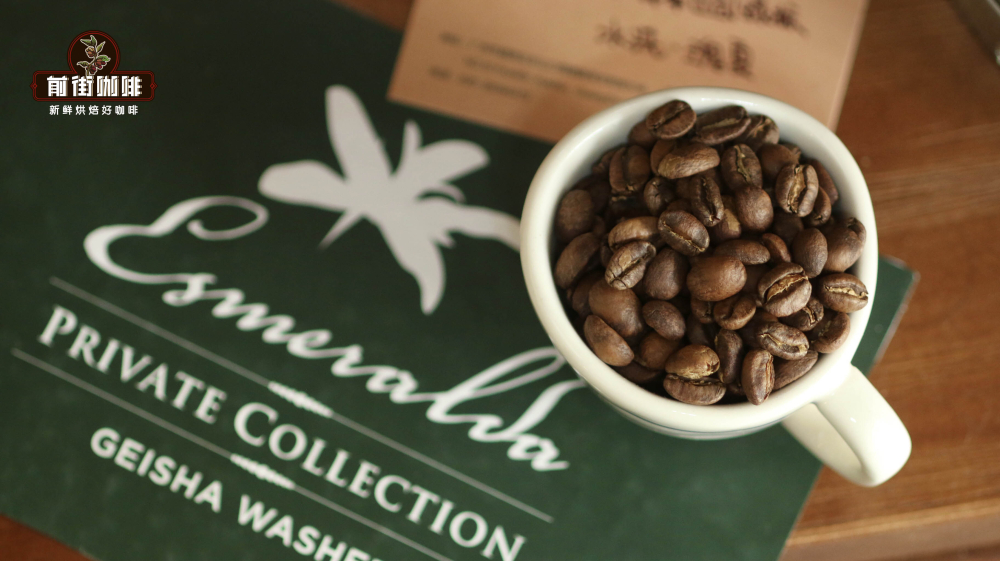
The fame of Panamanian coffee owes much to the Geisha variety, and all of this is closely connected to the region's superior natural and geographical conditions. If you want to taste a high-caliber Panamanian coffee, Front Street Coffee's Emerald Estate Green Label Geisha is a choice worth prioritizing. After roasting and brewing, it shows medium body, a silky mouthfeel, delicate acidity, and balanced flavor, with hints of caramel, chocolate, citrus, and jasmine emerging subtly.
[Panama]: Panama is a country in Central America.
[Boquete]: Boquete is a famous coffee-producing area, a town in Chiriqui, in the province of Chiriqui.
[Washed]: Washed processing. Washed processing removes the skin, pulp, and mucilage, and then the beans are dried later; they are guided into a clean tank and soaked in water for fermentation. Characteristics: pronounced acidity, good cleanliness, medium body, and high consistency.
[Variety]: Due to the estate's historical reasons, in order to pursue yield at the time, the early Geisha variety was planted mixed together with coffee trees of the Caturra and Catuai varieties. To make harvesting easier, the coffee farmers did not reclassify them, but instead processed the three varieties directly as a mix. Geisha, Caturra, and Catuai are varieties of coffee beans.
Colombia is the world's third-largest coffee-producing country. Located in northwestern South America, its climate varies with topography. The southern part of the eastern plains and the Pacific coast have a tropical rainforest climate, while mountainous areas at elevations of 1,000 to 2,000 meters have a subtropical climate, and the northwest shows characteristics of a tropical savanna climate. Compared with Brazilian coffee, Colombian coffee has slightly less body, and its acidity is not as bright as that of African beans, but its overall balance is excellent, combining nutty notes with fruity acidity.
Colombian coffee is often compared with Brazilian coffee. Both belong to the American coffees, and both are major coffee-producing countries. In fact, there is no need to taste them—the difference can be seen just from the appearance of the beans: because of significant differences in processing methods, Colombian coffee beans often carry more silver skin, while Brazilian coffee beans show almost no silver skin. The two are quite similar in bean size and shape, but the different processing methods make them easy to distinguish.
Southern coffee-producing region: Close to the equator, coffee grows in higher mountainous areas. As in the north, the south has only one wet season and one dry season. The dry season is from June to September, and the rainy season arrives in October and may last until May of the following year. Contrary to the north, where coffee is harvested in autumn, the harvest season in the south usually begins in April and continues until June, so green bean merchants can provide customers with Colombian coffee beans almost continuously throughout the year. The south is mainly dominated by specialty coffee varieties, including Huila, Cauca, Narino (Narino), and Tolima. To taste high-quality Colombian coffee, buy the entry-level Front Street Coffee Washed Huila, which has flavors of chocolate, caramel, and cream.
Brazil is the world's largest coffee-producing country and also the world's second-largest coffee-consuming country (the first being the United States). Although Brazil faces natural disasters several times more than other regions, its available planting area is enough to compensate.
Compared with other Latin American countries, Brazil's elevation is noticeably lower, it lacks microclimates, and it habitually cultivates coffee trees without shade trees, which leads to Brazilian coffee beans being somewhat flat in flavor, with nothing particularly striking. However, Brazil has still put great effort into improving coffee quality, continuously cultivating and improving Arabica varieties, and adjusting coffee bean processing methods according to dry and wet climatic conditions to present the best regional flavor. Commonly used processing methods include natural, semi-washed, and washed. Generally, high-humidity producing areas use washed processing, while low-humidity producing areas use natural or semi-washed processing.
The representative coffee-producing areas of Minas Gerais state include Cerrado and Sul de Minas, both of which are higher-elevation areas. Cerrado is located in the western part of Minas Gerais state and is a flat plateau at an elevation of 750m-1,200m. Sul de Minas is hilly woodland at an elevation of 700m-1,200m. Since 1999, among the estates winning in Brazil's Cup of Excellence auction event, Sul de Minas has been the most numerous. The southeastern forest region of Minas Gerais state, at an elevation of more than 1,000 meters, also produces high-quality coffee beans, so when buying Brazilian Arabica coffee, Front Street Coffee Cerrado Red Bourbon is the first choice.
The above content is compiled by CoffeeHunters, a coffee news website.


