








What makes geisha coffee beans taste so distinctive?
Geisha coffee beans are a branch of the Arabica species known for intense floral aroma and citrus acidity. The variety was found in 1931 in the Geisha forest of Ethiopia, then sent to Kenya, introduced to Uganda and Tanzania in 1936, brought to Costa Rica in 1953, and planted in Panama in the 1970s.
Panama geisha from estates such as Elida, Sofia, and Guarumo shows layered floral and fruit notes. Washed processing reveals a bean's core flavor, while natural processing adds aroma on top of that base. Brewing guidance covers coffee-to-water ratio, water temperature, grind size, and a three-pour technique so the delicate layers come through in the cup.
Geisha coffee is hailed as the crown jewel of specialty coffee, and its unique floral aroma and citrus acidity have captivated countless coffee lovers. This article will guide you through the origins and spread of Geisha coffee, analyze its flavor characteristics, and highlight three distinctive Geisha coffee beans from Panama's Elida Estate, Sofia Estate, and Guarumo Estate. Front Street Coffee will also share brewing recommendations for Panamanian Geisha, including coffee-to-water ratio, water temperature, grind size, and a three-pour technique, helping you fully bring out Geisha coffee's rich layers and delicate flavors at home.
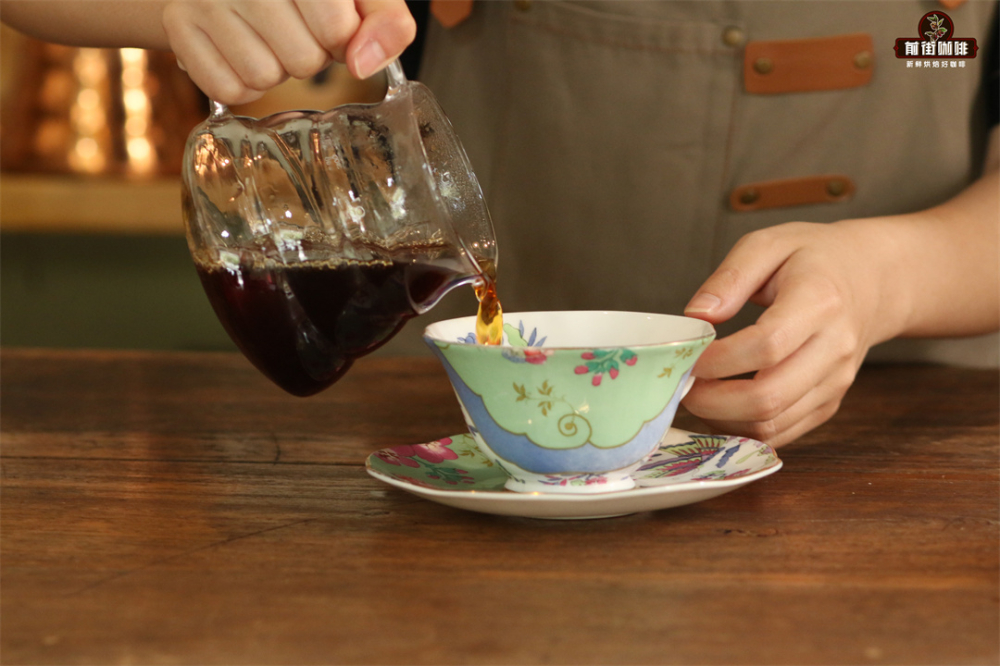
Within the realm of specialty coffee, the vast majority of members belong to the Arabica species, and among these Arabicas, Geisha is widely recognized as the most aristocratic type of coffee bean. At Front Street Coffee's locations, customers are often introduced to the unique qualities of Geisha. If we limit the scope to a single production region, washed processing often reveals a bean's core flavor, while natural processing adds more aroma on top of the washed profile. For beans like Blue Mountain, the washed version is recommended; for beans where aroma expression is sought, natural processing is more suitable, and Geisha is a prime example. It is precisely for this reason that Geisha has always been a specialty coffee that never disappears from Front Street Coffee's bean list.
The Origins of Geisha Coffee
Geisha coffee beans are also known by the nickname "Geisha," but they do not come from Japan. This name arose because the Ethiopian mountain region where they first grew is called Gesha, and its pronunciation happens to match the Japanese traditional geisha (Geisha), thus giving rise to this name. In recent years, the transliteration "瑰夏咖啡" has become more commonly used in Chinese.
The Geisha variety was discovered in 1931 in the Geisha forest of Ethiopia, and was subsequently sent to the coffee research institute in Kenya; in 1936 it was introduced to Uganda and Tanzania, in 1953 Costa Rica began importing it, and in Panama it was in the 1970s, after Mr. Francisco Serracin of Dong Ba Qi Farm obtained seeds from CATIE in Costa Rica, that Geisha coffee cultivation began.
Although the coffee bean's place of origin is Gesha Mountain in southwestern Africa, after being introduced to Panama, because yields were consistently low, coffee farmers were actually not very willing to plant this variety. It was not until Panama's La Esmeralda Estate made a stunning debut with this bean in the 2004 Panama Cup of Excellence that Geisha's reputation spread. Another reason is likewise that Geisha coffee's yield is relatively scarce; when people are accustomed to linking price with quality, Geisha coffee naturally became a legend.
The Characteristics of Geisha Coffee
Geisha coffee beans present a very beautiful blue-green hue—this usually refers to washed-processed beans—with a texture warm and smooth as jade and an elongated bean shape. When you bring them close to smell, you can perceive fresh grassy notes, peach, berry aromas, and the milky sweetness unique to oolong tea that most coffee beans lack. It seems that things like aroma and taste really require engaging the imagination, but that subtle tea-like quality is something we can clearly capture.
It is often said in the market that Yirgacheffe tastes somewhat similar to Geisha coffee, only that the charm contained in Yirgacheffe is not as profound as that of Geisha. However, Geisha coffee has its own distinctive flavor expression characteristics, typically manifesting as clear floral aromas and bright, clean citrus acidity. But Geisha from different origins each carries some unique flavors, and these differences may stem from the influence of the growing location or processing methods.
Since Geisha's flavor expression varies, Front Street Coffee will now look at what flavors Panama's several Geisha coffees each have.
Panama Geisha
Elida Estate is located in the town of Boquete in Panama's well-known coffee-producing region of Bouquete. The estate sits at an extremely high altitude, with part of it even within the Volcan Baru preserve of Panama's national park. Baru is one of the highest volcanoes in Central America and Panama's only volcanic terrain. Thanks to its excellent growing environment, Elida's cultivation altitude is approximately between 1,670 and 1,825 meters, mainly growing three varieties: CATUAI, GEISHA, and CRLOLLO.
The Geisha Green Tip Natural coffee beans grown at Elida Estate won the Geisha Washed category championship at the 2016 "Best of Panama" (BOP) green bean auction, with international judges giving an incredible score of 94.15, not only setting the highest score in BOP history, but that batch of green beans also fetched a sky-high price of about NT$9,000 per pound at the international bidding arena, setting a new record for the highest price ever paid for Geisha Washed beans in BOP history. The champion of the 2016 All-Japan Barista Championship also won using coffee beans produced by Elida Estate.
Front Street Coffee: Panama Elida Estate
Country: Panama
Region: Boquete
Altitude: 1850M
Processing Method: Washed
Variety: Geisha
Flavor Description: Citrus, honey, berries, green tea, with a round, smooth, and silky mouthfeel.
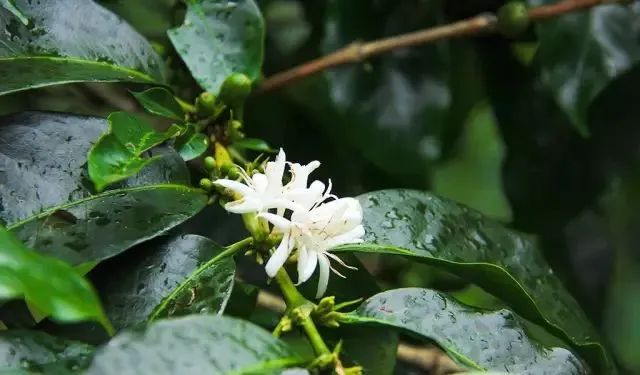
Front Street Coffee: Panama Sofia Estate
Country: Panama
Region: Baru Volcano Region
Altitude: 1900—2100
Processing Method: Natural
Variety: Geisha
Sofia Estate Geisha coffee enters the mouth with an orange-like sweet-tartness, along with the aroma of honeydew melon and roses; the mid-palate presents a refreshing sensation like apple juice, while the finish shows an oolong tea-like sweet aftertaste.
Front Street Coffee: Guarumo Estate
Country: Panama
Region: Chiriqui Province
Altitude: 1750m
Processing Method: Natural
Variety: Geisha
Guarumo Estate Natural Geisha coffee flavor profile: the entry is a mango-pineapple compound juice-like aroma and sweet-tartness, the mid-palate shows white floral notes and malt's fermented sweetness, while the finish resembles fruit candy.
Front Street Brewing Recommendations
Through cupping, Front Street Coffee has found that Panamanian Geisha coffee beans have very rich layers, so when brewing, it may be worth slightly lowering the concentration to make each layer of flavor clearer. The recommended brewing ratio is 1:15.5 to 1:16, with water temperature controlled at 90 to 91 degrees Celsius, and the coffee bean grind size recommended as medium-fine (77% passing rate through China standard No. 20 sieve).
Use a V60 dripper or conical dripper, paired with a three-stage circular pouring technique: first, use 30g of water to fully wet the coffee bed, causing it to form a "hamburger" shape, and let it bloom for 30 seconds, then proceed to the second stage of brewing; in the second stage, Front Street uses a steady medium-fine stream to pour in a circular motion up to 125g and then stops, waiting until the water level drops to 2/3 of the coffee bed before pouring the third stage; in the third stage, continue using a medium-fine stream to pour in a circular motion up to 225g, and the pouring is complete.
The above content is compiled by CoffeeHunters, a coffee news website.


