







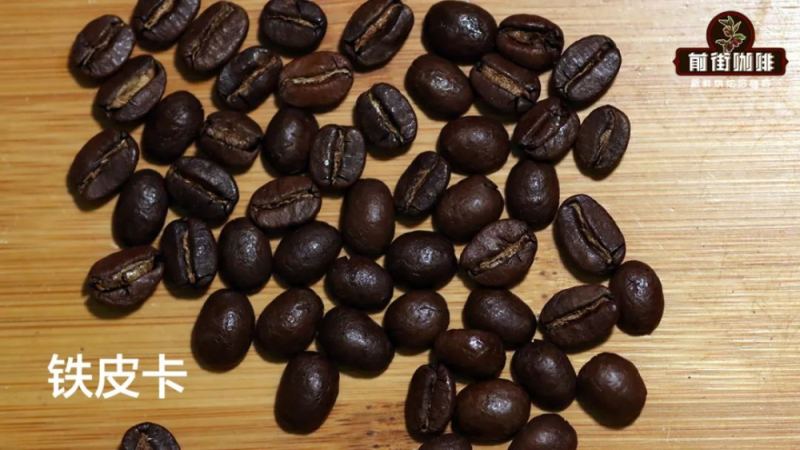
What Is Typica Coffee and Is It an Arabica Variety?
Typica is one of the oldest varieties of arabica coffee, traced back to Ethiopia and once planted across most producing countries. It cups cleanly and elegantly, but it is highly susceptible to coffee leaf rust and needs altitudes above roughly 1,200 meters to show its finer flavors.
The plant has a conical shape, a vertical trunk that can reach about 5 meters, and reddish bronze new leaves, which is why it is sometimes called red-top coffee. Today arabica coffee of the Typica type survives in places such as Jamaica Blue Mountain, Hawaii Kona, North Sumatra, and old plantings in Yunnan.
Typica is one of the oldest varieties of Arabica coffee, originating in Ethiopia and once widely cultivated around the world. It is known for its elegant and clean flavor, with excellent cupping performance, but it has weak resistance to disease and pests, and requires high-altitude growing conditions. This article will cover Typica's botanical characteristics, flavor performance, historical spread, and disease impact, and introduce well-known producing regions such as Jamaica Blue Mountain, Hawaii Kona, and Yunnan, China. At the same time, Front Street Coffee's experience growing Typica in Lincang, Yunnan, as well as the product characteristics of Front Street Blue Mountain No. 1 and Front Street 2013 Natural Typica, will also be presented to help readers fully understand the past and present of this classic variety.
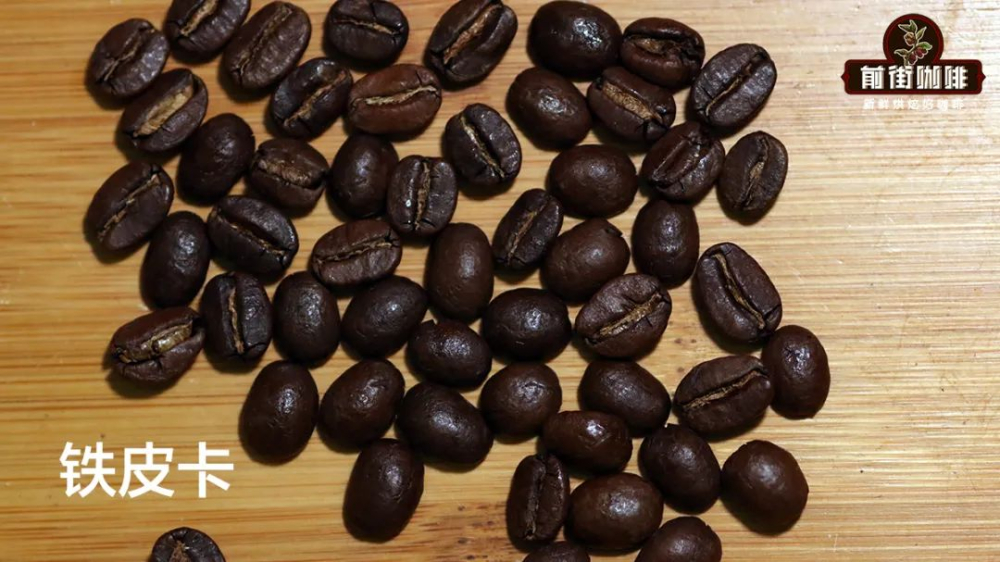
As one of the most representative varieties in the global coffee landscape, Typica can trace its roots back to Ethiopia—the birthplace of Arabica coffee. To truly understand the coffee in your cup today, learning about Typica is almost an unavoidable lesson.
This variety performs quite outstandingly in terms of flavor, with cupping scores that are often satisfying. However, its weakness is also obvious: it has relatively weak resistance to disease and pests; and only when planted at higher altitudes (above 1,200 meters) is it more likely to display a finer flavor profile.
What exactly is Typica?
Within the Arabica family, Typica is one of the oldest varieties. It was once planted on a large scale across coffee-producing regions worldwide, but the impact of coffee leaf rust changed that situation. Today, many major producing areas prefer varieties with stronger resistance to disease and pests. Currently, relatively representative Typica-producing regions include North Sumatra in Indonesia, Jamaica Blue Mountain, Hawaii Kona, and old-variety coffee in Yunnan, China.
Typica has a highly recognizable appearance and may be one of the easiest varieties to identify. The plant has a conical shape, with a vertical main stem that can grow up to about 5 meters tall. Because of this height, the spacing between Typica branches, and between nodes on the same branch, is wider than in other varieties.
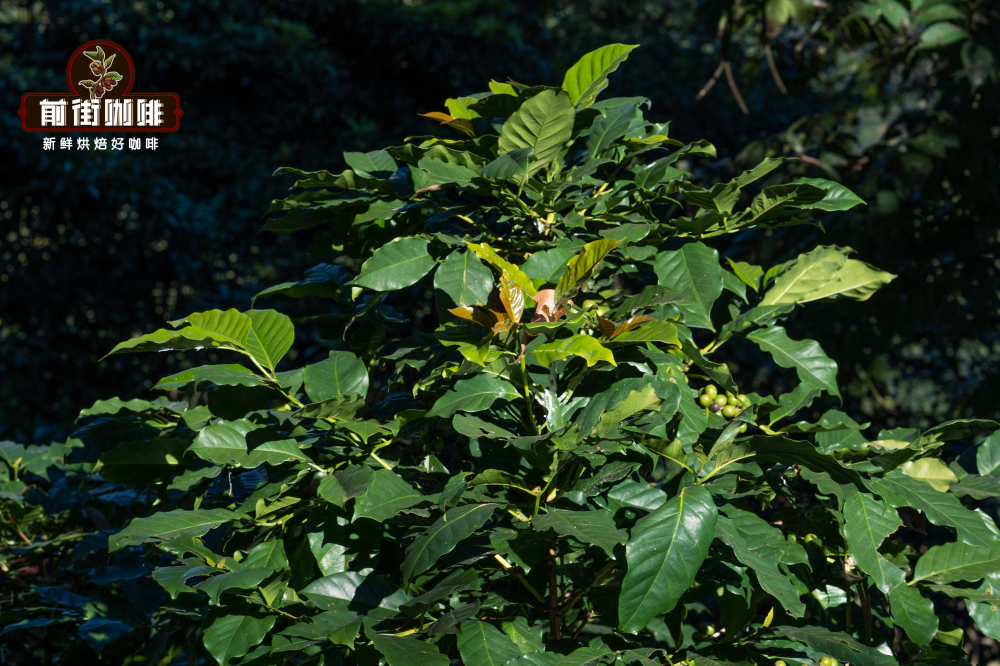
Typica's most striking marker is the reddish bronze tone on the top leaves, which is why some people also call it "red-top coffee." Its coffee beans are relatively large and elongated, with pointed and slightly upturned ends, somewhat resembling eggs in shape. In terms of flavor, Typica often has citrus-like acidity and a sweet finish, and is described by many enthusiasts as an elegant and clean coffee. The old Typica plant is relatively tall, about 5 meters (16.5 feet), making manual picking inconvenient. The tree shape is conical, with branches sloping slightly, forming an angle of 50–70° between the lateral branches and the vertical stem. The trunk is relatively slender and the branches are thin; due to its height and long-branch characteristics, sufficient spacing must be left when planting.
However, Typica's disease resistance is truly unsatisfactory. It struggles against common diseases such as coffee leaf rust and berry disease, and its yield is also quite limited. Coffee leaf rust is one of the most damaging plant diseases, first appearing in 1861 in the coffee-producing region around Lake Victoria in East Africa. In 1970, coffee leaf rust broke out in Bahia, Brazil, and since then cases have been discovered in coffee-producing areas around the world. Once a coffee tree is infected with coffee leaf rust, it is almost as if it has been given an incurable sentence, and it will eventually wither or even die. Coffee is, after all, a cash crop, and Typica, with its low yield and frail, disease-prone nature, is difficult to make profitable. Many growers therefore gave it up and switched to varieties with stronger disease resistance.
Despite the difficulty of cultivation, Typica is still grown around the world today thanks to its rich aroma and high-quality potential. Among these, the most famous is undoubtedly Jamaica Front Street Blue Mountain Coffee. Growing elegant and pure-flavored Typica coffee beans is by no means easy: innate terroir conditions, plant management, fruit harvesting, and post-processing all require adequate support before the beans can develop positive flavors and mouthfeel. This also means that producing high-quality Typica requires more labor costs and technical research, which is precisely why Blue Mountain coffee and Kona coffee are so precious.
Front Street Blue Mountain Typica Coffee Beans
Front Street Jamaica Blue Mountain No. 1 coffee beans are indeed the Typica variety. Unlike many coffee-producing regions, Jamaica is a relatively closed island nation, while also possessing exceptional microclimatic conditions. After more than two hundred years of domestication and adaptation, Blue Mountain Typica has evolved better disease resistance, especially stronger resistance to coffee berry disease than ordinary Typica, and its yield and quality are also more stable. The Front Street Blue Mountain coffee purchased by Front Street is selected from the famous local Clifton Farm, one of the oldest farms in the Blue Mountain region. In terms of flavor performance, this Front Street Blue Mountain No. 1 coffee has a clean and mellow taste, with flavors of nuts, chocolate, and caramel.
Yunnan Typica Coffee Beans
The coffee varieties originally planted in Yunnan were the ancient Typica and Bourbon. Later, global coffee leaf rust attacked Yunnan coffee, causing large-scale death of coffee trees and a sharp reduction in planted area. Afterward, with the support of various foreign enterprises, Yunnan introduced the high-yield, disease-resistant Catimor. This also established Catimor's position in replacing the ancient Typica and becoming the main variety of Yunnan coffee today. Typica coffee beans have low yield, are prone to disease, and have high management and care costs, meaning growers need a longer exploration period, which is also why most Yunnan coffee farmers are unwilling to plant it.
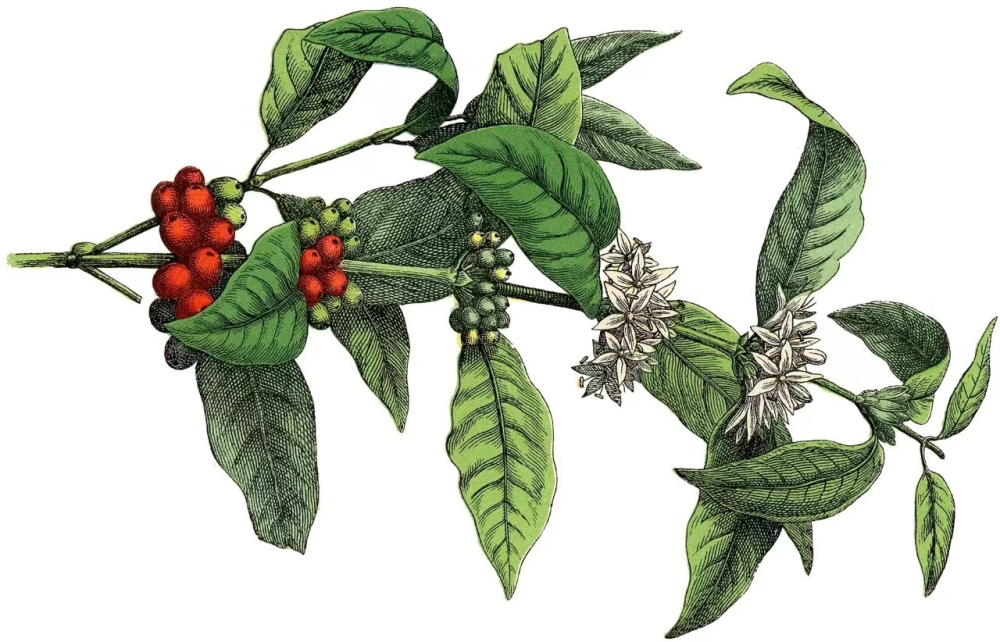
In order to explore more coffee knowledge, Front Street went to Lincang, Yunnan in 2013 and began its chapter of coffee cultivation. From site selection, variety selection, seedling raising, planting, harvesting, processing, and roasting, all were handled by Front Street colleagues, and from this they also summarized a great deal of experience and knowledge about varieties, altitude, and processing methods.
Lincang, Yunnan is influenced by warm, humid air currents from the Indian Ocean and the southwest monsoon. The distinction between the four seasons is not obvious, but the dry and rainy seasons are clearly defined. There is relatively abundant rainfall, long sunshine hours, and a short frost period. In some areas there is no frost all year round, and the vertical climate is pronounced, making it very suitable for Arabica coffee cultivation. Therefore, Front Street specifically chose the most original Typica. However, the delicate Typica is also famous for its low yield and poor resistance, so Front Street put considerable effort into planting and management. After 5–6 years of cultivation, Front Street finally harvested its first results in 2020, produced them using the natural sun-dried processing method, and officially named them "Front Street 2013."
After harvesting, the Typica coffee fruits grown by Front Street are immediately processed by the natural method to ensure the coffee's freshness. Front Street first carries out screening, with floatation being one of the commonly used screening methods, and the screened coffee fruits are then placed under the sun for drying. Front Street arranges for staff to turn them regularly to prevent the coffee fruits from being heated unevenly, which could lead to excessive fermentation. When the coffee fruits dehydrate and change from bright red to dark purple, reaching the target moisture content, they can be sent for hulling and roasting. Front Street's natural Typica presents a fuller fermented flavor than the washed process, with a prominent sweetness and aromas of caramel, berries, and black tea.
For professional coffee knowledge exchange and more coffee bean information, please follow Coffee Workshop (WeChat public account: cafe_style) For more specialty coffee beans, please add the private WeChat of Front Street Coffee (FrontStreet Coffee), WeChat ID: qjcoffeex
The above content is compiled by CoffeeHunters, a coffee news website.


