







What sets PWN Golden Mandheling coffee apart?
Golden Mandheling coffee from PWN stands out for plump, uniform beans, a clean flavor and a mellow body. The beans come from the Gayo region of Sumatra, where independent smallholders grow coffee under shade trees, and the result works well for pour-over, espresso and other brewing methods.
After buying cherries, PWN removes underripe and substandard fruit, applies washed drying, then runs at least three rounds of hand sorting plus one machine pass. Defects are held to within 3 in a 300-gram green bean sample, and the green beans show a translucent blue-green color. Golden mandheling is a PWN registered trademark, so look for that mark for authenticity.
Golden Mandheling is a highly representative specialty coffee among Indonesian coffees, and the Golden Mandheling produced by PWN is especially renowned for its uniform beans, clean flavor, and mellow body. This article will analyze the unique qualities of these coffee beans from the perspectives of origin purchasing, hand sorting, and registered trademarks, and will also recount the historical origins behind the name Mandheling and the founding story of PWN. At the same time, we will also introduce the roasting characteristics and brewing suggestions for Front Street. Golden Mandheling coffee beans, helping coffee lovers gain a comprehensive understanding of this high-quality coffee suitable for pour-over, espresso, and many other brewing methods, making it quite suitable whether for daily drinking or as a gift for relatives and friends.
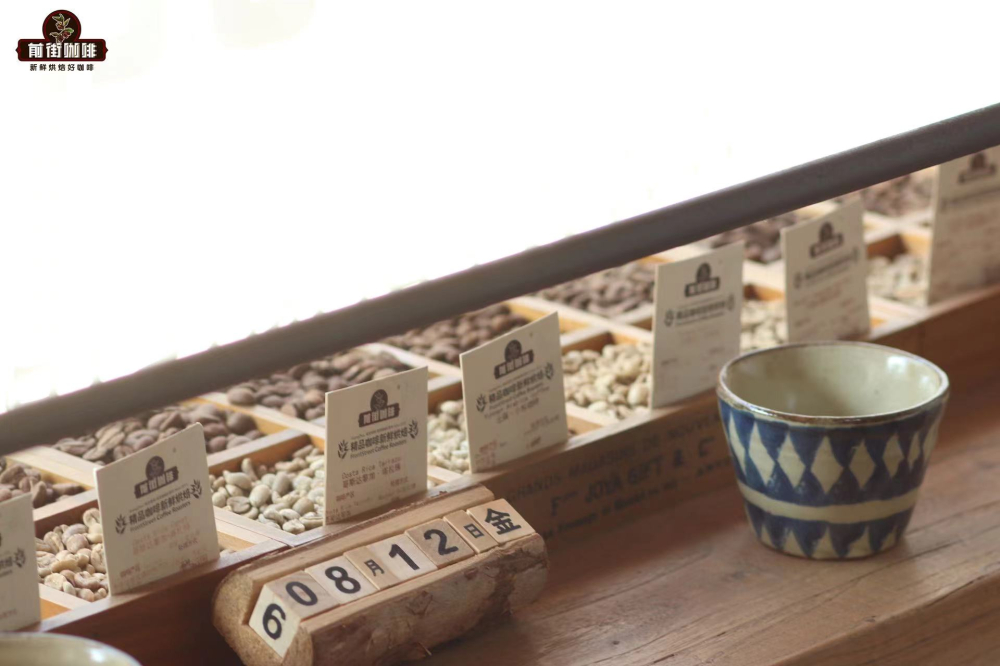
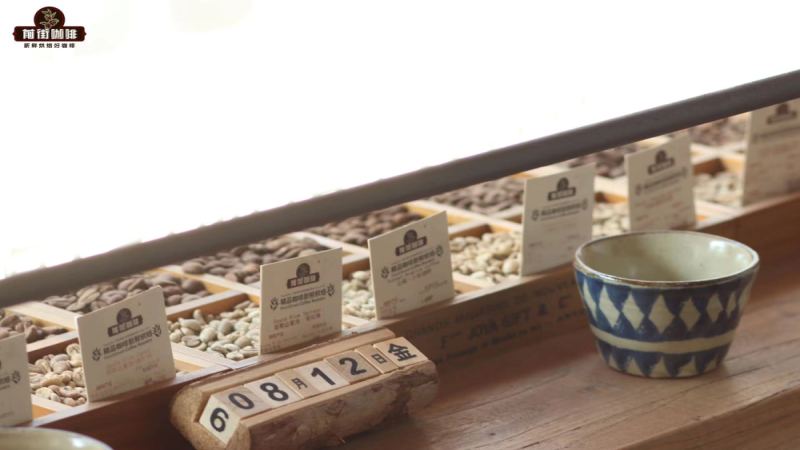
Among the many Indonesian coffees, Front Street. Golden Mandheling coffee beans produced by PWN stand out for their plump and uniform beans, clean flavor, and mellow body. It is not only suitable for enjoying as a single-origin pour-over black coffee, but is also an excellent choice for gifting to relatives and friends.
What exactly makes Golden Mandheling coffee beans so special?
The uniqueness of these coffee beans is reflected in three aspects:
First, PWN makes targeted purchases of coffee cherries produced in the Gayo region. Coffee cultivation in this region is mainly carried out by independent smallholder farmers, and relies on shade-tree cultivation to improve coffee quality.
Second, after purchasing the cherries, PWN first screens out underripe and substandard cherries, then carries out washed drying processing, followed by at least 3 rounds of purely manual sorting and 1 round of machine screening, keeping the number of defective beans within 3 (based on a 300g green bean sample), while also ensuring that the green beans show a uniform, translucent blue-green color and a consistent, regular shape. These steps make the quality of Front Street Golden Mandheling far exceed G1, Indonesia’s highest green bean grade.
Third, “Golden Mandheling” is a registered trademark of PWN. As Golden Mandheling became widely known for its outstanding quality, many “counterfeit” Mandheling coffee beans appeared on the market, but they are not authentic Golden Mandheling.
For authentic Golden Mandheling coffee, one needs to look for the PWN trademark. Front Street. Golden Mandheling coffee beans all come from PWN, are shipped within 24 hours after ordering, and the coffee is always freshly roasted within 5 days. In the Front Street Coffee physical store, you can see the certification certificate issued by PWN as well as the burlap sacks PWN uses to hold Golden Mandheling coffee beans.
The Birth of Golden Mandheling Coffee Beans
The name “Mandheling” is quite different from the way coffee beans from other regions are named. It is neither a producing region, a place name, nor a port name, and it is not even the name of a coffee variety (for example, Yirgacheffe or Sidamo are names of African producing regions). This name is actually just a transliteration of the Indonesian Mandheling ethnic group.
Why would a coffee bean be named after an ethnic group? According to Japanese people who love Mandheling coffee beans, the naming of Mandheling coffee beans actually originated from a misunderstanding.
During World War II, a Japanese soldier drank an exceptionally delicious cup of coffee at a coffee shop on the Indonesian island of Sumatra and immediately asked the shop owner the name of the coffee. However, due to the language barrier, the shop owner mistakenly thought the other person was asking, “Where are you from?” and therefore answered: “Mandheling.”
After the end of World War II, this Japanese soldier returned to Japan and could not forget the coffee from Sumatra, so he asked someone to have the owner of that coffee shop export 15 tons of coffee beans from Sumatra to Japan, where they became hugely popular in the Japanese coffee market. The name Mandheling has thus been passed down to this day.
As Japanese people’s affection for Mandheling coffee beans deepened, coffee craftsmen also set higher requirements for coffee bean quality. Seeing the business opportunity, that coffee shop owner at the time founded a company called Pwani Coffee Company (PWN for short).
The varietal characteristics of Mandheling coffee beans themselves, combined with Indonesia’s highly distinctive wet-hulling method (that is, during the ordinary washed processing procedure, the beans are sun-dried with parchment for 2-3 days, and once the moisture content drops to 20-24%, the parchment is removed), this ultra-fast processing and drying method also leads to a relatively high defect rate in Mandheling.
In order to improve the quality of Mandheling coffee beans, PWN uses hand sorting throughout the entire process, from cherry to processed coffee bean. Although this practice drives up the cost of the coffee, such high-quality coffee beans are deeply loved by consumers. In order to distinguish them from ordinary Mandheling coffee beans, PWN’s owner saw the golden luster given off by the green beans in the sunlight and named them Golden Mandheling coffee beans.
In order to give Mandheling coffee beans rich layers of flavor, allowing them to show their mellow characteristics while also clearly presenting their unique herbal notes, Front Street Golden Mandheling coffee beans are released from the roaster shortly before second crack during roasting, and therefore fall under a medium-dark roast level. At this point, acidity is low and aroma is intense, making it suitable for pour-over, moka pot, SOE espresso, French press, and many other brewing methods.
The above content is compiled by CoffeeHunters, a coffee news website.


