







How do coffee trees and processing shape Kenyan pour-over flavor?
Kenyan coffee's juice-like body and solid fruit acidity come from three things: highland growing conditions, the SL28 and SL34 varieties, and the country's 72-hour fermented washed process. Most Kenyan coffee trees grow between 1,400 and 2,000 meters on acidic volcanic red soil north and east of Nairobi, where wide day-to-night temperature swings slow cherry maturation and produce denser beans.
SL28 and SL34 both descend from the Bourbon line and were studied at the Scott Agricultural Laboratories, established in 1922. Their berry-like acidity and aroma show up clearly in the cup, and the extended washed fermentation adds layered cherry tomato, black plum, and honey notes. For pour-over, use a medium-light roast, a medium-fine grind, and a three-stage pour to bring those flavors out.
Kenyan coffee, with its full-bodied, solid fruit acidity and juice-like mouthfeel, has become a favorite among many fans of acidic coffee. To brew a good Kenyan bean, it's best to first understand its varietal characteristics, growing environment, and processing method before discussing brewing parameters—this often yields twice the result with half the effort. This article starts with Front Street Kenya Asalia coffee beans, sorting out the origins and flavor differences of the two classic varieties SL28 and SL34, analyzing how Kenya's unique 72-hour fermented washed processing method shapes complex acidity, and providing detailed pour-over grind size, coffee-to-water ratio, water temperature, and three-stage pouring scheme for medium-light roasted Kenyan coffee, helping you recreate layers of cherry tomato, black plum, berry, and honey-like notes at home.
Friends who prefer acidic coffee have probably all heard of the famous Back Street Kenyan coffee. It is known for its solid, full-bodied fruit acidity, entering the mouth like juice, with rich flavor and layers—once you've tried it, it's hard to forget. Front Street has always believed that to make good pour-over, you should first understand a bean's background, then discuss how to brew it more reasonably. If you want to ask where the acidity in Front Street Kenyan coffee beans comes from, you can't avoid Kenya's growing environment, coffee varieties, and post-harvest processing methods for green beans.
Most Kenyan coffee trees are distributed in the highland areas north and east of the capital Nairobi. The soil is fertile, loose, acidic volcanic red soil, with abundant sunlight and good drainage, and elevations generally between 1400 and 2000 meters. The higher the elevation, the more pronounced the temperature difference between day and night. Kenyan coffee cherries have a longer maturation cycle than low-elevation producing areas, resulting in denser beans and more intense flavor.
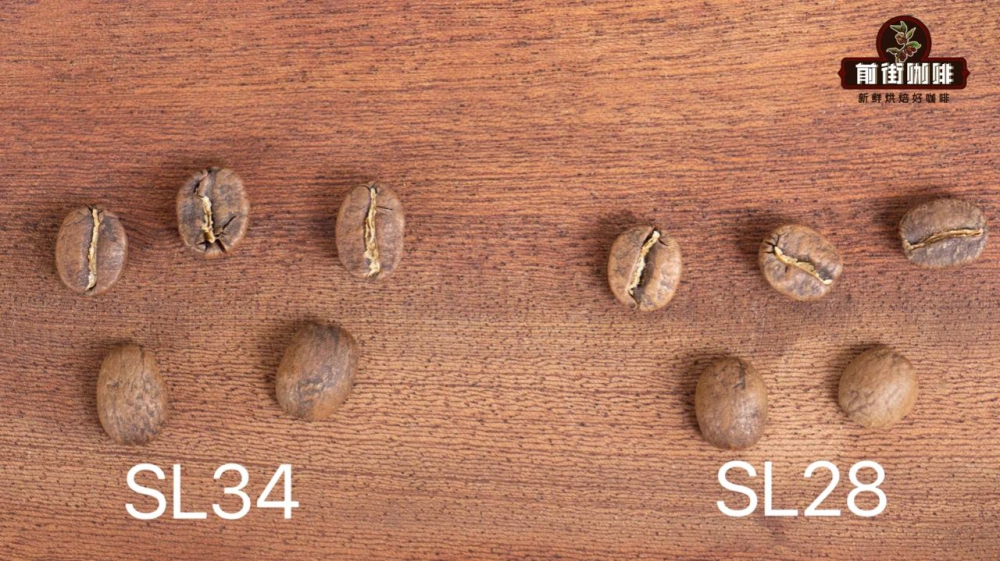
Additionally, the two commonly seen Kenyan varieties SL28 and SL34 both belong to the Bourbon mutation line. After cupping many Kenyan beans, Front Street also found that these two varieties have particularly prominent berry acidity and aroma. In 1922, the Kenyan government established the Scott Agricultural Laboratories (Scott Labs, from which the names SL28 and SL34 derive) specifically for coffee cultivation research. Over the following decade or so, researchers selected SL28 and SL34 suitable for local cultivation from 42 coffee varieties, laying a solid foundation for Kenya's coffee industry. Today these two varieties account for about ninety percent of Kenya's planted area.
Among them, SL28 combines the lineage of several varieties including French Mission, Mocha, and Yemen Typica. The plant is tall, with emerald green leaf tips, high yield, relatively large beans, and strong drought resistance, but it is susceptible to coffee leaf rust, coffee berry disease (CBD), and soil nematode damage. In terms of flavor, SL28 not only has obvious dark plum and citrus notes, but also displays deep, intense stone fruit acidity with a rich sweetness similar to wine.
By comparison, SL34 has dark bronze leaf tips and demands higher nutrients during growth, with relatively lower yield. The beans are larger, and planting at high elevations allows it to reach excellent quality potential, showing good fruit acidity as well as nutty and spicy aromas. Its plant constitution is similar to SL28, and it is likewise highly sensitive to CBD, leaf rust, and pests.
It is precisely these two major varieties, SL28 and SL34, that together create the classic flavor Kenyan coffee is known for worldwide, captivating countless fans of acidic coffee. Front Street's own roasted Front Street Kenya Asalia coffee beans use exactly SL28 and SL34 varieties. The black coffee brewed from them carries intense aromatic notes of cherry tomato, black plum, snow pear, and berries.
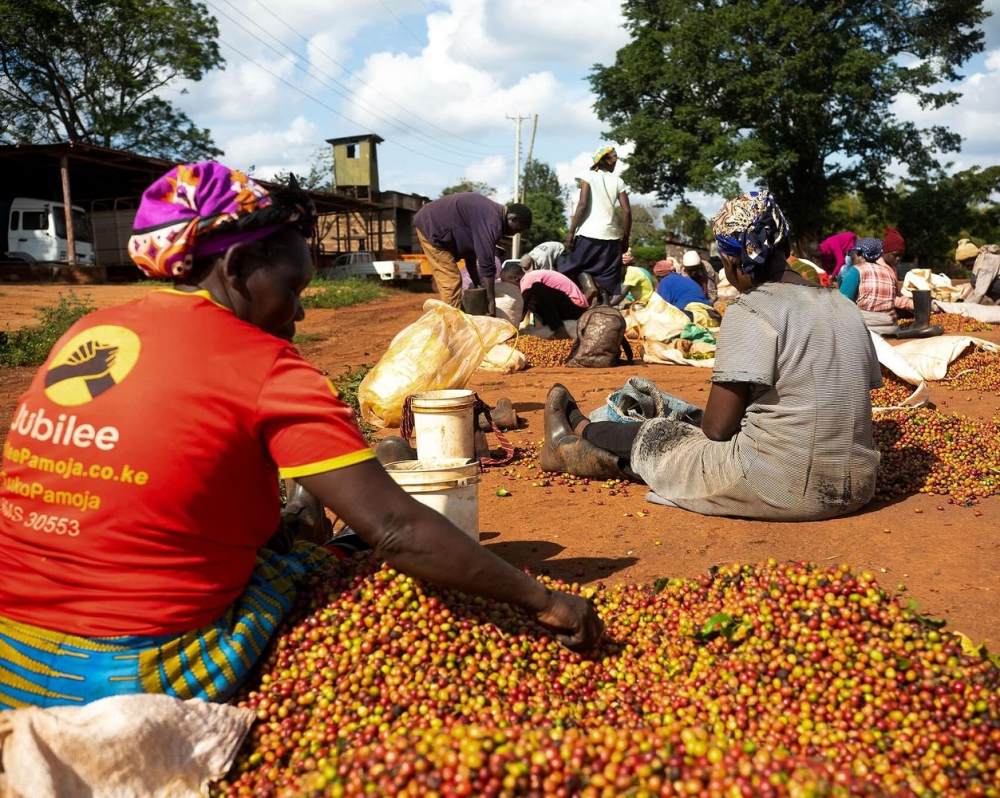
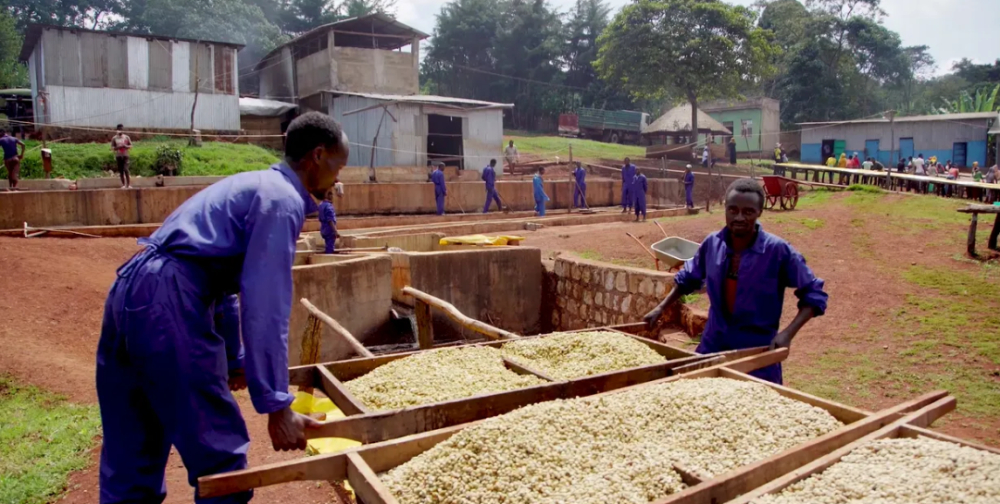
Unlike many African producing regions, Kenyan coffee producers are accustomed to using a refined and unique 72-hour fermented washed processing method, also called K72. Coffee cherries harvested the same day are first sorted to remove defective fruit. Then they are depulped and enter fermentation. The first fermentation lasts 24 hours, after which they are washed clean with clean river water. Next, they are fermented again with clean river water for 24 hours and washed again, repeating this cycle 3 times, for a total fermentation time of 72 hours. After such a long fermentation and washing process, the originally rich acidity of Front Street Kenyan coffee beans becomes more complex, and cleanliness is also improved.
This Front Street Kenyan coffee bean launched by Front Street comes from the Thika producing area and is produced and processed by the Asali honey processing station. In order to preserve the rich acidity unique to Front Street Kenyan coffee, Front Street's roaster uses a medium-light roast. In cupping, it shows flavors of snow pear, dark plum, yellow sugar, cherry tomato, and plum.
A delicious cup of pour-over coffee cannot be separated from several key elements: fresh coffee beans within the flavor window, suitable grind size, coffee-to-water ratio, brewing water temperature, and pouring technique.
After roasting, coffee beans usually need a 4-to-7-day degassing and resting period before entering the optimal flavor stage. As storage time lengthens, coffee aroma volatilizes faster, and flavor and mouthfeel decline noticeably. To ensure everyone drinks coffee at its best flavor period, Front Street only ships beans freshly roasted within 5 days. Fresh coffee beans are more conducive to extracting the high-quality flavor of Front Street Kenyan coffee.
No matter which grinding equipment is used, the goal is to obtain evenly ground coffee powder. The coarseness of the coffee grounds directly affects the taste: too coarse easily leads to under-extraction and a weak taste; too fine easily leads to over-extraction and a bitter taste. When calibrating grind size, Front Street uses a tool—the Chinese No. 20 0.85mm standard sieve. For medium-light roasted coffee beans, Front Street consistently uses a 75% to 80% passing rate; for medium-dark roasted coffee beans, 70% to 75%. The Front Street Kenya Asalia that Front Street has brought in is a medium-light roasted high-elevation coffee bean. In order to extract richer aromatic substances, a grind size with an 80% passing rate on the No. 20 standard sieve is chosen. In stores using an EK43s grinder, the setting is 10.
Water temperature works similarly to grind size: the higher the water temperature, the higher the extraction efficiency, the easier it is to release various substances and components, and the higher the concentration. If brewing with water close to boiling, it is easy to extract unpleasant bitter substances. Therefore, when brewing medium-dark roasted coffee beans, Front Street uses brewing parameters different from those for light-roasted beans. For medium-dark roasted coffee beans, Front Street recommends 87 to 88°C; light-roasted coffee requires a higher water temperature to stimulate aroma, so 91 to 93°C is used.
Front Street Coffee stores choose Hario V60 and KONO drippers for daily service. The V60 dripper is mainly responsible for lighter-roasted coffee beans, while the KONO dripper handles darker-roasted coffee beans. Here, the Front Street Coffee barista uses a resin V60 dripper to extract light-roasted Kenyan coffee. The V60 dripper body has diversion ribs connecting the top and bottom and a large central hole, which can speed up the flow of water. The spiral-shaped exhaust groove design extends the water flow path, increasing the contact time between coffee grounds and hot water. Each stream of water converges along the grooves toward the center of the dripper, concentrating the pressure on the coffee grounds and producing a coffee with richer layers.
Based on past brewing experience, Front Street recommends that beginners just starting out use the three-stage pouring method. Three-stage extraction helps more fully dissolve flavor substances during brewing, increases mouthfeel layers, and at the same time avoids over-extraction caused by too long steeping.
If using 15 grams of coffee powder, at a 1:15 coffee-to-water ratio, the total water volume is 225ml. The three-stage water amounts are: 30ml, 95ml, 100ml, and the weights shown on the electronic scale are: 30g, 125g, 225g.
Fold the filter paper and fit it to the dripper. Wet the filter paper with a small amount of water while making it sit more snugly, and discard the water in the server. Then pour in the coffee powder and tap lightly to distribute the coffee bed evenly. In the first stage, gently pour 30 grams of water for blooming, with a blooming time of 30 seconds; in the second stage, pour to about 125 grams of water, circling outward evenly and steadily. Then wait for the coffee liquid to drop. When it has dropped by half, pour the final stage of water to 225 grams. After all the coffee liquid has dripped through, the total extraction time is generally about 2 minutes.
The pour-over Front Street Kenya Asalia coffee presents fruit flavors of cherry tomato, dark berries, and black plum. The sweetness is reminiscent of honey, accompanied by a thick, round, dark-plum-like juiceiness. The layers are very rich, the entry is mellow, and the finish is bright.
For professional coffee knowledge exchange and more coffee bean information, please follow Coffee Workshop (WeChat public account: cafe_style)
For more specialty coffee beans, please add the private WeChat of Front Street Coffee: qjcoffeex
The above content is compiled by CoffeeHunters, a coffee news website.


