







What Makes Jamaican Blue Mountain Coffee Beans Distinct?
Jamaican Blue Mountain coffee comes from the Blue Mountains, the longest range on the island and home to the Caribbean's highest peak. The Typica variety was introduced there and is grown on estates such as Clifton, where cherries are washed and packed in wooden barrels. The cup balances acidity, sweetness and bitterness with a rich aroma, which is why the name became shorthand for quality coffee.
Grading matters when judging authenticity. The top grade defines the beans sold under that label; the sample described here was grown at 1,310 meters on the largest local estate and given a medium-dark roast to bring out chocolatey sweetness. Pour-over parameters are often published alongside the beans for reference.
Blue Mountain coffee is synonymous with good coffee in the minds of many elders; even if they have never tasted it, they have heard of Blue Mountain flavor. What exactly are the flavor characteristics of this coffee from Jamaica? From the geographical environment of the Blue Mountains, the introduction of the Typica variety, to the washed processing and wooden barrel packaging at Clifton Estate, and then to the NO.1 grading standard and methods for distinguishing authenticity, this article sorts through them one by one. The Jamaican Blue Mountain No.1 on Front Street Coffee's bean list comes from the largest local estate, grown at an altitude of 1,310 meters, and uses a medium-dark roast to highlight its chocolatey sweetness. Complete pour-over parameters are included at the end for reference.
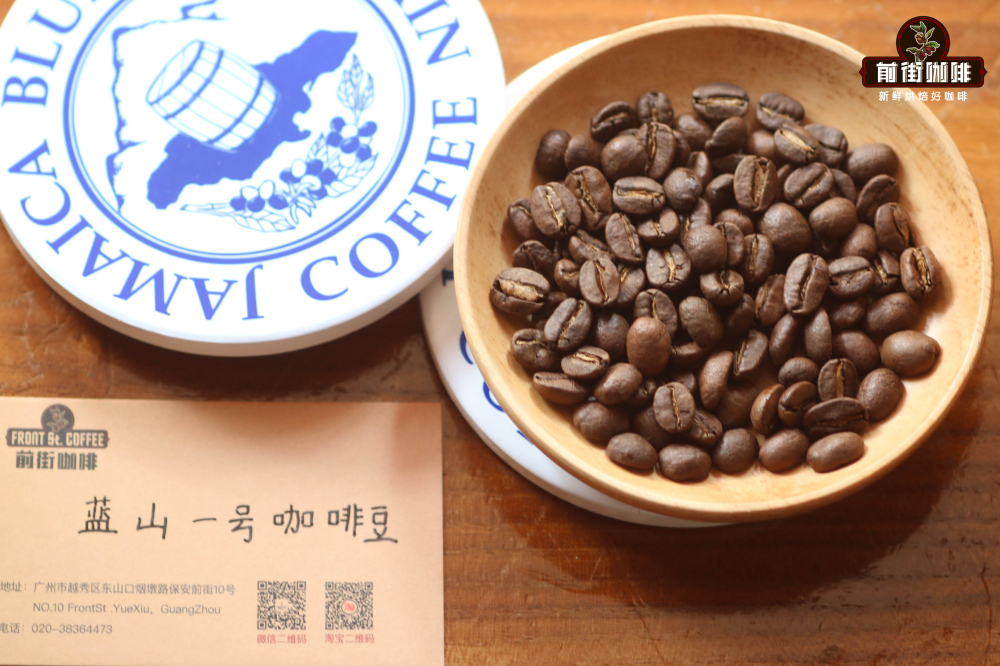
When talking about coffee with elders who rarely drink coffee, the first thing that often pops into their minds is Blue Mountain coffee. In that era, Blue Mountain was almost equivalent to good coffee; even if they had never really drunk it, they had certainly heard the term Blue Mountain flavor. Today Front Street is here to talk about this widely renowned Jamaican Blue Mountain coffee and what exactly its flavor characteristics are.
What Exactly Does Blue Mountain Flavor Taste Like?
If you search for the words Blue Mountain flavor on mainstream e-commerce platforms, a large number of blended beans or instant products under the Blue Mountain banner will pop up, and their promotional language mostly revolves around the words mellow, aromatic, and sweet. True Blue Mountain coffee, however, harmonizes acidity, sweetness, bitterness, and sweetness in one cup, with a rich and captivating aroma, which is what has made it sought after by coffee lovers around the world.
The reason Blue Mountain coffee can have such a unique flavor is that every stage, from cultivation, harvesting, and transportation to roasting, plays a role. Below is an overview of how this exquisite Blue Mountain coffee bean is born.
The Cultivation Conditions of Jamaican Blue Mountain Coffee
The Blue Mountains are the longest mountain range in Jamaica, located in the east, and have the highest peak in the Caribbean region. On clear days, the light refracted by the sea gives the mountains a blue appearance, which is how the Blue Mountains got their name. As a famous scenic area, the highest peak of the Blue Mountains reaches 2,256 meters and attracts tourists year-round. To protect local vegetation and landforms, the government has designated areas above 1,700 meters as protected zones, and coffee trees can only be planted below 1,700 meters.
Front Street has said many times in past articles that coffee is a very picky plant. It can survive in many places, but to make its flavor outstanding, it must satisfy all its growing conditions, and the Blue Mountains happen to meet them. The Blue Mountains are located in a volcanic and seismic zone, the soil is fertile volcanic soil, and the high altitude creates a marked temperature difference between day and night in the mountains. The forest is shrouded in clouds and mist all year round, with sufficient rainfall, allowing the coffee fruit to accumulate ample nutrients.
The variety grown in the Blue Mountains is Typica. Typica is known for its elegant acidity and sweetness, but the plant is weak, has poor disease resistance, and yields relatively little, so it is often abandoned by coffee farmers pursuing yield. Typica was introduced to the Blue Mountains in the 18th century. After two hundred years of adaptation, the local Typica has evolved into an Arabica variety with better disease resistance, is very well suited to the local environment, and has also developed a refined flavor that is difficult to replicate elsewhere.
The Meticulous Processing of Blue Mountain Coffee Beans
Although the Blue Mountain growing area is quite extensive, the truly prized land is only the section from 910 meters to 1,700 meters, distributed across four production areas: St. Andrew, St. Mary, St. Thomas, and Portland, with a total planted area of 6,000 hectares. According to the regulations of the Jamaica Industry Board, only coffee produced in this range is eligible to be called Jamaican Blue Mountain coffee.
Coffee grown between 460 meters and 910 meters is called Jamaica High Mountain Coffee, while coffee below 460 meters can only be called Jamaica Supreme Coffee. The lower the altitude, the lower the grade.
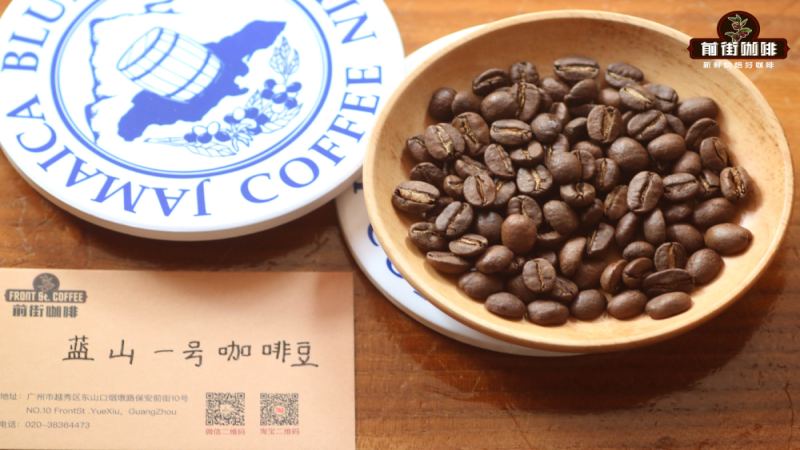
The Jamaican Blue Mountain No.1 coffee beans on Front Street's bean list come from Jamaica's largest local estate, Clifton Estate, and are grown at an altitude of 1,310 meters.
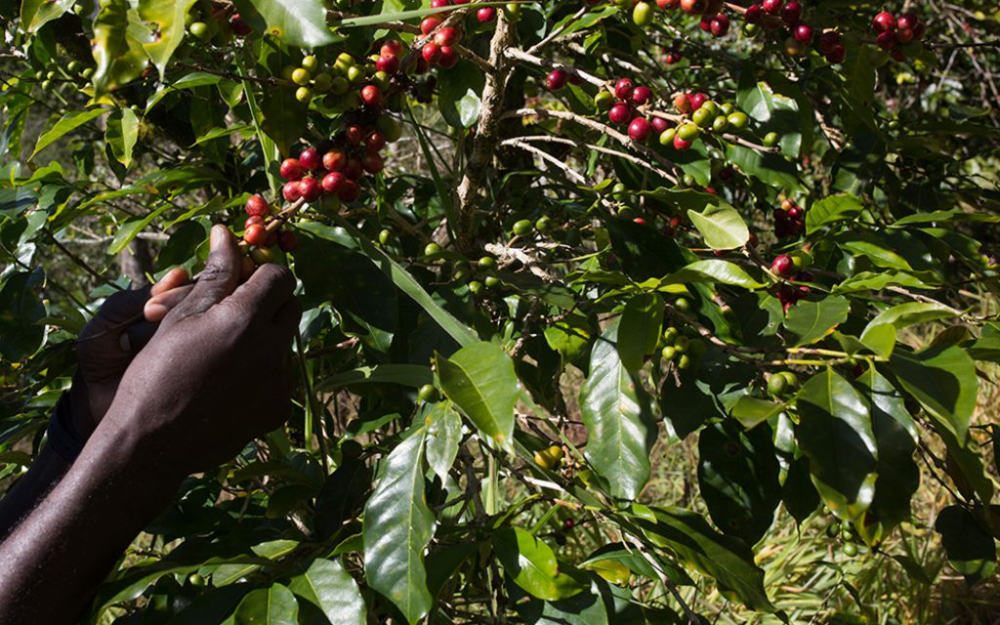
Because the coffee trees are mostly planted on steeper slopes, harvesting is not easy. Clifton Estate arranges for local women familiar with the terrain to go to high-altitude areas to pick coffee cherries at just the right ripeness. The harvested fruit is processed using the traditional washed method.
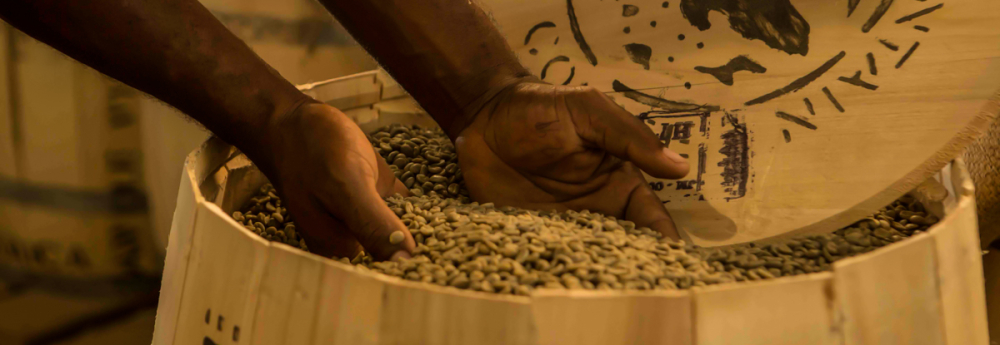
Clifton Estate first removes defective cherries by hand, then uses a machine to strip off the outer skin, after which the beans are poured into a tank to ferment for 12 to 18 hours in order to remove the mucilage layer. They are then moved to a clean tank for repeated scrubbing and a second screening for defective beans. The clean parchment beans are drained and spread flat on concrete ground or drying nets to dry until the moisture content drops to 10% to 12%. They are then packed into wooden barrels and stored in a warehouse with constant temperature and humidity, and only hulled and quality-tested before shipment once orders are received.
Jamaican Blue Mountain coffee green beans have a strict grading system, divided by bean size and defect rate into four grades: NO.1, NO.2, NO.3, and Peaberry. Among them, NO.1 is the highest grade, also called Blue Mountain No.1, with bean specifications between 17 and 18 screen sizes, a defective bean ratio not exceeding 2%, and overall uniform, plump beans. After layers of screening, the number of beans that can meet the Blue Mountain No.1 standard is very small, so a relatively high selling price is only natural.
Unlike most countries that pack green beans in burlap sacks, Jamaica's high-quality Blue Mountain No.1 is packaged in round wooden barrels, which is also one of the bases for buyers to distinguish genuine Blue Mountain. The wooden barrels can isolate the coffee beans from the outside during transportation, prevent moisture from entering, and ensure that the moisture content of the green beans is always maintained at 11.5% before roasting.
How to Distinguish Genuine Blue Mountain Coffee Beans from Fake Ones
Friends often ask Front Street that since Blue Mountain coffee beans are not cheap, they worry about spending a lot of money and buying counterfeit goods, so how should they distinguish authenticity? What brand of Blue Mountain coffee beans is more reliable? Front Street offers a few key points for identification.
(1) Blue Mountain No.1 coffee beans are all exported in whole barrels. When purchasing, you can pay attention to whether the seller has whole Blue Mountain barrels, which can help avoid the situation of using other beans to pass off as Blue Mountain.
(2) First-hand green bean buyers purchasing Blue Mountain coffee beans can apply to the Jamaican CIB or the estate for a Blue Mountain coffee bean certification certificate, which is also proof that the beans are authentic.
(3) You can also look at the roasted beans. Blue Mountain No.1 roasted beans should be uniform in size and plump.
As for the brand of Blue Mountain coffee beans, it actually is not that important. Any brand selling genuine Blue Mountain coffee beans ultimately sources its goods from the four major processing plants and several independent farms authorized by the Jamaican CIB, so there is no such thing as one brand obtaining better-quality beans. As long as it is confirmed to be real Blue Mountain, you can choose based on cost-effectiveness.
How to Brew Out the Flavor of Blue Mountain No.1
Front Street believes that, in addition to variety, growing environment, and green bean processing, coffee flavor also depends to a large extent on the roast level. Blue Mountain coffee has a balanced nutty profile of acidity, sweetness, and bitterness. In order to restore a more classic Blue Mountain flavor, Front Street tried several medium and dark roast profiles, and after cupping comparisons found that a medium-dark roast better highlights chocolate-like sweetness.
For specialty-grade coffee beans like Blue Mountain No.1, Front Street believes drip-style black coffee best showcases Blue Mountain's unique aroma. Blue Mountain coffee is roasted relatively dark, and its flavor tends toward rich mellowness. The baristas at FrontStreet Coffee will choose a KONO dripper, using the tight fit between the filter paper and the dripper to create immersion-style extraction during the pour-over process, making the coffee more concentrated. At the same time, to avoid over-extraction bringing out a bitter and overly strong taste, Front Street uses a slightly lower water temperature and a slightly coarser grind setting.
The parameter approach Front Street uses when brewing all coffee beans is based on the premise of fresh roasting. Coffee enters its optimal tasting period 4 to 7 days after roasting, and as time passes, the aroma gradually dissipates. Front Street deeply understands the importance of freshness, so all beans shipped are roasted within 5 days, in the hope that everyone can brew them in their best flavor state upon receiving them.
Blue Mountain pour-over parameters: water temperature 88°C, coffee-to-water ratio 1:15, coffee powder 15 grams, grind size (75% passing rate on a No. 20 standard sieve), three-stage extraction.
First pour in 30 grams of hot water and bloom for 30 seconds, then from the center point slowly pour in a thin stream in circles up to 125 grams. When the water level in the dripper drops to almost exposing the coffee bed, continue pouring in circles up to 225 grams. The total extraction time is about 2 minutes. Finally, shake the brewed coffee liquid evenly and it is ready to taste.
When Front Street brews Blue Mountain No.1 coffee beans, caramel aroma can be smelled during the blooming stage, and on the palate you can taste rich, mellow nutty and dark chocolate flavors. The overall mouthfeel is full, with a sweet and clear finish.
For professional coffee knowledge exchange and more coffee bean information, please follow Coffee Workshop (WeChat public account: cafe_style).
For more specialty coffee beans, please add the private WeChat of Front Street Coffee (FrontStreet Coffee), WeChat ID: qjcoffeex
The above content is compiled by CoffeeHunters, a coffee news website.


