








Where Is Jamaican Blue Mountain Coffee Grown?
Authentic Blue Mountain coffee is grown in four eastern Jamaican districts: St. Andrew, St. Thomas, St. Mary and Portland. Only coffee planted between 1,000 and 1,700 meters in that zone may carry the name. The area covers about 6,100 hectares, and land above 1,700 meters is a nature reserve where commercial farming is banned.
The Jamaica Coffee Industry Board, set up in 1948, wrote those rules to protect quality. Coffee has been grown in the Blue Mountains since the 1720s, but the grading system came much later. Beans from 500 to 1,000 meters in the same districts fall outside the top grade and are sold under different names.
Blue Mountain coffee has frequently appeared on the world's top ten coffee bean lists since the 1970s—what exactly earned it such renown? This article begins with its place of origin, sorting out the grade standards set by the Jamaica Coffee Industry Board (CIB) and the production region of authentic Blue Mountain coffee, to help readers distinguish genuine Blue Mountain from fakes. At the same time, Front Street Coffee will share the brewing parameters for Blue Mountain No. 1 and the three-pour technique, along with a cold brew recipe, so you can fully experience this "King of Coffee"'s chocolate, nutty, and caramel flavors at home.
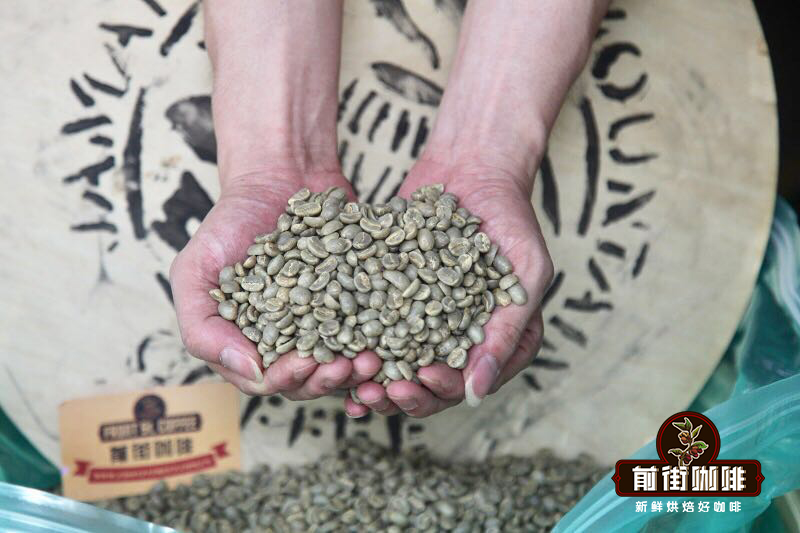
Since the 1970s, whenever the world's top ten coffee beans are ranked, Blue Mountain coffee has almost never been absent. Why has it accumulated such high fame? After reading this article from Front Street, you may find the answer.
The story goes back to 1948. Blue Mountain coffee beans actually have an even earlier cultivation history—coffee was already being planted in Jamaica's Blue Mountains by 1728. But it was not until 1948, when the Jamaica Coffee Industry Board (CIB for short) was officially established, that this national organization began to take on the responsibilities of setting production standards, supervising Blue Mountain coffee bean quality, and rebuilding Blue Mountain coffee's reputation.
After the CIB was established, its first task was to lay down the rules and clarify which coffee beans qualified to be called authentic Blue Mountain coffee.
Establishing Jamaica's Coffee Grade Standards
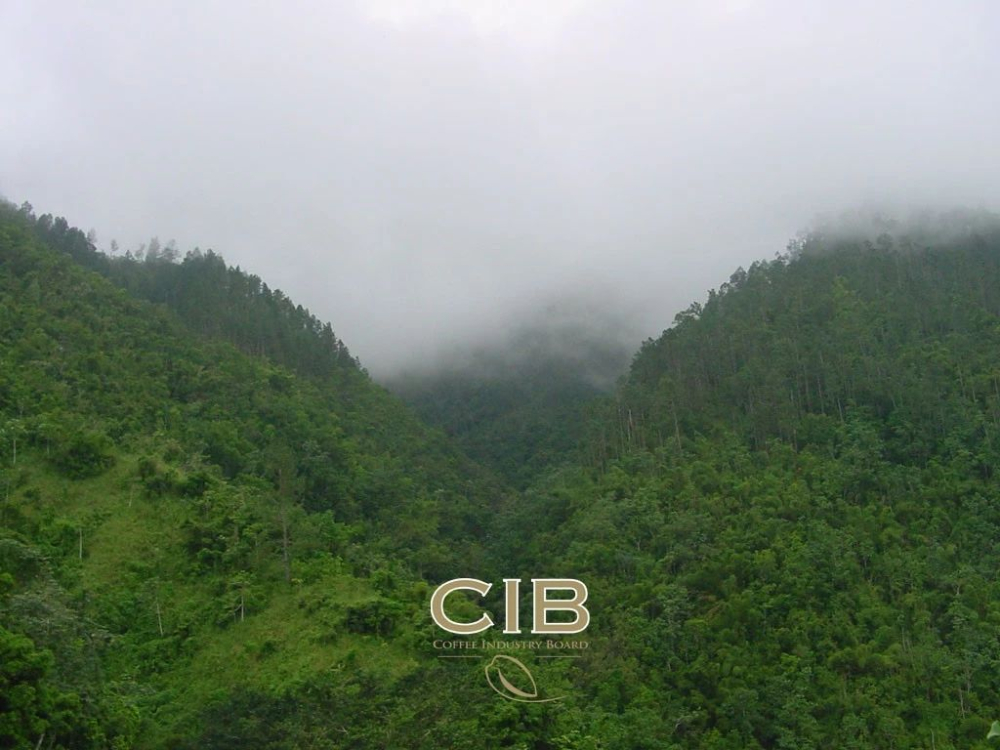
All coffee in Jamaica is grown in the Blue Mountain range. The highest peak of the Blue Mountains stands at 2,256 meters above sea level, and the area above 1,700 meters is a nature reserve where any commercial cultivation is prohibited.
The officially recognized authentic Blue Mountain coffee production area in Jamaica covers four eastern administrative districts: St. Andrew, St. Thomas, St. Mary, and Portland—these four districts happen to lie in the foothills that the Blue Mountains span. The elevation must be between 1,000 and 1,700 meters, with a total area of about 6,100 hectares. Only coffee grown within this range and at an elevation of 1,000 to 1,700 meters can bear the name authentic Blue Mountain. Even if grown in the above four administrative districts but at an elevation of only 500 to 1,000 meters, the coffee must be downgraded to Jamaica High Mountain Coffee; below 500 meters, it falls into the even lower grade of Jamaica Supreme Coffee. Coffee produced on the other 1.21 hectares of land outside this region cannot use the name Blue Mountain coffee at all. Jamaica's official regulations for Blue Mountain coffee are extremely strict—of all Jamaican coffee, at most only 25% can qualify as Blue Mountain.
Blue Mountain coffee beans themselves are also divided into four grades: NO.1, NO.2, NO.3, and PB. NO.1 is what we commonly call Blue Mountain No. 1 , whose notable feature is its large size—it must reach 17 screen mesh or above to be rated NO.1. NO.2 requires 16 mesh or above, and NO.3 requires 15 mesh or above. PB is rather special—it refers to round beans specifically selected from the coffee beans, PB being the abbreviation of Peaberry.
It is precisely because the standards are so strict that Blue Mountain coffee has been able to maintain an extremely high level of quality. Jamaica Blue Mountain coffee quickly made a name for itself worldwide and earned the reputation of "King of Coffee." With great fame, counterfeiters naturally emerge in endless streams. Therefore, identifying genuine Blue Mountain coffee has become a skill consumers need to master.
Front Street would like to briefly explain here: products typically labeled as Blue Mountain flavor, Blue Mountain blend, Blue Mountain mixed coffee, Blue Mountain taste, or Blue Mountain special blend coffee are not true Blue Mountain coffee—they are merely coffee beans imitating the Blue Mountain flavor or playing at the edges.
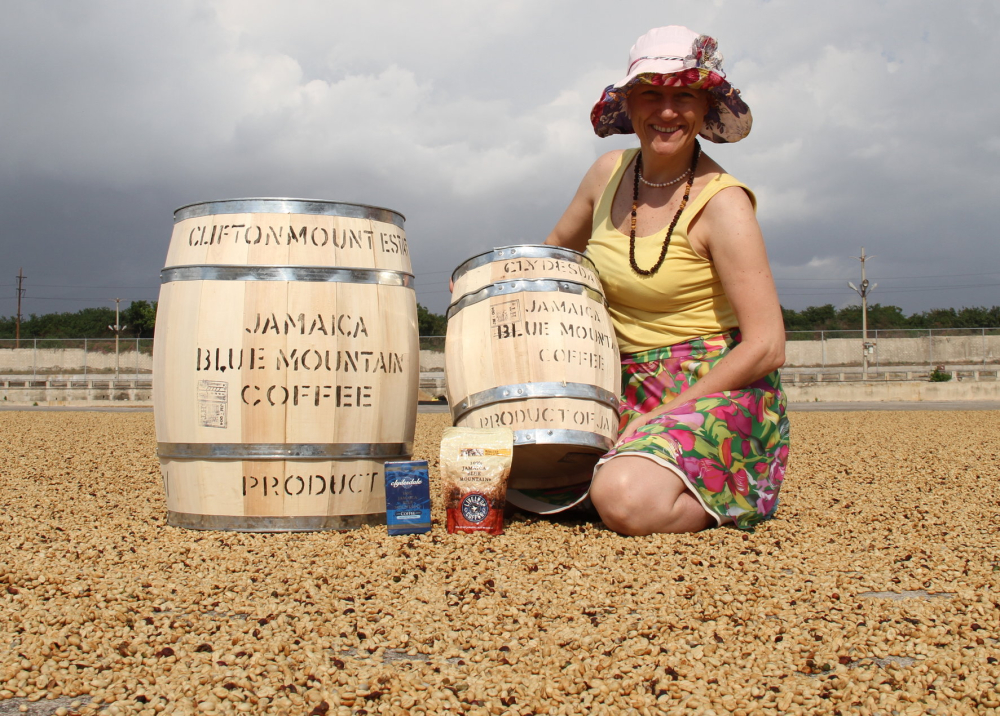
Genuine Blue Mountain coffee must be produced in Jamaica's Blue Mountains at an elevation above 1,000 meters, and Jamaica Blue Mountain coffee is always shipped in wooden barrels for export. Consumers can also confirm with the seller whether the original wooden barrel is included.
Blue Mountain coffee beans imported through proper channels can apply for Blue Mountain coffee certification. Currently, there are three types of certificates that can prove a merchant is selling genuine Blue Mountain coffee:
(1) Quality certificate issued by the Jamaica Coffee Board (2) Authorization certificate issued by the Blue Mountain coffee producer. (Blue Mountain coffee is distributed by 4 Jamaican government-licensed processors and exported by 16 licensed exporters) (3) Jamaica Blue Mountain coffee certificate of origin The quality certificate will indicate the time and quantity. The Jamaica Coffee Board randomly selects one package from the submitted Blue Mountain coffee for inspection, and if it meets the conditions for Blue Mountain coffee, the certificate is issued.
The certificate Front Street holds is the first type—the quality certificate issued by the Jamaica Coffee Board. Everyone can purchase with confidence.
Many friends have asked Front Street how to brew out the Blue Mountain flavor. Front Street would like to share a simple brewing method here.
First, Front Street recommends using freshly roasted coffee beans for brewing, as this allows you to experience the coffee's rich flavors to the fullest. Coffee beans shipped by Front Street Coffee (FrontStreet Coffee) are all within 5 days of roasting, because Front Street knows well that the freshness of coffee beans has an enormous impact on flavor. Front Street's roasting philosophy is "Freshly roasted good coffee," so that every customer who places an order receives the freshest coffee possible. Coffee's resting period is about 4 to 7 days, so when customers receive it, it is at its peak flavor.
Regarding parameters, Front Street recommends using 15g of powder, water temperature of 86°C, a water-to-coffee ratio of 1:15, and a medium grind (75% passing rate on China standard No. 20 sieve). For the dripper, the following options are generally available: V60 dripper, Kalita wave, and Kono. Front Street Coffee (FrontStreet Coffee) primarily uses the Kono dripper for demonstrations. Front Street Coffee (FrontStreet Coffee) chose the Kono dripper mainly considering that Blue Mountain coffee uses a deep roast level, and high temperatures can easily cause over-extraction, so Front Street Coffee (FrontStreet Coffee) chose 86°C for the water temperature. If using a V60 dripper or other faster-flow drippers at this temperature, it would easily cause under-extraction. Kono's ribs are few and short, which can block the gap between the filter paper and the dripper, increasing the water's dwell time and providing an immersion function. Taking all brewing parameter test results into account, Front Street Coffee (FrontStreet Coffee) ultimately selected the Kono dripper.
For the brewing technique, Front Street Coffee (FrontStreet Coffee) uses staged extraction, namely the three-pour method. First, bloom with 30g of water for 30 seconds, then for the first pour, pour in a circular motion with a small stream until reaching 125g and stop, wait for the liquid level to drop until the coffee bed is about to be exposed, then continue with the second pour up to 225g to finish extraction, with a total extraction time (including blooming) of 2'00.
Blue Mountain coffee brewed this way has rich chocolate and nutty tones, with an alluring intense caramel aroma. When tasting, the coffee achieves a balance of acidity, sweetness, and bitterness, giving a very comfortable feeling.
Can Blue Mountain coffee be made into cold brew?
Cold brew essentially means that at low temperatures, small-molecule substances tending toward aroma and acidity are more easily released in cold water, so the coffee tastes light and often presents a sweet-and-sour profile. But for some friends who don't like acidic coffee, they will actively choose a darker roast type. So upon hearing this question, Front Street was actually not surprised, and quickly replied: Yes. As long as you don't waste the coffee beans and bring out their good flavor, Front Street believes the production method is just a path—achieving the goal is what matters. But then again, if you want to make a good-tasting cold brew, Front Street believes the details are key—the specific parameters and steps are as follows.
Coffee beans: Front Street Blue Mountain No. 1 coffee
Powder amount: 20 grams
Water-to-coffee ratio: 1:12
Grind: coarse grind (slightly coarser than normal pour-over grind to avoid over-extraction)
Steeping time: 8–10 hours
① First, grind the coffee powder and pour it into a jar, then add 240ml of water.
② Place in the refrigerator to extract for 13 hours, allowing the coffee powder to fully contact the cold water.
③ Filter out the coffee liquid with a filter cloth or filter paper.
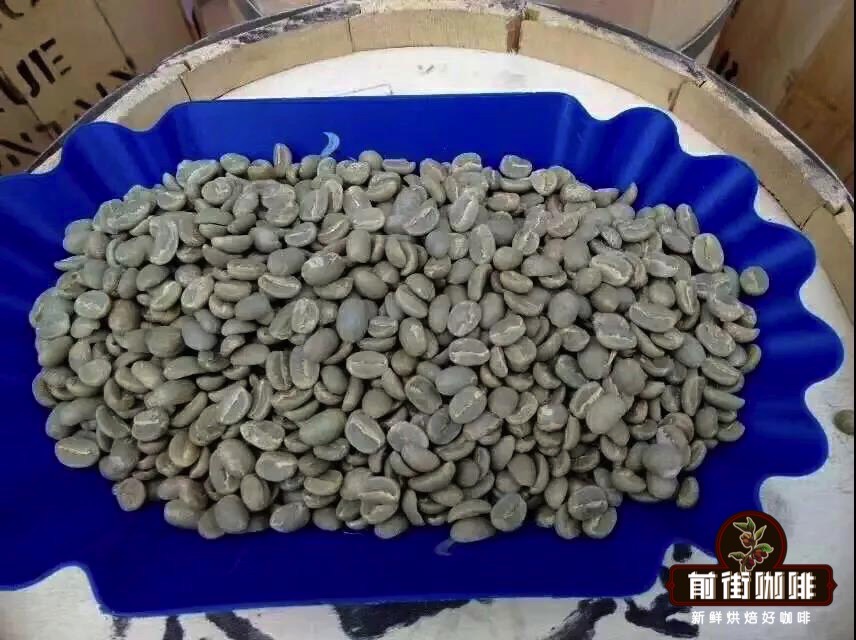
The Blue Mountain cold brew made this way, although not as rich in flavor as light-roast coffee, carries an intense mellow sweetness of dark chocolate, nuts, and caramel, with a smooth mouthfeel, solid aroma, and almost no bitter or astringent taste.
The above content is compiled by CoffeeHunters, a coffee news website.


