







How does the Brazil coffee grading system work?
Brazil grades green coffee on several dimensions at once rather than one standard: defect count, screen size and cupping flavor. Common trade terms include NY.2 for defect allowance, 17/18 for screen size and Strictly Soft for cup character, and together they indicate the quality and traceability of a lot of Brazil green coffee beans.
Brazil supplies roughly 45 percent of the world's green coffee beans, so any shift in its crop affects international prices. Growing altitudes average 600 to 1,200 meters, lower than neighboring Colombia, and the flat terrain supports large-scale cultivation and mechanical harvesting across regions such as Mogiana and Cerrado.
As a superpower accounting for about 45% of global coffee production, Brazil's green coffee grading system is not a single standard, but rather an evaluation based on multiple dimensions including defect bean ratio, screen size specifications, and cupping flavor. This article will, from Front Street's perspective, sort out the distribution characteristics of Brazilian coffee origins, the main grading methods and criteria, and interpret the meanings behind professional terms such as NY.2, 17/18 screen, and Strictly Soft. It will also introduce the terroir characteristics of representative producing regions such as Mogiana and Cerrado, and share specific information about the Brazil Queen's Farm coffee on Front Street's bean list, helping coffee enthusiasts gain a more systematic understanding of the quality indicators and traceability logic of Brazilian green beans.
There are obvious differences in management approaches among various coffee origins. Some are dominated by farmers of varying sizes, while others are controlled by specialized enterprises. Even within the same region, coffee quality and flavor can be vastly different. To distinguish between different levels of coffee quality and to make the buying and selling process smoother, the "coffee grading" system was created. In this article, Front Street will introduce how Brazil, a major coffee-producing country, classifies its green coffee beans.
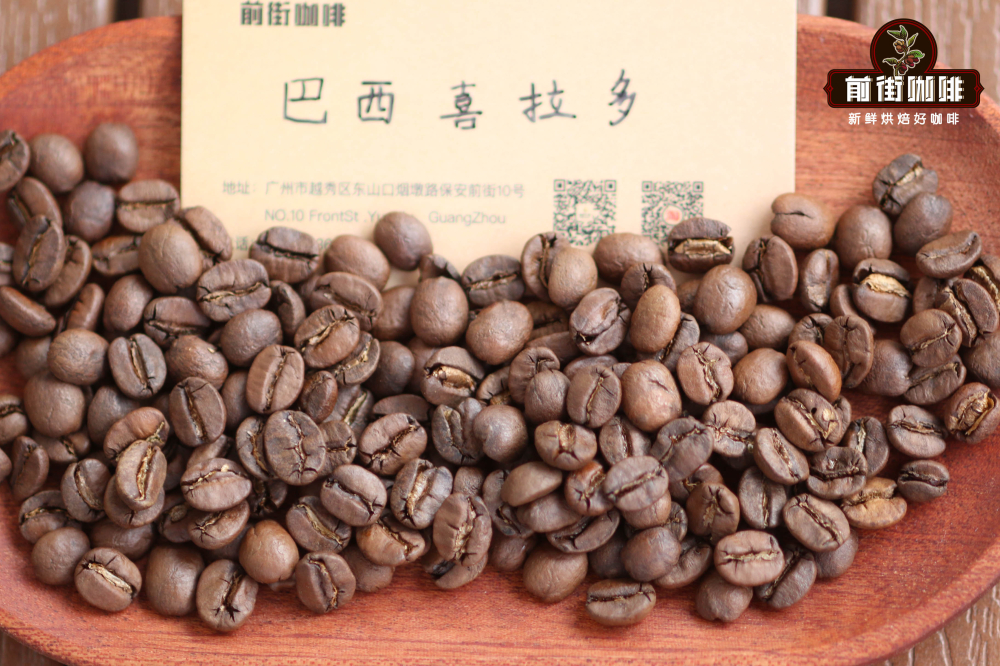
Brazilian coffee beans are plump, with a mild aroma and moderate, smooth body across all taste dimensions, making them a typical representative of neutral-style coffee. They can be brewed as single-origin coffee through pour-over and other methods, or blended with other coffee beans for making espresso. As a major coffee-producing country, about 45% of the world's green coffee beans come from Brazil, giving it an extremely important position in the coffee market. Any factor affecting Brazil's coffee production will have a chain reaction on international coffee prices.
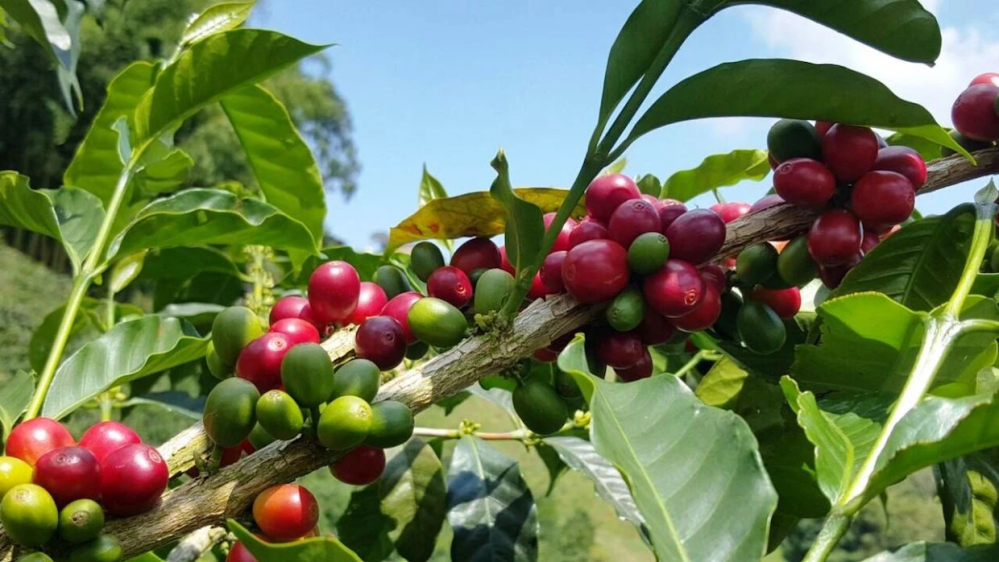
The average growing altitude of Brazilian coffee is between 600 and 1,200 meters, noticeably lower than the neighboring Colombian producing regions. The local terrain is mainly low-altitude plains, with a small portion of Brazilian highlands. The flat terrain is very conducive to large-scale cultivation and management of coffee trees. When the coffee cherries ripen, most farms use machines for harvesting, directly stripping all the cherries from the same branch at once.
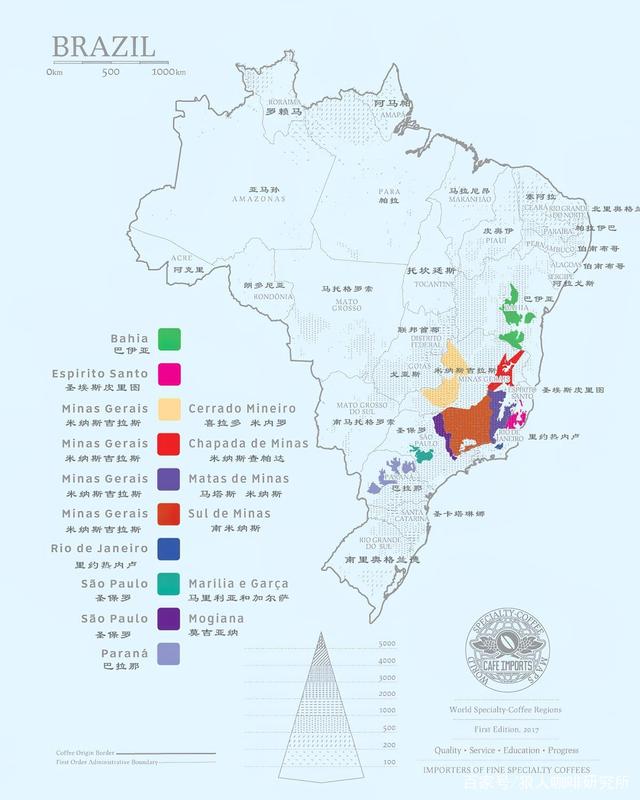
Brazilian coffee origins are distributed across 7 states. Minas Gerais in the southeast has the highest production, with four sub-regions under its jurisdiction. Among them, the Cerrado region is the first coffee-producing region in Brazil to obtain origin certification, and almost all the coffee it produces belongs to the Arabica species with superior flavor. As a mature coffee-producing region, Cerrado was the first area in Brazil to achieve coffee commercialization, and many exporters have built large-scale coffee plantations here.
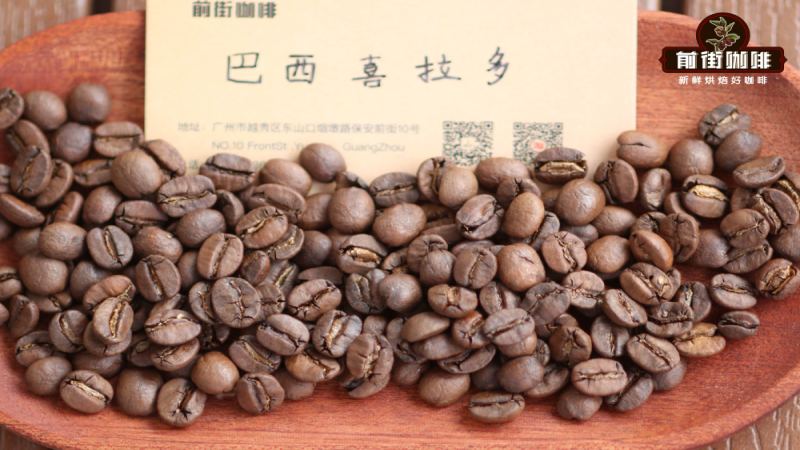
São Paulo state is home to Santos Port, the largest coffee export port in Latin America, and is also the oldest coffee-producing region. The commonly seen Santos and Mogiana both come from São Paulo. The Mogiana region has rich red volcanic soil, higher altitude, and a mild climate, which makes the coffee produced here of better quality. Most coffee from local estates belongs to specialty batches. The Brazil Queen's Farm coffee on Front Street's bean list comes from Mogiana, featuring the delicately flavored Yellow Bourbon variety, with a full body and aromas of dark chocolate and creamy peanut.
Front Street Coffee: Brazil Queen's Farm Coffee Beans
Region: Brazil, Mogiana
Farm: Queen's Farm
Altitude: 1,400m – 1,950m
Variety: Yellow Bourbon
Processing Method: Natural
Flavor: Chocolate, Nuts, Cream, Peanut, Caramel
Due to Brazil's massive production and numerous origins, the grading work is quite cumbersome and not suitable for applying a single standard. Therefore, Brazil has multiple grading methods, with defect bean ratio, screen size, and cupping flavor all taken into consideration. Locally, the proportion of defects is counted from a 300-gram green bean sample to determine the grade, assessed through a "deduction" system. For example, the Brazilian Cerrado green coffee beans purchased by Front Street are labeled on the bag as "Brazil NY.2SC – 17/18 FC Cerrado."
NY.2 refers to the New York grading standard, where beans can be classified as NY2, NY2/3, NY3, NY3/4, etc., based on defect ratio. The smaller the number, the lower the defect rate and the higher the grade. Batches with deductions under 4 points belong to NY2, which is the highest level. Since NY.1 means completely free of defect beans, such carefully selected batches are difficult to supply consistently, so Brazil designates NY.2 as the highest grade.
17/18 indicates that the green bean screen size is between 17 and 18 screen (1 screen equals 1/24 inch).
There are also corresponding standards to distinguish flavor and body. Based on the cup quality during cupping, there are various descriptions: Strictly Soft, Soft, Softish, Hard, Rioy. SC stands for Strictly Soft, representing the best cup quality. Cup flavors are classified as Fine Cup, Good Cup, Fair Cup, Poor Cup, and Bad Cup, with Fine Cup having the best flavor and highest quality, followed by Good Cup.
Of course, in addition to the information above, many specialty-grade Brazilian green coffee beans also come with richer traceability information, such as producing region, altitude, processing method, variety, and estate information.
For professional coffee knowledge exchange and more coffee bean information, please follow Coffee Workshop (WeChat official account: cafe_style)
For more specialty coffee beans, please add the private WeChat of Front Street Coffee: qjcoffeex
The above content is compiled by CoffeeHunters, a coffee news website.


