







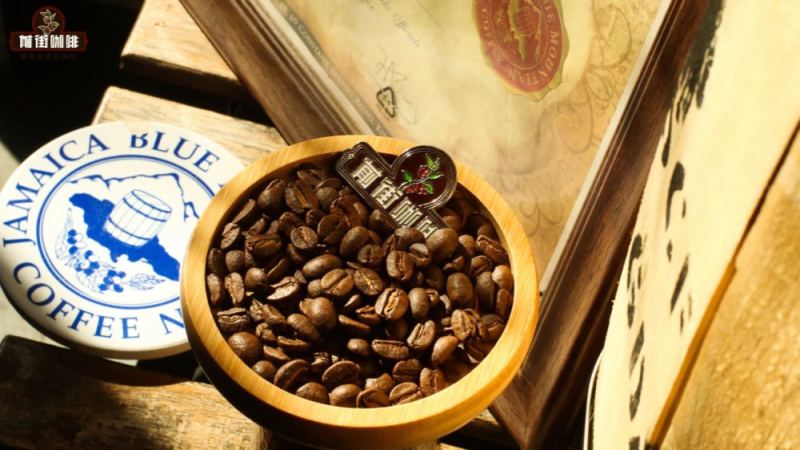
What defines authentic Blue Mountain coffee from Jamaica?
Blue Mountain coffee refers to coffee grown in the core production area of Jamaica's Blue Mountain range, an island country in the Caribbean. The name comes from the country's highest peak, 2,256 meters, which reflects the sea's azure hue in direct sunlight. Market prices for beans labeled Blue Mountain range widely, so origin definition, variety, grade, and certification matter when judging authenticity.
Jamaica's coffee cultivation dates to the 18th century, but specialized cultivation began in the mid-20th century, when the government made coffee an economic pillar and set up the Jamaica Coffee Industry Committee to write quality standards and supervise them. Clifton Farm's Blue Mountain No. 1 shows how grind size and coffee-to-water ratio shape a pour-over cup.
Blue Mountain coffee has always enjoyed an extremely high reputation among coffee lovers worldwide, but products marketed under the "Blue Mountain" banner range in price from a few dozen yuan to over a thousand yuan, making it hard to tell genuine quality from fakes. This article will systematically sort out the origin definition, variety characteristics, grade classification, and certification system of authentic Jamaican Blue Mountain coffee, helping readers understand what truly constitutes Blue Mountain No. 1. At the same time, Front Street Coffee uses the Blue Mountain No. 1 produced at Clifton Farm as an example to share practical recommendations for pour-over Blue Mountain coffee regarding grind size, coffee-to-water ratio, and other parameters, allowing this top-tier coffee bean to display the flavor performance it deserves.
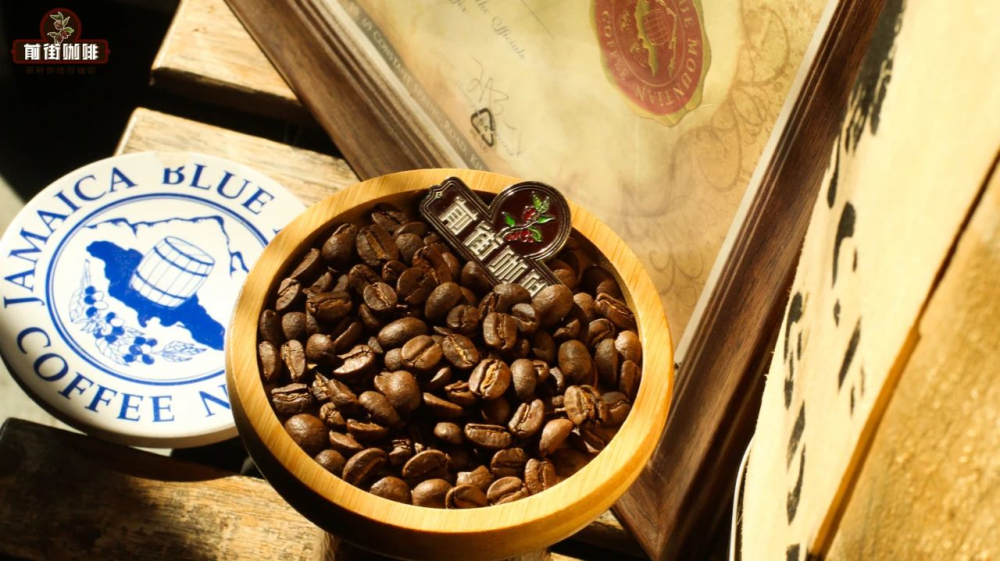
To get more specialty coffee knowledge, follow the WeChat public account: Front Street Coffee (FrontStreet Coffee)
Blue Mountain coffee is famously well known in coffee circles, and its price remains high as well. However, products bearing the name "Blue Mountain coffee" on the market range enormously in price from a few dozen yuan to over a thousand yuan, making many consumers worry about whether they have bought a counterfeit. In response to this issue, Front Street is here to teach everyone several methods for identifying authentic Blue Mountain coffee beans.
What exactly are Blue Mountain coffee beans?
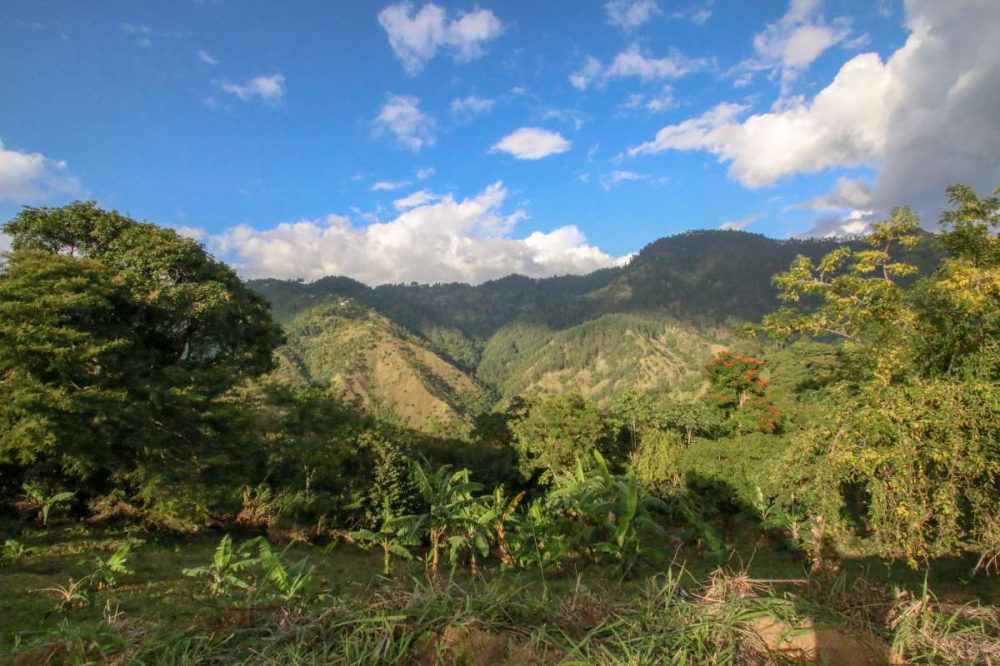
What is usually called Blue Mountain coffee beans refers to coffee produced in the core production area of Jamaica's Blue Mountain range. Jamaica is an island country in the Caribbean Sea, and in the southwest direction of the island stands the highest peak in the entire country, with an elevation of 2,256 meters. Whenever sunlight shines directly on the sea surface, the peak reflects the azure hue of the seawater, and the name Blue Mountain comes from this.
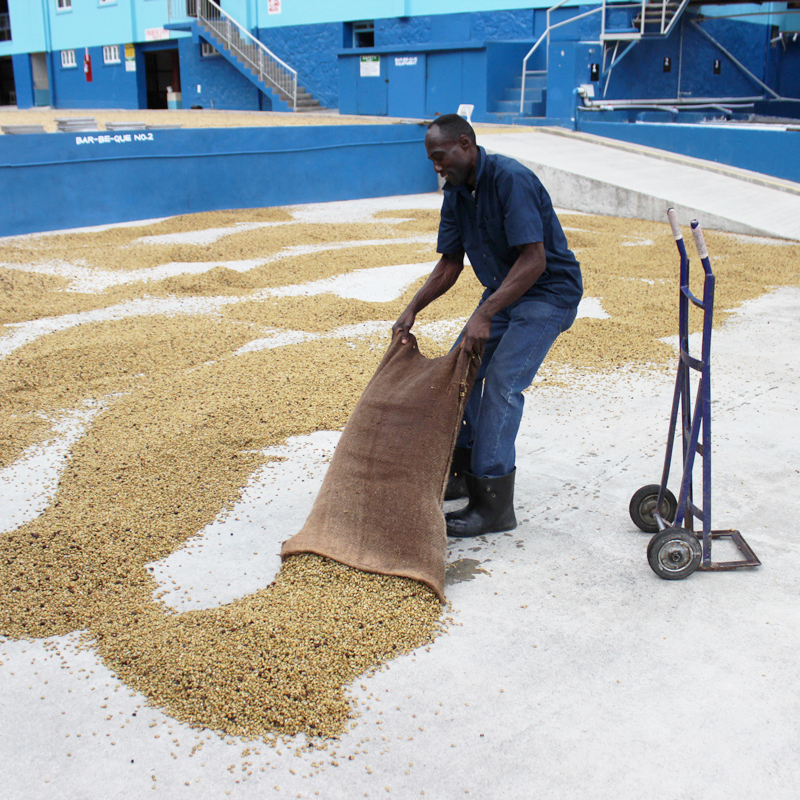
Jamaica's coffee cultivation history can be traced back to the 18th century, but Blue Mountain coffee truly embarked on the path of specialized cultivation in the mid-20th century. At that time, the Jamaican government was determined to build the coffee industry into an important pillar of the national economy, and for this purpose specially established the Jamaica Coffee Industry Committee, which was responsible for formulating coffee quality standards and supervising their implementation, thereby safeguarding the overall quality of Jamaican coffee.
Jamaica is the only country in the world with a government-level coffee management agency—the Jamaica Coffee Industry Board (abbreviated as CIB), which falls under Jamaica's Ministry of Agriculture and Fisheries. CIB undertakes various matters related to the quality and brand of Blue Mountain coffee, including cultivation technical guidance, processing training, fair trade, and quality monitoring. The members of the agency's board of directors are all estate owners with plantations above a certain scale (affected by industrial changes, newly certified Blue Mountain estates now need to reach an area of more than 50 hectares).
According to CIB regulations, only coffee beans produced in Jamaica's Blue Mountain area above 910 meters in elevation are eligible to bear the name Jamaican Blue Mountain. Grades are divided according to bean size into NO.1, NO.2, NO.3, and hand-sorted PB. Among them, the basic requirements for NO.1 grade Blue Mountain green beans are: above 17 mesh, defect rate not exceeding 3%, moisture content around 13%, etc. In addition, to date Blue Mountain coffee green beans have only used the washed processing method, and there is no natural processing (a batch of natural Blue Mountain briefly appeared in 2020) or other processing methods.
Therefore, authentic Blue Mountain coffee should come from areas above 910 meters in elevation in Jamaica's Blue Mountain range. Although CIB official documents do not directly use this wording, they use another formulation: in Jamaica's Blue Mountains, only coffee grown within the cultivation areas demarcated after JACRA certification and inspection counts as true Jamaican Blue Mountain coffee. And the lowest elevation of this certified area is exactly around 910 meters (3,000 feet).
Jamaican Blue Mountain coffee beans are divided by grade into NO.1, NO.2, NO.3, and PB. PB refers to selected round beans, with a particle size of 14-15 mesh. The highest grade is NO.1, which is what everyone commonly calls Blue Mountain No. 1 coffee, with a particle size of 17-18 mesh. Most Blue Mountain coffee beans currently circulating on the market are mainly Blue Mountain No. 1.
Blue Mountain green beans are uniformly packaged in standard wooden barrels of three specifications: 15 kg, 30 kg, and 70 kg. Each barrel is marked with estate information registered with the Jamaica Blue Mountain Coffee Industry Board (CIB), the production batch number, and the barrel number. The barrel lid is printed in black ink with the Blue Mountain coffee logo and the number representing the bean grade, and inside the barrel is also attached a uniformly customized circular product certificate roughly the same diameter as the barrel lid.
With continuous technological progress, in recent years when Jamaican Blue Mountain coffee green beans are exported, an additional green grain freshness bag is placed inside the barrel to maintain the moisture content of the green beans. Jamaica is also the last country in the world that still insists on using traditional wooden barrels to package and transport coffee.
How to identify the authenticity of Blue Mountain coffee beans
At present, the Jamaica Coffee Board can issue certificates for all exported Blue Mountain coffee.
There are three types of certificates:
(1) Quality certificate issued by the Jamaica Coffee Board
(2) Authorized sales certificate issued by Blue Mountain coffee producers (Blue Mountain coffee is distributed by 4 processing producers recognized by the Jamaican government, and 16 licensed exporters are responsible for export)
(3) Certificate of origin for Jamaican Blue Mountain coffee
The quality certificate will indicate the time and quantity. The Jamaica Coffee Board will randomly select one barrel from the submitted Blue Mountain coffee for inspection, and if it meets Blue Mountain coffee standards, a certificate will be issued.
Taking the Blue Mountain coffee beans sold by Front Street as an example, Front Street's Blue Mountain coffee beans come from Clifton Farm, which is located in Saint Andrew Parish and has more than 200 years of operating history. Front Street holds a certification certificate issued by Clifton Farm, which can prove that the Blue Mountain coffee beans sold are indeed produced at Clifton Farm in Jamaica.
Front Street Coffee (FrontStreet Coffee) Jamaican Blue Mountain No. 1 coffee beans
Origin: Jamaica Blue Mountain Clifton Farm
Altitude: 1,300 meters
Variety: Typica
Processing method: washed processing
How should Blue Mountain coffee beans be brewed to taste good?
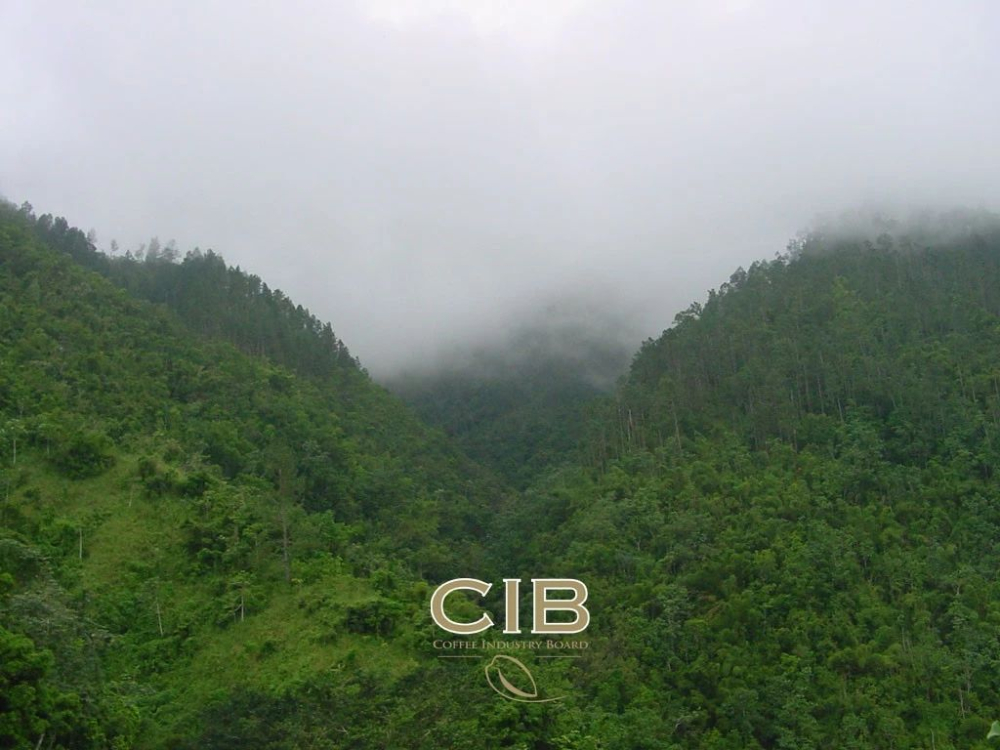
In terms of grind size, brewing Blue Mountain coffee should use a slightly coarser grind than light-roast beans. This is because Blue Mountain coffee beans use a deep roast, have a relatively loose internal structure, and absorb water and release coffee substances more quickly. If ground to the fineness of light-roast beans, it is easy to extract burnt bitterness; if ground too coarse, the coffee will seem bland and tasteless, with a mouthfeel like water. It is recommended to control the coarseness at about a 70% passing rate on a No. 20 sieve.
In terms of coffee-to-water ratio, Front Street recommends using 1:15. Although some brewing methods recommend 1:13 or a smaller ratio in pursuit of a richer taste, reducing the coffee-to-water ratio is to a certain extent a way to avoid the bitter and miscellaneous flavors in the tail end, and correspondingly it also affects the performance of the aftertaste. Front Street believes that as long as the coordination between water temperature and grind size is well controlled, a 1:15 coffee-to-water ratio can more completely present the overall flavor layers of Blue Mountain coffee.
The above content is compiled by CoffeeHunters, a coffee news website.


