







Why Does Yunnan Coffee Typica Taste Different From Catimor?
In Yunnan, Typica and Catimor behave very differently. Typica is an old Arabica variety with a clean, elegant cup, but it is frail and prone to leaf rust. Catimor carries Robusta genes, so it resists disease and yields heavily, yet its flavor is often debated. The first coffee planted in Yunnan was Typica, brought from Vietnam by a French missionary.
Yunnan small-seed coffee simply means Arabica, named for the small fruit size of the species. After leaf rust spread in the late 19th century, Catimor was bred in 1959 from Timor and Caturra and widely promoted for its hardiness. Lincang has become a key producing area, and washed or natural coffee bean processing further shapes the final flavor.
In Yunnan's coffee industry, Typica and Catimor are two varieties with vastly different fates. Typica, as the oldest Arabica derivative, has a clean and elegant flavor but is frail and disease-prone; Catimor, having incorporated Robusta genes, is disease-resistant and high-yielding, yet bears controversy over its flavor. Front Street Coffee established an estate in Lincang, insisting on cultivating Typica, solely to present the most authentic charm of Yunnan coffee. This article will deeply analyze the historical origins, flavor differences, and current cultivation status of the two varieties, and provide a detailed interpretation of the characteristics of Yunnan's main producing regions, the impact of washed and natural processing methods on flavor, and finally share the brewing parameters and tasting notes of Front Street 2013 Natural Typica, taking you on a comprehensive journey through the past and present of Yunnan coffee.
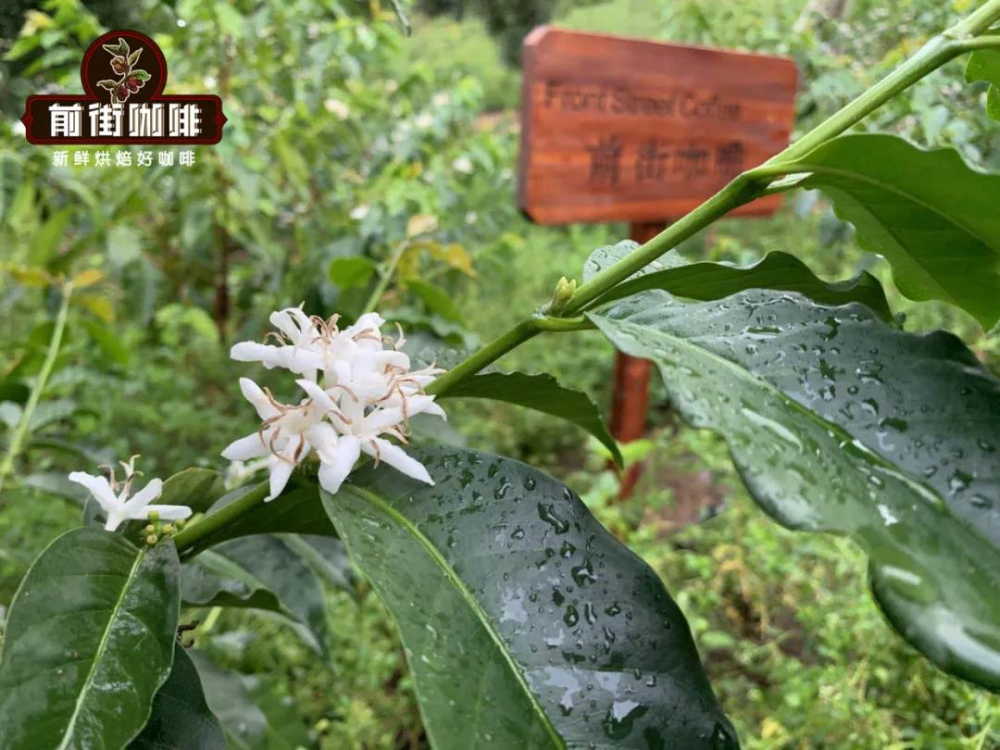
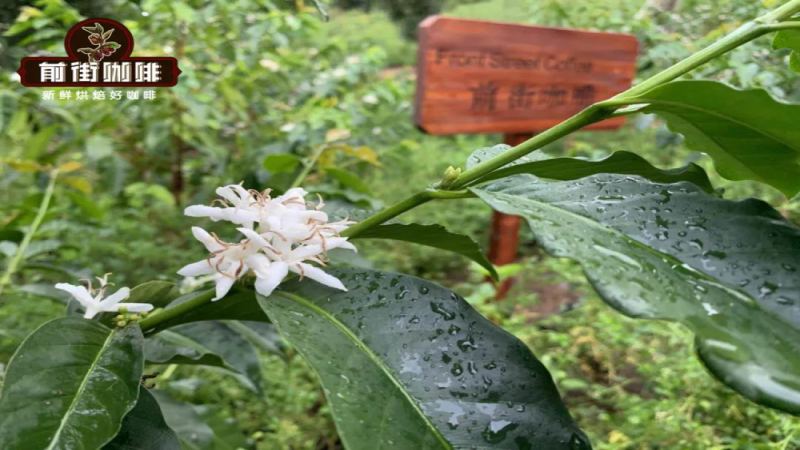
Front Street Coffee has its own exclusive coffee estate in Lincang, Yunnan, where the Typica variety is cultivated. The reason for choosing Typica over Catimor is that Front Street hopes to let more people appreciate the unique charm of Yunnan coffee beans. Typica is one of the oldest Arabica derivative varieties, with the most primitive and excellent flavor expression, so Front Street Coffee (FrontStreet Coffee) made it the main variety on the estate.
In fact, the first coffee planted in Yunnan was Typica. Yunnan small-seed coffee refers to Arabica coffee beans—when the French missionary Tian Deneng brought Typica coffee seeds from Vietnam to Yunnan and successfully trial-planted them in Zhugula Village, Binchuan County, he told the locals it was small-seed coffee (since Arabica belongs to the small-fruit species, while Robusta belongs to the medium-fruit type). Over time, the Yunnan region collectively referred to Arabica coffee beans as Yunnan small-seed.
However, in the late 19th century, leaf rust destroyed a large number of Typica plants worldwide. In 1959, the Portuguese Coffee Leaf Rust Research Center CIFC bred a hybrid of Timor and Caturra—Catimor—which was widely promoted for its strong disease resistance and high yield. The Yunnan producing region in China initially planted the elegant but delicate Typica. Later, when international brands like Nestlé and Starbucks entered the Chinese market looking for raw materials, coffee farmers, pursuing higher economic returns and driven by these big brands' promotion of the Catimor variety, cut down Typica and switched to the high-yielding, disease-resistant Catimor.
The birth of Catimor originated from a 1959 research project by CIFC in Portugal, aimed at balancing disease resistance, high yield, and flavor. Researchers crossed the Timor variety, a Robusta derivative, with the Caturra variety, an Arabica derivative, to breed Catimor. This new variety did not disappoint—it inherited Timor's Robusta genes, giving it stronger resistance to coffee berry disease, coffee leaf rust, and pests, but for this very reason, its cupping performance is often criticized.
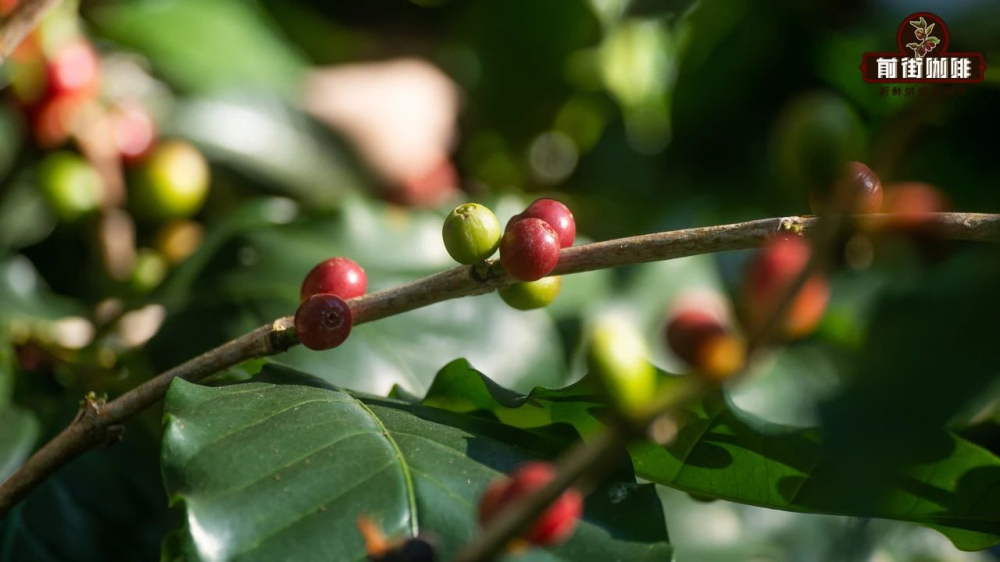
Catimor fruits ripen quickly and yield high, but require ample fertilizer and shade. High yield also means a relatively short commercial lifespan, averaging only about ten years. Front Street's cupping has found that Catimor grown at low altitudes shows no clear advantage or disadvantage in the cup compared to other commercial varieties.
As an ancient coffee variety, Typica has a clear, clean flavor with high balance, and a cleanliness in the cup that special processing methods cannot replicate. Yunnan coffee farmers are unwilling to grow Typica because of its low yield and vulnerability to pests, making the input-to-output ratio unfavorable. On the other hand, farmers have not yet developed an awareness of specialty coffee, so they naturally shy away from the Typica variety.
Typica, also known as the old-variety small-seed coffee, has scarce yield and is difficult to cultivate, with a price much higher than ordinary small-seed coffee. Typica originated in Ethiopia and southeastern Sudan and is the most widely cultivated coffee variety in the Western Hemisphere. The plant is relatively robust but does not tolerate strong light, and yields higher in Hawaii. Typica's top leaves are copper-red, hence the name red-top coffee. It is an ancient coffee with elegant flavor, but its constitution is weak, disease resistance poor, susceptible to leaf rust, and its fruit yield low, making it economically unviable.
Because Catimor carries Robusta genes, while inheriting disease resistance, it also inherits Robusta's criticized flavor. Han Huaizong once described Catimor as having a "devil-like aftertaste." With the development of cultivation techniques and variety improvement, Catimor's flavor has gradually become more elegant.
Main Producing Regions of Yunnan Coffee
Yunnan's coffee-growing areas are mainly distributed across Lincang, Baoshan, Simao, Xishuangbanna, Dehong, and other prefectures.
Lincang Producing Region
Lincang City is located in southwestern Yunnan Province, with the Tropic of Cancer passing through its southern part. It borders Pu'er to the east, Dali to the north, Baoshan to the west, and Myanmar to the southwest. Because the Lancang River flows through this area, Lincang is known as a shining pearl on China's southwestern border. The city's average annual temperature ranges from 16.8 to 17.2°C, with distinct dry and wet seasons and abundant sunshine.
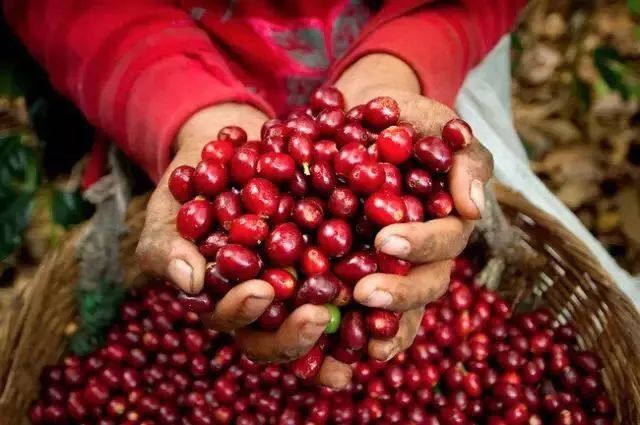
With its unique geographical location and climatic conditions, Lincang has become a focal point for many coffee enterprises. The local government established 200-mu and 100-mu high-quality coffee seedling bases in Mengding Town of Gengma Autonomous County and Lincang Happy Farm respectively, and promoted cultivation in Gengma, Zhenkang, Yunxian, Cangyuan, and other areas. Yunnan coffee, also known as Yunnan small-seed, has uniform, plump beans with a mellow, moderate taste.
For this reason, to let more friends appreciate the charm of Yunnan coffee beans, Front Street established its own coffee estate in Lincang, Yunnan, mainly cultivating the Typica variety. Typica is one of the oldest Arabica derivative varieties, with the most primitive and excellent flavor expression, so Front Street Coffee (FrontStreet Coffee) chose it. The fruit of Front Street Coffee Estate—Front Street 2013 Natural Typica Coffee—was thus born. Of course, Front Street went through many hardships on this cultivation journey.
Baoshan
Baoshan has a long history of coffee cultivation and is recognized as the best small-seed coffee producing area, as well as one of the regions with better coffee quality nationwide and even globally.
Baoshan has an average temperature of 21.5°C, with a maximum of 40.4°C, and is essentially frost-free year-round, making it a recognized optimal small-seed coffee producing area. The small-seed coffee cultivated here is renowned both domestically and internationally for being strong yet not bitter, fragrant yet not harsh, with small and uniform beans, rich mellowness, and fruity notes. Tasting experts from the International Coffee Organization have rated Yunnan coffee as comparable to Colombian wet-processed small-seed coffee, belonging to the world's highest quality coffee. Front Street's Yunnan small-seed coffee comes from the Baoshan producing area.
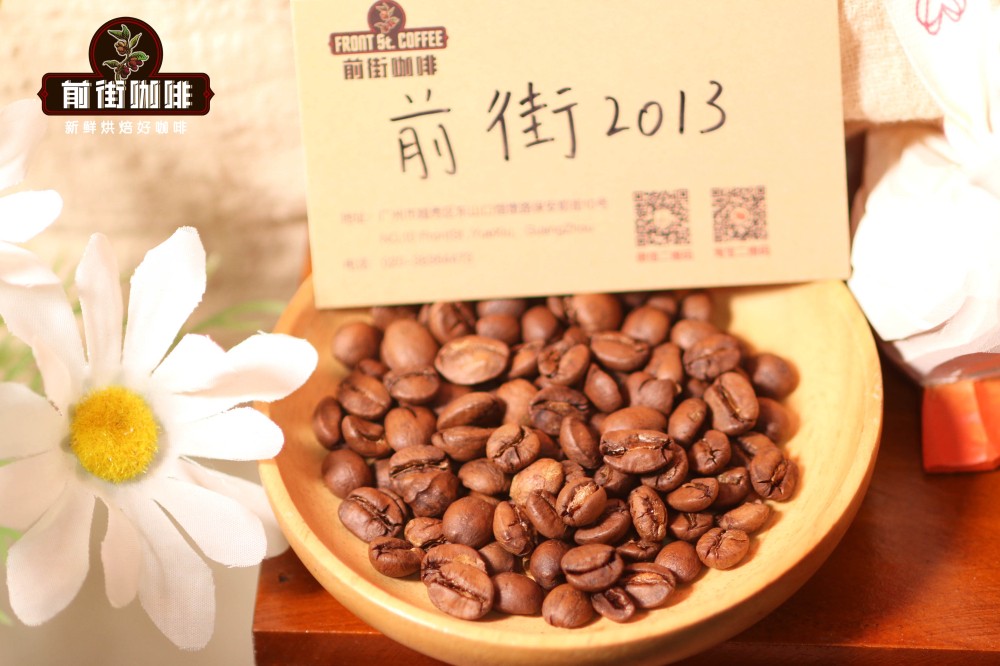
Yunnan Coffee Bean Processing Methods
Yunnan's weather is rainy and foggy, so the washed processing method is the most commonly used locally. Of course, there is also natural processing, such as Front Street's Natural Catimor Coffee and Front Street 2013 Natural Typica Coffee.
Washed Processing Method: The harvested cherries are pulped using a depulper to separate most of the flesh, then the parchment beans are introduced into clean water tanks and soaked and fermented to thoroughly remove the remaining mucilage layer. In washed processing, unripe and defective beans are removed by flotation, and the fermentation process is easier to control, so the flavor lacks the off-notes of natural beans, instead presenting distinct fruit acidity, slightly greater complexity, and a cleaner cup profile.
Natural Processing Method: Ripe, intact coffee red cherries are evenly spread on drying beds to dry. Because the complete skin and flesh layers are retained, the drying process is more complex and time-consuming. To avoid over-fermentation, workers must frequently turn each coffee red cherry on schedule.
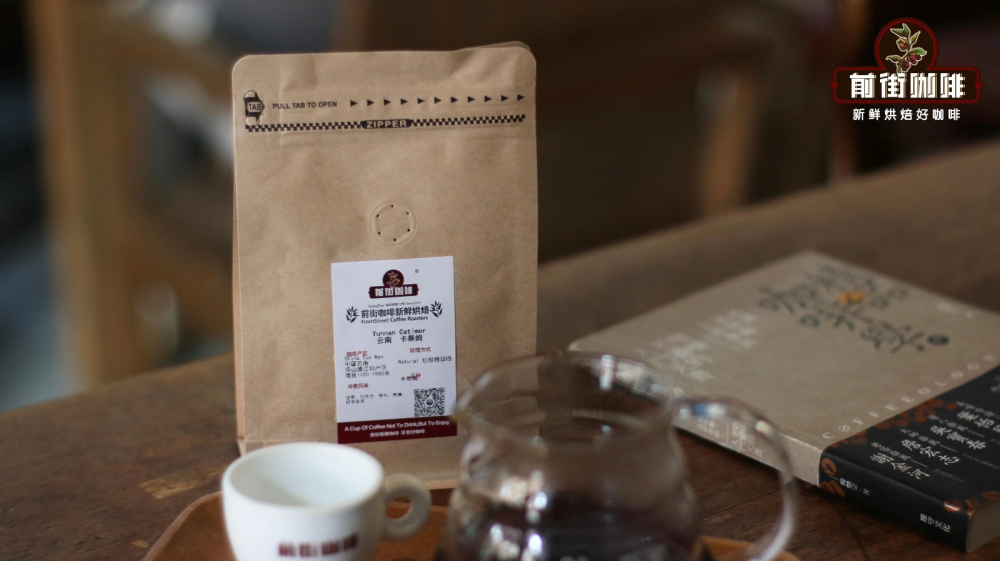
This Front Street Natural Typica uses a Japanese-style processing method, with abundant aroma and particularly prominent sweetness, featuring preserved-fruit-like sweetness, gentle plum acidity, rich nutty notes, and an aftertaste with brown sugar sweetness and black tea sensation. Many friends who purchase this Front Street coffee bean ask Front Street baristas how to brew it to best bring out its flavor. Front Street's Natural Typica is fragrant yet not harsh, strong yet not bitter, possessing the traditional Yunnan small-seed coffee taste.
Front Street Brewing Parameters for Front Street Natural Typica Coffee:
To preserve the sweet-and-sour sensation and tea-like characteristics of Yunnan coffee, Front Street Coffee (FrontStreet Coffee) gives it a medium roast. For brewing, use a V60 dripper, a 1:15 coffee-to-water ratio, medium grind (about the size of coarse granulated sugar / 80% passing through a Chinese No. 20 standard sieve), and 91°C water temperature.
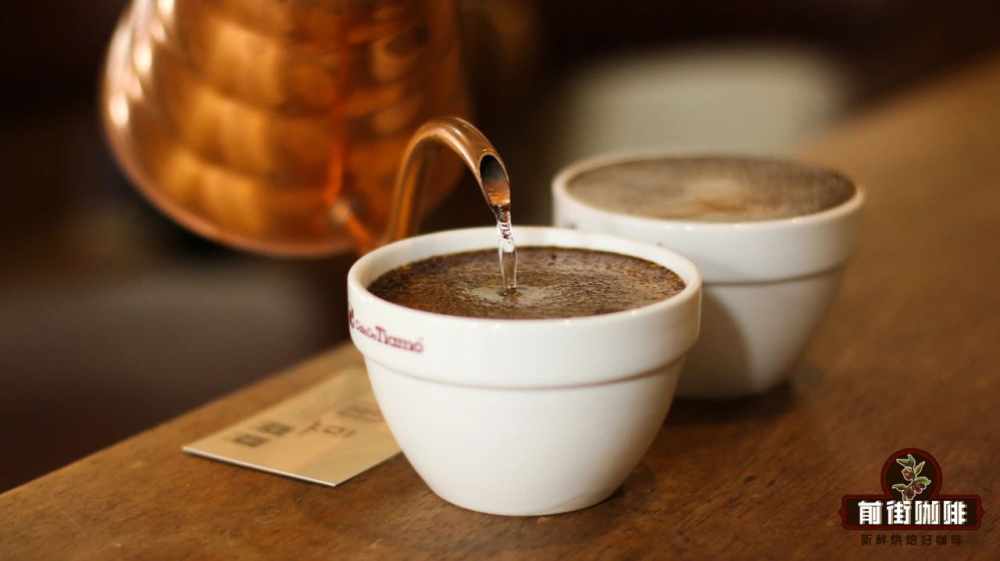
Use staged extraction, first blooming with water at twice the coffee powder weight, i.e., 30g of water for a 30-second bloom. Blooming allows the coffee grounds to release internal carbon dioxide, making subsequent extraction more stable. Pour in a circular motion with a small stream until reaching 125g, then pause, continue pouring until 225g and stop. After the water in the dripper has dripped through, remove the dripper. Timing from the start of pouring, the extraction time is 2'00". Then swirl the entire cup of coffee to mix, and pour into cups to taste.
[Front Street 2013 Natural Typica Coffee Flavor] Heavy body, prominent sweet-and-sour sensation, with citrus and berry notes, a hint of fermented wine aroma, caramel-like sweetness, creamy aftertaste, and black tea sensation.
Front Street Coffee Brewing Suggestions:
Regarding coffee brewing, Front Street has always believed that coffee bean freshness greatly affects flavor, so all coffee beans shipped by Front Street Coffee (FrontStreet Coffee) are within 5 days of the roast date. Front Street's roasting philosophy is "freshly roasted good coffee," ensuring every customer who places an order receives the freshest coffee. The coffee resting period is about 4-7 days, so when customers receive it, it is at its optimal flavor.
For friends who need ground coffee, Front Street kindly reminds: once coffee beans are pre-ground, there is no need to rest them, because the pressure from carbon dioxide inside the packaging during transport can also round out the coffee's flavor, so you can brew a cup immediately upon receiving the ground coffee. However, ground coffee should be brewed promptly, because after contact with air it oxidizes quickly, the flavor dissipates faster, and the coffee won't taste as good. Therefore, Front Street recommends buying whole beans and grinding fresh for each brew, so you can better taste the coffee's flavor.
For professional coffee knowledge exchange and more coffee bean information, please follow Coffee Workshop (WeChat public account: cafe_style)
For more specialty coffee beans, please add the private WeChat of Front Street Coffee (FrontStreet Coffee), WeChat ID: qjcoffeex
The above content is compiled by CoffeeHunters, a coffee news website.


