







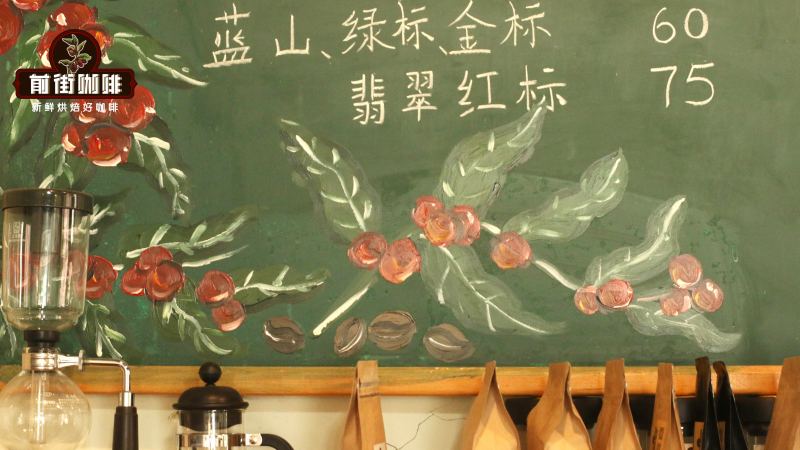
How Are Geisha Coffee Grades at La Esmeralda Split?
Panama's Hacienda La Esmeralda sorts its Geisha coffee into grades including Red Label, Green Label, and Blue Label based on altitude and cupping performance. Red Label, or Esmeralda Special, sits at the top, Green Label is Private Collection, and Blue Label is Geisha 1500. Each grade differs in origin plot, altitude, and processing method.
The estate's four brand systems also cover estates such as Janson and Hartmann. Panama's east-west topography channels cold air over the Central Mountains above 6,500 meters, creating a microclimate around Boquete and Piedra de Candela with temperatures and rainfall suited to coffee. That setting, plus nutrient-rich soil, helps explain the character of these Geisha coffee beans.
Panama's Hacienda La Esmeralda is the discoverer and promoter of the Geisha flavor. Its unique grading system classifies Geisha coffee into different grades such as Red Label, Green Label, and Blue Label according to altitude and cupping performance. From the perspective of Front Street Coffee, this article systematically sorts out the four major brand systems of Hacienda La Esmeralda, explains in detail the origin, altitude, processing methods, and flavor differences of Red Label (Esmeralda Special), Green Label (Private Collection), and Blue Label (Geisha 1500). It also introduces the climatic advantages of Panamanian coffee, the characteristics of Janson Estate and Hartmann Estate, as well as Front Street's roasting ideas, brewing parameters, and cupping performance for three Geisha coffees, providing coffee lovers with a complete guide to Geisha grades.
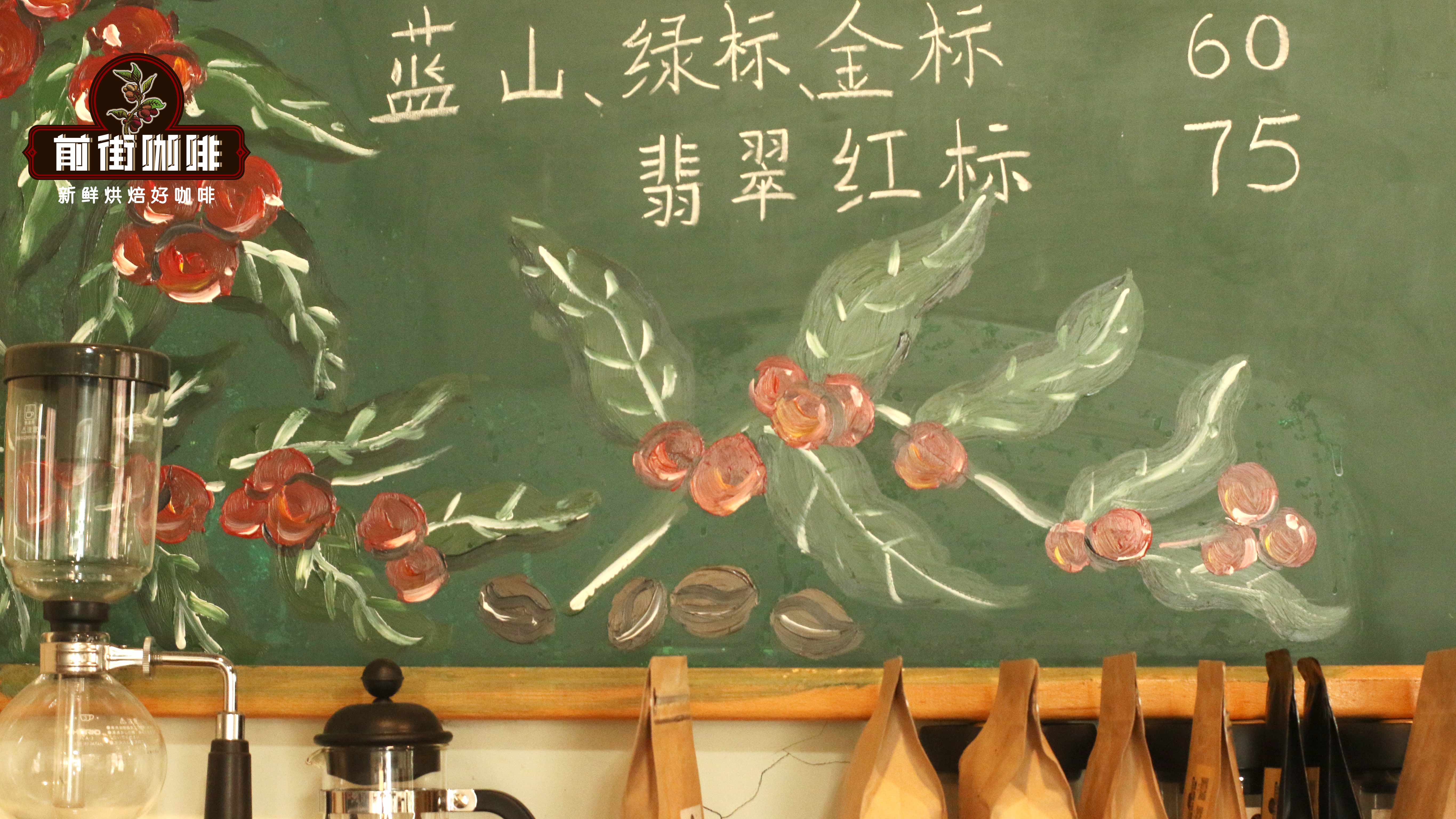
When it comes to Panamanian coffee, Front Street Coffee will inevitably think of Panama's Hacienda La Esmeralda. Hacienda La Esmeralda is not only the discoverer of the Geisha flavor, but also the promoter that brought Geisha coffee to the world. From its Geisha product line, one can see the estate's emphasis on Geisha and its strict quality control. When discussing Hacienda La Esmeralda's quality control strength, Front Street Coffee believes its grading system is an unavoidable topic. Hacienda La Esmeralda has established its own grading system, using different grades to distinguish Geisha coffee beans.
Panamanian Coffee Panama's climate creates uniquely favorable conditions for coffee. The country borders Costa Rica and Colombia. Its east-west topography allows cold air currents to cross the Central Mountains and converge above 6,500 meters, thereby forming a unique microclimate in the Boquete and Piedra de Candela areas, with temperatures and rainfall suitable for plant growth. This microclimate zone is the core production area of Panamanian coffee. In addition, the surrounding soil in this region is rich in nutrients, and the fertile soil provides an ideal growing foundation for coffee, nurturing a large number of distinctive, high-quality coffees.
In addition to natural conditions, Front Street Coffee also notes that another key factor in Panama coffee's global attention lies in historical opportunity. Front Street Coffee believes that since the end of the 20th century, the development of Panamanian coffee has been smooth sailing. At that time, the United States assisted Panama in building the canal and once independently controlled the region for a period. A large number of American elites went south to Panama, driven both by work needs and commercial instinct. Hacienda La Esmeralda is precisely a witness to this elite-era trend.
Janson Estate
In 2013, a new entrant appeared in the Best of Panama award issued by the Specialty Coffee Association of Panama (SCAP)—Carl Janson's Janson Estate Geisha variety, also known as "the champagne of the coffee world." It has full jasmine aromas and delicate berry notes, a clean mouthfeel, and flavors of honey and lychee.
Geisha has full sweetness, an extremely clean mouthfeel, and rich aromas ranging from berries and citrus all the way to mango, papaya, and peach. A very obvious bergamot-like aftertaste is also one of its typical cupping characteristics. To date, Geisha remains the champion among coffee varieties. Janson Geisha is rarely heard of domestically because Janson Estate focuses mainly on domestic sales and does not export. Under the combined effects of high altitude, nutrient-rich volcanic soil, abundant rainfall, and suitable temperatures, Janson Estate has gradually become the estate with the second-highest Geisha production in Panama, and 50% of the trees in the estate are Geisha variety coffee trees.
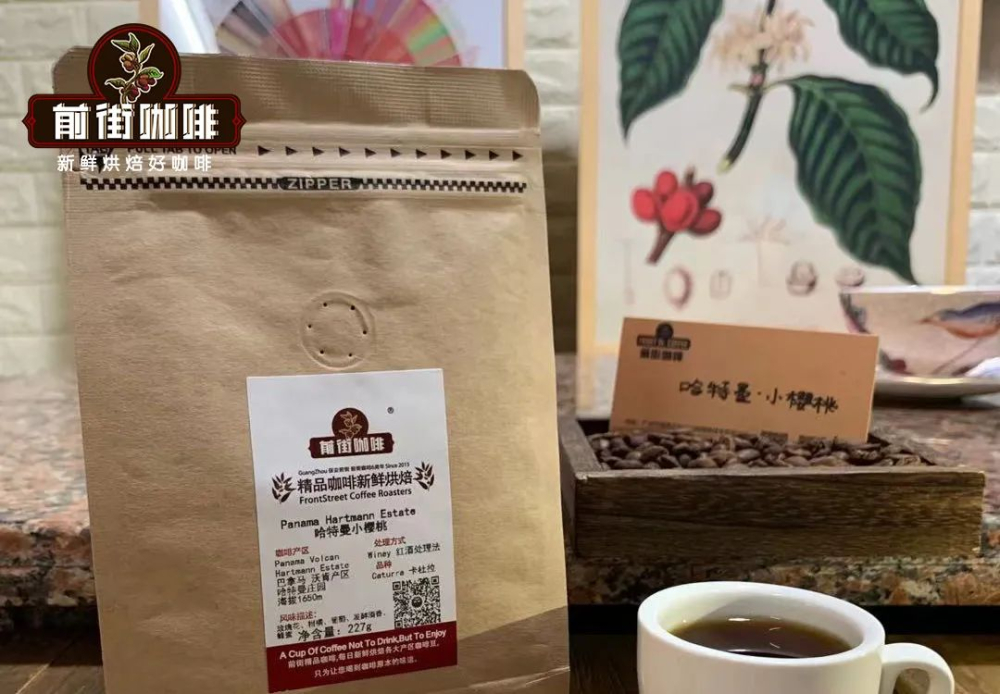
Hartmann Estate At Panama's Hartmann Estate, people always follow green and environmentally friendly requirements when growing coffee, and the farm's compost is made from pulp and cherry skins. Curious about what kind of coffee flavor such an environment would produce, I couldn't wait to brew a cup of Hartmann. Its flavor is pure, with a sweet and bright tonality, thick honey aroma, and the sweet fragrance of stone fruits. Every inch of the mouth is filled with the rich taste of milk chocolate, and it remains delicious even after cooling. In addition to superior climatic conditions, careful cultivation, and strict picking and selection, its perfect taste also comes from a special processing method—red wine processing.
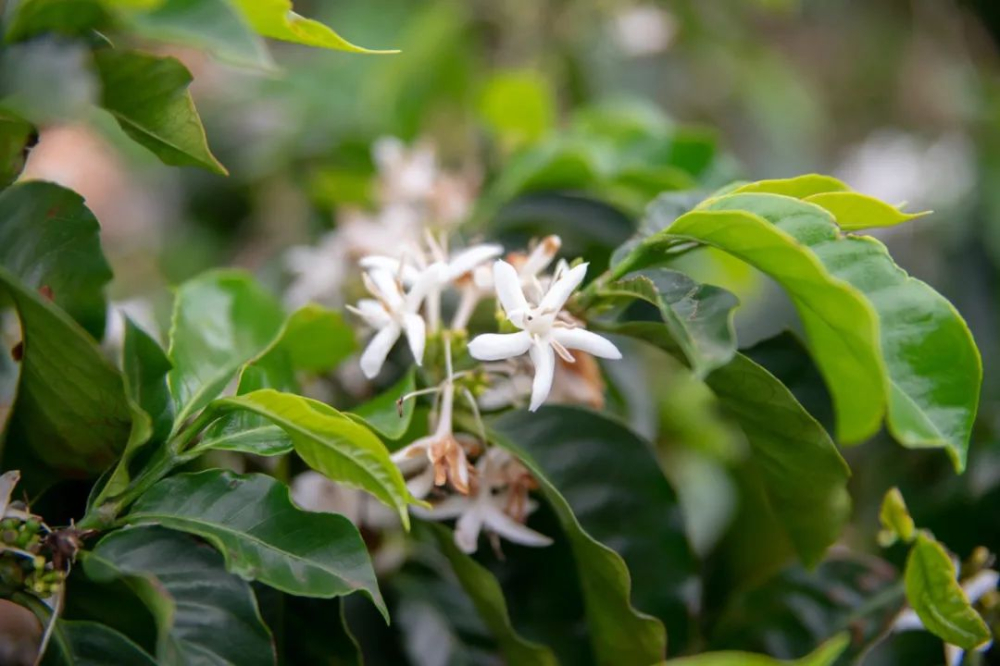
Hartmann Estate has a very wide range of coffee varieties, including Typica, Caturra, Catuai, Bourbon, Pacamara, Maragogipe, and Geisha.
La Esmeralda Estate (Bouquete)
Hacienda La Esmeralda is located at one corner of the Baru volcano, so before it became famous, coffee beans produced in this area were mostly named after Baru Mountain. The surrounding area of Boquete is beautiful, with many leisure hotels, villas, and holiday estates, even built along the important Rio Caldera. Hacienda La Esmeralda is located in Jaramillo on the right side of the river, and later coffee was also planted in the higher-altitude area of Canas Verdes on the left side of the river. This all owes thanks to Rudolph Peterson's decision to purchase this property back then.
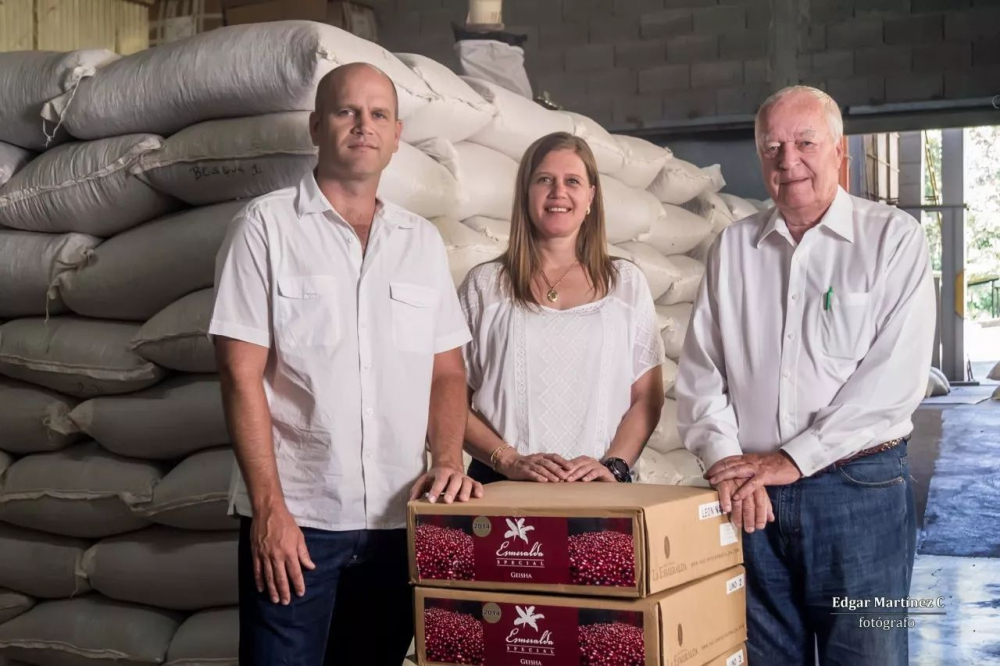
The first-generation estate owner of Hacienda La Esmeralda, Rudolph A. Peterson In 1964, Swedish-American financier Rudolph A. Peterson moved to Panama after retirement and bought Hacienda La Esmeralda in Boquete, focusing mainly on dairy. He had served as president of Bank of America and was an influential figure in financial circles at the time. Rudolph bought Hacienda La Esmeralda only for vacation and future retirement use, and probably did not expect that this estate would become world-famous, even becoming a representative Panamanian specialty coffee estate. In 1973, his son Price Peterson returned to Boquete to help his father run the farm after obtaining a doctorate in neurochemistry in the United States. After Price took over, he segmented the market into three major brands for sale according to altitude and microclimate, combined with cupping performance and planted varieties (Esmeralda Special, Diamond Mountain grows, Palmyra). Starting in 2012, Geisha was added, making it four major brands.
[Hacienda La Esmeralda] Actually includes 4 farms: Cades Verdes, El Velo, Jaramillo, and Palmira. All coffee beans are sent to the 4 farms for post-processing. The first farm bought by the Peterson family, the estate owners, was Palmira.
1. Esmeralda Special, that is, the independent auction held by Hacienda La Esmeralda itself, completely focused on Geisha. According to the names of production blocks, each block is further divided into small lots for bidding. Only the Geisha lots that the estate puts out for independent bidding can use the name Esmeralda Special. Starting in 2013, Esmeralda Special had nine lots.
Hacienda La Esmeralda's El Velo Farm El Velo Farm was acquired by Hacienda La Esmeralda in 2012 and is the newest farm in the estate. Front Street Coffee has learned that this farm has already passed Rainforest Alliance Certified, proving the environmental friendliness and conservation awareness of Hacienda La Esmeralda's coffee base. El Velo Farm covers 50 hectares. In addition to growing Geisha and Catuai varieties, the farm also plants a small number of exotic varieties such as Laurina, Pacamara, Mocha, and SL28, as well as more than 400 other varieties obtained from CATIE. These are all planned as part of the farm's long-term commercial exploration.
Although the land of this farm winds upward along the mountains, with an elevation as high as 3,900 meters, the coffee planting altitude is between 1,650 and 1,900 meters. Front Street Coffee also learned that a nature reserve is established here, which is the famous home of the resplendent quetzal and other endangered birds.
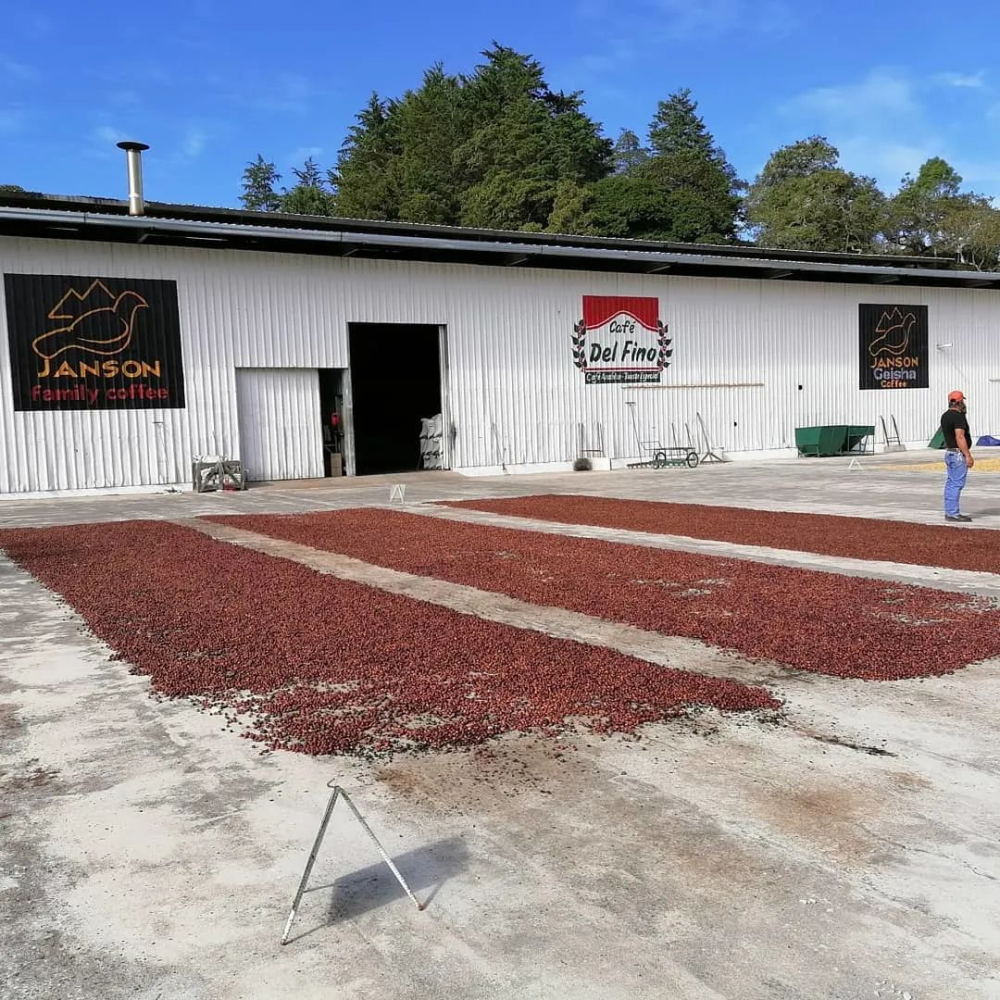
Hacienda La Esmeralda's special micro-lot is called the Prueba lot. Prueba means "experiment, test" in Spanish. In the process of unremittingly improving coffee quality, Hacienda La Esmeralda not only makes unremitting efforts in variety selection and cultivation, but also continuously tries new methods in processing. Prueba 4 belongs to a particularly innovative lot from Hacienda La Esmeralda's special reserve plot. Since 2004, this rare coffee cultivation reserve plot has won more than 15 international awards. The coffee produced here does not participate in Hacienda La Esmeralda's auction and is sold in small batches through direct trade. At present, Hacienda La Esmeralda mainly has three estates growing Geisha varieties: El Velo, Canas Verdes, and Jaramillo. In 1996, it bought the nearby Jaramillo, which has superior geographical conditions and good flavor in the original coffee varieties. El Velo was acquired by Hacienda La Esmeralda in 2012. Front Street Coffee believes that Hacienda La Esmeralda's acquisition of estates with good output and high altitude was a unique decision at the time, and this also enabled Hacienda La Esmeralda to occupy a certain position in the coffee industry.
Front Street Coffee has learned that although Hacienda La Esmeralda initially discovered coffee beans with flavor performance, in order to achieve precision, it cupped coffee beans from different areas within the estate and determined planting plots according to altitude. That is why we now know the Red Label, Green Label, and Blue Label Geisha grades, all graded according to altitude. Starting with winning the championship in the 2004 Best of Panama (BOP) green bean competition, it was astonishing all the way. Later, after expert identification, it was discovered that the coffee bean was the Geisha variety from Ethiopia. After that, the Peterson family put most of its energy into developing infrastructure to support excellent lot separation and fine processing. Geisha Red Label, Green Label, Blue Label Front Street Coffee believes that the biggest difference between Hacienda La Esmeralda's marketing strategy and that of other estates is that it is divided into five major brands according to cupping performance, planted varieties, and planting plots. There are three brands of the Geisha variety: Esmeralda Special, Private Collection, and Geisha 1500. There are two brands of the Catuai variety: Diamond Mountain grows and Palmyra.
Red Label Geisha The Geisha produced under Esmeralda Special is what we often call Red Label. It is selected from Geisha beans grown at an altitude of 1,600-1,800 meters, with a cupping score above 90, from the two production areas of Jaramillo and Canas Verdes.
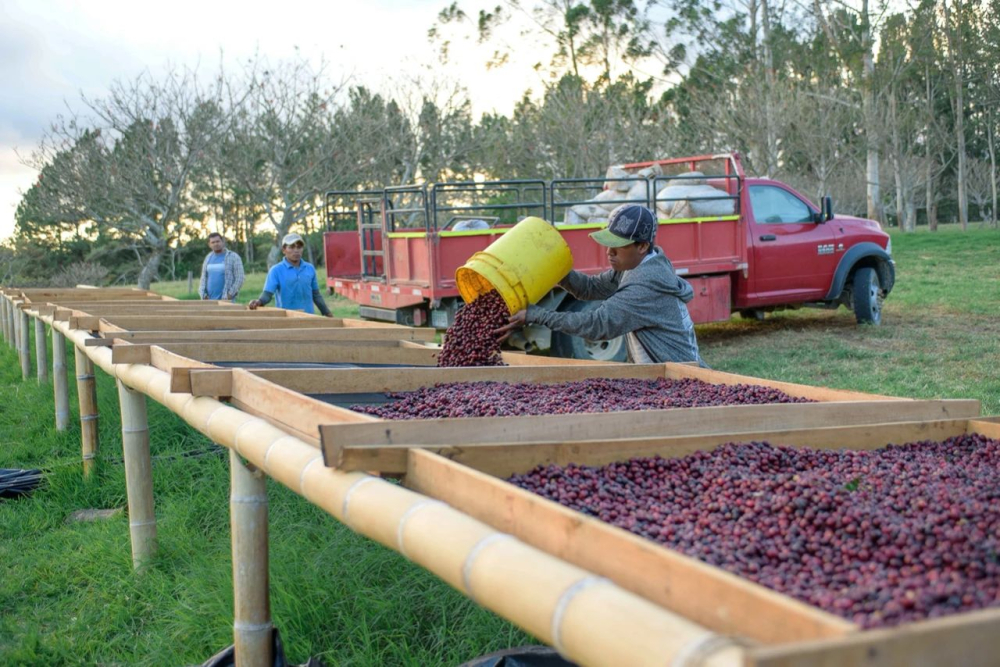
Only the Geisha lots that Hacienda La Esmeralda puts out for bidding from divided plots in its own independent auction are the auction Red Label. Guests often ask whether auction Red Label tastes better or Red Label tastes better. In fact, non-auction Red Label and auction Red Label belong to the same plot; the difference lies in whether they participated in the auction. Front Street Coffee believes there is no need to insist on drinking auction-level coffee. First, the price is indeed relatively high. Second, if you just want to try it, Red Label is also a good choice. Coffee of this grade is later processed into sun-dried or washed green beans. In 2018, a yeast processing method was added. It can only be purchased through the annual global auction, and the flavor has special, bright floral and citrus aromas.
Green Label Geisha Private Collection, commonly known as Green Label, is not an independent competition lot. It is a Geisha variety that does not participate in bidding but still has excellent quality. It is selected from micro-lot blended beans grown at an altitude of 1,600-1,800 meters from different plots such as Jaramillo and Canas Verdes.
People often ask what the difference is between Red Label and Green Label. Front Street Coffee gives the most easily understood answer: Red Label can be traced back to which small plot, while Green Label is a blend and cannot be traced. Because it uses a blending model and does not specify the plot in detail, sometimes Green Label and Red Label have a very high flavor similarity, but the next output may differ again. Front Street Coffee feels that drinking Green Label is like buying a lottery ticket—perhaps the lot you drink this time has the flavor of Red Label. Although Green Label is not as high-grade as Red Label, it still has the classic flavor of Geisha: floral aroma, fruit aroma, citrus acidity, and a thick, juicy mouthfeel. Green Label Geisha is also processed either washed or sun-dried.
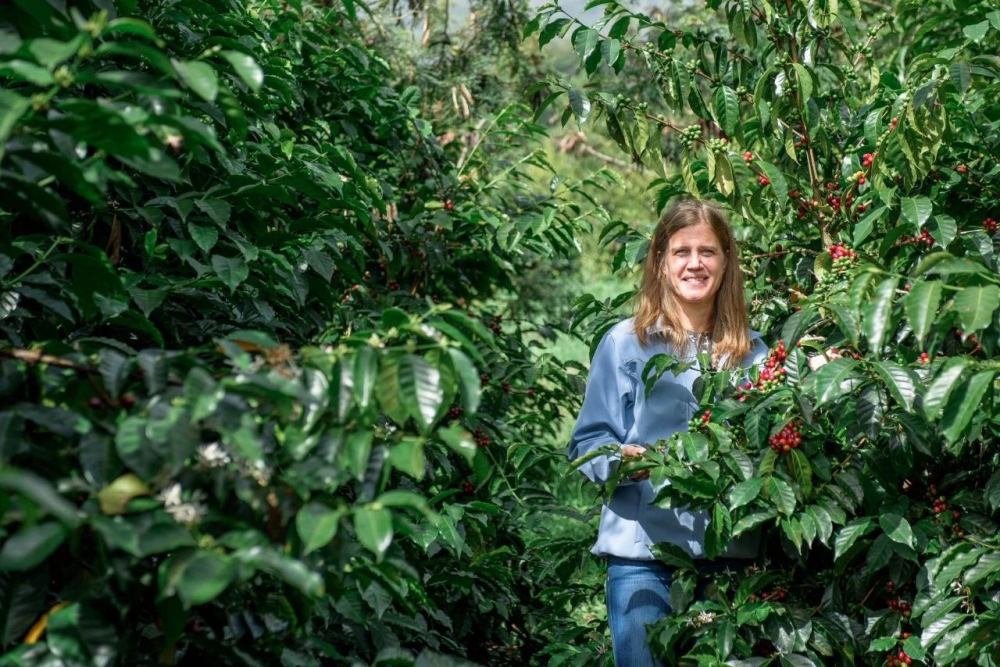
Blue Label Geisha The Geisha 1500 brand is what we commonly call Blue Label Geisha. It is selected from blended beans grown at an altitude of 1,400-1,500 meters from three different plots: Jaramillo, Canas Verdes, and El Velo. The flavor has slight floral aroma, fruity acidity, and sweetness, with a less thick mouthfeel. At present, the Blue Label brand has been discontinued by Hacienda La Esmeralda, and Geisha from this lot has been sold for export, becoming Volcanic Rock Geisha coffee beans. The Geisha produced in this area is sold for export and becomes Volcanic Rock Geisha coffee beans, with the same flavor as the original Blue Label. The Volcanic Rock flavor is light floral aroma and fruity sweet-and-sour notes, and the mouthfeel is not as full as the other two brands.
2. Geisha, that is, the Geisha variety, but not an independent competition lot. It is blended from coffee of excellent quality that does not participate in bidding from various production blocks into this brand. It is still the Geisha variety. This brand strategy began in 2012.
3. Diamond Mountain grows, Esmeralda's traditional variety, planted in the two areas of Canas Verdes and Jaramillo at about 1,400-1,700 meters. The coffee has a complex mouthfeel, with obvious chocolate and spice sweetness. The planted coffee varieties are the standard Central American blend, including three varieties: Typica, Bourbon, and Catuai. Diamond Mountain is eco-friendly and Rainforest Alliance Certified coffee.
4. Palmyra. Coffee under this brand is near the Baru Volcano National Park area and belongs to Hacienda La Esmeralda's commercial beans, at an altitude of 1,100-1,200 meters. All planted trees are Catuai. Only this place belongs to a lower planting altitude. Although it is not specialty grade, it has the typical Panamanian Boquete coffee flavor, with acidity that is not too sharp, along with nutty sweetness and vanilla. Roasting Suggestions and Cupping Flavors When Front Street roasts these three Geisha coffee beans of different grades, the main idea is still to highlight Geisha's rich floral aroma and bright, varied fruity acidity, using a light roast approach. However, Front Street takes into account that each grade has a different growing environment, so corresponding adjustments also need to be made in roasting details.
[Red Label Geisha] Dry aroma: jasmine, citrus Wet aroma: citrus, lemon, honey Palate: lemon, honey, berries, orange peel, mango, cream, citrus, tea-like note [Green Label Geisha] Dry aroma: jasmine, ginger flower Wet aroma: lemon, sweet orange Palate: lemon, sweet orange, honey, cream, almond, tea-like note [Blue Label Geisha] Dry aroma: floral, citrus Wet aroma: citrus, lemon Palate: citrus, lemon, honey, nuts, tea-like note
Front Street Coffee's brewing suggestions for Hacienda La Esmeralda Red Label, Green Label, and Blue Label Geisha:
Front Street Coffee recommends the following brewing parameters: Hario V60 dripper, 91°C water temperature, 15 grams of coffee, 1:15 coffee-to-water ratio, grind size EK43s setting 10 (80% passing through a Chinese standard No. 20 sieve).
[Brewing Method] Front Street Coffee uses staged extraction, also called three-stage brewing. Use 30 grams of water for blooming for 30 seconds. Pour in a small stream in a circular motion until 125 grams, then pause. When the water level is about to expose the coffee bed, continue pouring until 225 grams and stop. When the water level is about to expose the coffee bed again, remove the dripper. (Start timing from the beginning of blooming.) The extraction time is 2'00". Flavor Description [Red Label] It has bright rose and citrus aromas, genmai, berries, apricot, mixed fruits, and honey. It has a thick juice-like mouthfeel, rich flavor layers, and obvious sweetness. [Green Label] Rich jasmine aroma and high sweetness, with citrus, berries, juice-like mouthfeel, cream, green tea, orange peel, and cantaloupe. The overall flavor layers are rich, with a lasting aftertaste of floral and citrus notes. [Blue Label] Floral aroma. On the palate, there is a soft acidity of lemon and grapefruit, honeyed sweetness in the middle, and oolong tea-like notes and brown sugar sweetness in the finish. The mouthfeel is relatively clean and bright.
The above content is compiled by CoffeeHunters, a coffee news website.


