







What Is Arabica Bean? Bourbon Coffee Explained
Bourbon is one of the oldest Arabica varieties still grown, sharing a common ancestor with Typica. It appeared as a natural mutation on Réunion Island, once called Bourbon Island, about 650 kilometers east of Madagascar. Compared with Typica, the Bourbon tree has shorter spacing between branches, rounder and shorter cherries, and stronger resistance to leaf rust.
The Bourbon family covers more than Red Bourbon. Yellow Bourbon, the low-yielding Orange Bourbon, and the rare Pink Bourbon all belong to the same group. Across arabica coffee bean varieties, flavor shifts with origin, terroir, and processing: Red Bourbon tends toward sweetness and bright acidity, and the round dense cherries help explain that cup profile.
Bourbon coffee is one of the oldest and finest coffee varieties still in existence, sharing the same Arabica ancestral lineage as Typica. It was born from a genetic mutation on Réunion Island (formerly known as Bourbon Island), and surpasses the original Typica in disease resistance, fruit morphology, and cup profile. The Bourbon family is not limited to Red Bourbon alone; it also includes Yellow Bourbon, Orange Bourbon, and the rare Pink Bourbon, with flavors that vary richly depending on origin, terroir, and processing method. This article will trace the historical relationship between Bourbon and Typica, introduce the characteristics of the various Bourbon varieties, and showcase the flavor expression and suitable brewing methods of Bourbon across different producing regions through three representative coffees: Front Street. Brazil Cerrado Red Bourbon, Front Street. Brazil Queen Estate Yellow Bourbon, and Front Street. Rwanda Red Bourbon.
Bourbon Coffee Introduction
The birthplace of Bourbon coffee is Bourbon Island, now known as Réunion Island, located approximately 650 kilometers east of Madagascar. Among the oldest and finest coffee varieties still in existence, Bourbon and Typica hold equal standing.
Genetically, Bourbon and Typica share a common origin. The Typica originally introduced to Bourbon Island underwent a genetic mutation after several generations of natural reproduction. The new trees showed significantly improved vigor, disease resistance, appearance, and cup profile compared to the original Typica, so people named this new variety after the island itself—hence the name Bourbon coffee.
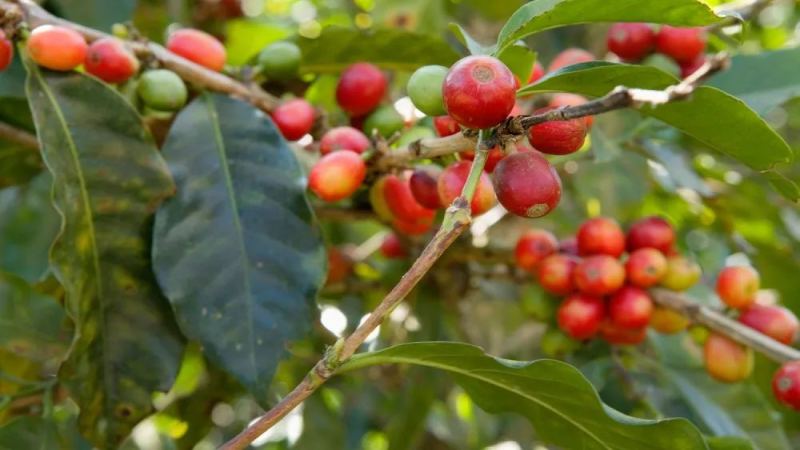
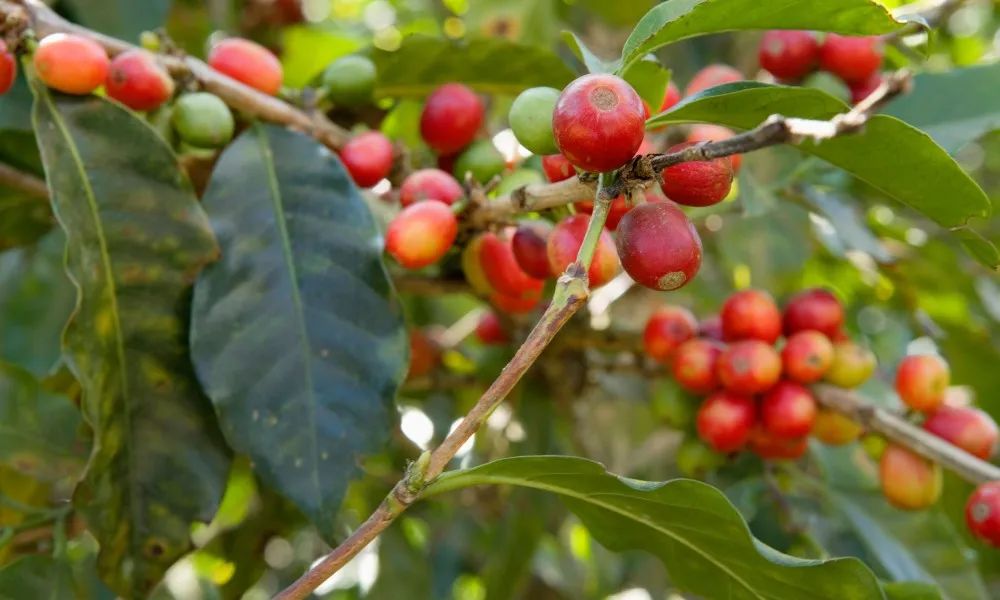
Bourbon and Typica both belong to the ancient fine varieties under Arabica, but Bourbon has significantly stronger resistance to leaf rust than Typica. The Bourbon tree has distinctive visual characteristics: shorter internodal spacing on the branches, and the coffee cherries it produces are rounder and shorter than those of Typica. Common Bourbon coffee cherries gradually ripen from green to bright red—this is the most widely available Red Bourbon. Its cherries are short and round, with high density in the pulp and seed, prominent sweetness, and bright acidity.
Beyond Red Bourbon, the Bourbon family also includes Yellow Bourbon, the low-yielding Orange Bourbon, and the even rarer Pink Bourbon.
To get to know Bourbon coffee, one might start with a freshly ground cup. As the most widely cultivated type, Red Bourbon's flavor profile varies to a greater or lesser degree depending on origin, terroir, and processing method. The following three Bourbon coffees are quite representative:
1. Front Street. Brazil Cerrado Red Bourbon
Recommended for: smooth mouthfeel, low acidity, pronounced nutty aroma; suitable for pour-over, SOE, drip bags, French press, siphon, and other extraction methods
Brazil's coffee-growing terrain falls mainly into two categories: the Brazilian Highlands above 500 meters in elevation, and the Brazilian plains below 200 meters. The primary and most well-known variety grown locally is Bourbon (encompassing Yellow Bourbon, Red Bourbon, and Flat Bean Santos). Its flavor profile is characterized by low acidity, nutty notes, balance, and moderate body. Due to the enormous volume of production and to conserve water, Brazil predominantly uses the semi-washed (pulped natural) process. The beans are well-suited to medium-dark roasting, which brings out aromas of nuts, toasted bread, and caramel along with a smooth mouthfeel.
2. Front Street. Brazil Queen Estate Yellow Bourbon
Recommended for: creamy peanut, chocolate, roasted hazelnut, caramel, and the clean sweetness of sugarcane; suitable for moka pot, SOE, pour-over drip bags, and Clever Cup immersion
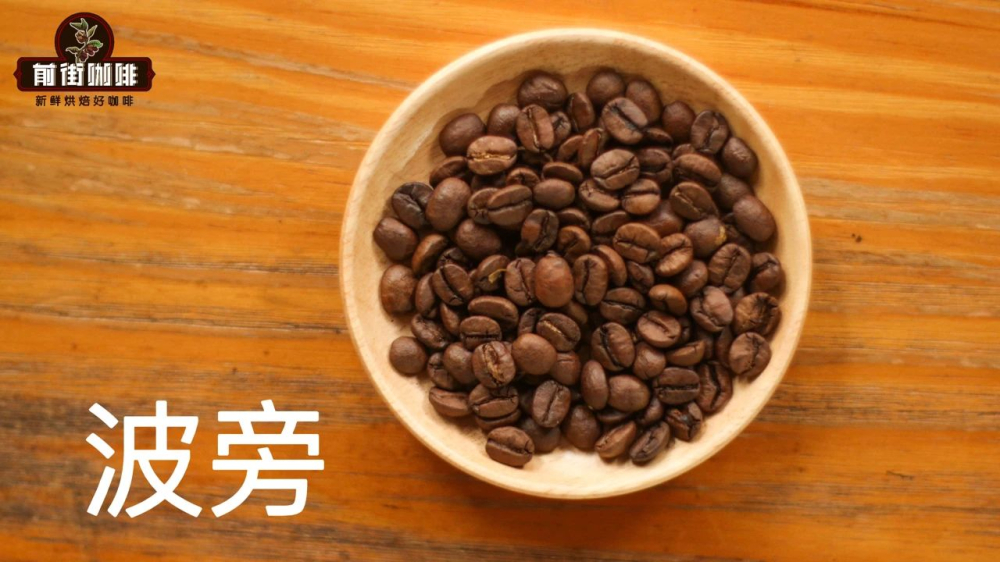
Front Street Queen Estate uses the rare Yellow Bourbon variety, sourced from the Mogiana region in eastern Brazil. The estate employs a semi-washed process to highlight its rich mouthfeel. Based on flavor considerations, Front Street. Brazil Queen Estate coffee is produced with a medium-dark roast, carrying the sweetness of sugarcane juice, black tea, and fruit, with prominent nut and chocolate notes, mild acidity, and a bright, smooth, and delicate mouthfeel.
3. Front Street. Rwanda Red Bourbon
Recommended for: berry, citrus, stone fruit, tea-like notes, floral aromas; bright and rounded acidity; suitable for pour-over, drip bags, cold brew, and Clever Cup immersion
Unlike Brazil in South America, African coffee is renowned for its floral and fruity aromas, and Rwanda is no exception. Although this Rwandan single-origin coffee also belongs to the most common Red Bourbon, the different growing environment produces vastly different aromas. Front Street. Rwanda Red Bourbon is washed-processed, sourced from high-altitude areas above 1,600 meters, featuring distinct dark berry, citrus, and floral notes with a tea-like finish. The acidity is bright and rounded, with low bitterness—ideal for those who enjoy floral and fruity flavors.
The above content is compiled by CoffeeHunters, a coffee news website.


