







How Does the Indonesian Coffee Grading System Work?
Indonesian Mandheling is exported under a coffee grading system that relies mainly on bean size, using the familiar 17/18 screen specification, and on the number of defective beans. Regular quality requirements include no live insects, no moldy or rotten-smelling beans, moisture content at or below 12.5 percent, and an impurity rate below 0.5 percent. Grading is checked against a 300-gram sample.
Because Indonesia's coffee varieties are mixed and mostly hybrid descendants, Mandheling can be grouped within the Arabica category. Most large-scale production uses the wet-hulling method, which shortens processing time but raises the defect rate, since parchment is removed before the beans are fully dry and the friction can crack them. Manual sorting before export removes those incomplete beans.
Indonesian Mandheling coffee beans are deeply favored by coffee lovers for their rich body and unique regional flavor. This article will start with Indonesia's coffee grading system, analyzing Mandheling's Arabica classification, the impact of wet-hulling on quality, and the specific criteria for the G1 grade. At the same time, Front Street Coffee will share the cupping flavors, roasting approach, and brewing parameters of Golden Mandheling, helping readers gain a comprehensive understanding of this classic coffee bean from green bean to cup.
When Indonesian Mandheling is exported, it is usually graded according to bean size, using internationally common screen specifications as the grading basis, namely the familiar 17/18 mesh. Because Indonesia's coffee varieties are relatively mixed and mostly hybrid descendants, if defined from a genetic perspective, Indonesia, like Yunnan, can also be included in the Arabica coffee category.
Coffee grading often comprehensively considers factors such as defect ratio, bean screen size, growing altitude, green bean density, and processing method. Different producing countries and regions also have different green bean rating methods due to historical background, trade needs, climate conditions, and topographical differences. In this article, Front Street will focus on Indonesia and discuss how local green coffee beans are graded.
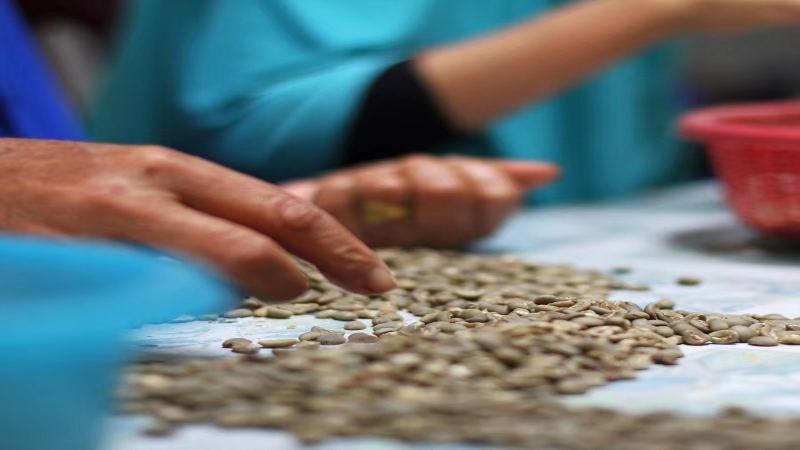
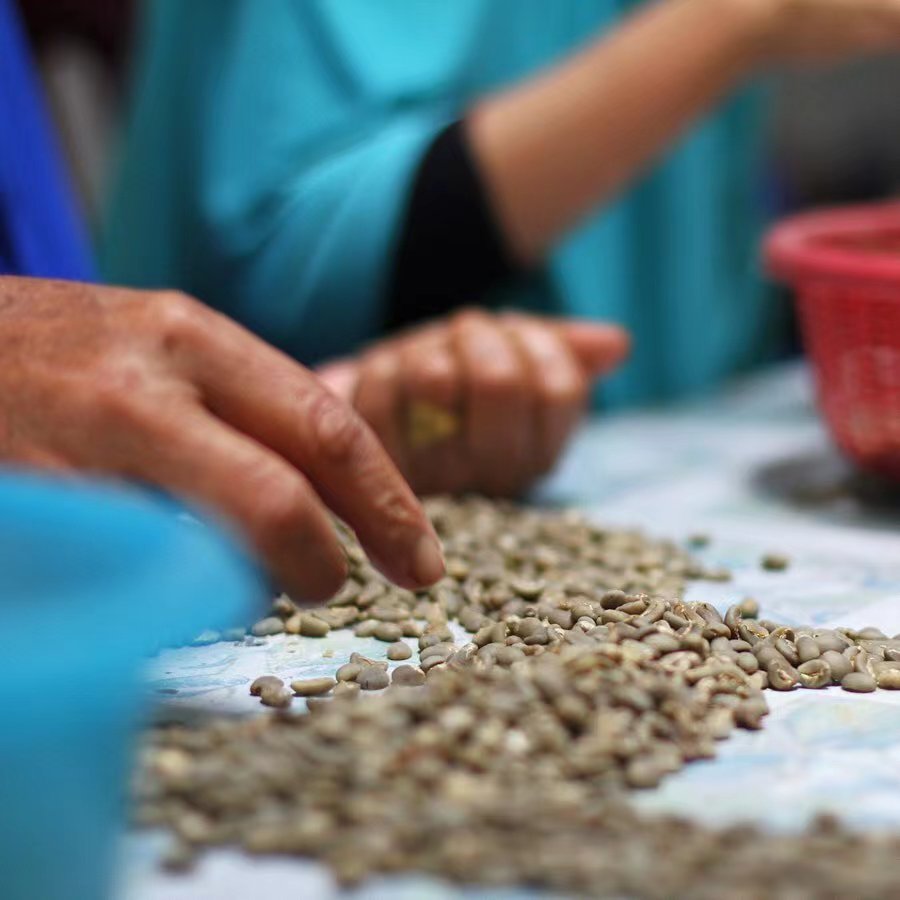
Indonesia is located around the equator and has a tropical rainforest climate. Coffee beans produced on a large scale generally use the relatively extensive wet-hulling method. This processing method greatly shortens the overall processing time, but because the parchment layer needs to be removed while the beans are not fully dry, the friction is greater, and the green beans are easily cracked or crushed, especially with small chips often appearing at both ends. For this reason, wet-hulled Indonesian coffee beans generally have a relatively high defect rate, and green bean traders arrange manual sorting before export to remove incomplete defective beans.
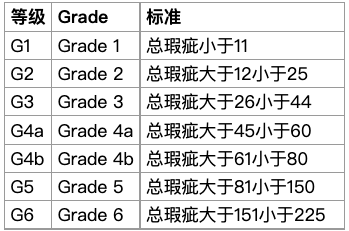
Indonesian coffee grading uses the number of defective beans as the main basis, with bean size as an auxiliary reference. Indonesia's requirements for regular quality include: no live insects, no moldy or rotten-smelling beans, maximum moisture content of 12.5%, and impurity rate below 0.5%. When grading by defect rate, 300 grams is used as the base, and the grades range from Grade 1 to Grade 6, for a total of 6 levels.
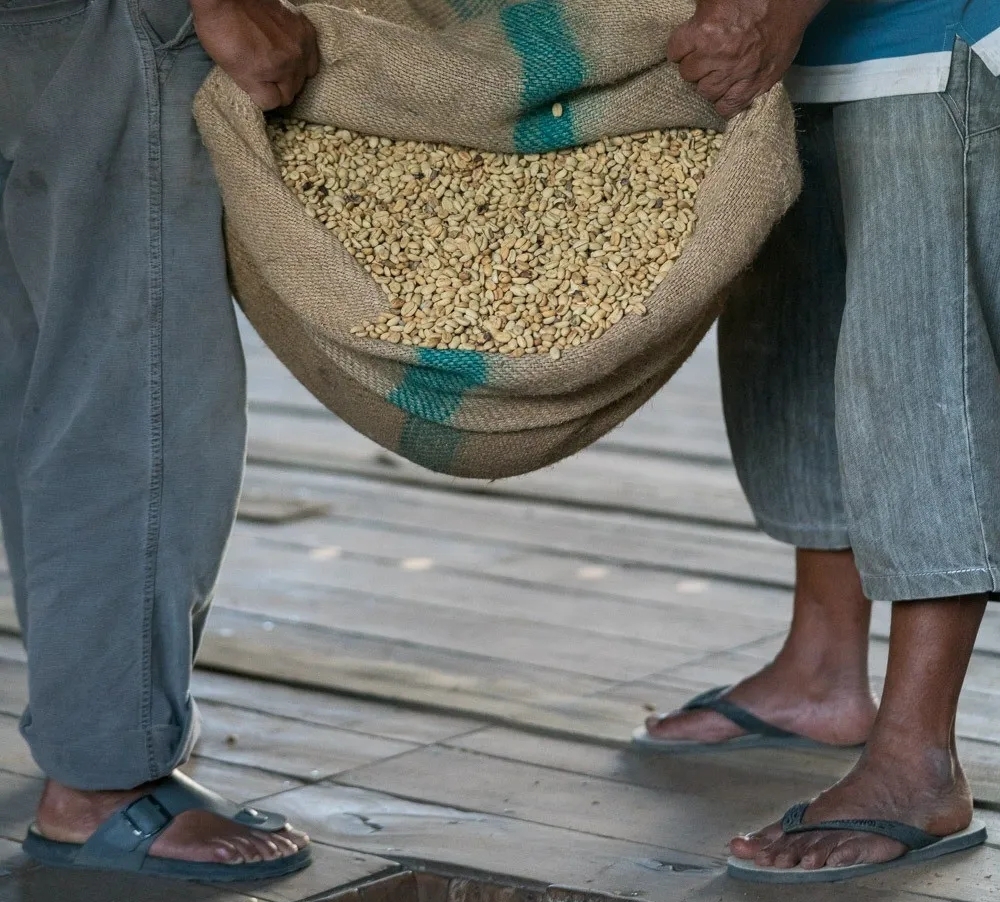
The burlap sacks of Indonesian green coffee beans usually indicate: country + grade name + green bean trader. For example, the Lindong Mandheling coffee on Front Street's bean list and Front Street PWN Golden Mandheling coffee both belong to the G1 grade. Among them, the green bean sack of Front Street PWN Golden Mandheling coffee is printed with "PWN GOLDEN MANDHELING TRIPLE PICKED Grade 1 PROD OF INDONESIA 30KGS NET". On the basis of G1, the Indonesian PWN company uses 1 mechanical sorting plus 3 manual sortings; the Mandheling green beans produced are uniform in color and regular in shape, belonging to extremely high-quality Indonesian coffee beans.
Although the wet-hulling method increases the defect rate of coffee beans, the coffee flavor does not become worse because of it. Instead, it develops a unique aroma. In the final drying stage of the wet-hulling method, there is no parchment protection, and the green beans are directly exposed to the environment, allowing various microorganisms to grow and giving Indonesian coffee its distinctive woody, spicy, and herbal notes, which is what we often call the "taste of place." In order to let more people taste this unique flavor, Front Street has included Indonesian Lindong Mandheling coffee beans in its everyday drinking bean series. The original intention of Front Street launching small-package everyday drinking beans is to hope that coffee beginners can understand the essence of coffee by tasting the basic flavors of different producing regions.
In order to present the classic rich flavor of Mandheling coffee, Front Street chooses a medium-dark roast for both Mandheling coffees, making the aromas of dark chocolate and caramel more prominent. After Mandheling coffee beans enter their optimal tasting period, the aroma is at its fullest. Front Street believes that brewing with freshly roasted coffee beans is crucial. The aromatic substances in coffee beans accelerate their loss over time, and this affects the final flavor presentation of the coffee. Front Street hopes every customer can drink fresh, good coffee, so it only ships roasted beans freshly roasted within 5 days. Adding logistics time, they are just right to enjoy upon receipt.
Front Street's coffee brewing parameters are all based on the characteristics of the coffee beans, the roast level, and the flavor profile. Whenever a coffee bean is launched, Front Street evaluates it through cupping. Front Street PWN Golden Mandheling coffee shows flavors of nuts, dark chocolate, spices, pine wood, and caramel in cupping, with relatively weak acidity and a high body.
The baristas at Front Street Coffee (FrontStreet Coffee) choose the KONO dripper to brew this kind of rich-bodied coffee. Compared with the v60, the KONO dripper has a smooth curved surface, weaker exhaust effect, and straight ribs that occupy only one quarter of the dripper, allowing the coffee bed and hot water to form immersion extraction and making the coffee taste rounder and richer. The KONO dripper is also suitable for coffees such as Brazil's Queen's Estate coffee and Jamaica Blue Mountain No. 1 coffee.
Dark roasting makes the internal structure of coffee beans loose, so we can crush them with a gentle pinch, which indicates that after grinding into powder they have strong water absorption. In order to avoid the coffee powder releasing too many bitter substances after absorbing water, Front Street will adjust the grind coarser and use lower-temperature water for pour-over. For the coffee-to-water ratio, Front Street will use the commonly used 1:15. If you want a stronger taste, you can use 1:13, adjusting according to your own preference.
Recommended brewing water temperature: 87–88°C Coffee powder: 15g Coffee-to-water ratio 1:15, grind size: medium-coarse grind (70% passing through China standard No. 20 sieve) Use a three-stage pouring method. Pouring in three stages can better express the rich body of Golden Mandheling coffee as well as its caramel sweetness.
For the first stage, pour 30ml for blooming. This pour fully wets the coffee powder and allows degassing, so that the flavor substances of the coffee can be better extracted afterward. For the second stage, pour 100ml. This stage mainly washes out the golden foam of Mandheling and raises the coffee bed. For the final stage, gently pour 95ml in the center. This can improve the coffee's sweetness, overall presenting a thick, rich body, caramel sweetness, and notes of chocolate and nuts.
For professional coffee knowledge exchange and more coffee bean information, please follow Coffee Workshop (WeChat public account cafe_style)
For more specialty coffee beans, please add the private WeChat of Front Street Coffee (FrontStreet Coffee), WeChat ID: qjcoffeex
The above content is compiled by CoffeeHunters, a coffee news website.


