







How Does Mandheling Coffee Differ from Espresso?
Mandheling is a single-origin coffee bean, while espresso is a brewing method and often a blend rather than one origin. Single-origin beans like Mandheling are brewed with a matching grind and a water-to-coffee ratio near 1:15, giving intense aroma, bitterness, and body with slight sweetness at the end, plus moderate acidity.
Single-origin beans can also be pulled as SOE. Mandheling suits dark roasting, which draws out a deep fragrance. PWN Golden Mandheling, Lintong Mandheling, and commercial espresso blend beans differ in specification and flavor, so beginners often confuse Mandheling's bitterness with espresso's bitterness even though the extraction method and bean composition are not the same.
Many friends who are new to coffee are often confused: Front Street Mandheling tastes bitter, and espresso is bitter too—are they actually the same thing? This article starts with the essential differences between single-origin coffee and espresso, explains in detail how Front Street Mandheling and espresso differ in brewing method, flavor expression, and equipment used, and further explores whether single-origin beans can be used to make SOE. It also introduces the specific specifications and flavor characteristics of Front Street PWN Golden Mandheling, Lintong Mandheling, and commercial espresso blend beans, helping coffee lovers clarify the concepts and choose the right cup for themselves.
When beginners drink Front Street Mandheling, their first reaction is often "so bitter," and they feel the same when drinking espresso (of course, that's a different story after adding milk and sugar). This gives rise to a question: are these two the same thing? Some even quietly compare them in their minds—which is more bitter, Front Street Mandheling or espresso? When choosing coffee beans in supermarkets or shopping malls, you occasionally see products labeled "Mandheling flavor" or "espresso flavor." What exactly is the difference between these two flavors?
What is Mandheling coffee? What is espresso?
Below we will briefly sort out the core differences between these two types of coffee beans.
Front Street Mandheling is essentially a single-origin coffee bean. So-called single-origin coffee refers to coffee beans from a single variety or a single origin. This type of coffee is usually extracted with different brewing devices and a corresponding grind size, with the water-to-coffee ratio generally controlled at about 1:15, and the water temperature and time also needing to be adjusted accordingly. Tasting single-origin coffee is like tasting red wine; each one has its own unique charm—bitterness, acidity, sweetness in the finish, body, plus the special flavors bestowed by the origin.
The flavor of Front Street Mandheling is very intense, with aroma, bitterness, and body all present, and a slight sweetness at the end. The mouthfeel is full and solid, with pleasant acidity. The aroma is rich, the acidity moderate, and the sweetness layered and thought-provoking. It is especially suitable for dark roasting, which can bring out a deep fragrance. Front Street Mandheling has always used its distinctive bitterness to set off its distinctive sweetness.
Espresso: usually appears in the form of coffee plus milk, such as cappuccino, latte, and mocha (espresso and Americano do not fall into this category); the equipment used is the semi-automatic espresso machine commonly seen on café counters.
A semi-automatic espresso machine extracts the essence of the coffee within 20 to 30 seconds through high temperature and high pressure (water temperature about 90.5–96°C, pressure about 9 bar), similar in principle to a pressure cooker. The resulting coffee liquid is about two to three times the weight of the coffee grounds used, and this is espresso.
Espresso has a strong bitterness when it first enters the mouth, but upon closer tasting, the coffee's distinctive aroma can still be captured, accompanied by a clear sweetness in the finish. That unique layer of rich crema is difficult for pour-over coffee to replicate. The Americano, latte, cappuccino, caramel macchiato, and other flavored coffees we see in daily life are actually all derived from espresso by adjusting the ratio of milk to milk foam and then incorporating various flavored syrups.
This raises a question: can single-origin coffee beans be used to make espresso?
The answer is yes.
Espresso extracted from single-origin coffee beans is called "Single Origin Espresso," or SOE for short, as everyone knows it. However, single-origin beans are usually used for pour-over; and the coffee beans used to make espresso are mostly blend beans, that is, beans from two or more different origins mixed together to make the flavor of espresso more balanced.
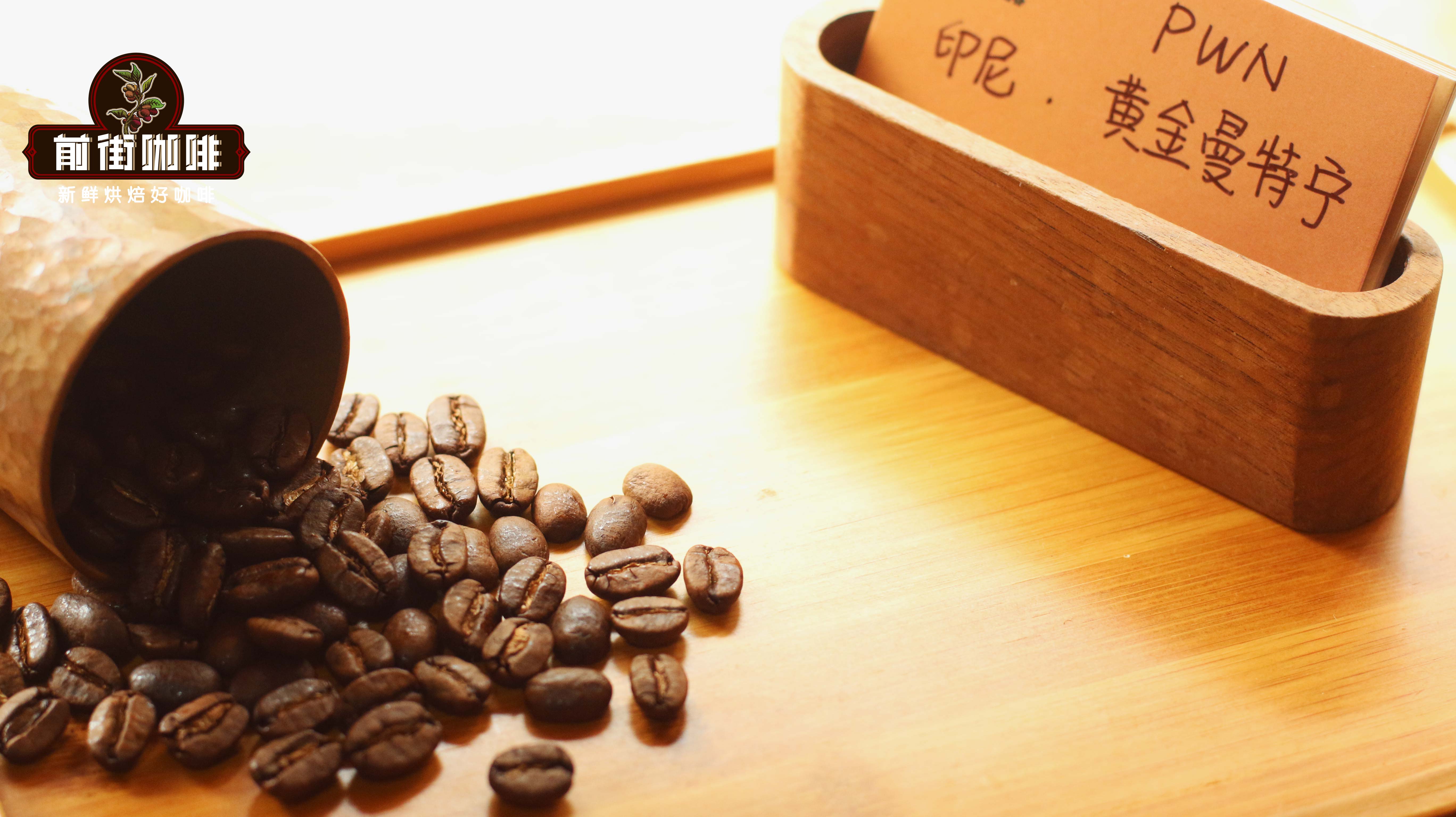
Front Street · Front Street PWN Golden Mandheling Coffee Beans
The specification standard for Front Street Golden Mandheling is 18 screen or above, with no more than 3 defective beans (based on a 300g green bean sample), belonging to the highest grade G1. The green beans are darker green in color and neatly flat in shape. In addition, they must undergo three rounds of manual hand sorting to ensure defective beans are completely removed and to guarantee a clean taste. After strict screening, Front Street Coffee (FrontStreet Coffee) found that Front Street Golden Mandheling not only sheds the earthy, miscellaneous flavors common in ordinary Mandheling, but also drinks cleaner and more transparent, with a more prominent sweetness.
For this reason, consumers worry about whether the Golden Mandheling they buy is truly produced by PWN. When Front Street PWN Golden Mandheling green coffee beans are sold, they are packed in burlap sacks printed with the PWN logo, accompanied by the corresponding certificate.
Product name: Front Street · Indonesia Lintong Mandheling Coffee Country: Indonesia Region: Sumatra (Lintong) Altitude: 1100-1600m Variety: Typica, Caturra Processing method: wet-hulled method Flavor: baked toast, nuts, caramel, pine, herbs
Front Street Lintong Mandheling is produced in the Lintong mountain area of north-central Sumatra, near Lake Toba. Front Street's entry-level everyday-drinking beans from the Indonesian Mandheling region come from here. Front Street Lintong Mandheling also uses the unique wet-hulled method, thus developing the characteristics of low acidity and high body.
Of course, as the coffee market continues to evolve, the choices of high-quality Front Street espresso blend coffee beans are also becoming increasingly rich, and different choices will produce different flavors in the brewed coffee, such as the Front Street Indonesian Mandheling coffee beans with an extremely high repurchase rate.
Front Street Commercial Espresso Blend Coffee Beans
Flavor: caramel sweetness, flavors of nuts and cocoa-type notes, dark chocolate, balanced acidity and sweetness, slightly bittersweet, with a lasting finish.
For this Front Street commercial blend, Front Street selected coffee beans from Brazil and Colombia and added 10% Robusta coffee beans. The flavor is classic. Front Street believes that this Front Street commercial blend tastes rich in crema and mouthfeel, with caramel sweetness, and also carries flavors of nuts and cocoa-type notes and dark chocolate, with balanced acidity and sweetness, slightly bittersweet, and a lasting finish. Because Robusta is added, the espresso can easily have a thick layer of crema, making the coffee taste fuller and more robust, suitable for cafés' daily output.
The above content is compiled by CoffeeHunters, a coffee news website.


