







Are robusta coffee beans really too bitter to enjoy?
Robusta coffee beans taste more bitter and intense than Arabica, but that bitterness is not a flaw. Robusta is the main source of the thick, dense crema on a real espresso shot, and traditional Italian blends add a small share of it to build body, aroma and a lingering cocoa-like finish. Arabica accounts for roughly 70 percent of global production, yet Robusta still holds a firm place in espresso.
Its commercial role is practical rather than decorative. Front Street Coffee's commercial espresso blend uses about 10 percent Robusta beans, enough to round out body and crema without overwhelming the cup. When espresso meets milk, the two species complement each other, and Robusta fills the gap Arabica leaves in mouthfeel. Judged on function instead of reputation, the variety earns its place in coffee production.
In the specialty coffee wave, Arabica is often revered as the premium choice, while Robusta frequently encounters prejudice. However, is this coffee variety, labeled as "bitter" and "cheap," truly worthless? This article will comprehensively analyze the true nature of Robusta coffee beans from multiple perspectives, including botanical characteristics, flavor composition, and commercial uses. You will discover that it is not only the soul source of espresso crema but also plays an irreplaceable role in blends. Front Street Coffee will also use its own blending experience to help you rediscover this "unsung hero" of the coffee world.
Many people equate Arabica with specialty coffee at the mention of it, given that about 70% of global coffee production is Arabica. In contrast, Robusta is often seen as an inferior choice, with its intense flavor and prominent bitterness making it less palatable to ordinary consumers. So, is Robusta really good for nothing? Front Street Coffee doesn't think so. In fact, its uses are quite extensive. The espresso we drink daily often contains Robusta beans; without it, that enticing layer of crema would be greatly diminished—and a successful espresso shot relies precisely on that thick, dense crema. For example, Front Street's commercial espresso blend incorporates 10% Robusta beans.
The Value of Robusta in the Coffee Industry
As a pivotal member of the coffee family, Robusta makes outstanding contributions in the commercial sector. Its existence is not to highlight the superiority of Arabica but to secure a firm place in espresso blends. Traditional Italian blending methods include a small amount of Robusta to enhance the coffee's body and extract espresso with a richer crema.
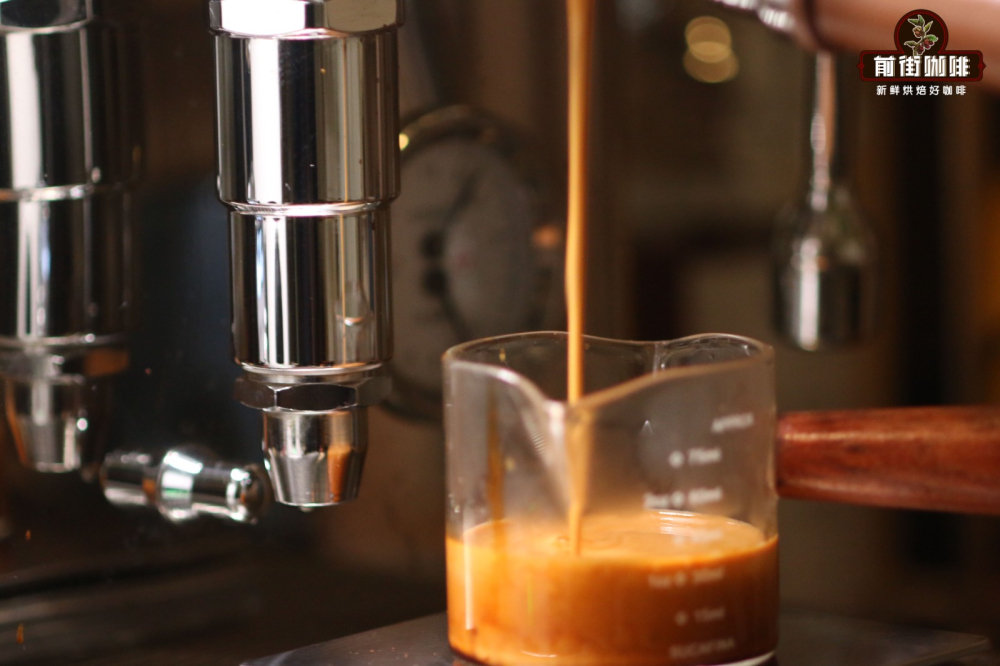
To make an authentic espresso, one needs to blend high-quality Robusta with Arabica in proportion. Among the many coffee beans, high-quality Robusta can give espresso a unique character: enhancing mouthfeel thickness, adding intense aroma, and intensifying bitterness to make the golden crema more striking. Upon careful tasting, one can also detect chocolate or cocoa notes in the aftertaste.
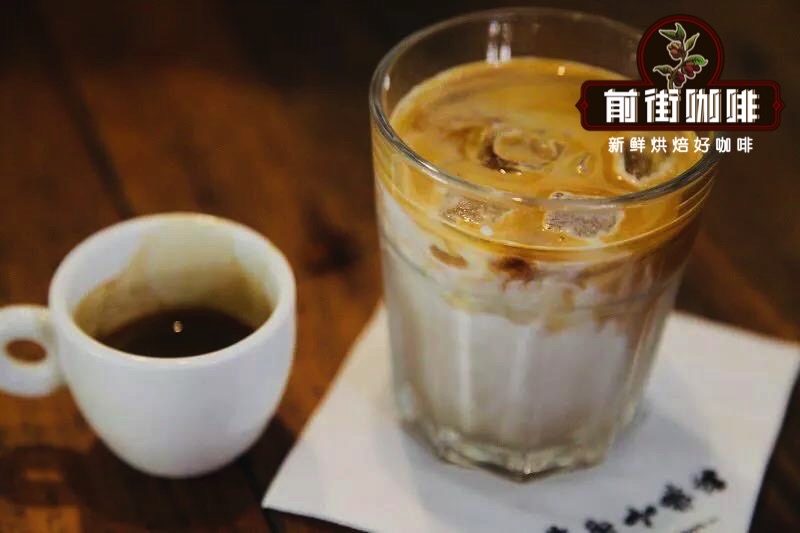
When espresso merges with milk, Robusta and Arabica complement each other, making the milk coffee's texture richer and fuller. Robusta compensates for Arabica's lack of body and is mainly used in espresso blends to achieve a rich crema. Although its flavor cannot compare to Arabica, Robusta has its own irreplaceable value.
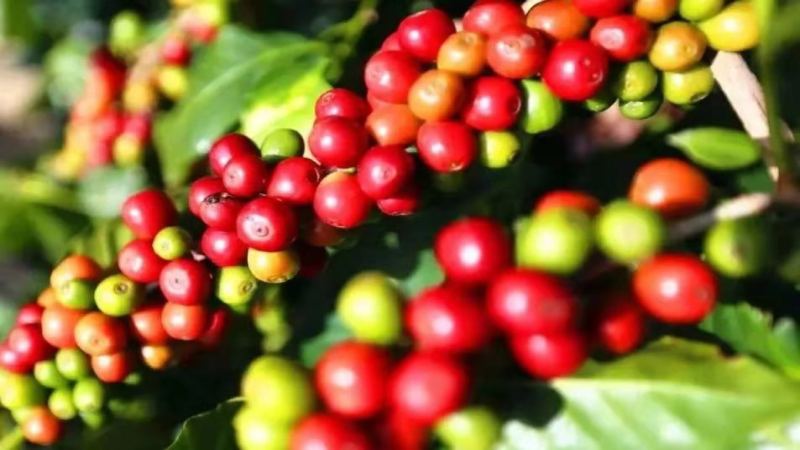
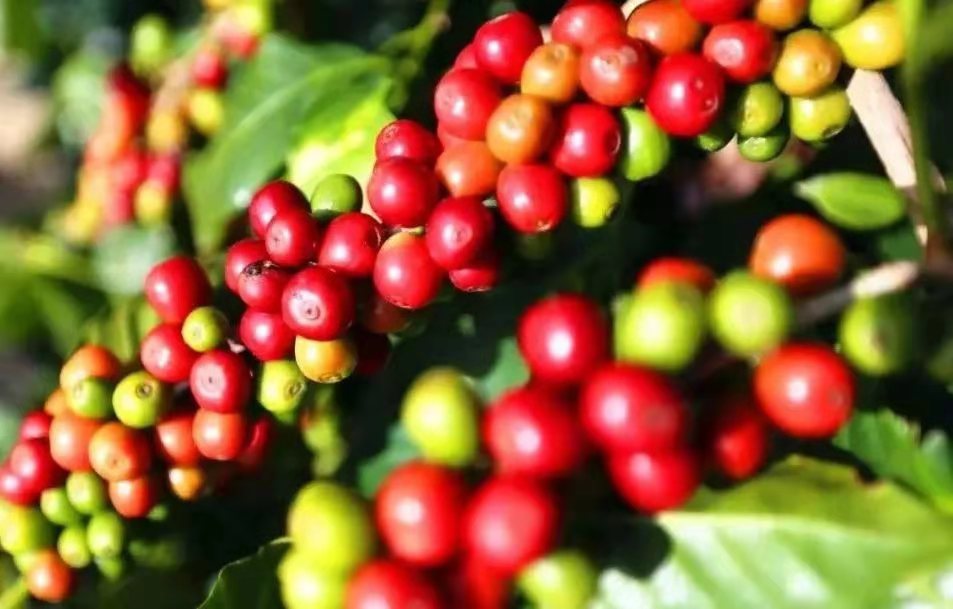
The coffee tree belongs to the Rubiaceae family, blooming and bearing fruit that turns red or purple when ripe, resembling cherries, hence called coffee cherries. What we commonly call coffee beans are actually the seeds after removing the pulp, with each fruit typically containing two coffee seeds. A coffee tree can produce about 0.9 kilograms of green beans per year. There are hundreds of coffee varieties worldwide, but the main ones commercially cultivated are Arabica and Robusta, with Arabica accounting for about 70%.
As a tropical cash crop, coffee is mostly grown in the "Coffee Belt" between the Tropics of Cancer and Capricorn, requiring high and stable temperatures, ample rainfall and sunlight, and well-drained, fertile soil. Today, the Coffee Belt covers over 70 countries and regions, such as Brazil, Colombia, Ethiopia, Kenya, Indonesia on Front Street's bean list, as well as Yunnan and Hainan in China. The unique terroir and microclimates of each producing region provide diverse growing conditions for coffee trees and shape distinct flavors.
Arabica
Arabica is the most popular variety on the market, and its sub-varieties develop rich and unique aromas and sweet-tart flavors due to different terroir conditions like high altitude, volcanic soil, and microclimate, with a mild taste that is more easily accepted by the public. Comparing the components of Robusta and Arabica, Arabica's sucrose content is almost twice that of Robusta. Sucrose converts into aromatic compounds during roasting, endowing coffee with more layered sweet aromas.
Arabica's outstanding flavor has its reasons: it requires high altitude, shade trees, and has weak disease resistance. Robusta, on the other hand, tolerates high temperatures, cold, drought, and humidity, with high yield, strong pest and disease resistance, and excellent environmental adaptability, typically grown in low-altitude plains, facilitating mechanized uniform management and harvesting, thus selling at a lower price. Robusta coffee beans have a unique aroma and bitterness, with caffeine content far higher than Arabica, generally less easily accepted by most people, but they can bring stunning effects when used in espresso. Due to lower cultivation costs, Robusta is more suitable for commercial mass production.
Robusta
Strictly speaking, Robusta should be called Canephora, and it is a widely cultivated sub-species within that species, so Robusta has almost become synonymous with Canephora. Robusta originated in the Congo Basin of West Africa and became widely cultivated due to its low growing altitude, high yield, and ease of planting.
Robusta has extremely strong environmental adaptability and can thrive even at altitudes of 0 to 800 meters. Its chlorogenic acid content is relatively high, about 7% to 10%, and it is less susceptible to pests, diseases, and climate effects. It is usually grown at lower altitudes, bearing more fruit and faster.
The characteristics of Robusta coffee beans are: a unique aroma and bitterness, slightly round and small fruits, and relatively flat and round beans. It is generally used for instant coffee because the extracted coffee liquid is almost twice that of Arabica.
Robusta accounts for 25% to 35% of global coffee bean production, with major producing countries including Indonesia (one washed-processed variety there is a hybrid of Robusta and Arabica and the only coffee bean available in the Chinese market for single-origin drinking), Vietnam, and Africa (centered on West African countries like Ivory Coast, Nigeria, and Angola). In recent years, Vietnam has even included coffee production in national policy, vigorously developing it (Vietnam also produces a small amount of Arabica).

Robusta is unpopular in the coffee circle mainly because its flavor is less appealing than Arabica. Its chlorogenic acid content is extremely high, and chlorogenic acid is the source of coffee's bitterness, typically bringing a full, deep bitterness and flavor notes like walnut, peanut, hazelnut, wheat, and grain; improper processing can also result in earthy flavors. Therefore, it is often used in dark-roasted espresso blends or as raw material for instant coffee.
Since dark-roasted Robusta can produce a rich crema during extraction, Front Street's commercial espresso blend on its bean list incorporates 10% washed Robusta, combined with Colombian washed coffee beans (30%) and Brazilian semi-washed coffee (60%). The resulting espresso has a rich golden crema and nutty aroma. When tasting, it has a toasty bitterness, but more of a creamy, full-bodied mouthfeel; after swallowing, the bitterness dissipates, leaving a lingering fragrance in the mouth.
Although Arabica is more favored, it is not without its drawbacks. The Arabica plant is very "picky" about its growing environment, has low caffeine content, and is more susceptible to pests, so it needs to be planted at altitudes above 800 meters without frost. The higher the altitude, the more significant the temperature difference, which is more conducive to the accumulation of flavor compounds in the fruit and results in a fuller aroma. To display diverse and positive flavors, in addition to high altitude, unique microclimates are also needed, and many famous specialty coffees come from microclimate environments. However, high-altitude terrain is often rugged, making planting, management, and harvesting more difficult, so high-quality Arabica requires higher production costs.
Therefore, Front Street believes that while the coffee bean variety is important, brewing is equally crucial. Moreover, ordinary coffee beans may not even be up to the task of espresso! Although Robusta is not well-regarded, it is extremely popular for espresso.
Front Street Coffee Brewing Suggestions:
No matter what kind of coffee you brew, the freshness of the coffee beans is crucial. Front Street always believes that freshness is closely related to coffee flavor, so the coffee beans sent by Front Street Coffee (FrontStreet Coffee) are all within 5 days after roasting. Front Street's roasting philosophy is "Freshly Roasted Good Coffee," ensuring that every customer receives it in the freshest state. The resting period for coffee is about 4 to 7 days, so when customers receive it, it is at its optimal flavor.
For those who need ground coffee, Front Street warmly reminds: once coffee beans are pre-ground, there is no need to rest them, because the pressure from carbon dioxide in the packaging during transport can also mellow the flavor, and the ground coffee can be brewed immediately upon receipt. However, ground coffee should be used up as soon as possible because it oxidizes quickly upon contact with air, and the flavor will dissipate rapidly. Therefore, Front Street recommends buying whole beans and grinding fresh before brewing to better enjoy the coffee's flavor.
For professional coffee knowledge exchange and more coffee bean information, please follow Coffee Workshop (WeChat public account: cafe_style)
For more specialty coffee beans, please add the private WeChat of Front Street Coffee (FrontStreet Coffee), WeChat ID: qjcoffeex
The above content is compiled by CoffeeHunters, a coffee news website.


