







Why is honey-processed coffee so sweet?
Honey processing keeps the mucilage layer on the green bean; no honey is added. The name comes from the Spanish word miel, used by Costa Rican farmers for the sticky fruit substance, and the method grew out of Brazil's pulped natural approach, which was designed to cut water use. Retained mucilage leaves more sugars in the bean and gives a juicy body with a long, sweet finish.
This is where the coffee originated as a wider processing style: Costa Rica had become a pioneer of modern washed technology with new pulping equipment and wet mills, and between roughly 1997 and 2000 low international prices pushed producers to experiment further. A honey-processed Geisha from Colombia's Cauca department, at about 1,850 meters, shows blackcurrant, blueberry, orange, and red wine notes.
Honey-processed coffee always impresses with its prominent sweetness. This processing method originated in Costa Rica, and the "honey" in its name does not refer to added honey, but to the mucilage layer retained on the surface of the green beans. This article starts with Front Street Coffee's Colombia Hope Estate Geisha, sorts out the historical context, color classification, and flavor logic of honey processing, and fully presents Front Street's V60 three-pour brewing recipe, including dose, grind, water temperature, and pouring rhythm, to help coffee lovers understand why honey processing can save water and be environmentally friendly while delivering a full juicy mouthfeel and a long, sweet finish.
When it comes to coffees with obvious sweetness, many people's first thought often centers on two processing methods: natural and honey. To keep this sweet option always available on the daily bean list, Front Street usually keeps at least one honey-processed lot, such as the recently launched Colombia · Hope Estate Geisha, which is a honey-processed coffee. It has an intense rose aroma and quite high sweetness, and has received favorable reviews from many customers. So why is the sweetness of honey-processed coffee so prominent? Does it really have extra honey added?
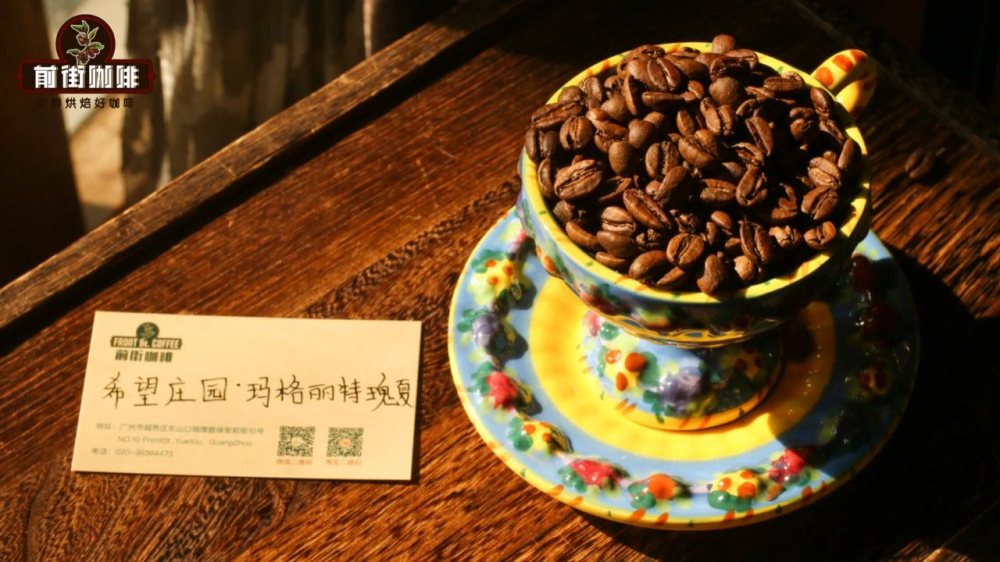
Front Street Coffee (FrontStreet Coffee): Colombia · Hope Estate Geisha
Country: Colombia Region: Cauca Department Altitude: 1,850 meters Variety: Geisha Processing Method: Honey Process Flavor: Blackcurrant juice, blueberry, orange, smoked plum, red wine
What does "honey" in honey processing mean?
The English term for honey processing is Honey Process, also written as Miel Process, and the "honey" comes from the Spanish word Miel, which literally means honey. This naming was first spread from Costa Rica, where local coffee farmers habitually call the viscous, sticky substance inside the fruit "Miel." The predecessor of honey processing is Brazil's Pulped Natural, that is, semi-natural or pulp natural, and its original purpose was to reduce production water usage. As for how it rose in Costa Rica, Front Street found two key time points.
In the latter half of the 20th century, Costa Rica mainly produced washed coffee and, with innovative coffee cherry pulping equipment and wet mills, became a pioneer of modern washed technology.
Around 1997 to 2000, international coffee prices remained depressed for a long time. To increase income, many growers stopped selling coffee cherries directly to large processing stations and instead shifted to producing and selling on their own. In this way, coffee farmers gained more control over the processing stage and naturally became willing to try more techniques. It was against this background that pulping and drying technology was introduced into production.
Honey processing first came into public view in 2006. At that time, coffee farmer Juan Ramón Alvarado won first and second place with two honey-processed coffees in the Costa Rica GOLDEN HARVEST green bean competition organized by the SCAA. The following year, in the first Costa Rica CoE, three of the top five were honey-processed coffees.
In 2008, a major earthquake struck Costa Rica, severely disrupting electricity and water supply in many areas. To cope with water shortages and power outages, local coffee farmers began to adopt this water-saving technique. At first, many people had concerns, believing that drying with pulp and mucilage still attached could easily cause uncontrolled fermentation, but after experimentation, many farms not only obtained positive results but also greatly reduced water consumption. Later, by regulating the degree of mucilage fermentation, they developed multiple honey processing styles with different flavor expressions.
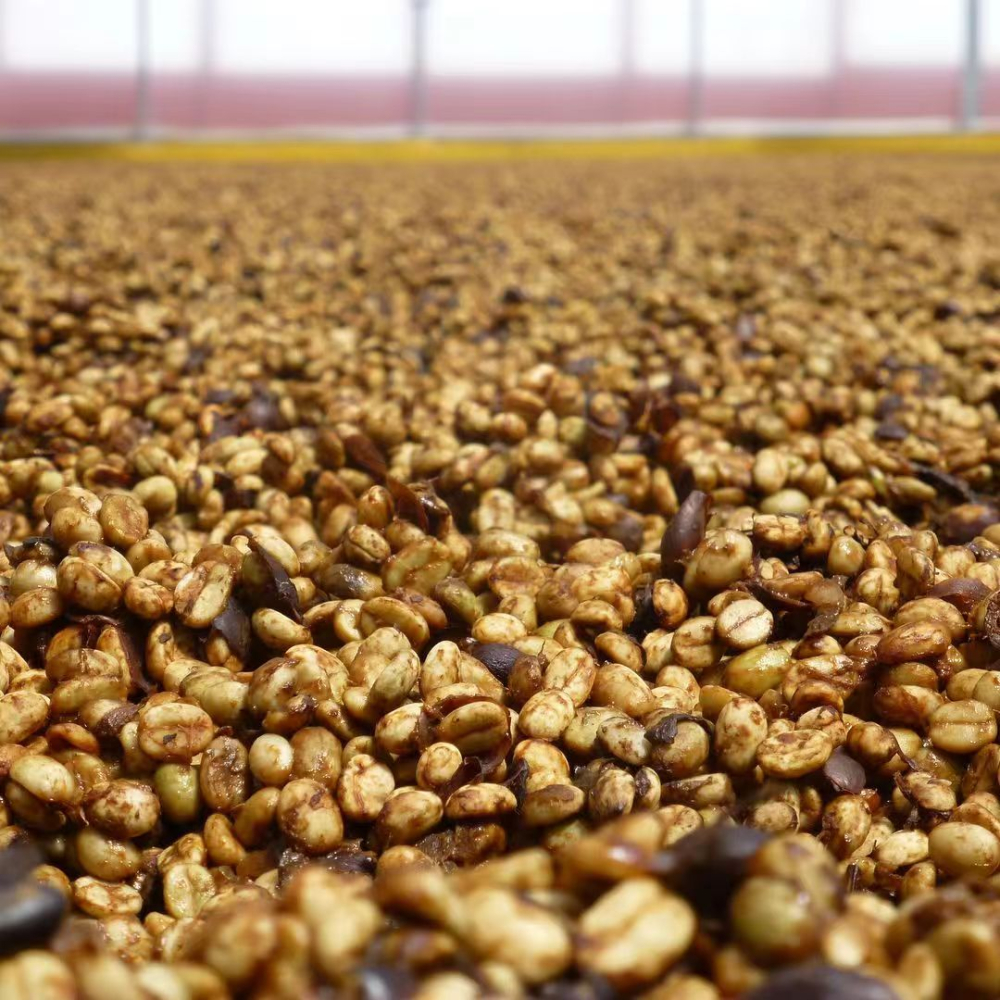
In terms of naming, we often hear of colored honey processes such as black honey, red honey, yellow honey, and white honey. This is because mucilage contains a large amount of sugar, and green beans that retain only mucilage oxidize after contact with air. The bean surface gradually turns from its initial yellow-white to golden yellow, and as fermentation progresses, it may even become dark red or even black-purple until drying is complete.
Theoretically, black honey or red honey coffee is closer to natural than yellow honey or white honey, and the fermented character is also more obvious. But even today, the industry still has no precise standard to define honey processing of different colors, and most are determined by producers themselves. Therefore, naming is often confusing; for example, what one producer labels "red honey" may be called "yellow honey" by another.
The drying time for honey processing falls between natural and washed, ranging from 2 weeks to 4 weeks. The flavor also often sits between natural and washed, with most leaning toward a natural profile, featuring preserved-fruit-like sweetness and often a solid, bright acidity. Compared with the washed method, honey processing can reduce fresh water use by about 40%, while avoiding the negative defective flavors caused by long exposure to the sun. Coffees using honey processing usually show a full, delicate fruity sweet-tartness and refined, complex floral notes in cupping, with an overall fresh and clean character. Water-saving, environmentally friendly, and excellent in flavor, honey processing gradually became popular in Central and South America and is also widely favored in the specialty market.
Next, let's move on to the practical part and see how Front Street brews this Geisha. The parameters are as follows:
Dose: 15g Grind: 9.5 on the EK43, 80% passing a No. 20 sieve, caster sugar grind. Coffee-to-water ratio: 1:15 Brewing temperature: 92°C Brewing method: three-pour Dripper: V60
First comes the blooming stage. Pour water at twice the dose and let it bloom for 30 seconds. As you can see, this Geisha absorbs water well and the bed domes up noticeably.
After blooming, pour in circles from the center outward until the entire coffee bed is wet, then continue pouring in larger circles. At this point, use a strong flow, with the aim of raising the coffee bed to give the coffee more layering. The poured amount is 130 ml.
When the hot water has drained through most of the way, switch to a small flow and pour in small circles around the center, adding the remaining 65 ml of hot water. After pouring is complete, wait until the water finishes draining, then stop extraction.
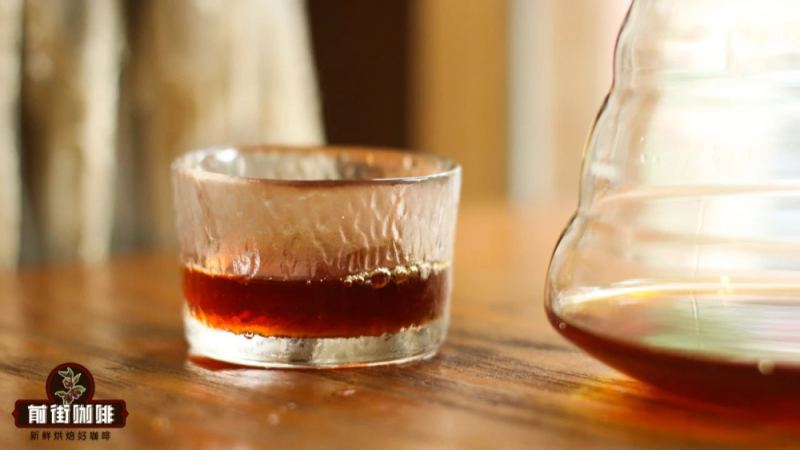
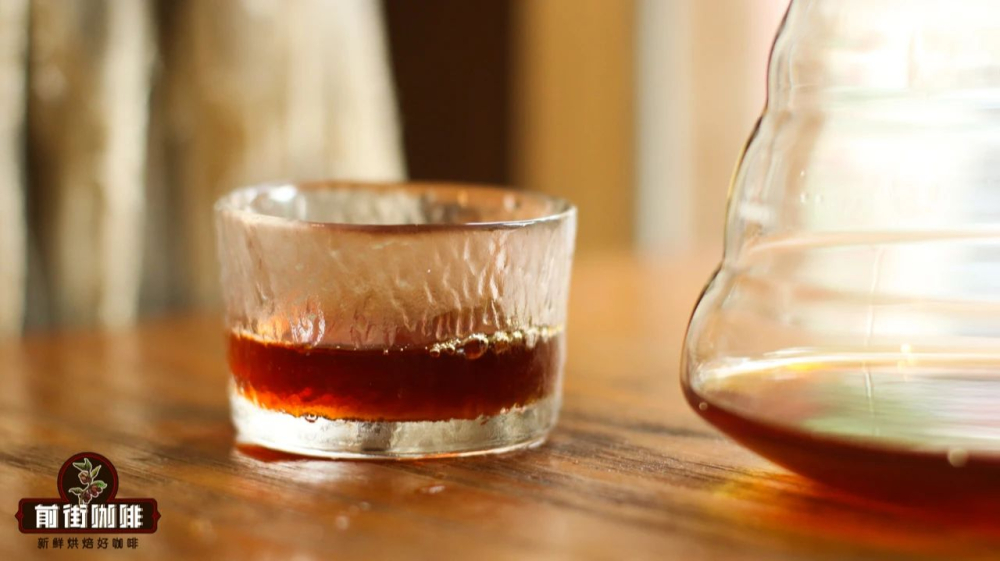
The Hope Estate Geisha brewed this way, as described earlier, has a full purple grape juice character, an intense rose floral aroma, and lively citrus acidity. The sweetness is high, the finish is long and sweet, and the performance is excellent!
The above content is compiled by CoffeeHunters, a coffee news website.


