







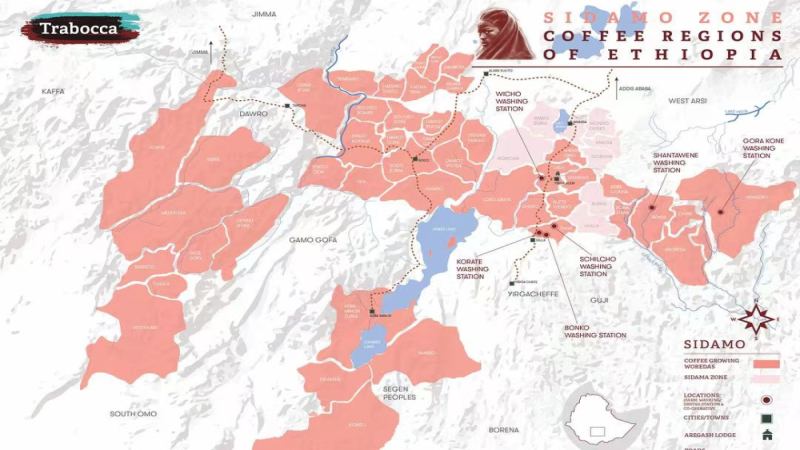
Where are coffee beans grown in the Sidamo and Bensa regions?
Sidamo coffee comes from the highlands of the East African Rift Valley in southern Ethiopia, where rainfall reaches roughly 1,550 to 2,220 millimeters a year. Abundant rain, mild temperatures, fertile soil, and high elevation combine to give the region its bright acidity, sweet floral aroma, and rounded, juicy body.
Sidamo is one of Ethiopia's official regions, and the name also appears as Sidama, after the indigenous Sidama people. Coffee from here shows spice, floral, and fruit notes. The Bensa sub-region, at high altitude, produces lots such as Front Street Hamasho natural, with light floral and fruity sweet-tart flavors.
Sidamo coffee has always captured the hearts of many coffee lovers with its bright acidity, sweet floral aroma, and rounded juicy feel. This article systematically explores the charm of Sidamo coffee, from the region's background, the origin of its name, its performance on the COE list, to the cultivation and processing details of the Bensa sub-region. As a loyal fan of Sidamo, Front Street Coffee offers a variety of single-origin recommendations, among which the Front Street Hamasho natural bean comes from the high-altitude Bensa region, presenting light floral notes and fruity sweet-tartness. Whether you are new to specialty coffee or looking for your next daily bean, this content will help you gain a more comprehensive understanding of Sidamo's unique value.
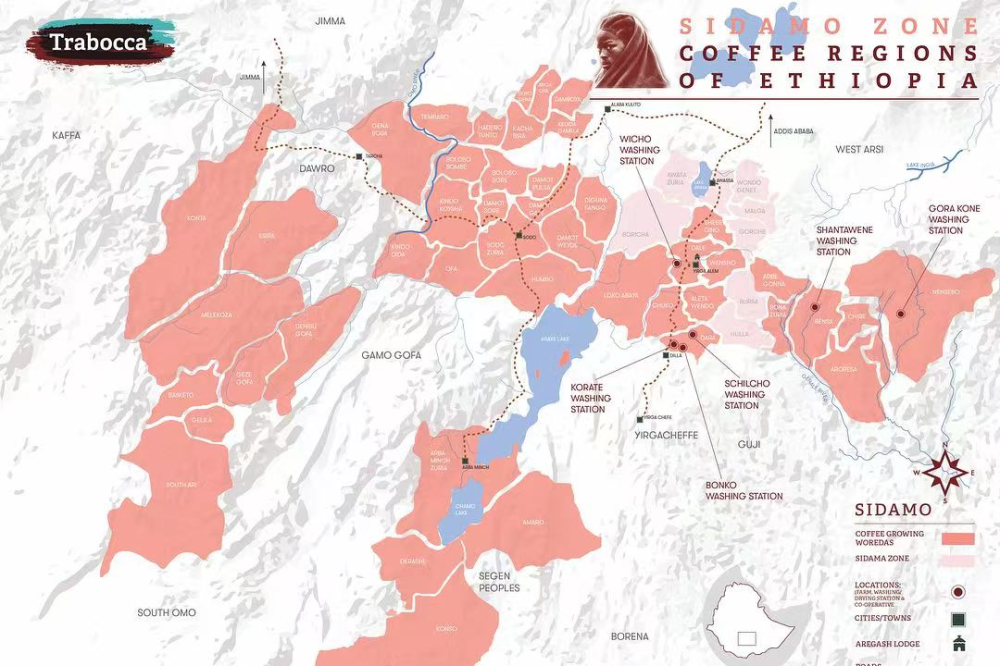
Sidamo coffee can be said to be an indispensable presence in the hearts of many coffee enthusiasts. Its clear and lively taste, sweet floral aroma, and juice-like rounded texture make it unforgettable at first sip. Front Street Coffee is equally fond of Sidamo coffee. Today, let's talk about the story behind this coffee that is worth knowing.
The Sidamo region is located in the highlands of the East African Rift Valley, in southern Ethiopia, with annual rainfall of approximately 1,550 to 2,220 millimeters. Abundant rain, comfortable temperatures, fertile soil, and relatively high altitude together have made Sidamo coffee renowned. As one of Ethiopia's three official regions, the coffee produced here is known for its diversity, high quality, and complex flavors. After cupping and comparing many excellent Sidamo single-origin coffees, Front Street Coffee has noticed that coffees from this region typically exhibit bright acidity, a viscous and smooth mouthfeel, and rich layers interwoven with spice, floral, and fruity notes. At Front Street Coffee alone, there are multiple Sidamo options available, such as Front Street Natural Huakui, Front Street Hamasho, and Front Street ALO Village, demonstrating the popularity of coffees from this region.
I wonder if you have ever noticed that whenever you look up information about this coffee origin, you always encounter two different spellings: one is Sidamo, and the other is Sidama.
The pronunciation "Sidamo" originates from the local indigenous Sidama people. Like other ethnic groups in Ethiopia, the Sidama people have their own traditions and culture, and even have a New Year recognized by UNESCO—Fiche Chambalala—during which more than five million people gather in the capital Hawassa to celebrate together. As early as the late 18th to early 19th century, the region was invaded and annexed, and the invaders mispronounced Sidama as Sidamo. Therefore, for the Sidama people, this name carries a humiliating connotation. By the 1990s, the Ethiopian government began implementing a federal system, redividing administrative regions according to major ethnic residential areas and languages, and the Sidama took this opportunity to restore their historical name: Sidama.
However, before the administrative regions were redivided, Sidamo Coffee had already gained worldwide fame for its distinctive aroma. Therefore, compared to Sidama, people are more accustomed to calling it Sidamo. In addition, when the Ethiopian government protected Sidama coffee through trademark registration, it also chose the old name Sidamo® as the official registered trademark. To this day, domestic consumers are still more accustomed to calling the coffee from here "Sidamo."
The COE competitions in 2020 and 2021 were both held in Ethiopia. Among the Sidamo sub-regions that made it into the COE, they were mainly concentrated in four towns: Arbegona, Bensa, Bura, and Bona Zuria. These four towns are geographically very close, all located in the Sidamo highlands. In the 2021 COE Sidamo listed sub-regions, all five champion farms came from Bensa town.
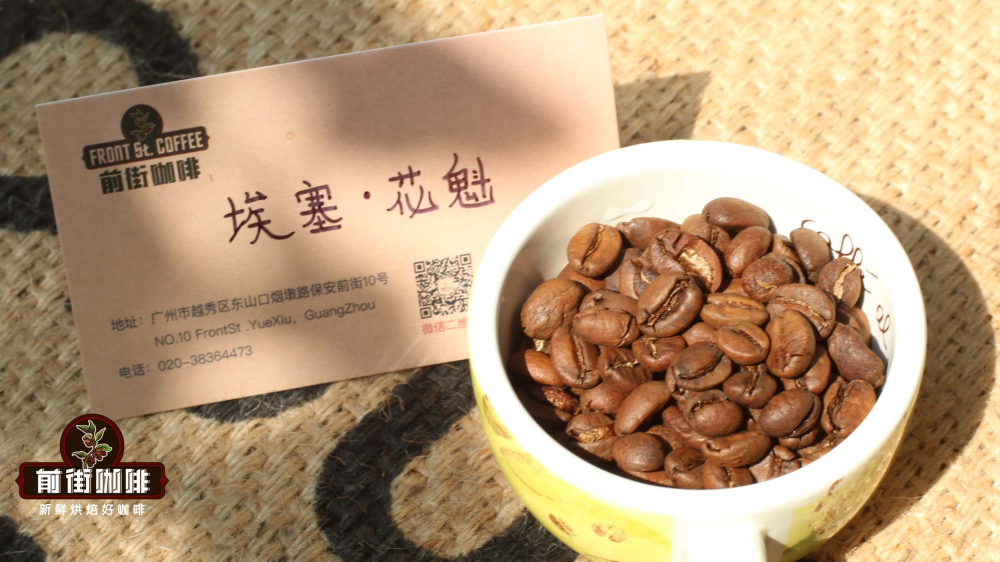
Front Street Hamasho is a natural-process coffee bean from the Bensa region of Sidamo. Because it is grown at extremely high altitudes, the significant temperature difference between day and night allows the coffee cherries to absorb more nutrients and convert them into richer aromatic compounds, especially light floral notes and fruity sweet-tartness.
Bensa is located in the Sidamo region of southern Ethiopia, at an altitude between 1,800 and 2,300 meters. The high altitude makes the coffee flavor more complex. In Bensa, you can taste typical and intense fruity notes, and sometimes even strawberry-like flavors.
For Bensa coffee beans, washed, natural, and red honey processing are all suitable. Among them, washed Bensa has a bright aroma and pleasant acidity. During harvest season, farmers deliver ripe coffee cherries to the processing station, where they undergo screening and grading, removal of the skin, fermentation of the mucilage, rinsing with clean water, and then spreading on drying beds to dry. It should be noted that during the first few days of the drying process, the beans need to be turned every 2 to 3 hours. Depending on weather conditions, the coffee beans need 12 to 15 days to dry until the moisture content drops to 11.5%.
Bensa sounds similar to a Guangdong herbal tea called "ban sha liang cha," but it is not herbal tea! Bensa coffee beans have a unique and delicate taste, mild yet rich, accompanied by fruity aromas, smooth on the palate with a long-lasting finish.
The above content is compiled by CoffeeHunters, a coffee news website.


