








How Does the Kaffa Forest Shape Ethiopian Arabica Coffee?
Ethiopia is the birthplace of Arabica coffee, and the Kaffa forest is where the most widely told origin story begins: around 900 AD a shepherd named Kaldi noticed his flock became unusually active after eating red berries. The English word coffee is often traced to the place name Kaffa, while Ethiopians call the drink Buna, meaning beans.
Ethiopian specialty coffee comes from several distinct regions, including Yirgacheffe, Sidamo and Guji, each with its own flavor imprint. Cultivation broadly splits into forest and garden systems, and the country's heirloom and numerical varieties reflect that genetic range. Arabica coffee from these areas often shows bright floral and fruity aromas.
As a genetic treasure trove of Arabica coffee, Ethiopia has given birth to countless fascinating specialty coffees thanks to its unique cultivation patterns and diverse terroir. From the ancient legends of the Kaffa forests to the cup flavors of Yirgacheffe, Sidamo, Guji and other regions, this land has always led the trends of the coffee world. This article will systematically walk you through the origins of Ethiopian coffee, the differences between forest and garden cultivation, the terroir characteristics of core regions, and the mysteries of Heirloom native varieties and numerical varieties. At the same time, we will also taste acclaimed works such as Front Street Yirgacheffe, Front Street Gedingding, and Front Street Huakui, exploring why they have become synonymous with the bright floral and fruity aromas cherished by coffee lovers.
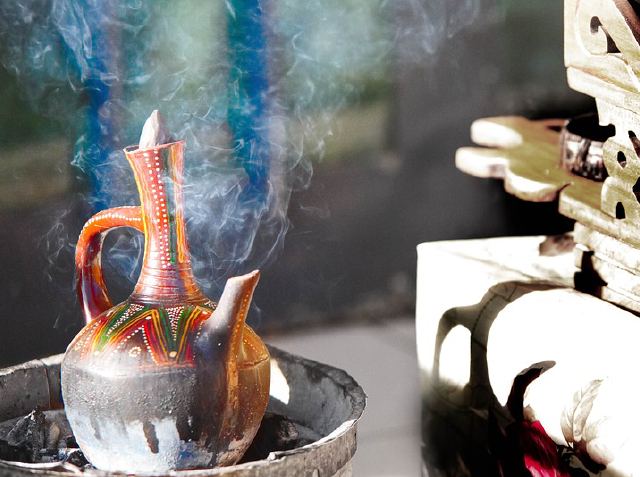
Ethiopia is widely recognized as the birthplace of coffee, with several specialty coffee regions scattered across the country, producing highly praised quality beans such as Front Street Yirgacheffe, Front Street Gedingding, and Front Street Huakui. Each region bears its own unique flavor imprint. Next, let's follow Front Street Coffee into this ancestral home of coffee.
The Origin of Coffee
Although Yemen has earlier records of coffee cultivation and trade, Ethiopia's coffee drinking tradition has also continued for hundreds of years. Locally, people selling or drinking coffee can be seen everywhere on the streets, as commonplace as our daily tea drinking, and they still preserve distinctive ceremonial customs. It is clear that coffee has long been woven into the bloodline of this nation. As for the origin of coffee, let us begin with that widely circulated legend.
It is said that around 900 AD, in the Kaffa region of Ethiopia, there was a shepherd named Kaldi who one day noticed his flock became unusually active after nibbling on some red berries. He picked and tasted them himself, found the fruit sweet and delicious, and felt instantly refreshed after eating. So he brought the fruit to share with the villagers, and from then on this "red cherry" gradually spread. The English word coffee actually derives from the place name Kaffa, while Ethiopians locally call coffee Buna, meaning beans.
Classification of Ethiopian Coffee Cultivation
Ethiopia's coffee cultivation methods can be broadly grouped into three categories: forest coffee, garden coffee, and large-farm coffee.
Forest coffee refers to coffee trees growing naturally in the wild, that is, wild coffee. They are mostly distributed in the Kaffa forests of southwestern Ethiopia, with quite mixed varieties, and the dense jungle provides natural shade for the coffee trees. When the fruit ripens, nearby farmers go to pick it and sell it at the market. This type of coffee varies greatly in quality, so the price is often very low. There is also semi-forest coffee: to increase yields, people manually prune overly dense branches and leaves so the coffee trees get proper sunlight and shade, and weeding is done once a year.
More than half of Ethiopia's coffee uses the garden coffee model. Since coffee cannot provide income year-round, farmers plant coffee trees together with other cash crops in their own backyards, which also makes daily maintenance easier.
Finally, there is large-farm coffee, which accounts for a relatively small proportion and is usually invested in by large companies or major brands. Its main purpose is to improve efficiency, implementing large-scale professional cultivation and management, with dedicated workers responsible for seedling raising, pruning, fertilizing, spraying, and harvesting.
From these three models, it can be seen that unlike the large-scale, professionalized, high-efficiency cultivation in Central and South America, Ethiopia's coffee production is difficult to increase substantially, so most Ethiopian coffee practitioners choose to increase returns by improving bean quality.
Ethiopian Coffee Regions
Ethiopia's regions are mainly divided into: Yirgacheffe, Sidamo, Harar, Guji, Lekempti, Jimma, Limu, Bebeka, Kaffa, and Teppi. Among them, there are five specialty regions: Yirgacheffe, Sidamo, Guji, Harar, and Limu, which are also the most well-known.
Ethiopia's climate is polarized, half humid and rainy rainforest, half arid desert and gobi, with coffee cultivation mainly concentrated in high-altitude rainforest zones. The main rainy season locally is from June to August. The annual rainfall in coffee-growing areas is about 1000-2000 mm, and the average annual temperature is between 15-30°C. Ethiopia has many high mountains and belongs to tropical cloud forests, with coffee mainly grown on plateaus. High-altitude areas have lower temperatures and fewer pests, requiring almost no pesticides, and coffee cherries ripen more slowly, allowing the coffee trees more time to accumulate nutrients.
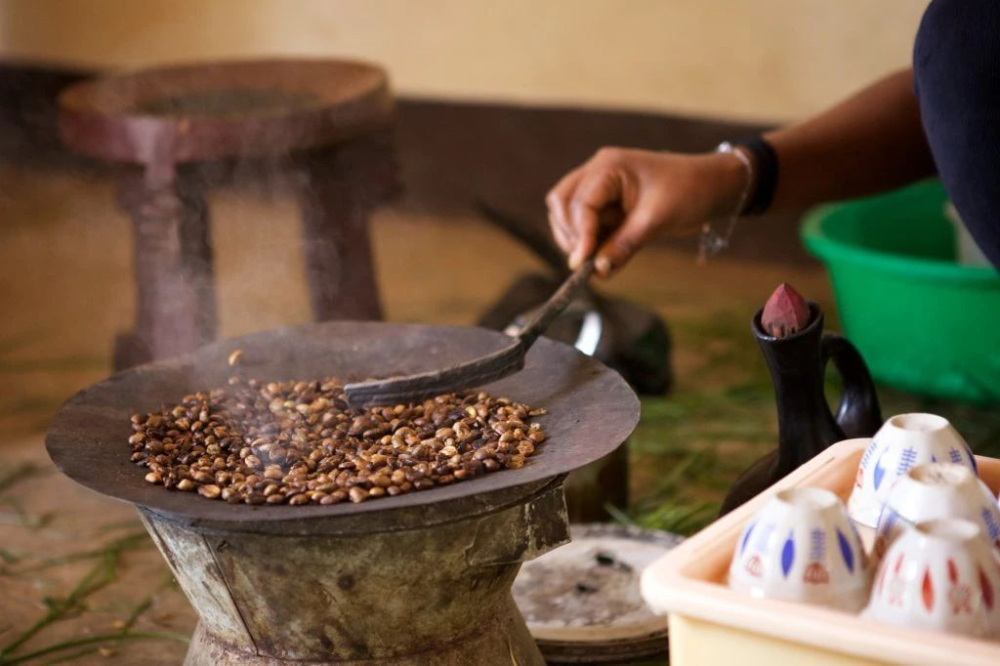
Yirgacheffe
In Ethiopia, this coffee powerhouse, the Yirgacheffe region is undoubtedly one of the most renowned specialty regions. The town of Yirgacheffe is located in the Gedeo region in the south, at an altitude of about 1700~2100 meters. The soil here is fertile, and abundant rainfall and significant temperature differences between day and night allow the coffee fruit to accumulate more sugar. Every household in the town grows coffee trees, almost all on a family basis, with small yields—precisely the garden coffee model mentioned above. Because coffee cultivation is extremely widespread, Yirgacheffe has cooperative processing stations of various sizes responsible for purchasing farmers' coffee fruit for processing, and exports are sold under the cooperatives' names.
The Yirgacheffe Coffee Farmers Cooperative Union (YCFCU), composed of 28 member cooperatives, has more than 40,000 farmers under it. Among them, the Gedingding Cooperative, Worka Cooperative, and Konga Cooperative are the most famous. Yirgacheffe originally belonged to the Sidamo region, but because of different processing methods, its coffee flavor is highly recognizable and distinctive, and it was later separated into its own region. The so-called Yirgacheffe flavor refers to rich jasmine floral notes and lemon-citrus-like acidity. As for why Front Street Yirgacheffe is so widely popular, Front Street Coffee believes it is thanks to its unique bright and fresh floral and fruity aroma; it drinks more like a cup of flower tea, making many people realize that "coffee is not only bitter."
Front Street Gedingding Cooperative Coffee Beans
Region: Yirgacheffe Region
Altitude: 1900-2000m
Processing Method: Washed
Variety: Heirloom native variety
Flavor: Jasmine, citrus, berries, tea-like body
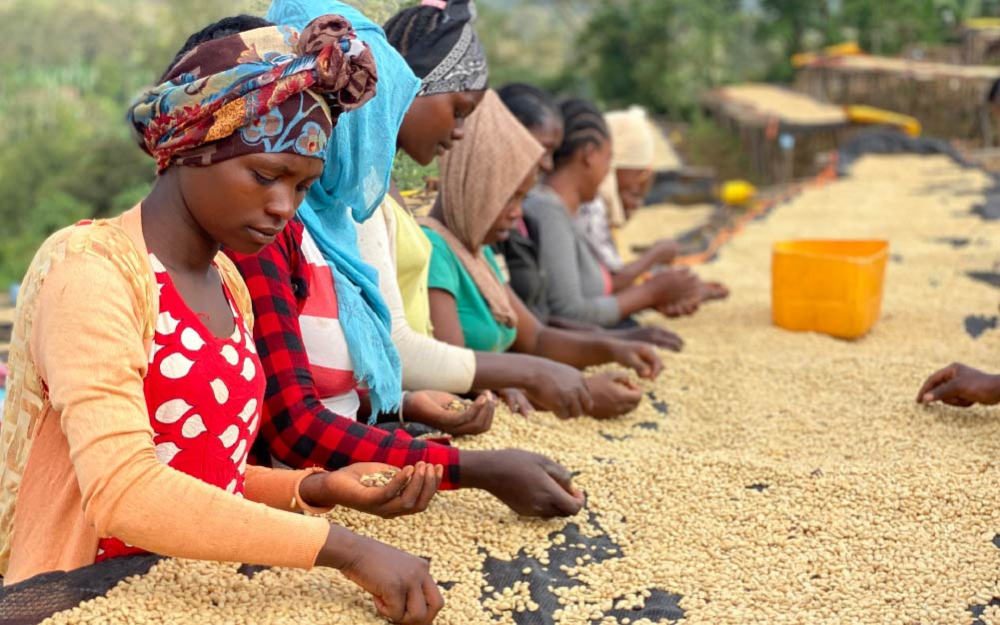
Traditional natural processing, because it directly spreads unscreened coffee cherries on the ground to sun-dry, easily picks up off-flavors from soil and dust, and improper sun-drying may also produce over-fermented flavors. In 1972, Ethiopia introduced and promoted Central and South American washing technology, making the taste of Front Street Yirgacheffe clean and bright, and from then on it entered the ranks of high-quality specialty coffee. Front Street believes that to understand the flavor of a region, washed coffee best highlights the taste brought by the regional terroir, so most of Front Street's daily beans series use washed processing, such as this Front Street washed Yirgacheffe. Front Street has 7 highly cost-effective daily beans, each representing the basic flavor of a different region, allowing coffee beginners to taste the signature flavors of the regions and then choose the type they like.
Sidamo
Sidamo is a large specialty coffee region in southern Ethiopia, distributed on both sides of the East African Rift Valley. Because it spans a vast area, different environmental climates, coffee varieties, and terrain and soil create diverse coffee flavors, with characteristics differing from village to village. Sidamo has three sub-regions with more representative flavors: Bensa, Chire, and Aroresa. As highly regarded specialty origins, coffees from Bensa and Chire carry complex fruit aromas, leaning toward tropical fruit and fermented sweet-tart notes, accompanied by nutty and red-wine-like mouthfeel. Aroresa, located in eastern Sidamo, presents lighter aromas of sugarcane, jasmine, and black tea.
In addition, different green bean processing methods also lead coffee toward different flavors. Washed and natural processing are common in the Sidamo region. Properly done natural processing adds fruitiness and body to the spice-tinged Front Street Sidamo, while washed Front Street Sidamo gives off citric acidity and subtle floral notes.
Guji
The Guji region originally belonged to Sidamo. Because it is remote and its development was relatively lagging, its coffee cultivation and rise to fame came later, so Guji coffee was often classified under the Sidamo region. At first its fame was also less than that of regions such as Yirgacheffe and Harar, but later, because of the outstanding quality of its coffee beans, it began to be independently separated as a new region. It has fertile black soil, with an average altitude above 1800 meters, and its unique geographical features form terroir conditions very suitable for coffee tree growth.
The famous Front Street Huakui coffee beans originate from the Hambela region of Guji, one of the highest-altitude sub-regions in Ethiopia. However, only coffee produced from the Hambela Buku processing station can be called Huakui. The naturally processed Front Street Huakui coffee beans carry rich passion fruit aroma, honey-like gentle sweetness, and pleasant strawberry-like fruit acidity.
Front Street Ethiopia Huakui 5.0 Coffee Beans
Region: Sidamo Guji Region
Altitude: 2250-2350m
Variety: Local native variety
Processing Method: Natural processing
Flavor: Passion fruit, fermented fruit, strawberry
Harar
As a very important natural bean region in Ethiopia, Harar shares similar nutty, red wine, and chocolate flavors with Front Street Yemen Mocha coffee. Compared with other regions, Harar's growing environment is hotter and drier, at an altitude of 1500-2400 meters, with annual rainfall of only 1000 mm. It belongs to a desert-type climate, so almost all coffee beans produced here use natural sun-drying. Harar coffee beans taste bold and unrestrained, with rich and substantial fermented fruit aromas.
Limu
In the Limu region, coffee is mostly grown by smallholders, at an altitude of 1850-1900 meters. The harvest season is mainly from October to February of the following year, with small yields, mainly sold to European and American coffee markets. The washed coffee here has grassy aromas and acidity with spices such as sandalwood, and is deeply loved in Europe and America.
Ethiopian Coffee Varieties
In Ethiopia, the homeland of Arabica coffee, besides the local native varieties that have not been subdivided for various reasons, there are actually some varieties that can be classified and distinguished.
Heirloom Local Native Varieties
Heirloom translated into Chinese is "chuán jiā bǎo," meaning a precious asset passed down through generations. Because there are simply too many local coffee varieties, identification is difficult, and the government does not disclose variety information for protection reasons, these varieties are collectively called native varieties. So when brewing Ethiopian coffee beans, you will often see beans of differing sizes and shapes, some long and some short; that one pot of coffee may contain multiple varieties.
Numerical Series
In the 2021 COE Cup of Excellence competition held in Ethiopia, the top ten coffee bean varieties were all represented by numbers. First and second place were 74165, and third and fourth place were 74110. The meaning of these numbers traces back to 1940, when Ethiopia established an agricultural research institution in Jimma to improve forest coffee and semi-forest coffee, including improving cultivation techniques, analyzing soil composition, optimizing green bean processing methods, and pest and disease control. Because in 1971 a large-scale outbreak of coffee berry disease in Ethiopia destroyed nearly 200 tons of coffee beans, from 1974 to 1975 the agricultural research institution began experimenting with cultivating disease-resistant seedlings, collecting 639 coffee tree samples and ultimately developing 13 improved varieties resistant to coffee berry disease. For example, 74165 refers to the sample variety numbered 165 released in 1974.
Typica and Bourbon
The elegant old varieties Typica and Bourbon are also grown in Ethiopia. Typica coffee trees have bronze tips, while Bourbon has green tips.
Kurume
Because it looks very similar to a local fruit called Kurume, it was simply named Kurume. The coffee plant is relatively short, can be planted compactly, and yields a relatively large amount. The coffee fruit produced is very small, even smaller than local native varieties, making it fairly easy to identify. Kurume's main growing areas are the Gedeo area under Yirgacheffe and the Guji area. Its flavor is mostly floral, berries, and citrus, with bright and rounded acidity, and obvious juicy and sweet sensations.
For professional coffee knowledge exchange and more coffee bean information, please follow Coffee Workshop (WeChat public account: cafe_style)
For more specialty coffee beans, please add the private WeChat of Front Street Coffee (FrontStreet Coffee), WeChat ID: qjcoffeex
The above content is compiled by CoffeeHunters, a coffee news website.


