







Is Mandheling Coffee Suitable for Espresso Brewing?
Mandheling coffee comes from Sumatra, Indonesia's largest island, where volcanic ash soil and high-altitude mist create strong growing conditions. The local wet-hulling process, developed for a humid and rainy climate, gives the beans their signature woody, spicy, and herbal notes. Those low-acid, heavy-bodied flavors make Mandheling a workable base for espresso, though the profile differs from brighter single origins.
Sumatra's varieties shifted over time. Typica arrived during Dutch colonial rule, then coffee leaf rust struck in 1869 and wiped out large numbers of plants. Indonesia responded by introducing disease-resistant Robusta and hybrids such as Tim Tim, Bor Bor, and Ateng, which now dominate plantings. Golden Mandheling lots reflect that history in the cup.
As the largest island in Indonesia, Sumatra, with its volcanic ash soil and high-altitude misty environment, nurtures the one-of-a-kind Mandheling coffee. From the introduction of Typica during the Dutch colonial period to the rise of disease-resistant varieties such as Tim Tim and Ateng after leaf rust, Sumatra's coffee varieties have undergone multiple changes. The local humid and rainy climate has given rise to the unique wet-hulling process, which imparts the coffee's signature woody, spicy, and herbal notes. This article will guide you through the evolution of Sumatra's coffee varieties, the specific process of wet-hulling, and whether Mandheling is suitable for espresso, along with practical advice from Front Street Coffee.
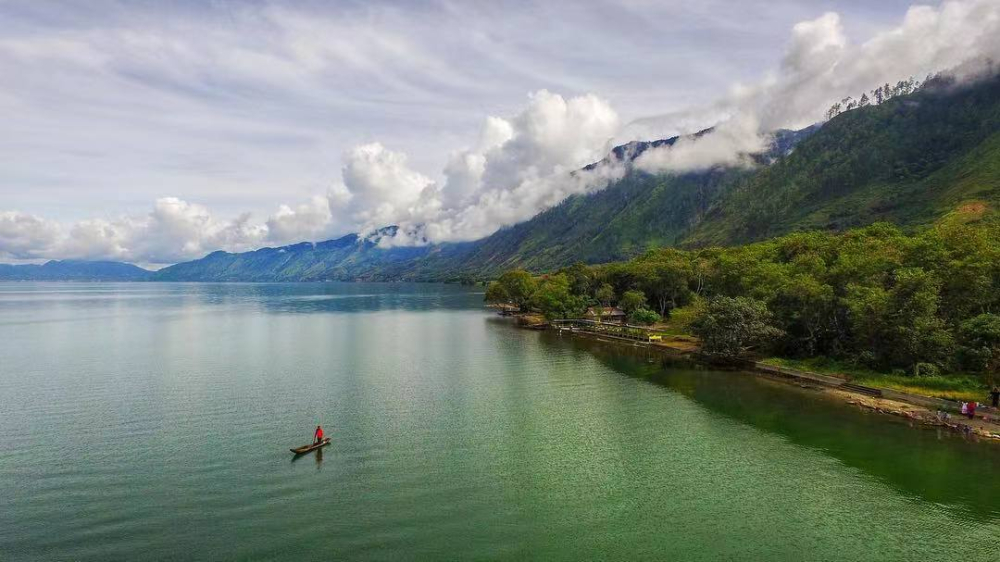
Sumatra is the largest island in Indonesia, bordered by the Indian Ocean to the west and facing the South China Sea to the east, with the equator running through its territory. The island lies on the Pacific Ring of Fire and has numerous volcanoes, whose weathered volcanic ash forms fertile soil. The mountainous areas are shrouded in mist year-round, with high altitudes, abundant rainfall, and pleasant temperatures, providing superior growing conditions for various crops, and coffee is one of the most suitable agricultural products there.
Indonesia's coffee cultivation history can be traced back to the late 17th century. After the Dutch occupied Java, they turned it into a stronghold of the Dutch East India Company in Asia and introduced Typica seedlings from India in two batches for trial planting in Java. Before the 1870s, coffee plantations had already been established in Sumatra, Bali, Sulawesi, and Timor, with cultivation areas gradually expanding from Java to the entire Indonesian archipelago. But the good times did not last. In 1869, coffee leaf rust suddenly broke out, sweeping through Asian production areas including Indonesia, and large numbers of Typica plants became diseased and died.
To save the severely damaged coffee plantations, the Indonesian government introduced more disease-resistant Robusta varieties from Africa and elsewhere, and to this day Robusta remains the mainstay of Indonesian coffee. To further improve survival rates and yields, Indonesia continued to introduce various disease-resistant varieties from abroad, among which the hybrids of Robusta and Arabica—the Tim Tim and Bor Bor varieties and the Ateng series—were promoted for their strong disease resistance, high yields, and adaptability to Sumatra's terroir.
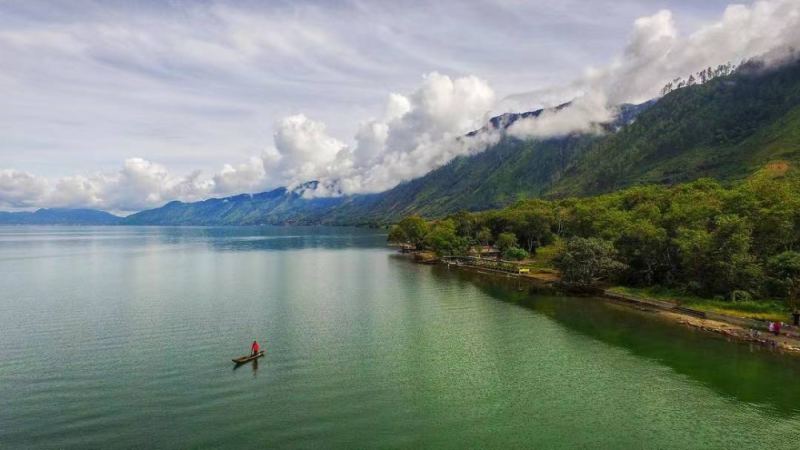
Afterward, Ateng and Tim Tim gradually replaced the original Typica and became the dominant varieties in Sumatra and other areas, with Mandheling being the representative of specialty coffee among them. Mandheling mainly comes from around two major lakes in Aceh Province and North Sumatra Province: Lake Toba and Lake Tawar.
Lake Toba is the largest volcanic lake in the world and the largest highland freshwater lake in Indonesia. The region has an average annual temperature of about 22°C, a tropical rainforest climate, is humid and rainy, with mountainous areas at an altitude of about 1,400 meters, and is rich in spices, timber, palm oil, and other agricultural products, including coffee. Because the weather is often cloudy and drizzly, most fruit trees grow on high-altitude slopes covered with various ferns, which provide a natural sunscreen for the coffee, so growers do not need additional shade.
The Gayo Mountains in central Aceh Province, Sumatra, have a unique microclimate and are adjacent to the famous volcanic Lake Tawar. Here the lake water is clear and the natural conditions are excellent. Coffee trees are planted at altitudes of 1,200–1,800 meters, where mist prevails year-round, the temperature difference between day and night is significant, and the volcanic soil is rich in minerals and nutrients, with fallen fruit naturally becoming fertilizer. Local farmers generally practice organic cultivation, and combined with a long planting history, the coffee from this area stands out in both quality and yield. Many green bean traders are particularly fond of this place, including the well-known local Pwani Coffee Company (PWN).
From September to April of the following year is the coffee cherry ripening period, and busy farmers can be seen picking throughout the mountains. Traditional Lintong Mandheling is grown by the Mandailing and Batak peoples, while the later-emerging Lake Tawar Mandheling is cultivated by the Gayo people.
Unlike many production areas, most of Indonesia has a humid climate, with year-round humidity between 70–90%, frequent typhoons, and annual rainfall that can exceed 2,000 mm. Under such conditions, it is impossible to carry out the 2–3 week sun-drying used in Africa, while washed processing is time-consuming and labor-intensive, with high labor and water costs that Indonesia, aiming for mass production, cannot afford. So the locals developed a unique semi-washed method—wet-hulling.
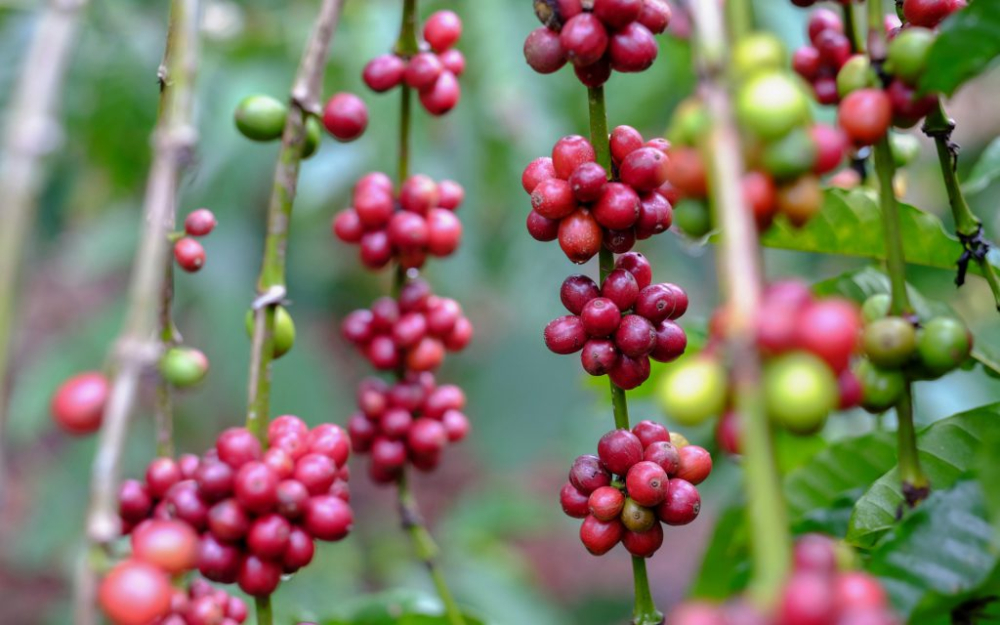
Coffee cherries with the skin and pulp removed are put directly into a pool for a short fermentation of several hours. At this point, a small amount of mucilage still remains on the surface of the parchment, and the mucilage must be removed by scrubbing. Then the parchment beans are spread out to dry, and the first drying only needs to reach a moisture content of 30–40%, about 2–3 days, after which coffee farmers sell the green beans to collectors. The collectors directly hull the semi-dry parchment beans they buy by machine to obtain the innermost green beans.
Because the huller has strong friction, it tears open the parchment layer clinging to the green beans. At this stage, white or green mucus often oozes out. After prolonged soaking in mucus and the influence of the humid environment, the green beans eventually become soft, white, swollen, and grayish-green. During the friction and stirring process, the green beans are also prone to pressure cracking or bruising, especially at both ends where small gaps easily form, creating "goat hoof" beans. The "naked beans" with the parchment removed dry extremely quickly, but are also directly exposed to humid air, making them prone to various fungi. This gives the coffee its unique woody, spicy, and herbal notes, which people commonly call the "Mandheling flavor."
Front Street hopes enthusiasts can taste the classic Mandheling flavor. The two Mandheling coffees regularly offered are both medium-dark roasted, including the Lintong Mandheling daily-drinker beans and Front Street PWN Golden Mandheling coffee from the Aceh region. Dark-roasted Mandheling usually presents aromas of dark chocolate, nuts, caramel, and cream, making people first think of rich and full-bodied espresso.
However, it should be understood that espresso is extracted with fine grinding, high water temperature, and 9 bar pressure, and the highly concentrated coffee liquid brings together multiple flavors, including the aforementioned woody and herbal notes. Various flavor compounds hit the taste buds exponentially, and the resulting Americano or latte may not be pleasing.
Therefore, rather than risk wasting high-quality coffee beans, Front Street suggests choosing a blend more suitable for espresso extraction, such as Front Street's own roasted rich and aromatic espresso moka pot coffee beans—Front Street Classic Blend Coffee Beans, which combines 50% Brazilian coffee, 30% wet-hulled Mandheling coffee, and 20% Robusta coffee. The resulting espresso not only has rich caramel and cream aromas and solid chocolate sweetness but also carries Mandheling's unique spicy and pine-like finish, with very rich layers.
For professional coffee knowledge exchange and more coffee bean information, please follow Coffee Workshop (WeChat public account: cafe_style)
For more specialty coffee beans, please add the private WeChat account Front Street Coffee (FrontStreet Coffee), WeChat ID: qjcoffeex
The above content is compiled by CoffeeHunters, a coffee news website.


