







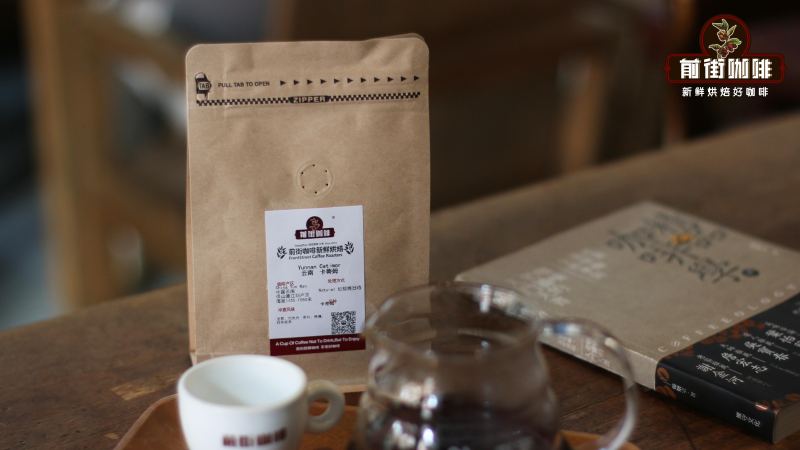
Why Typica Coffee Still Matters in Yunnan Today
Typica coffee is one of the oldest native Arabica varieties, originating in Ethiopia and known for citrus-like acidity, a clean sweet aftertaste, large elongated beans, and bronze-colored young leaves. In Yunnan, it was widely planted alongside Bourbon before the 1960s, but low yields and weak resistance to leaf rust pushed farmers toward higher-yielding Catimor from the 1990s onward.
Catimor now dominates Yunnan plantings. It was hybridized from Timor and Caturra and carries roughly one-quarter Robusta lineage, so its flavor cleanliness can suffer if post-processing is poorly controlled. Typica is regaining attention on the specialty path. A washed or sun-dried Typica from Lincang, brewed as pour-over with moderate water temperature and a steady, gentle pour, tends to show balanced, clean, layered flavors.
Yunnan coffee is predominantly grown with Catimor, but on the path to specialty coffee, the ancient variety Typica is regaining attention. This article starts from Front Street Coffee's planting practice in Lincang, sorts out the historical origins and variety characteristics of Typica, reviews the context of Yunnan coffee variety replacement, and introduces in detail the cultivation, processing, and brewing methods of Front Street 2013 Sun-Dried Typica. The article also provides pour-over parameter suggestions and flavor descriptions to help coffee enthusiasts understand the balanced, clean, and richly layered flavor performance of Yunnan Typica, and how to fully present its advantages with suitable extraction methods.
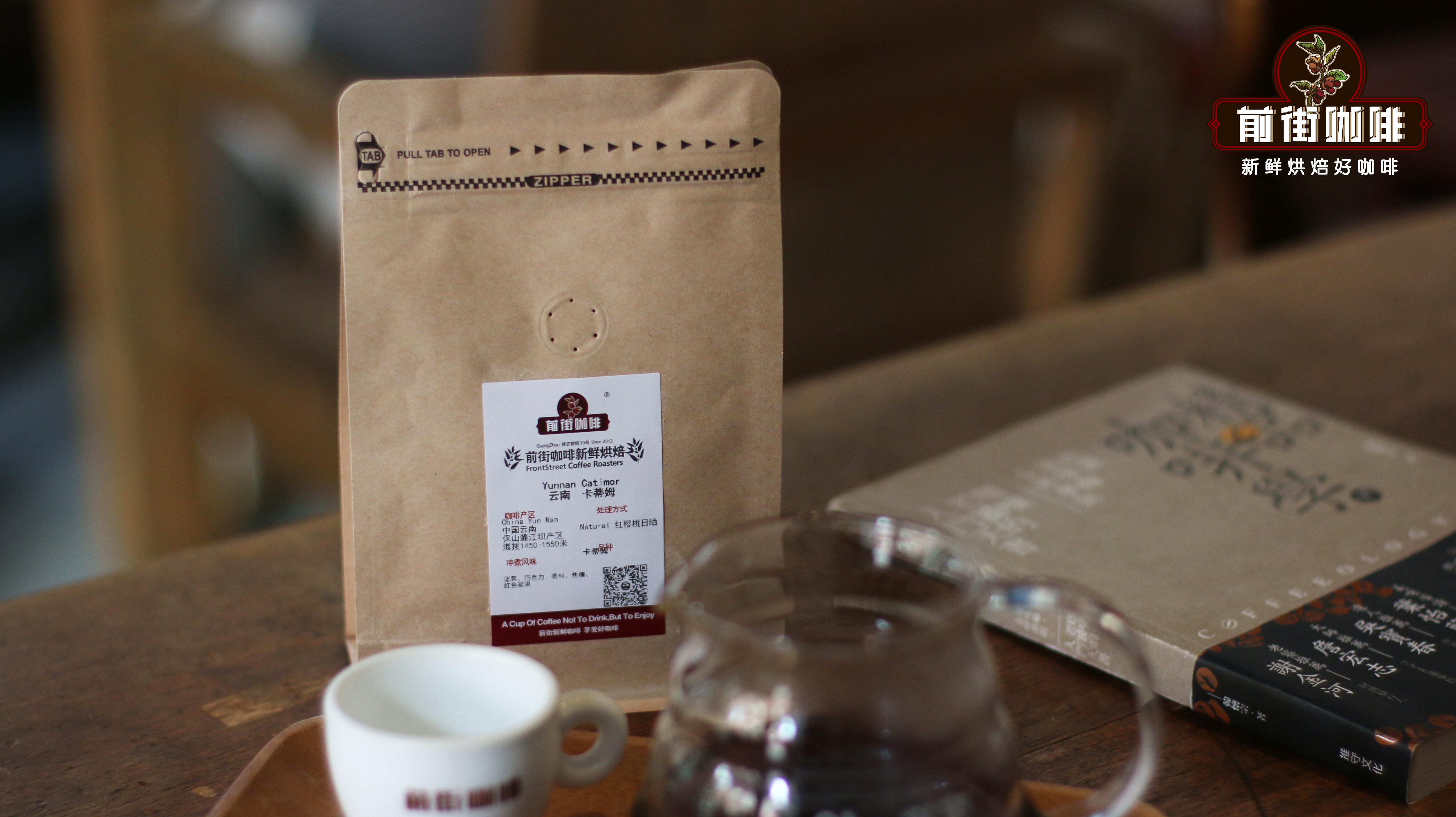
Most of the coffee trees currently planted in Yunnan production areas are Catimor. This variety was hybridized from Timor and Caturra and carries about one-quarter Robusta lineage. If the post-processing stage is not well controlled, its flavor cleanliness often falls short of pure Arabica, and some messy notes can easily emerge in the finish. So, are there other varieties in Yunnan? The answer is yes. The "Front Street 2013 Coffee Beans" in Front Street's bean list uses exactly the industry-recognized high-quality variety - Typica.
What are the characteristics of the Typica variety?
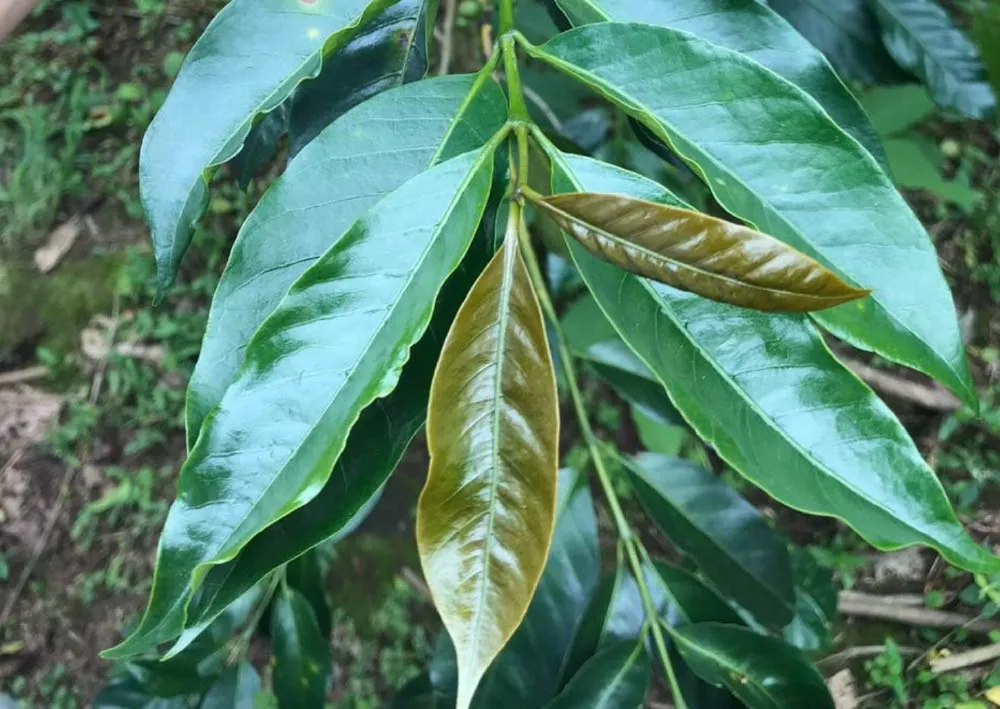
It originated in Ethiopia and is one of the oldest native Arabica varieties, discovered by people around the 15th to 16th centuries. The Typica plant is relatively tall, and the young leaves at the top are bronze-colored; the coffee beans are relatively large, elongated, pointed and slightly upturned at both ends, resembling an egg. In terms of flavor, Typica often has a citrus-like acidity and a clean, sweet aftertaste, so it is praised by many as an elegant and clean bean. Unfortunately, its yield is low, and its resistance to leaf rust is also weak, so it was gradually replaced by farmers with more robust varieties. The situation in Yunnan was the same.
Before the 1960s, the Arabica widely planted in Yunnan was mainly Typica and Bourbon. By the 1970s and 1980s, leaf rust swept through major production areas around the world, and practitioners searched for countermeasures. In 1990, driven by Nestle and other foreign-funded enterprises, Yunnan introduced Catimor from Latin America, which had stronger disease resistance and higher yield, to replace the "economically inefficient" Typica. This also "planted the seed" for Catimor to later become Yunnan's main variety.
Front Street believes that Typica will evolve new morphological characteristics according to differences in the planting environment in order to adapt to its new home, and will gradually form its own unique elegant flavor. World-famous beans such as Jamaica Blue Mountain and Hawaii Kona are essentially varieties derived from Typica mutations.
In the early years, while exploring coffee knowledge, Front Street had the idea of growing coffee itself, so in 2013 it went to Lincang, Yunnan, and began the process of planting coffee trees. From site selection, seed selection, seedling cultivation, planting, harvesting, processing to roasting, everything was handled personally by Front Street colleagues, and therefore a great deal of experience was accumulated regarding varieties, altitudes, and processing methods. Front Street deliberately chose the most primitive Typica. It has an elegant and pure flavor, but its low yield and poor disease resistance are also well known, so Front Street invested a great deal of effort in field management. After years of cultivation, the first batch of fruit was finally harvested in 2020, processed by the sun-dried method, and named "Front Street 2013."
Why use sun-dried processing?
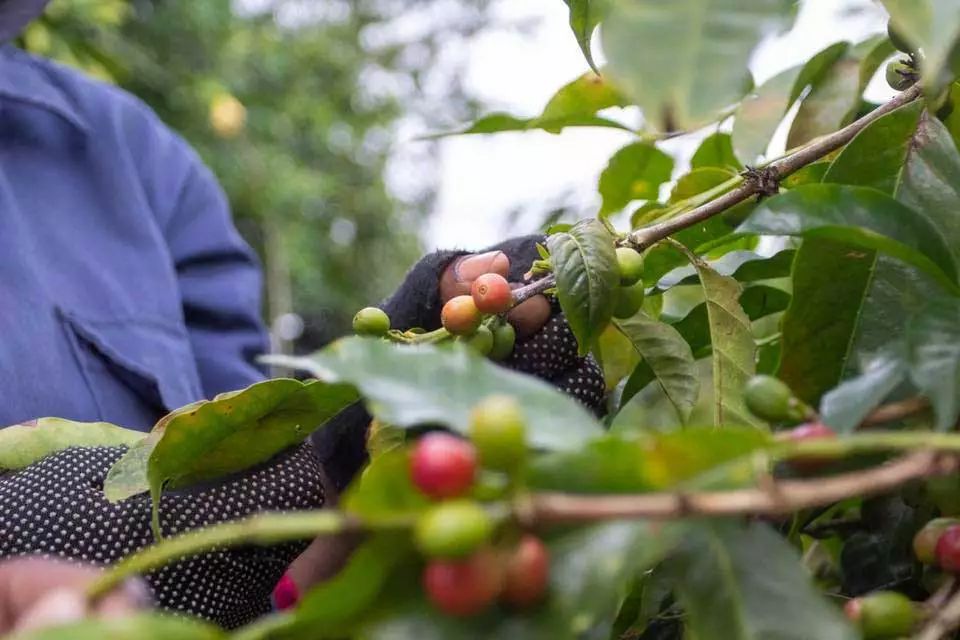
Every November as winter begins, the coffee fruits grown by Front Street gradually mature. Front Street arranges workers to pick red coffee cherries one by one, then spreads the fresh fruit in the sun to dry naturally, turning it irregularly so the fruit dehydrates evenly and avoids negative flavors caused by excessive fermentation. Front Street believes that sun-dried processing can enhance the sweetness of coffee, make it easier to present berry-like notes in flavor, and give a rounder aftertaste.
When Front Street chats with customers about the flavor characteristics of Yunnan coffee, some say it is like chocolate, some say it is like sweet potato, and some friends think it is like Sanhua plum. Front Street believes that the flavor of Yunnan coffee belongs to a neutral and balanced profile, that is, it has acidity, sweetness, and bitterness. Therefore, Front Street's Yunnan coffee is uniformly medium-roasted, highlighting roasted aromas such as chocolate and nuts while retaining part of the acidity.
From Front Street's cupping, this Yunnan sun-dried Typica presents chocolate, brown sugar, plum, a fermented tropical fruit quality, and a black tea aftertaste, and is overall clean and richly layered.
How should Yunnan Typica coffee be brewed to taste good?
In order to highlight the balanced mouthfeel of Yunnan Typica, Front Street will choose intermediate parameters between dark roast and light roast for brewing, that is, a medium water temperature paired with a medium grind size.
Front Street's pour-over parameters:
Dripper: hario v60
Dose: 15g
Water temperature: 90 degrees Celsius
Grind size: 75% passing through a No. 20 sieve
Water-to-coffee ratio: 1:15
Dripper: Front Street believes that Yunnan coffee should display rich aroma and diverse flavor layers, so Front Street Coffee (FrontStreet Coffee) baristas will choose a resin V60 dripper. The V60 body has guide ribs connecting the top and bottom, with a large round hole in the center that can speed up the flow of water; the spiral exhaust grooves extend the water path and increase the contact time between coffee grounds and hot water. Each stream of water converges along the grooves toward the center of the dripper, the pressure on the coffee grounds is more concentrated, and the brewed coffee has a stronger sense of layering.
Grind size and water temperature: precisely because the flavor attribute of Yunnan coffee is neutral and balanced, too high a water temperature or too fine a grind can easily cause over-extraction, releasing too many bitter large-molecule flavor substances; too low a water temperature or too coarse a grind will lead to under-extraction, and the coffee can easily taste weak and bland. Therefore, Front Street will choose a medium water temperature and grind size, extracting with 90 degrees Celsius hot water, with coffee grounds at a coarseness of 70% passing through the Chinese standard No. 20 sieve, and an EK43s setting of 10.5 in the shop.
Three-stage pouring: first wet the coffee bed with water weighing twice the coffee grounds, form a dome, and let it bloom for 30 seconds; then pour in a small stream in circles from the inside outward, pausing the stage at 125g; when the coffee bed drops to half the height of the dripper, continue pouring the third stage with the same fine stream to 225g, and remove the dripper only after all the coffee liquid has drained, with a total time of about 2 minutes.
Front Street 2013 Sun-Dried Typica coffee flavor: the dry grounds present aromas of caramel, nuts, and citrus; at high temperature it is chocolate, fermented notes, and berries; as the temperature drops, it shows plum acidity and a clean, sweet finish like black tea and sugarcane. Medium-high body, clear mouthfeel, rich and varied layers.
For professional coffee knowledge exchange and more coffee bean information, please follow Coffee Workshop (WeChat public account cafe_style)
For more specialty coffee beans, please add the private WeChat Front Street Coffee (FrontStreet Coffee), WeChat ID: qjcoffeex
The above content is compiled by CoffeeHunters, a coffee news website.


