







Three-Pour Pour-Over: How Coffee Particles Affect Water and Time
Three-stage pouring splits the brew into one bloom and two extraction stages. With 15 grams of coffee at a 1:15 ratio, the plan is 30 milliliters for the bloom, then 100 milliliters, then 95 milliliters. This approach is highly controllable, suits light, medium and dark roasts, and is one of the most mainstream methods in specialty coffee, making it a practical starting point for beginners.
Staged water temperature control runs alongside the pours, since the extraction rhythm changes as the bed drains and the coffee particles settle. Grind size, pour height and flow rate all shift how fast water moves through the bed, so adjusting the pouring technique reveals different flavor layers and mouthfeel in the same bean. A coffee tutorial diet of steady practice on one recipe builds consistency.
Among the many techniques of pour-over coffee, the pouring method has always been the core topic that enthusiasts are most passionate about discussing. Different pouring strategies directly affect the flavor layers and mouthfeel that the coffee ultimately presents. For beginners who have just come into contact with pour-over, Front Street Coffee usually recommends a three-stage pouring scheme known as the "universal pour-over method." This article will use 15 grams of coffee and a 1:15 coffee-to-water ratio as an example to break down in detail the proportion distribution of the three-stage pouring, deeply analyze the operational essentials of each pouring stage and the extraction logic behind it, and at the same time share practical experience in staged water temperature control, helping you stably brew clean, bright, and richly layered good coffee at home.
The pouring technique has always been the part that pour-over players love to explore most. Change your pouring approach, and coffee can reveal a completely different flavor direction and mouthfeel experience. For friends who have just recently started pour-over, Front Street Coffee often recommends first practicing the three-stage pouring known as the "universal pour-over method."
What exactly is three-stage pouring?
The so-called three-stage extraction is to break the entire pouring process into three steps: one blooming stage at the beginning, followed by two stages to complete the extraction. The key factor determining the water distribution for each stage is the coffee-to-water ratio. Taking
Front Street Coffee's 15 grams of coffee as an example, according to a 1:15 ratio, Front Street Coffee's distribution plan is to pour 30 milliliters in the first stage for blooming, 100 milliliters in the second stage, and 95 milliliters in the third stage.
What are the advantages of three-stage extraction?
Three-stage extraction is highly controllable and widely applicable. It is one of the most mainstream extraction approaches in today's specialty coffee field, and also one of the most practical and easiest to master. Whether the beans are light roast, medium roast, or dark roast, the three-stage method is compatible and suitable for the vast majority of coffee beans, and can find a balance between flavor and mouthfeel.
Front Street Coffee believes that the three-stage method is especially friendly and easy for beginners to get started with, because controlling flow rate is often the most difficult variable to grasp in the early learning stage. If you use the one-pour method and dump all the remaining water into the dripper at once after blooming, then if the pouring is too fast and the extraction time is insufficient, or the pouring is too slow and the extraction time is prolonged, you can only watch helplessly with no room for adjustment. The significance of the three-stage method is that it provides one more opportunity to observe and judge—if there is a deviation in the previous extraction stage, based on your own experience and assessment, you can make corrections during the third pouring stage, thereby coordinating the entire extraction process. Today, Front Street Coffee will talk with everyone about how to operate it specifically, so that you can also brew the taste you expect at home.
Analysis of practical steps
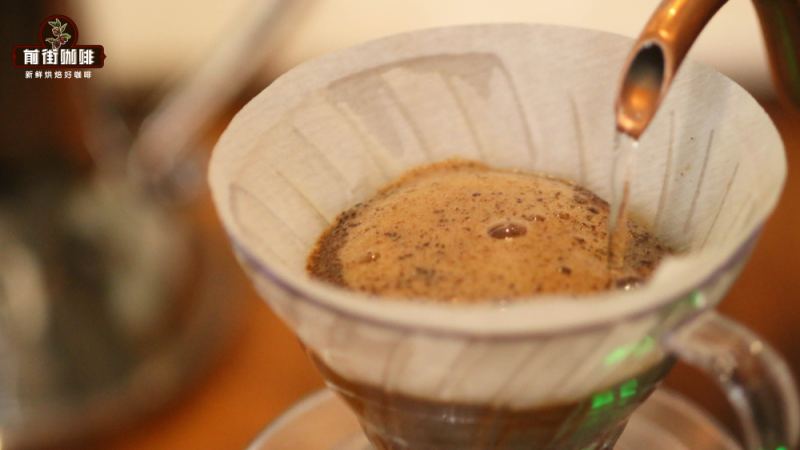
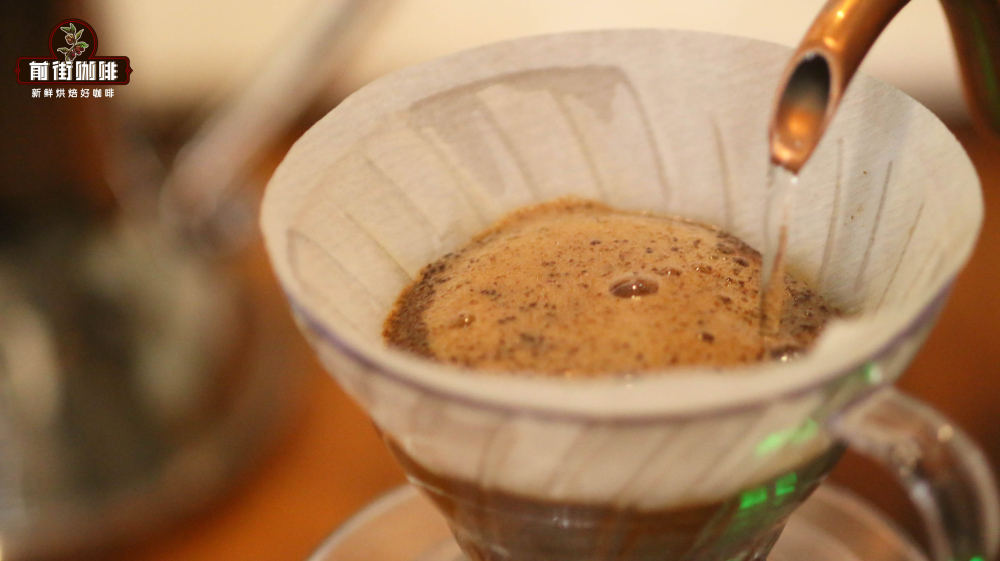
During the first pouring stage, the water flow should be light and gentle, and the amount of water should be just enough to wet all the coffee grounds. The core purpose of this step is to allow the carbon dioxide in the coffee grounds to be released smoothly. During the degassing process, the coffee particles push against each other. As the gas escapes, the coffee bed expands and rises, forming a solid shell on the surface, while a thick filter layer is built underneath. In this stage, the circular pouring speed should be fast to prevent some areas from not being fully wetted.
The second pouring stage begins when the expansion of the coffee grounds is about to subside. The initial water flow should be gentle and thin, continuing to help with degassing. After enough solution has accumulated among the coffee grounds, the pouring force can then be appropriately increased. This stage's water volume is about three-quarters of the total extraction amount. The reason the pouring rhythm is slow first and then fast is to use the force of the water to drive the coffee grounds to tumble while ensuring sufficient solution among the grounds, achieving even extraction and avoiding over-extraction of coffee grounds at any one layer.
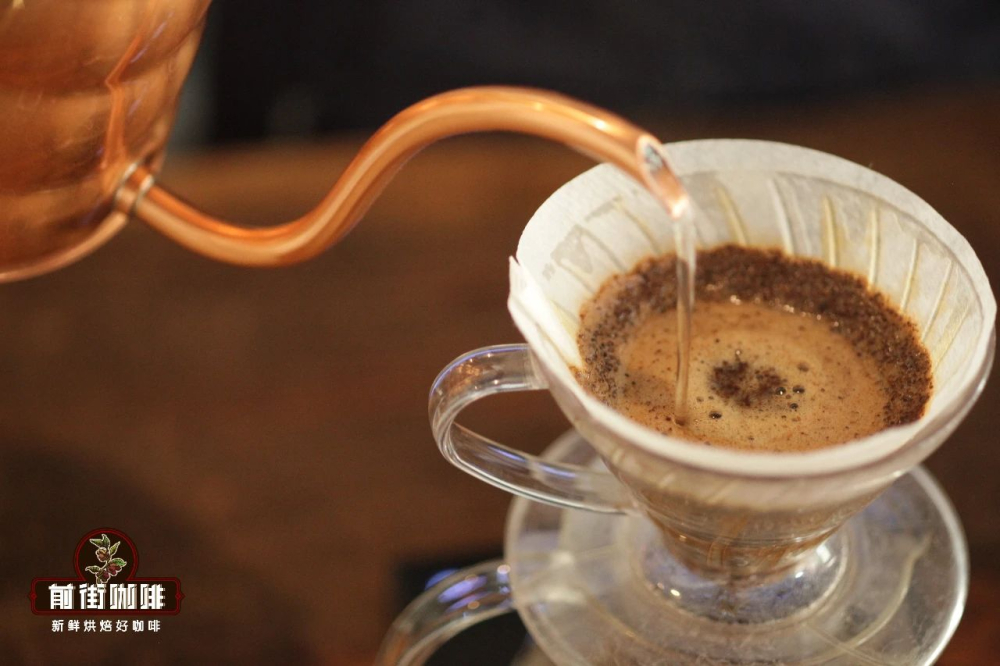
The third pouring stage should be carried out when the speed of water draining through the dripper begins to slow but has not yet completely drained. My personal habit is to pour with greater force at this step, allowing the coarser particles in the coffee grounds to fully tumble, in order to prevent clogging at the bottom outlet and ensure the overall extraction effect. Three-stage extraction can enhance layering, smoothness, body, and the solidity of mouthfeel, allowing you to easily extract clean and bright coffee.
In terms of water temperature, the first stage uses 92°C, the second stage starts at 88°C and ends at around 75°C, and the third stage starts at 80°C. The high water temperature in the first stage helps the gas in the coffee grounds be completely released. The water temperature in the second stage ensures that fruit acids and aromatic substances are fully dissolved. The water temperature in the third stage continues to advance extraction while avoiding the release of too many bitter components. It should be noted that the water temperature mentioned here refers to the actual temperature when the hot water contacts the coffee grounds, not the temperature inside the kettle. To judge it accurately, you can only rely on repeated practice, adjusting by raising or lowering the height of the kettle spout.
For professional coffee knowledge exchange and more coffee bean information, please follow Coffee Workshop (WeChat public account: cafe_style)
For more specialty coffee beans, please add the private WeChat of Front Street Coffee (FrontStreet Coffee), WeChat ID: qjcoffeex
The above content is compiled by CoffeeHunters, a coffee news website.


