







How Do Anaerobic Natural and Natural Coffee Processing Differ?
Natural processing is the oldest method: whole coffee cherries dry in the sun with the pulp still around the seed, then the dried shell is broken to release the beans. It carries a low technical threshold and low cost, and it produces a wide flavor spectrum with pronounced sweetness. Anaerobic natural adds sealed low-temperature fermentation on top of that base.
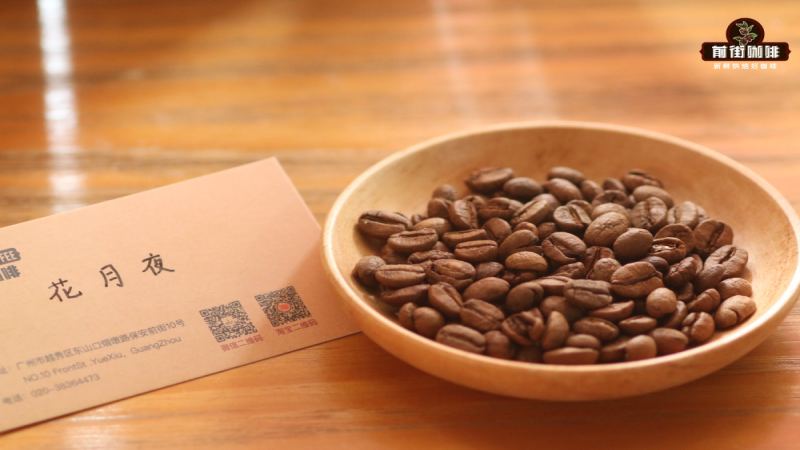
Sealing the cherries slows pectin decomposition and lets pH fall more gradually, so more sweet compounds accumulate and fermented notes become more prominent. Beans such as Front Street Colombia Flower Moon Night use this coffee process, pouring with rounded mouthfeel and non-sharp acidity. Grinding, water temperature and pouring technique are then adjusted to bring out that fermented sweetness.
Coffee processing methods directly influence the flavor direction in the cup. Natural processing, as the most traditional method of green bean processing, allows the fruit pulp to wrap around the seed and dry slowly, bringing a broader flavor spectrum and sweetness; while anaerobic natural builds on this by introducing sealed low-temperature fermentation, which slows pectin decomposition and causes pH to drop more gradually, thereby accumulating more sweet compounds. This article will start from the specific procedures of the two processing methods, analyze their effects on coffee flavor, and use Front Street Colombia Flower Moon Night, which employs anaerobic natural processing, as an example to explain how to adjust grinding, water temperature, and pouring technique for such beans in order to brew a full-bodied fermented sweetness and rounded mouthfeel.
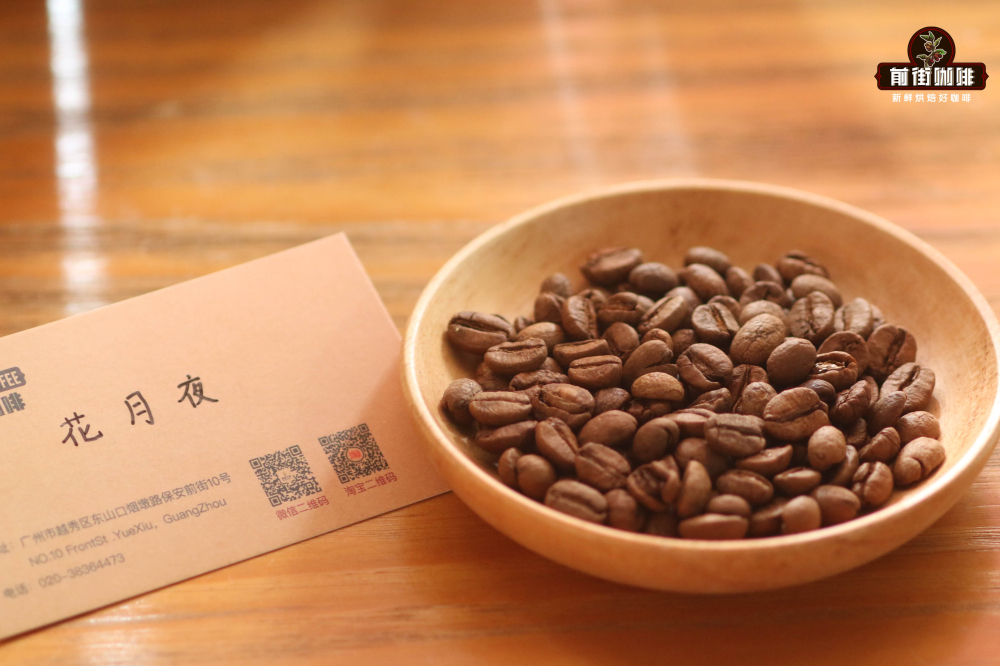
In recent years, in order to achieve more prominent sweetness, coffees processed anaerobically have attracted increasing attention. Taking a common product on the market as an example, Front Street's Colombia Flower Moon Night coffee beans use anaerobic natural processing. When brewed as pour-over, it can present full fruit aromas and fermented notes, with acidity that is not sharp and a clear sweetness, which is why it has gained many loyal fans.
What is natural processing?
Those who know a little about coffee processing know that the coffee beans we drink are actually the seeds inside the fruit. After coffee cherries are picked, they must undergo a series of steps such as depulping and drying before they become green beans ready for roasting. Natural processing is the oldest and most widespread method among them, and it is still used in many producing regions today.
So-called natural processing means spreading the whole harvested coffee fruit out in sunlight and using the sun to gradually evaporate the moisture in the pulp. Once the moisture content drops to the target level, the outer shell is broken with a machine to remove the beans, which still retain the parchment layer. This method has a low technical threshold, and almost every smallholder can complete it independently. The entire drying process only depends on sunny weather, and production costs are relatively low, so it is especially common in high-altitude producing areas.
For producing regions pursuing refined flavor, flotation is done before natural drying to remove unripe fruits and sand or stone impurities, and then the fruit is spread on raised drying beds for drying. The purpose is to keep distance from the ground and avoid pests, dust, and bacterial contamination. During drying, dedicated personnel also regularly check the condition of the fruit and remove insect-damaged, split, and moldy fruits to prevent them from affecting the quality of the entire batch of coffee.
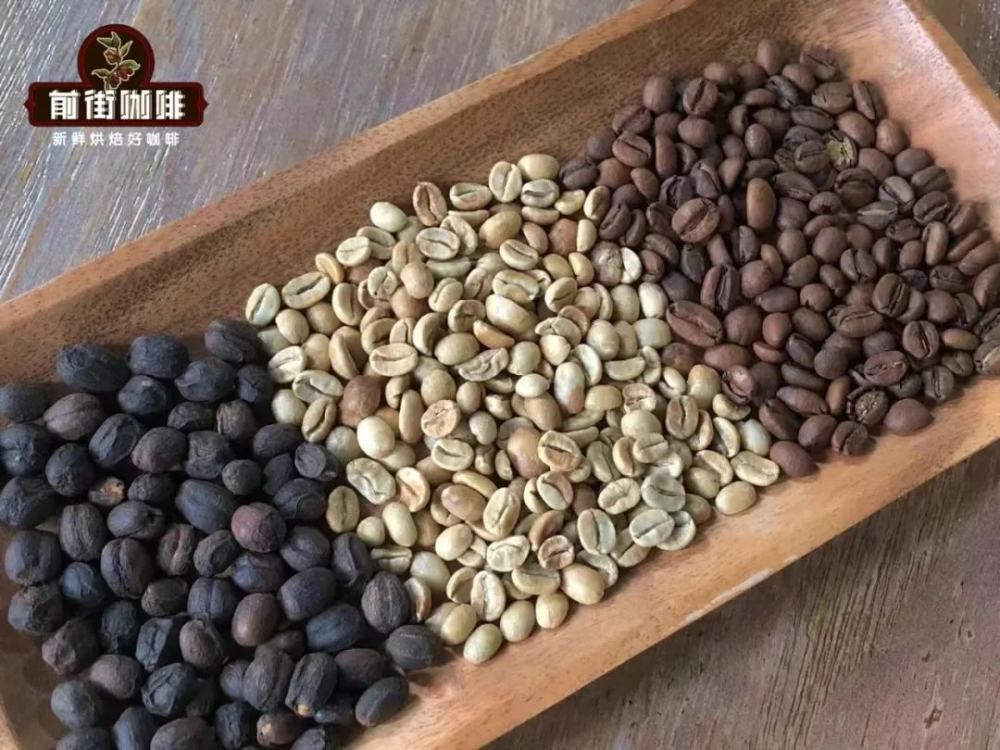
Because during natural processing the coffee seed is always dried while wrapped in the pulp, fermentation lasts longer, and the interaction between microorganisms and the pulp is more complete. Once the fruit enters a state of fermentation, microorganisms produce more volatile compounds, especially esters. These aromatic components give the roasted coffee richer floral and tropical fruit fermentation notes, such as furan compounds, making naturally processed beans have a broader flavor range and taste sweeter. Examples from Front Street's bean list such as Yirgacheffe Red Cherry, Hualkui, and Panama Red Label Geisha all use refined natural processing.
How is anaerobic natural processing done?
Simply put, anaerobic
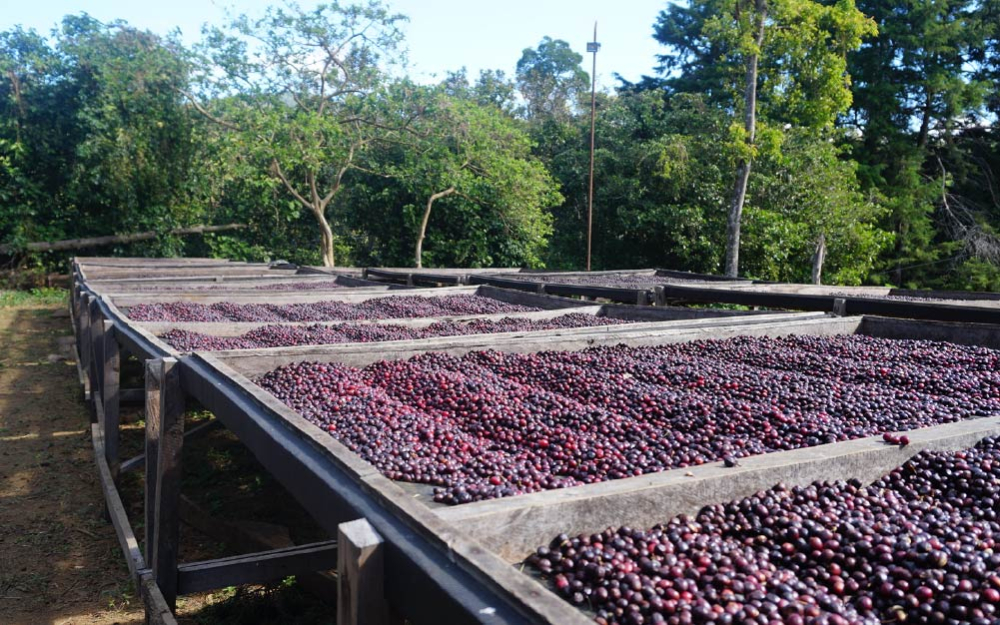
After more than three days of anaerobic fermentation, the fruit is removed from the barrels and sun-dried. Once fully dried, the excess parts are removed to obtain the coffee beans. Front Street Coffee's Colombia Flower Moon Night is processed using the anaerobic sun-dried method, which gives this bean a richer ripe fruit sweetness and fermentation aroma. Considering that Flower Moon Night is an anaerobic sun-dried coffee, in order to retain the fermentation character while presenting a full body and sweetness, Front Street roasters chose a medium roast.
After roasting, Front Street immediately arranged a cupping. This Flower Moon Night already emits distinct berry and ripe fruit notes when ground; after pouring hot water, the wet aroma is as intense as strawberry jam; on the palate, it has the sweetness and acidity of cranberry and strawberry jam, accompanied by a strong fermented sensation, as if eating liqueur chocolates; after swallowing, a faint floral fragrance lingers in the mouth. To fully appreciate the poetic aroma of Flower Moon Night, there are some details to pay attention to during brewing.
How should anaerobically sun-dried coffee be brewed to taste good?
Anaerobically processed beans spend a long time fermenting in a sealed space, so the compactness of the cell walls decreases. Even extremely hard beans from high-altitude Central American origins become less dense in cell structure after anaerobic processing, and after roasting the interior becomes more porous. As a result, during brewing, water passes through more easily, the contact time between coffee grounds and water is shortened, and the coffee is prone to underextraction and tastes weak. Front Street adjusts both grind size and pouring technique.
When adjusting grind size, Front Street uses a tool — the Chinese No. 20 0.85mm standard sieve. For medium-light roasted beans, Front Street usually maintains a 75–80% passing rate; for medium-dark roasts, it is controlled at 70–75%. Colombia Flower Moon Night belongs to the anaerobic fermentation type, with loose bean texture and faster water absorption, so water passes through the coffee bed more quickly, which easily causes underextraction. Therefore, Front Street grinds a little finer, setting the store's EK43s grinder to 9.2-9.5.
Water temperature and grind size play similar roles: the higher the water temperature, the stronger the extraction efficiency, the easier it is to release various components, and the higher the concentration. If water close to boiling is used, it easily brings out unpleasant bitterness. So Front Street recommends 87–90°C for medium-dark roasted beans, while light roasted beans need higher water temperatures to stimulate aroma, making 91–93°C suitable. Front Street recommends 90°C for brewing Flower Moon Night. This bean is balanced between sweetness and acidity and round, and too high a water temperature will release obvious bitterness and cover up the fruity and floral notes.
Still use 15g of coffee powder, with a coffee-to-water ratio of 1:15. The concentration is moderate, which is more conducive to experiencing the various flavors of Flower Moon Night.
Three-stage pouring:
First, place the folded filter paper into the dripper so it sits snugly, and rinse it with water to make it fit better. Prepare hot water and measure the temperature. At the same time, pour 15 grams of ground coffee into the dripper and tare the scale.
For the first stage, pour 30g of water and bloom for 30 seconds, starting the timer as you pour. Use a small stream throughout, circling outward from the center, and be careful to wet the entire coffee bed. At this point, you can see the coffee grounds swell into a dome and are degassing.
After 30 seconds, pour the second stage of 100g of water with a steady stream, with the aim of lifting the entire coffee bed. The stream should be vertical and even. At this point the timer scale shows 130g, and the pour is finished in about 55 seconds. When the liquid level drops to almost exposing the coffee bed, switch to a small stream and pour the third stage of 95 grams in a small circle. Try to control the stream so it does not circle too widely, and do not let the liquid level exceed the coffee wall formed by the second stage, otherwise the water will easily flow down along the filter paper and cause underextraction.
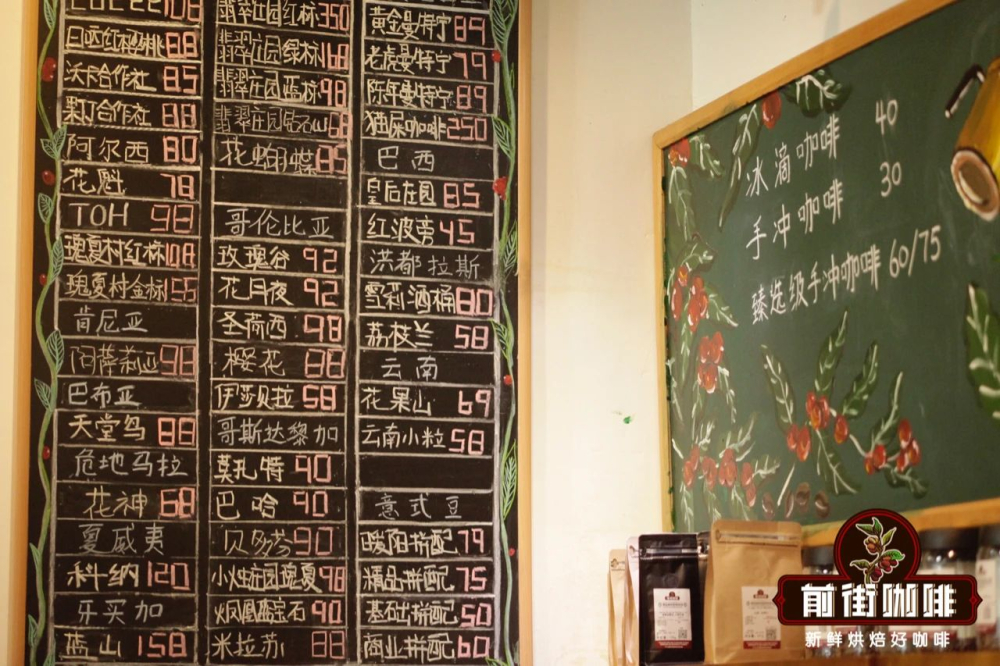
The final total pouring amount is 225 grams, and dripping ends at about 1 minute 50 seconds. Remove the dripper, swirl the coffee liquid in the server to mix it evenly, and it is ready to taste. Flavor performance of hand-brewed Flower Moon Night: the first thing that surges forward is the sweet aroma of strawberry jam and the fermented breath of ripe berries; after entering the mouth, the acidity of cranberry and the juicy berry texture fill the palate; then, a finish like liqueur chocolate emerges in the nasal cavity.
For professional coffee knowledge exchange and more coffee bean information, please follow Coffee Workshop (WeChat public account cafe_style)
For more specialty coffee beans, please add the private WeChat of Front Street Coffee (FrontStreet Coffee), WeChat ID: qjcoffeex
The above content is compiled by CoffeeHunters, a coffee news website.


