







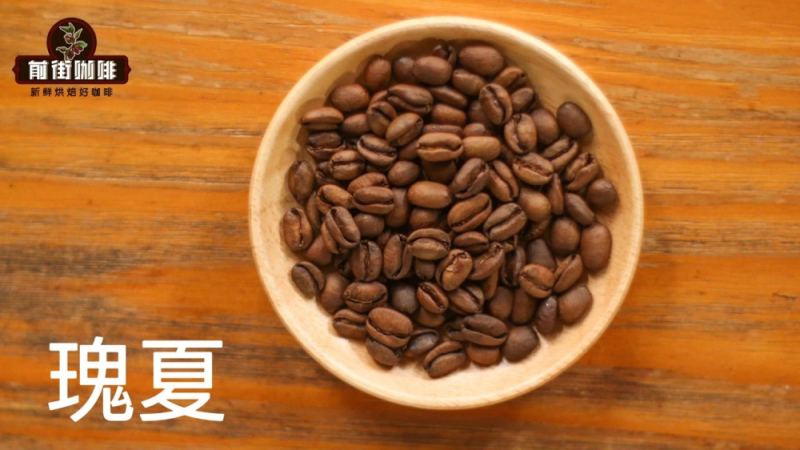
What Sets Panama Geisha Coffee Apart in the Cup?
Panama Geisha coffee is an Ethiopian-origin variety known for a light, tea-like cup with jasmine florals, tangerine aroma, and honeyed sweetness rather than heavy roasted notes. It reached the international stage in 2004, when Hacienda La Esmeralda entered it in a reliable of Panama competition and judges scored it highly, setting off the demand and record prices that followed.
The variety was first collected in 1931 in the wild Kaffa forest of southern Ethiopia. Its tall, thin trees and weak disease resistance discouraged growers, and lower altitudes gave mediocre results. Hacienda La Esmeralda later separated its Geisha lots into Red and Green Label grades, which differ in lot selection and price. High-grade geisha coffee beans are often brewed by pour-over with a three-stage method.
Geisha is one of the most talked-about varieties in today's specialty coffee world, winning over countless coffee lovers with its unique tangerine aroma and honeyed sweetness. This article, from the perspective of Front Street, systematically sorts out Geisha coffee's flavor characteristics, variety origin, and spread history, focusing on how Panama's Hacienda La Esmeralda discovered Geisha's potential, and explains in detail the grade differences, flavor performance, and price ranges of Red Label and Green Label Geisha. At the same time, Front Street will also share the pour-over brewing parameters and three-stage extraction method for high-grade Geisha, helping readers more fully appreciate this variety's floral and fruity notes.
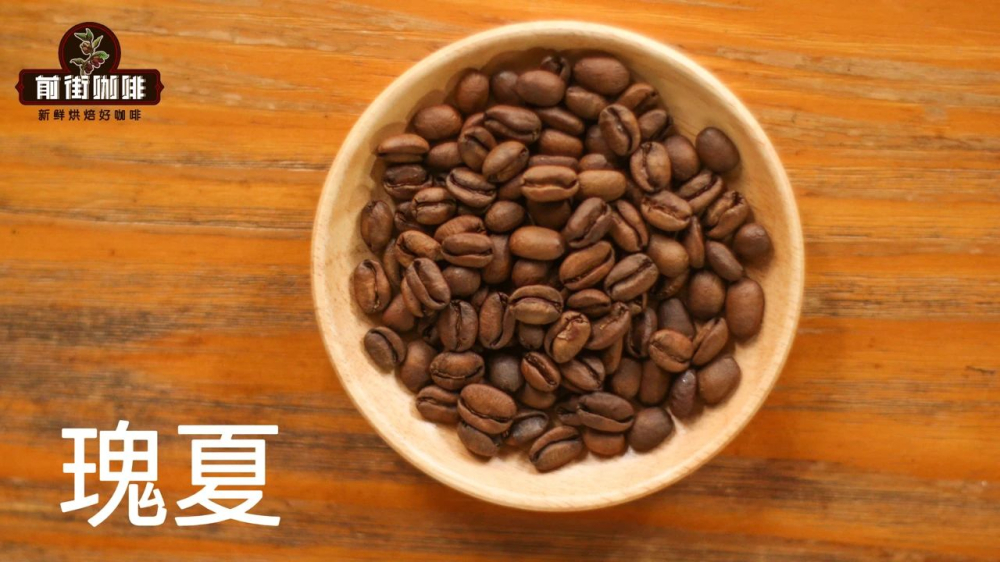
Geisha is one of the most famous varieties since the rise of the specialty coffee wave. With its distinctive tangerine aroma and honeyed sweetness, it has become a high-quality bean that coffee lovers around the world seek out. In this article, Front Street discusses Geisha's flavors and characteristics.
The Taste of Geisha Coffee
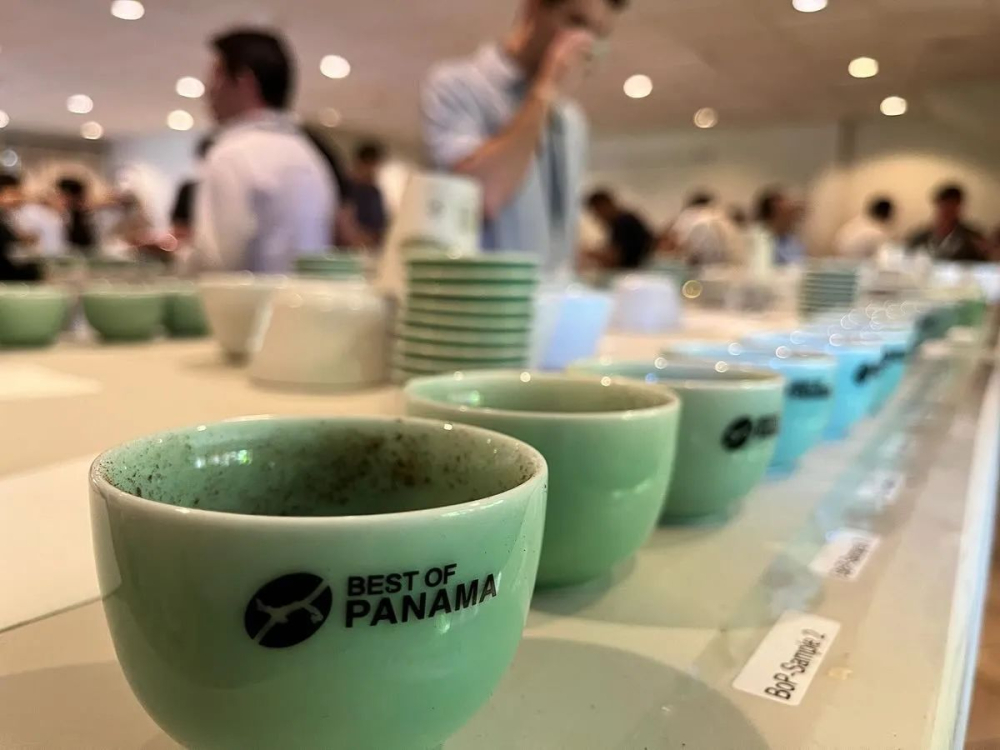
Before it became famous, Geisha did not receive much favor from growers—its tree shape was tall and thin, its disease resistance was weak, and its yield was not ideal; moreover, when planted at lower altitudes, its flavor performance was mediocre. It was not until 2004 that Geisha truly stepped onto the international coffee stage at the "Best of Panama green bean competition," astonishing the judges present with its delicate jasmine florals and deep fruit aromas, earning an unprecedented high score and taking the championship that year. After that, the price of Geisha coffee continued to set records, and its fame spread throughout the global coffee community.
Geisha has won coffee lovers' affection because, unlike the heavy, deep black coffee of traditional impressions, it is more like a refreshing floral and fruit tea. It carries rich fragrance and complex fruit flavors, evoking a series of unusual aromas. As the temperature changes, one can sense a delicate texture and sweet-and-sour fruitiness filling the entire mouth. Geisha's extraordinary flavor characteristics are enough to make it the "ceiling" in the words of many coffee drinkers. What gave Geisha such high popularity is precisely Geisha coffee's "talent scout," Hacienda La Esmeralda.
How Did Hacienda La Esmeralda Discover Geisha?
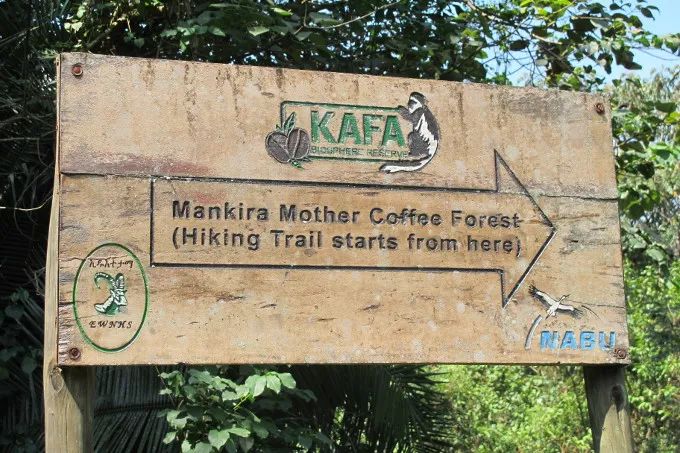
Like many Arabica varieties, Geisha also originates from coffee's birthplace, Ethiopia. In 1931, Geisha was first collected in the wild Kaffa forest in southern Ethiopia, with the purpose of finding new disease-resistant varieties, and it was named after the nearby Geisha Mountain. Later, it was transferred to research stations in Kenya, Uganda, Tanzania, and elsewhere for trial planting. In 1953, Geisha seeds arrived at Costa Rica's Tropical Agricultural Research and Higher Education Center, CATIE, and were recorded as T2722. There were planting records on multiple local farms; however, Geisha's branches were fragile and its yield was not high, so it was not favored by farmers and was not widely planted.
Starting in the 1960s, CATIE gave T2722 Geisha to coffee farmers in Panama, and Geisha truly began to enter this promised land of Panama. In the 1990s, the Peterson family, owners of Hacienda La Esmeralda, began to place importance on coffee production and purchased a new high-altitude farm, Jaramillo. Many coffee trees on the farm had coffee leaf rust, but Daniel Peterson noticed that the Geisha trees were not seriously harmed, so they decided to transplant Geisha, which had originally been planted mixed with other varieties, to more areas of the farm while also increasing its planting altitude.
In 2003, the Peterson family finally discovered Geisha's potential. When they cupped it for the first time, it showed quite intense white flower aromas and an extremely clean mouthfeel, with a finish reminiscent of berries, citrus, and bergamot, thus forming the very typical Panama Geisha flavor. Astonished, everyone decided to enter it in the 2004 BOP (Best of Panama coffee) competition and named it: "Geisha." Therefore, today's astonishing Panama Geisha coffee is the T2722 variety from back then.
Why Is Panama's Geisha the Most Famous?
As everyone knows, coffee is an agricultural crop, and flavor is not only affected by variety; terroir factors, post-processing, roasting, and brewing all have more or less influence on coffee taste. In other words, even if you plant the same Geisha variety as Hacienda La Esmeralda, you may not necessarily produce the same tangerine-aroma, honeyed-sweetness characteristics. Today, besides Panama, we can also drink Geisha coffee from Costa Rica, Ethiopia, Colombia, Guatemala, and other countries in many coffee shops, each with its own unique flavor profile. If you are tasting Geisha coffee for the first time, Front Street suggests starting with the Panama region, where Geisha became famous. Coffee farms in Panama have more planting experience with the Geisha variety, and the distinctive Geisha flavor is more representative.
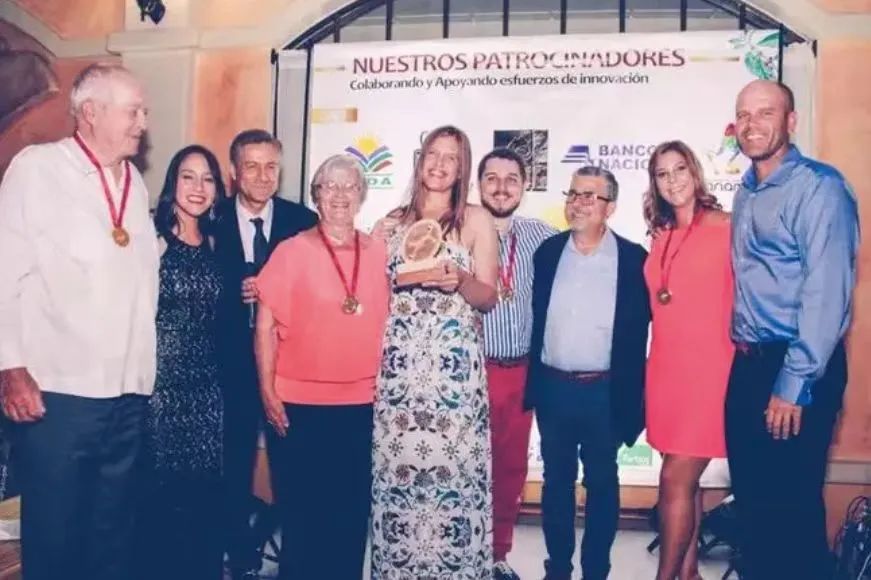
Panama's coffee-producing regions are mainly concentrated in the Boquete Valley of the western highlands and the Volcan region around Baru Volcano, including Hacienda La Esmeralda, as well as the more familiar Elida Estate, Janson Coffee Farm, and Hartmann Estate.
The Boquete producing region is a town in Chiriqui Province, near the eastern side of Baru Volcano at an altitude of about 1,000-2,000 meters. It faces the warm, humid Caribbean monsoon, with the Atlantic cold current behind it, and the mountains are high and steep. "Baru Volcano National Park" is an ecological conservation area with rich biodiversity and seven microclimates, plus it is shrouded in mist year-round with abundant rainfall, creating excellent local planting conditions. Thanks to its unique terroir, Geisha coffee here absorbs various essences and transforms them into elegant floral and fruity notes and layered, changeable acidity, so it naturally appears frequently in major competitions and wins excellent rankings.
What Is Different About Hacienda La Esmeralda's Geisha Coffee?
On Front Street's bean list, there are about 10 choices for Geisha coffee alone. Among them, within the Panama production area, Hacienda La Esmeralda's Red Label Geisha and Green Label Geisha present the most classic Geisha taste. So what do "Red Label" and "Green Label" mean?
The so-called Red Label is the Esmeralda Special grade (including auction lots). The highest-grade Red Label is picked from high-altitude Geisha (1,600 - 1,800 meters) coffee cherries, with a cupping score above 90, mainly from the 2 farms Jaramillo and Cañas Verdes. Although the altitude brings challenges for planting and harvesting, the floral and fruity charm of Geisha in the Boquete producing region is the most prominent. Hacienda La Esmeralda holds an independent auction event; among the divided plots, the Red Label lots put out for competition are called auction lots. Auction lots have a unique number, and each number corresponds to the entire lot of a plot. The one we most often hear about is probably the Mario plot of Jaramillo farm. The Esmeralda Red Label Geisha coffee beans Front Street purchased come from the Mario plot and use natural processing.
Green Label refers to Private Collection. Green Label is selected from plantings at 1,600-1,800 meters altitude, all picked from the two plots Jaramillo and Cañas Verdes, but Hacienda La Esmeralda does not specifically identify the plot information, so it also does not participate in auctions. Although its grade is not as high as Red Label, it mainly expresses the signature classic flavor of high-altitude Geisha. The Green Label Geisha Front Street purchased uses washed processing, and its cupping performance shows fresher, more natural flavors of lemon, berries, pomelo, and Tieguanyin tea.
Because Hacienda La Esmeralda's Geisha coffee beans are extremely high in quality, excellent in flavor, and very famous, their price is also considerably higher than Geisha from other estates. Using Front Street's selling prices as a reference, Hacienda La Esmeralda's Red Label roasted beans are priced at 350 yuan/100g, and Hacienda La Esmeralda's Green Label roasted beans are priced at 168 yuan/100g.
How to Brew High-Grade Geisha Coffee Beans?
Preparation before brewing is crucial. Since these are high-quality coffee beans, if you want to taste the coffee's complete aroma, Front Street suggests choosing freshly roasted coffee beans. The coffee beans shipped by Front Street are all freshly roasted within 5 days, with the aim of letting everyone taste them within the best flavor period. Here, Front Street chooses Esmeralda Green Label Geisha coffee beans for brewing.
Geisha coffee's flavor is world-famous for its rich floral aroma and complex fruit notes. Front Street's roaster hopes to retain more of Geisha's high-quality acidity, so chooses a medium-light roast. This roast level does not change much of the high hardness of beans grown at high altitude, so brewing requires increasing the extraction yield somewhat to present a fuller flavor layering. Front Street uses a higher water temperature and a slightly finer grind to stimulate more aromatic substances. In addition, Front Street hopes Geisha coffee's floral and fruity notes will be clearer, so it widens the coffee-to-water ratio a bit, using 1:16.
In order to improve Geisha coffee's extraction yield, avoid over-extraction, and at the same time highlight the sweet-and-sour flavor layers, FrontStreet Coffee's baristas use a V60 dripper. The V60 dripper's body has ribs connecting the top and bottom and a large central hole that speeds up the flow of water downward, while the spiral-shaped vent groove design lengthens the water flow path, increasing the contact time between coffee grounds and hot water. Each stream of water converges along the grooves toward the center of the dripper, concentrating the pressure on the coffee grounds and extracting coffee with richer layering.
Dripper: V60 Water temperature: 91-92℃ Dose: 15g Coffee-to-water ratio: 1:15 Grind size: fine granulated sugar size (sieve No. 20 to 80% passing)
Three-stage extraction: For the first stage, use 30g water to bloom for 30 seconds, pouring evenly in circles to form a dome. For the second stage, pour in 95g hot water. When the coffee bed drops by half, begin pouring the third stage of 100g until all the coffee has finished dripping. Note to start pouring from the center point, using a gentle, small stream in circles throughout, to avoid uneven extraction. Finally, after the coffee liquid has finished dripping, gently swirl to even it out, and you can begin tasting Geisha's flavor starting from high temperature.
The pour-over Esmeralda Green Label Geisha coffee enters with bright, refreshing citric acidity, while also offering a light, elegant aroma like jasmine. As the temperature drops, acidity and sweetness intertwine, like berry juice. The finish presents clear green tea, with very complex flavor layers and a full, smooth, pleasant mouthfeel.
For professional coffee knowledge exchange and more coffee bean information, please follow Coffee Workshop (WeChat public account cafe_style)
For more specialty coffee beans, please add the private WeChat FrontStreet Coffee, WeChat ID: qjcoffeex
The above content is compiled by CoffeeHunters, a coffee news website.


