







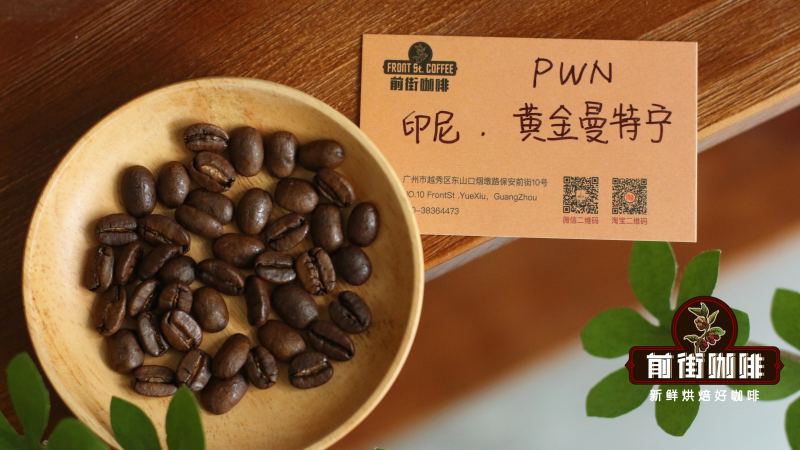
Why does Golden Mandheling coffee favor a medium-dark roast?
Golden Mandheling coffee is a premium selection within the Indonesian Mandheling family, and medium-dark roasting suits it because of Sumatran terroir and the wet-hulling process. Beans from Tobahu and Aceh grow at roughly 900 to 1,600 meters in a tropical rainforest climate near 25 to 28°C year-round. Wet hulling creates the herbal, woody and medicinal notes that darker roasting softens into mellow body, caramel and spice.
The name is not a grade but a registered trademark of the Pwani company, which is why PWN Golden Mandheling is treated as a reference point. Darker roasting reduces the acidity that would otherwise dominate, and the same bean performs differently across pour-over, SOE espresso or a moka pot. Adjust grind and ratio to keep the caramel and spice notes forward without pushing the brew bitter.
Golden Mandheling is a premium representative within the Indonesian Mandheling family, and the reason it is best suited to medium-dark roasting is closely tied to the terroir of its producing region, the wet-hulling process, and historical drinking habits. Starting from Front Street Coffee's best-selling PWN Golden Mandheling, this article first clarifies the key fact that it is not a grade but a registered trademark of the Pwani company, then explains the geographical conditions of Sumatra's two major producing regions, Tobahu and Aceh, before breaking down how the wet-hulling process creates herbal, woody, and medicinal notes. On the roasting level, the article explains why Mandheling has traditionally been dark-roasted, and how Front Street uses a dark roast to highlight mellow body, caramel, and spice notes while reducing acidity, allowing this bean to show different charms in pour-over, SOE espresso, or moka pot.
The world of coffee offers quite a rich range of choices, with both light roasts and dark roasts, and coffee beans themselves vary by variety, pairing with different coffee machines in different ways, so there are quite a few details to pay attention to. Today Front Street is here to talk about how to make pour-over with Golden Mandheling coffee, a bean that has always been a very popular specialty coffee at Front Street.
Before discussing the brewing method, let's first get to know Golden Mandheling coffee itself.
The flavor direction of coffee beans is mainly determined by three conditions: origin, variety, and processing method. Below, Front Street Coffee will discuss Golden Mandheling coffee around these three points.
Golden Mandheling Coffee
Mandheling is the iconic representative of Indonesian coffee, and Golden Mandheling is a premium selection within Mandheling. Sumatra is the main source of Indonesian specialty Arabica; what is commonly called Mandheling coffee refers to Arabica beans from the area around Tobahu in north-central Sumatra at an altitude of about 900 to 1,200 meters, as well as Arabica beans from the far northern part of Sumatra around Aceh at an altitude of about 900 to 1,600 meters. The suitable altitude combined with a tropical rainforest climate keeps the island's temperature at around 25 to 28°C year-round, with evenly distributed seasons and no obvious dry period, providing quite ideal growing conditions for coffee trees.
So what does Golden Mandheling refer to? Judging by the name, is it a higher grade than ordinary Mandheling?
Golden Mandheling is not a grade name, but a registered trademark of the Indonesian company N.V. Pawani Medan (PWN for short). Founded in 1957, the company is engaged in the export of Indonesian products such as coffee, rubber, cinnamon, cloves, and patchouli oil. It was the first Indonesian company to export coffee from North Sumatra, and the first company to make the name "Mandheling coffee" known in Japan. Since 1977, the company has focused on exporting high-quality coffee beans, mainly dealing in Sumatra Arabica Mandheling Grade 1 and Robusta AP-I Grade 2, with export markets mainly in Japan, Taiwan, and the United States, of which Japan and Taiwan together account for more than 95%. In Japan and Taiwan, "PWN" is almost synonymous with a quality guarantee.
Front Street Golden Mandheling coffee beans come from PWN's signature authentic product. The reason Front Street PWN Golden Mandheling dares to use the word "Golden" is that, on top of Indonesia's highest green bean grade G1, it must undergo at least three rounds of purely manual selection and one round of machine screening, ensuring a screen size of 18 mesh or above, fewer than 3 defective beans in a 300-gram green bean sample, a uniform darker green color, and a neat flat bean shape — clearly higher in quality than Indonesia's G1 grade.
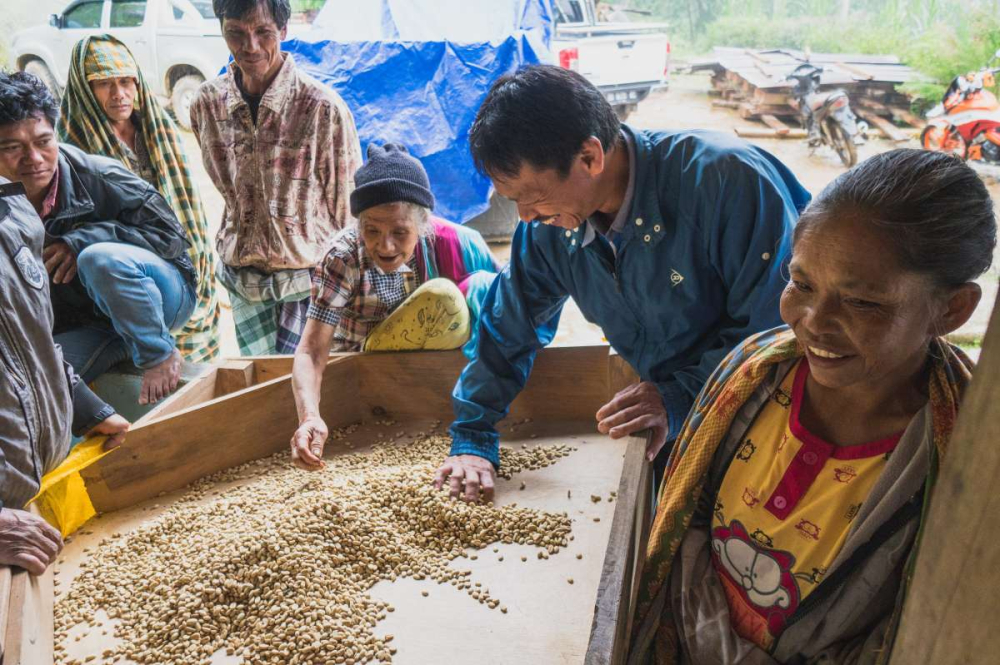
Processing Method of Sumatra Golden Mandheling Coffee Beans
The unique flavor of Golden Mandheling is inseparable from its processing method. Front Street has also mentioned that the processing method of coffee beans is often influenced by the local climate and environment, and the local area is rainy, frequently hit by typhoons, and humid year-round, making it difficult to meet the conditions required for sun-drying, so coffee farmers switched to the wet-hulling method to process the beans. In wet-hulling, the beans are first fermented using the washed method, and when the beans are in a semi-moist state, the parchment is removed by machine before drying continues. The beans enter a relatively humid storage environment completely bare, thereby developing herbal, woody, and medicinal notes, which also give Golden Mandheling its one-of-a-kind flavor.
Why is Mandheling dark-roasted? What makes dark-roasted Mandheling so good?
In an era before acidic coffee became popular, coffee beans around the world were almost all dark-roasted, which both matched the public's ingrained impression of coffee flavor and fully released the coffee's intense aroma, while also bringing a heavier mouthfeel and body, making it feel more "potent" to drink. Mandheling emerged against this backdrop.
In order to present the most ideal flavor profile of Front Street Golden Mandheling, we use a dark roast, further enhancing the coffee's mellow body and caramelized aroma while suppressing acidity, so that the brewed coffee carries unique spice, pine, and caramel notes.
Compared with light-roasted beans, dark-roasted beans show little variation in flavor, in other words, their taste layers are relatively less rich, but in exchange they offer the advantages of high body and rich, fragrant flavor.
After roasting, the coffee beans are relatively large, dark black in color, with a special aroma reminiscent of cloves, herbs, and sandalwood. Low in acidity and steady, with a fragrant, mellow, and clean taste, rich nutty and caramel aromas, with chocolate notes, a lasting finish, and high balance, it can be enjoyed as a pour-over single-origin, used to make SOE espresso, or extracted in a moka pot. Front Street Golden Mandheling will present different mouthfeel charms depending on the extraction method.
The above content is compiled by CoffeeHunters, a coffee news website.


