







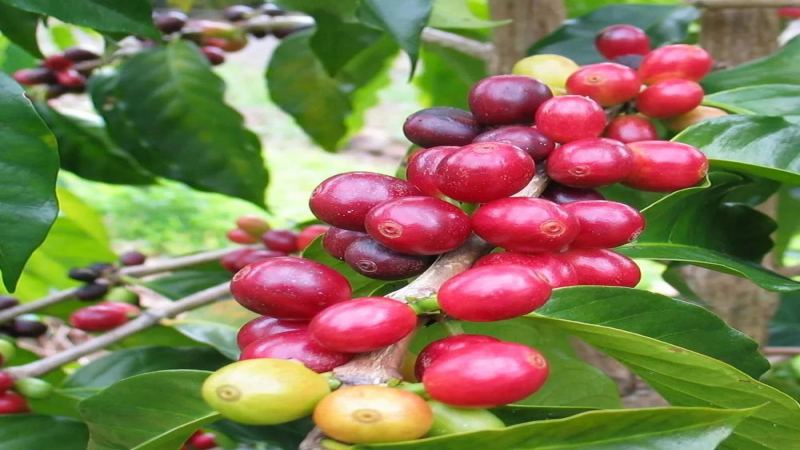
What do the red, green and blue labels mean in Geisha coffee?
Hacienda La Esmeralda grades its Panama Geisha coffee into Red, Green, and Blue labels, which differ by the altitude and plot the beans come from. The three grades carry different flavor characteristics and prices. Ethiopian Geisha and Esmeralda Geisha are also separate varieties, and their flavor profiles are not the same.
Panama's microclimate supports this: cold air moves through the central mountain range and converges above 1,900 meters around Boquete and Piedra de Candela, where temperatures and rainfall suit coffee. Nutrient-rich soil around the area adds to the cup quality. The estate began as a dairy farm bought by Rudolph Peterson in 1964, and his son Price later moved it toward coffee.
When Geisha is mentioned, many people first think of Hacienda La Esmeralda in Panama. Geisha originated in Ethiopia, but rose to fame because of Hacienda La Esmeralda in Panama. However, Front Street Coffee would like to remind everyone: Ethiopian Geisha and Esmeralda Geisha are not the same variety, and their flavor profiles also differ, with Esmeralda Geisha being superior in flavor. Hacienda La Esmeralda has a strict grading system for its Geisha coffee beans. What exactly do the commonly heard Red Label, Green Label, and Blue Label represent? This article will start from Panama's terroir conditions and the development history of Hacienda La Esmeralda, and provide a detailed analysis of the classification standards, altitude requirements, and flavor characteristics of the three grades of Geisha, along with Front Street Coffee's Geisha brewing suggestions and parameters.
When it comes to Geisha, many friends may first think of the Geisha coffee from Hacienda La Esmeralda in Panama. Geisha grew in Ethiopia, but became famous because of Hacienda La Esmeralda in Panama. But Front Street Coffee tells everyone: Ethiopian Geisha coffee and Esmeralda Geisha coffee are different varieties, and their flavors are also different. The flavor of Esmeralda Geisha coffee is slightly superior.
Panama Coffee
Why is Panama's coffee so famous? We all know that coffee is a type of crop, so of course it is closely related to the climate and environment. Panama's climate has made its coffee famous. Panama borders Costa Rica and Colombia, and its east-to-west environment allows cold air currents to flow through the central mountain range and converge above 1,900 meters in altitude, thereby forming a very unique microclimate in the Boquete and Piedra de Candela areas, with temperatures and rainfall very suitable for plant growth. This microclimate area is the main producing region of Panamanian coffee. In addition to climate, the land around this area is rich in nutrients, and the fertile soil provides perfect cultivation conditions for coffee growth, shaping a large number of unique, high-quality coffees.
Hacienda La Esmeralda
When talking about Geisha coffee, Hacienda La Esmeralda must be mentioned. In 1964, American banker Rudolph Peterson retired, moved to Panama, and bought Hacienda La Esmeralda in Boquete, initially focusing on dairy farming. Later, his son Price resigned from his position as a doctor to help his father run the farm, and in 1987 introduced Caturra and Catuai coffee varieties, and in 1994 established a washed processing plant, from then on having its own coffee processing facility.
At present, Hacienda La Esmeralda mainly has three farms growing Geisha varieties: El Velo, Cañas Verdes, and Jaramillo. In 1996, it bought the nearby Jaramillo, which had superior geographical conditions and good flavor in its original coffee varieties. El Velo was acquired by Hacienda La Esmeralda in 2012. Front Street Coffee believes that Hacienda La Esmeralda's acquisition of farms with good output and high altitude was a unique decision at the time, and this also enabled Hacienda La Esmeralda to occupy a certain position in the coffee industry.
Starting with its championship at the Panama Best of Panama green bean competition in 2004, it was astonishing all the way. Later, expert appraisal revealed that the coffee beans were the Ethiopian Geisha variety. After that, the Peterson family devoted most of its energy to developing infrastructure to support excellent lot separation and fine processing.
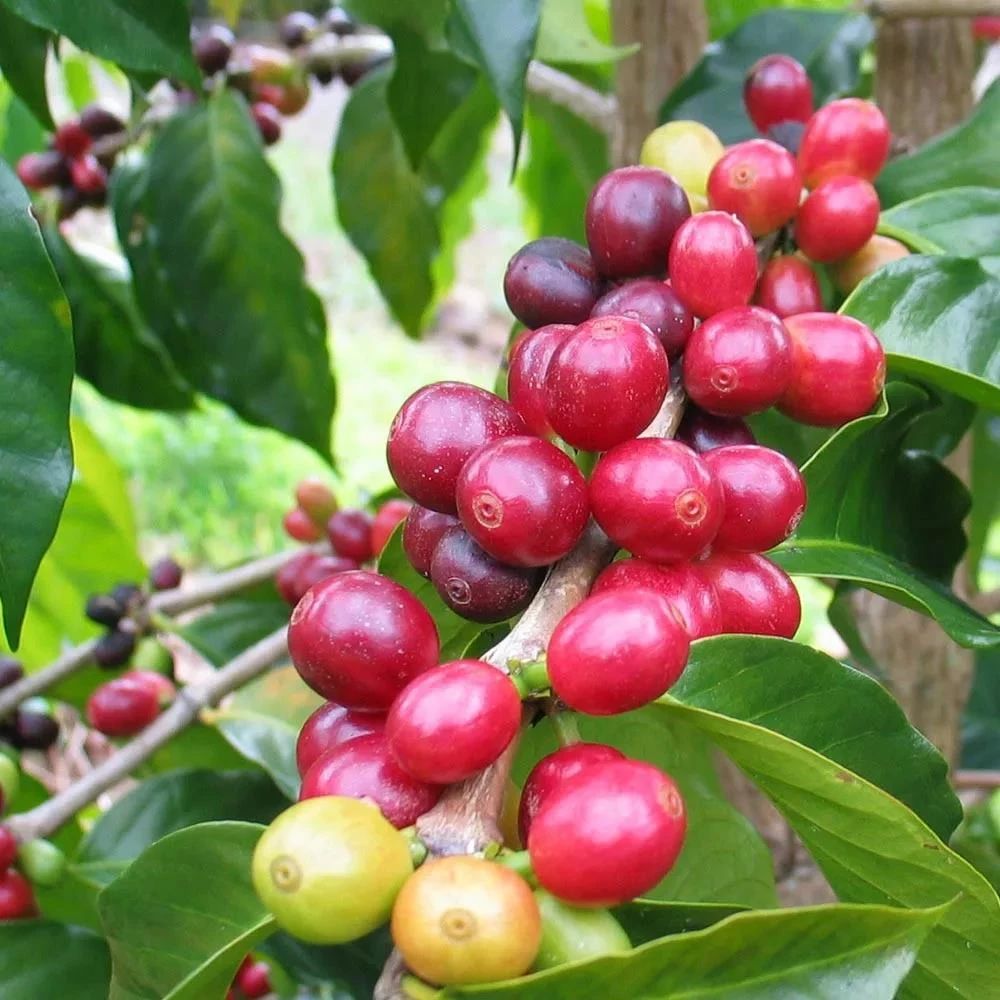
Hacienda La Esmeralda Red Label, Green Label, Blue Label Grading Standards
Although Geisha was discovered and made famous by Hacienda La Esmeralda, and now countries around the world are researching and growing Geisha coffee, Hacienda La Esmeralda still has strict classifications for the coffee beans produced on its farms. What do the Red Label, Green Label, and Blue Label we often hear about mean? And what are they divided according to?
Coffee beans can be graded by size, by cupping, by defect ratio, by altitude, and so on. So what are Hacienda La Esmeralda's Geisha coffee beans graded by? Front Street Coffee has learned that Hacienda La Esmeralda mainly grades by planting altitude, supplemented by actual cupping results, distinguishing Geisha beans into Red, Green, and Blue Label grades.
Top Grade — Red Label [Auction Lot]
The Geisha specially selected by Hacienda La Esmeralda is what we often hear called Red Label. It is selected from Geisha beans grown at an altitude of 1,600-1,800 meters, with a cupping score of 90 or above, produced from the Jaramillo and Cañas Verdes production areas. It is also the highest-quality Geisha bean. For auction-lot Geisha coffee beans, it is possible to trace which plot the coffee beans came from. Red Label Geisha coffee beans come only from this single plot and are absolutely never blended with Geisha from other plots. This grade of Geisha uses natural or washed processing methods, and the flavor has special, bright floral aromas and citrus notes.
Green Label [Private Collection Lot]
Green Label is grown at an altitude of 1,500-1,800 m, and is a blend of micro-lots from three different farms: Jaramillo, Quiel, and Cañas Verdes. The Green Label lot coffee beans are Geisha coffee beans blended from beans from all plots within Hacienda La Esmeralda. Although Green Label is not as high a grade as Red Label and is not the highest-level auction bean, it still carries the classic Geisha flavor: floral aroma, fruity aroma, citrus acidity, and a full, juicy mouthfeel. Green Label Geisha is likewise available in washed or natural processing. Because its elevation standard is the same as Red Label, but it is a mixed harvest, Front Street Coffee's view is that it is Esmeralda's most cost-effective grade. Green Label Geisha usually uses the washed processing method. This grade of Geisha beans still carries the classic flavor of Geisha coffee beans: floral aroma, fruity aroma, citrus acidity, and a full, juicy mouthfeel.
Blue Label [Selected Lot]
Blue Label is Geisha harvested as a blend at an altitude of 1,500 meters and below. It comes from a blend of beans from three different farms: Jaramillo, Cañas Verdes, and El Velo, including Geisha grown in planting areas near Hacienda La Esmeralda, all of which can be defined as Blue Label. The brand Geisha 1500 is the Blue Label Geisha we commonly see. At present, Blue Label Geisha has both washed and natural processed beans, and the natural-processed Geisha coffee beans were only introduced in small batches at the end of 2019.
Then in 2021, news came that Hacienda La Esmeralda had canceled the Blue Label brand; in the same year, a Geisha coffee bean named "Volcanic Rock" produced from the same region appeared. After verification by Front Street Coffee, Volcanic Rock Geisha is processed by Hacienda La Esmeralda, and its flavor is also highly similar to the Blue Label Geisha flavor of previous years.
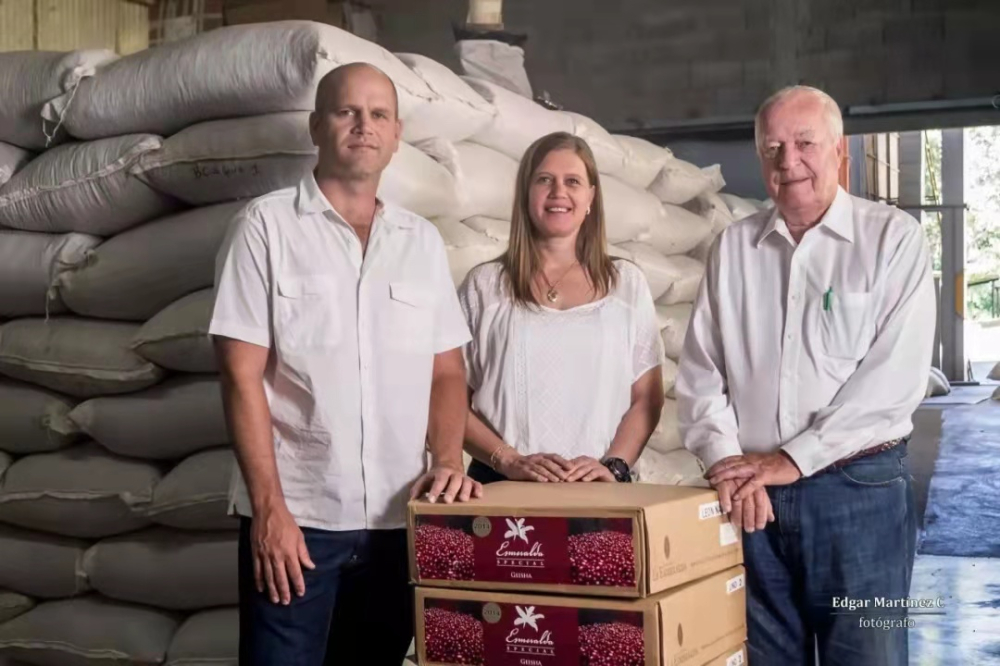
It can thus be seen that the biggest difference among Red Label, Green Label, and Blue Label is altitude. Front Street has said that coffee beans grown at higher altitudes have better flavor, so the quality of Red Label and Green Label is better than that of Blue Label. Front Street believes that all three kinds of Geisha coffee are very good coffees. Personal tastes differ: some people like a fuller mouthfeel, while some like a brighter one, so which Geisha coffee to choose depends on personal preference.
Front Street Coffee Geisha Brewing Suggestions
For coffee brewing, Front Street always suggests that freshly roasted coffee beans can better express the rich flavors of coffee. Therefore, the coffee beans sold by Front Street are all within 5 days of roasting. Front Street's roasting philosophy is "freshly roasted good coffee," so that every customer who places an order receives the freshest coffee when it arrives. The resting period for coffee is about 4-7 days, so when customers receive it, it is exactly at its best flavor.
Front Street Coffee's baristas take into consideration that Geisha beans are all light-roasted, and lightly roasted beans have a lower extraction rate of coffee substances than dark-roasted ones. Therefore, in order to ensure that the Geisha coffee flavor can be fully extracted, they use a higher water temperature for brewing, and also choose a finer grind size.
Front Street Coffee recommends the following brewing parameters: Hario V60 dripper, 90°C water temperature, 15 grams of coffee, 1:15 coffee-to-water ratio, and a medium-fine grind size (80% passing through a Chinese standard No. 20 sieve).
Front Street Coffee Brewing Method
Front Street Coffee uses staged extraction, also called three-stage brewing. Use 30 grams of water for blooming for 30 seconds, then pour in a slow circular stream until the water reaches 125 grams for the first stage. When the water level is about to expose the coffee bed, continue pouring until 225 grams and stop pouring. After the water in the dripper has dripped through, remove the dripper. Start timing from the beginning of pouring; the extraction time is 2'00". Next, pick up the whole cup of coffee and swirl it evenly, then pour it into a cup for tasting.
[Red Label Brewing Flavor] Bright rose and citrus aromas, genmai, berries, apricot, complex fruits, honey, with a full juicy mouthfeel, rich flavor layers, and obvious sweetness.
[Green Label Brewing Flavor] A rich jasmine floral aroma on the palate, high sweetness, citrus, berries, juice-like mouthfeel, cream, green tea, orange peel, cantaloupe, with overall rich flavor layers and a lasting floral and citrus finish.
[Blue Label Brewing Flavor] A soft acidity of lemon and grapefruit on the palate; as it cools slightly, there are oolong tea, honey, and sucrose sweet aftertaste, with a relatively clean and bright mouthfeel.
Professional coffee knowledge exchange. For more coffee bean information, please follow Coffee Workshop (WeChat public account: cafe_style)
For more specialty coffee beans, please add the private WeChat of Front Street Coffee. WeChat ID: qjcoffeex
The above content is compiled by CoffeeHunters, a coffee news website.


