







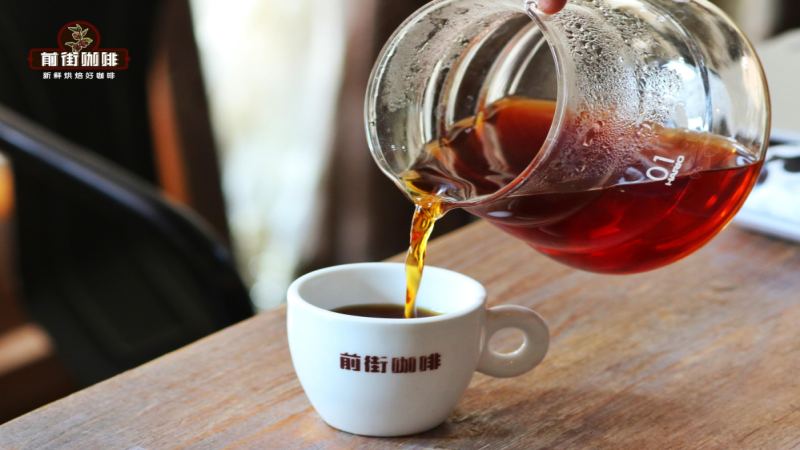
How Do You Brew Yirgacheffe by Pour-Over?
Yirgacheffe is a medium-light roasted Ethiopian coffee with tea-like body, citrus and berry acidity, and white floral aroma. Grind medium, keep water temperature moderate, and pour in three stages to extract evenly. Every step, from grind size to pouring rhythm, affects whether the delicate floral notes survive into the cup.
The name comes from the town of Yirgacheffe, once part of Sidamo province; the Ethiopian government registered it as a commercial trademark alongside Sidamo and Harar. A washed Yirgacheffe everyday bean built on Ethiopian heirloom varieties gives beginners a clear, repeatable pour-over framework.
Yirgacheffe stands out in specialty coffee with its light and elegant floral-fruity tea-like character. Its bright citrus acidity and rich white floral aroma have won the hearts of countless coffee lovers. However, to fully unlock the delicate flavors of this bean, every step matters—from grind size and water temperature control to pouring rhythm. This article takes Front Street Coffee's washed Yirgacheffe everyday drinking bean as an example to break down the complete pour-over process for Yirgacheffe in detail, covering equipment preparation, grind size setting, water temperature selection, dripper pairing, and the specific operating parameters of three-stage pouring, helping beginners build a clear pour-over framework and reliably reproduce a cup of layered, rich Yirgacheffe at home.
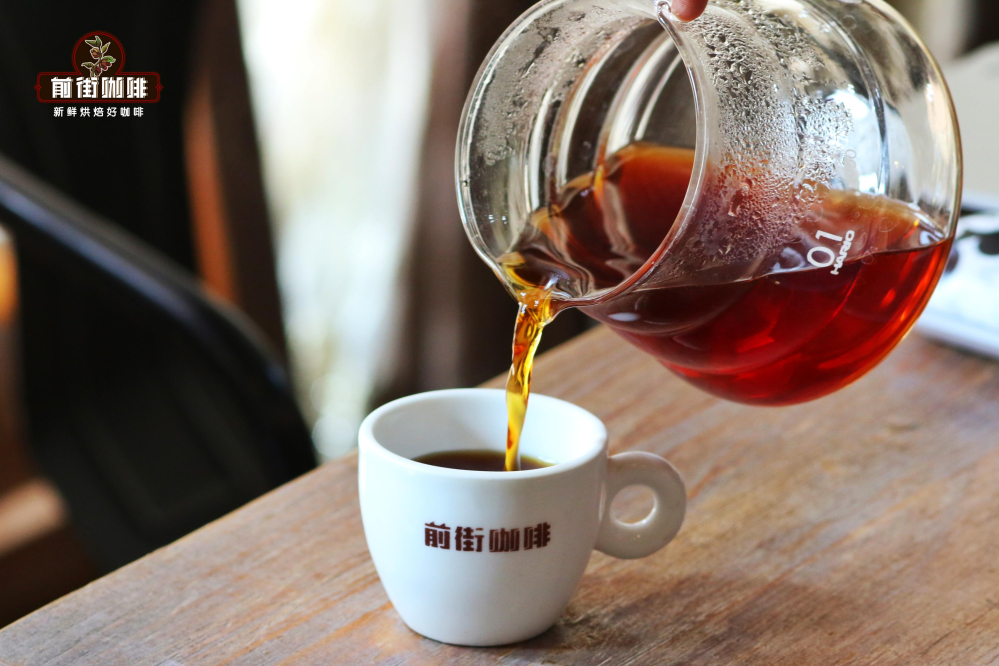
Yirgacheffe extracted by pour-over presents a light and elegant floral-fruity tea-like quality, completely different from traditional strong, deep black coffee. That bright, fresh fruit acidity interwoven with abundant white floral notes makes it unforgettable after just one sip. However, to fully brew out such rich aroma and mouthfeel, you still need to master certain techniques.
Yirgacheffe coffee generally uses a medium-light roast.
The name Yirgacheffe comes from the town of Yirgacheffe, which was originally a sub-region under the Sidamo province of Ethiopia. Because the coffee produced there had a uniquely distinctive flavor profile, it gradually gained fame worldwide and eventually became independent from Sidamo, forming its own region. Along with the two well-known regions Sidamo and Harar, Yirgacheffe was registered by the Ethiopian government as a commercial trademark. Therefore, what we now call Yirgacheffe more often refers to a trademark concept representing a specific coffee flavor.
The so-called Yirgacheffe flavor refers to a beautiful citrus, lemon, and berry sweet-tartness, paired with rich floral aroma and a pleasant tea-like sensation. To present such a refined and delicate flavor and mouthfeel, the coffee beans' excellent growing environment, variety, processing method, as well as roasting and brewing techniques, are all indispensable.
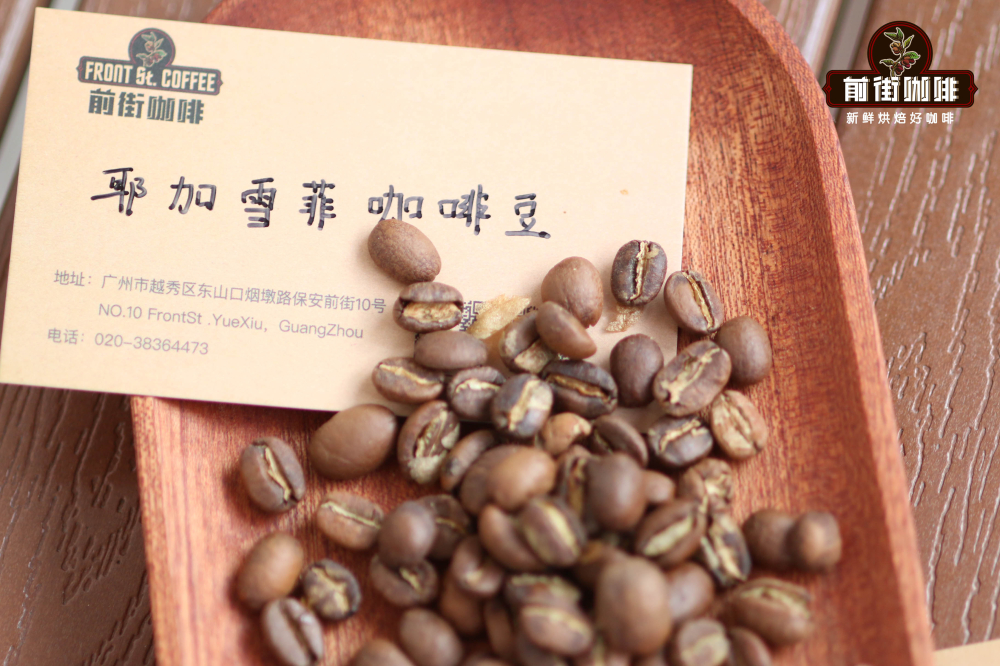
If you have just stepped into the coffee world and are a beginner, Front Street recommends a washed Yirgacheffe everyday drinking bean. This bean uses local Ethiopian heirloom coffee beans and is medium-light roasted. Front Street's everyday drinking bean series allows friends who are just getting into coffee to experience the basic flavors of a region at an affordable price, and the small-package design also avoids waste from not being able to finish it. Of course, as a loyal fan of Yirgacheffe, Front Street naturally has more than just this one. When you visit a Front Street store daily to taste Yirgacheffe pour-over coffee, there are three options available. The other two are the washed Gedeb Gotiti Cooperative coffee and the natural-processed Red Cherry coffee, both extremely popular Yirgacheffe products.
Yirgacheffe coffee beans are relatively small. If a dark roast is used, they are prone to uneven heating and even scorching. Therefore, roasters generally tend toward medium-light roasting. Surprisingly, a lighter roast level instead allows Yirgacheffe to show elevated acidity and highly recognizable fruit flavors, and this discovery also helped drive it to become a trend in the coffee market. What Front Street wants to present is the classic Yirgacheffe taste, so all three Yirgacheffe coffees use a medium-light roast.
Preparation before pour-over
Before brewing, we need to prepare the following equipment: a pour-over kettle, dripper, server, grinder, filter paper, electronic scale, thermometer, and a bag of Yirgacheffe coffee beans at their optimal tasting period. Here, Front Street uses the washed Yirgacheffe everyday drinking bean for demonstration.
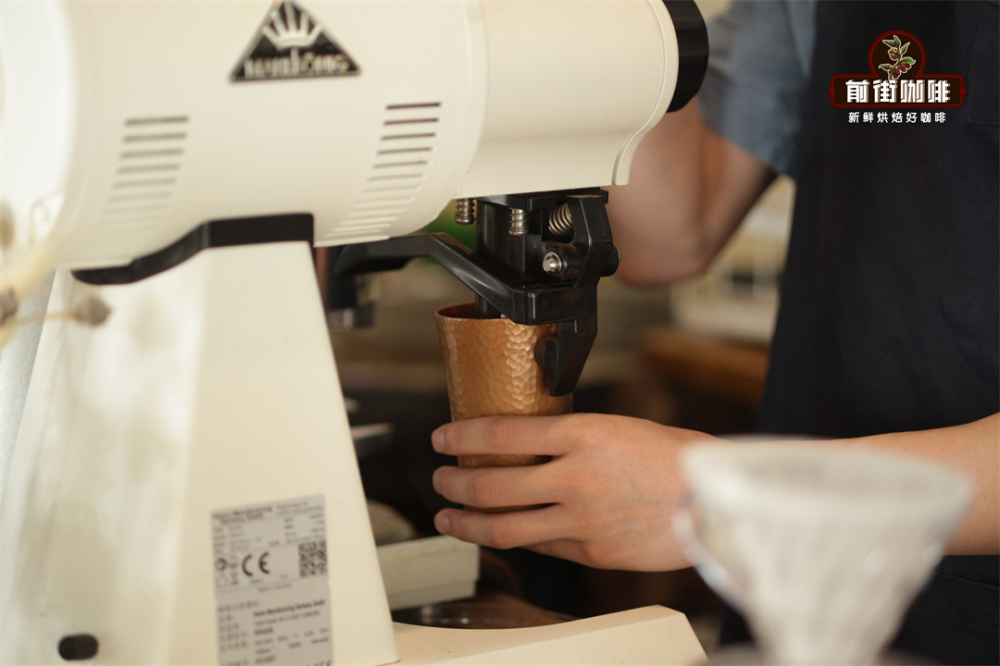
The grinder plays an extremely critical role in the pour-over process. The coarseness and uniformity of the coffee grounds directly affect the final taste of a cup of pour-over coffee. If the grounds are too coarse, it is easy to underextract and produce a weak taste; if too fine, it is easy to overextract and bring bitterness. When adjusting grind size, Front Street uses a tool—China No. 20 0.85mm standard sieve. For medium-light roasted coffee beans, Front Street usually uses a 75–80% passing rate; for medium-dark roasted coffee beans, 70–75%. Here Yirgacheffe is a high-altitude coffee bean with a medium-light roast. Front Street wants to extract richer aromatic substances, so it chooses a coarseness with an 80% passing rate on the No. 20 standard sieve. The store uses an EK43s grinder with a setting of 10.
Water temperature and grind size play similar roles: the higher the water temperature, the higher the extraction efficiency, the easier it is to release various substances and components, and the higher the concentration becomes. If near-boiling hot water is used for brewing, it is easy to extract unpleasant bitter substances. Therefore, when brewing medium-dark roasted coffee beans, Front Street uses different brewing parameters from those for light-roasted coffee beans.
Medium-dark roasted coffee beans undergo more caramelization reactions than light-roasted beans, so they more easily release bitter large-molecule substances. To avoid extracting too many off-flavors, Front Street appropriately lowers the water temperature. Therefore, for medium-dark roasted coffee beans, Front Street recommends 87–90°C, while light-roasted coffee needs a higher water temperature to stimulate aroma, so 91–93°C is used.
For daily service, Front Street Coffee chooses two drippers: Hario V60 and KONO. The V60 dripper is mainly responsible for serving lighter-roasted coffee beans, while the KONO dripper is responsible for serving darker-roasted coffee beans.
Here the Front Street barista uses a resin V60 dripper to extract Yirgacheffe coffee. The V60 dripper body has guide ribs connecting the top and bottom and a large central hole, which serve to speed up the flow of water. The spiral-shaped exhaust grooves lengthen the water flow path and increase the contact time between coffee grounds and hot water. Each stream of water gathers along the grooves toward the center point of the dripper, concentrating the pressure on the coffee grounds and producing a more layered extraction.
Pour-over technique sharing
Front Street's flavor descriptions for each coffee bean are based on freshly roasted beans. If coffee beans are stored for more than two months, part of the aroma may already have been lost, and it is difficult to reproduce it in brewing. Front Street deeply understands the importance of freshness, so it ensures that only coffee beans freshly roasted within 5 days are shipped, allowing everyone to enjoy the fullest tasting period when they receive them.
Based on past brewing experience, Front Street recommends that beginners just starting out use the three-stage pouring method. Three-stage extraction helps more fully dissolve flavor substances during the extraction process, increases mouthfeel layering, and at the same time avoids overextraction caused by too long a soaking time.
If using 15 grams of coffee grounds, a 1:15 coffee-to-water ratio, and 225ml total water, the three-stage water amounts are: 30ml, 95ml, 100ml, and the weights shown on the electronic scale are: 30g, 125g, 225g.
First, place the folded filter paper into the dripper to fit it, and wet it with water so it fits the dripper better. Prepare hot water and a measuring thermometer, and at the same time pour 15 grams of ground coffee into the dripper, then tare the electronic scale.
For the first stage, pour in 30g of water and bloom for 30 seconds, starting the timer as you pour. Use a small stream throughout, pouring at the center point, then begin circling outward, making sure to wet the entire coffee bed.
After 30 seconds, begin pouring the second stage of 95g of water with a slightly larger but steady stream, with the aim of raising the entire coffee bed. The water column should be poured vertically and evenly. At this point the timer scale shows 125g, and pouring is completed at around 55 seconds.
When the liquid level drops to the halfway point, begin pouring the third stage of 100 grams with a small stream in a small circle. Try to control the stream so it does not circle too widely, as it is easy to disturb the coffee bed and cause underextraction. The final total poured water is 225 grams, and the drip completion time is about 2 minutes. After removing the dripper, swirl the coffee liquid in the server to mix it evenly, and then you can begin tasting.
The amount of water poured in each stage is not fixed and unchanging. We can adjust it according to our accumulated pour-over experience and our understanding of the coffee beans. Front Street understands coffee brewing as an experiment grounded in science. To learn pour-over well, we need to deeply investigate and understand the true meaning of each brewing parameter. Only then can we easily find experimental methods and build a brewing framework that suits us.
The above content is compiled by CoffeeHunters, a coffee news website.


