







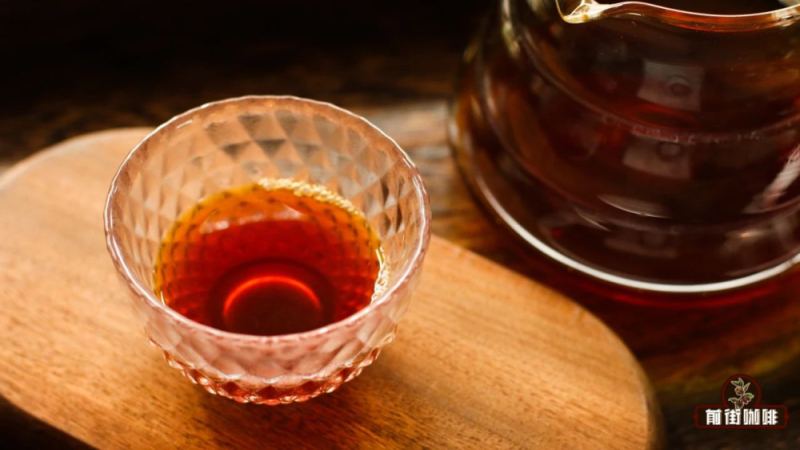
Why does Yunnan coffee cultivation suit the Pu'er region?
Yunnan is China's largest coffee-producing province, and Pu'er is its biggest production area by planted area, with roughly 1.8 million mu under coffee. That is over 95 percent of China's total coffee area, producing about 139,000 tons a year. The province sits in the global coffee-growing latitude belt, and Pu'er's climate and ecology are what make coffee cultivation viable at scale across 35 counties and districts.
Cultivation has spread across 9 prefectures and cities, including Baoshan, Dehong, Lincang, Wenshan, and Xishuangbanna. Pu'er's production area supports major cultivars such as Typica, Bourbon, and Catimor, and processing choices like washed and natural methods shift how the Catimor variety tastes in the cup. Yunnan coffee grew alongside the region's established reputation for Pu'er tea.
Yunnan, as China's largest coffee-producing region, enjoys unique geographical and climatic conditions that provide exceptional advantages for coffee cultivation. Production areas such as Pu'er, Baoshan, Dehong, and Lincang each have their own characteristics, with Pu'er being the largest coffee-producing region in the country by planted area. This article will provide a detailed analysis of the natural conditions for coffee cultivation in Yunnan, particularly the climatic features of the Pu'er production area, and offer an in-depth introduction to the characteristics and differences of major cultivars such as Typica, Bourbon, and Catimor. At the same time, we will compare the effects of washed and natural processing methods on the flavor of Yunnan Catimor, and share Front Street Coffee's recommended brewing parameters and flavor profiles, giving you a comprehensive understanding of the current state and charm of Yunnan coffee.
Yunnan is the largest coffee-producing province in China. In the past, when people mentioned Yunnan, the first thing that came to mind was Pu'er tea, but today coffee has become another calling card for this land. China is a vast country—why is Yunnan able to become an ideal place for coffee cultivation? Front Street has mentioned many times that coffee is essentially a crop, and its quality is inseparable from the local climate and environment. Just as coconuts are suited to growing in Hainan and would struggle to present the same flavor elsewhere, because coconuts require a hot climate and Hainan happens to meet that requirement. From the perspective of geographical and climatic conditions, Yunnan has large areas suitable for coffee cultivation.
What exactly makes Yunnan's climate so unique? Yunnan lies in the golden latitude belt for global coffee cultivation, and its superior ecological environment and abundant natural resources together shape the unique quality of Yunnan coffee. The province's coffee planting area is about 1.8 million mu, accounting for over 95% of China's total coffee area, with an annual output of about 139,000 tons. Coffee cultivation has covered 35 counties and districts across 9 prefectures and cities including Pu'er, Baoshan, Dehong, Lincang, Wenshan, and Xishuangbanna, of which 80% are impoverished areas, involving more than 380,000 coffee-growing households and over 1.14 million people. Yunnan's natural conditions are extremely similar to those of Colombia—low latitude, high altitude, and significant temperature differences between day and night. The small-bean coffee produced here is classified as mellow-aroma type through cupping analysis, with quality and taste approaching Colombian coffee. The flavor characteristics of Yunnan coffee are: rich yet not bitter, aromatic yet not pungent, with a subtle fruity note. Most Yunnan coffee is grown in dry-hot river valley areas at an altitude of around 1,100 meters, resulting in moderate acidity, rich aroma, and a mellow, soft body.
Currently, Yunnan's coffee production is mainly concentrated in four regions: Pu'er (180,000 mu), Baoshan (100,000 mu), Dehong (120,000 mu), and Lincang (20,000 mu), with the vast majority of the varieties being Catimor. More than 80% of coffee beans are currently used as raw material for instant coffee, with part supplied to Nestlé and another part exported by local traders to Europe, America, and other countries. Measured by specialty coffee grading standards, the current quality of Yunnan coffee still has room for improvement.
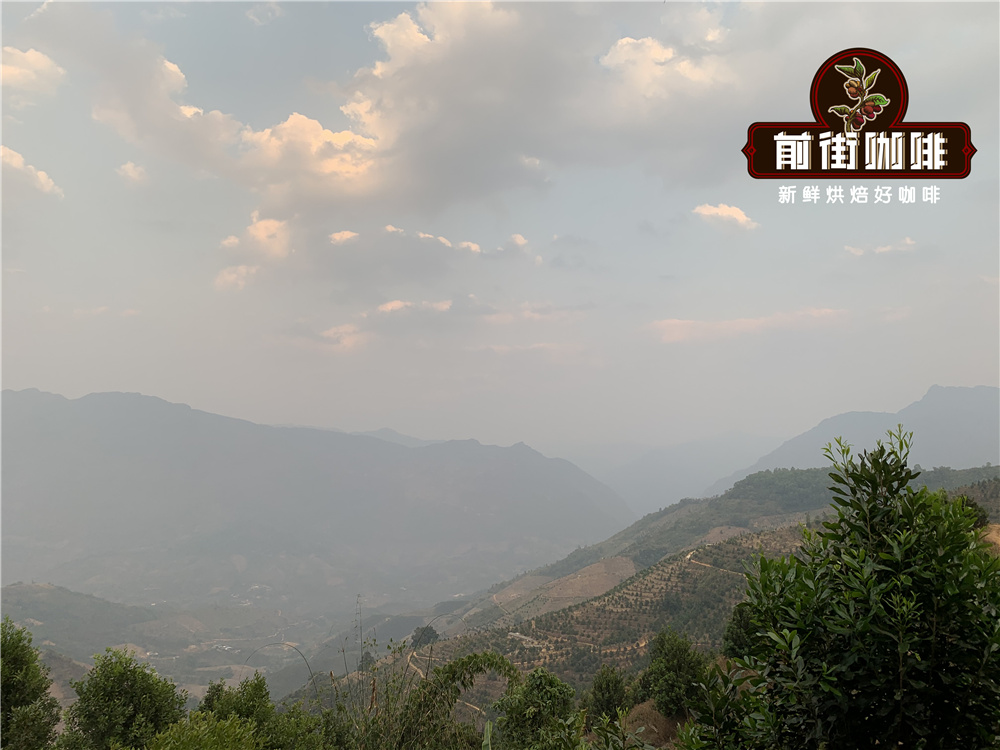
Pu'er tea is world-renowned, but Pu'er has a history of over a hundred years of coffee cultivation, with true large-scale planting beginning in 1988. That year, Nestlé entered Pu'er, injecting strong momentum into the local coffee industry and propelling Pu'er coffee onto the path of industrialized development. Today, Pu'er is the largest coffee-producing region in the country by planted area and output, and also an important coffee trading and distribution center. The coffee industry has become an important pillar of Pu'er's plateau characteristic agriculture and an important support for the construction of the national green economy pilot demonstration zone.
Pu'er has three treasures: Pu'er tea, coffee, and dendrobium. As one of the three treasures, coffee has already won a certain reputation in the international market. The city's coffee planting area reaches 770,000 mu, with an annual output of about 54,000 tons, ranking first in Yunnan. Pu'er is not only China's main coffee-producing region but also the area that receives the most coffee study tour programs.
Climatic characteristics of Pu'er City:
Pu'er City's climate has three major characteristics: low latitude, monsoon influence, and vertical zonation. Geographically, Pu'er borders the Indian Ocean and the Bay of Bengal to the south and is influenced by the humid Indian Ocean monsoon; to the east, the towering Ailao Mountains and Wuliang Mountains block the invasion of Siberian cold currents, forming the main climatic features of warmth, humidity, and calm winds. The temperature difference between the coldest and hottest months is small, making it a true "spring-like throughout the four seasons" place. The annual average temperature ranges from 15.3 to 20.2°C, annual precipitation is 1,000 to 2,780 mm, and annual sunshine hours are 1,873.9 to 2,206.3 hours. Due to the dramatic vertical elevation differences, this region has obvious three-dimensional climate characteristics, with climate types distributed from low to high in sequence: north tropical, south subtropical, mid subtropical, north subtropical, south temperate, and temperate. Coffee cultivation is mainly distributed in mountainous areas at altitudes of 800 to 1,200 meters.
Pu'er City belongs to a plateau climate zone dominated by a south subtropical mountainous humid monsoon climate, located in the golden belt for global coffee cultivation. Pu'er coffee has outstanding color, excellent quality, and unique flavor.
How many varieties of Yunnan coffee are there?
Ethiopia is the gene treasury of coffee—so which varieties has Yunnan introduced? Initially, Typica and Bourbon, two classic high-quality coffee varieties, were the main cultivation targets for Yunnan coffee. In 1991, Yunnan introduced the Catimor series from Kenya, which has stronger disease resistance and higher yield. Currently, the most widely planted variety in Yunnan is Catimor, with a small amount of Typica and Bourbon still retained in the Baoshan area.
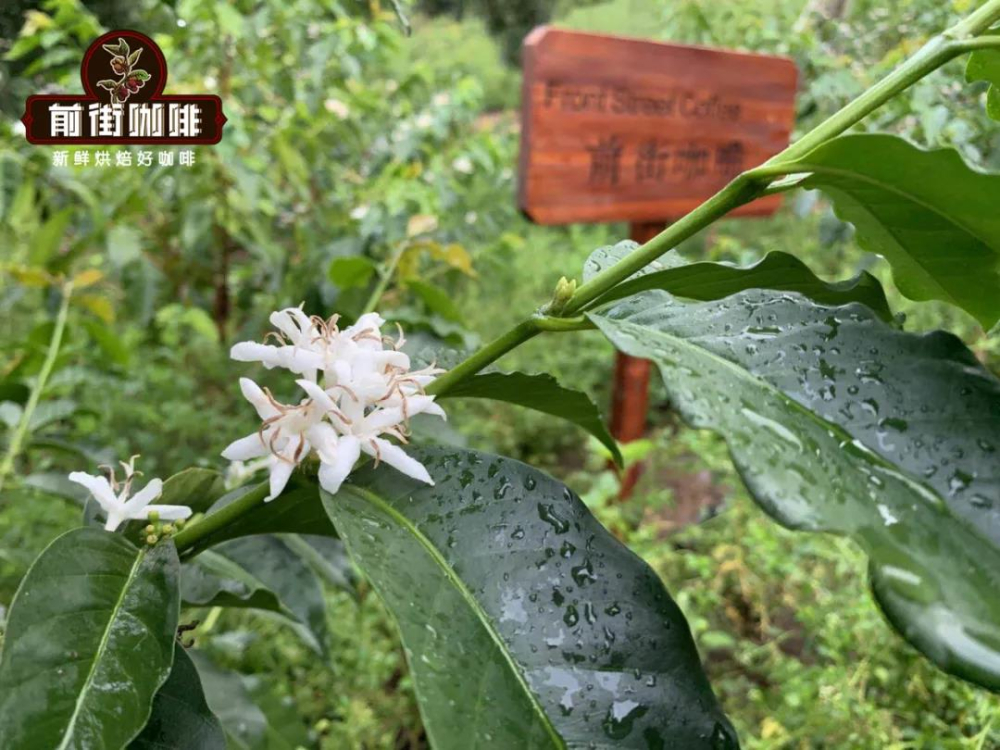
Typica
Typica is the most classic high-quality Arabica variety. The world-famous Blue Mountain coffee and Mocha coffee almost all belong to the Arabica species. Typica coffee originated in Ethiopia and southeastern Sudan and is the most widely cultivated coffee variety in the Western Hemisphere.
Bourbon
This variety is derived from Typica and was gradually spread after the French planted it on Bourbon Island (now Réunion Island) in 1708. Bourbon also possesses a captivating aroma and rich flavor, and surpasses Typica in yield and growth vigor, making it suitable for cultivation at altitudes of 1,200 to 2,000 meters. Bourbon is the variety second only to Typica among small-bean coffee varieties.
Catimor
Yunnan small-bean coffee belongs to the high-generation Catimor variety. Catimor is not of pure Arabica lineage; it is a hybrid of the Timor species (belonging to Robusta) and Caturra (a Bourbon variety), so Catimor contains 25% Robusta lineage. Catimor was bred from a cross between Timor and Caturra, with advantages of strong disease resistance and high yield, and holds a place among Central American coffee varieties. Among the Yunnan coffee beans offered by Front Street, there is a Yunnan small-bean coffee whose variety is precisely Catimor.
The Yunnan Catimor variety grows vigorously with stable secondary traits. The young leaves at the top of the canopy are emerald green, and the entire plant has dark green leaves with a columnar shape, short internodes, many branches, wide adaptability, and strong drought resistance, as well as a certain degree of cold resistance. Compared with Typica, Yunnan Catimor has a very high yield. Although Catimor performs excellently in adaptability in Yunnan, its flavor has always been controversial, just as Han Huaizong often uses "the devil's aftertaste" in his books to describe Catimor's flavor. But Front Street believes that many factors affect coffee flavor and it cannot be generalized. For example, the variety of Indonesian Mandheling coffee is Catimor, yet Mandheling's flavor is widely acclaimed.
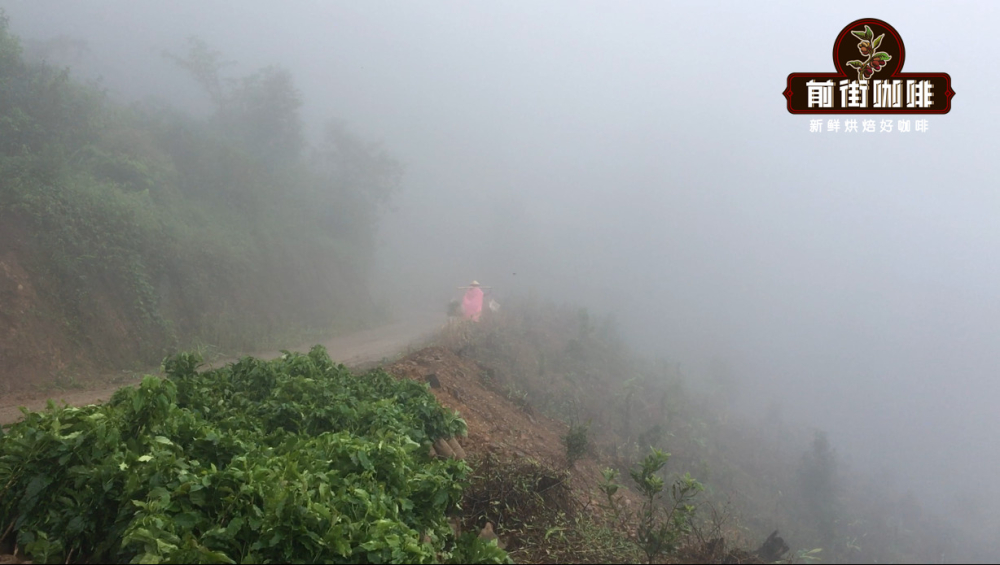
Catimor CIFC7963 (F6) has been widely promoted and planted in coffee-growing areas of Yunnan Province including Dehong, Baoshan, Pu'er, Xishuangbanna, Lincang, Wenshan, and Yuxi, as well as in Panzhihua, Sichuan Province, and neighboring Myanmar, with a cumulative promotion area of more than 200,000 mu.
The Pu'er region of Yunnan grows exclusively the Catimor variety.
Yunnan coffee bean processing methods
Most Yunnan coffee beans use the washed processing method, while FrontStreet Coffee's Yunnan coffee comes in two processing methods: washed and natural.
Comparison of FrontStreet Coffee's Two Processing Methods for Yunnan Catimor Coffee Beans
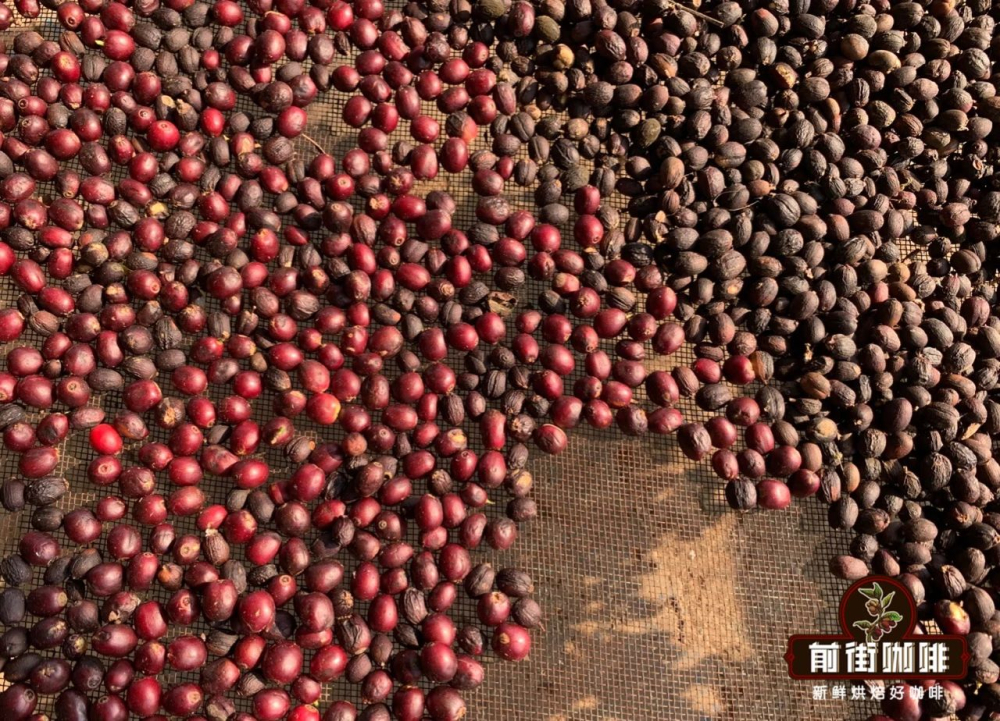
By comparing the green beans of Catimor processed by the two methods, Front Street noticed that the washed coffee appears blue-green with an acidic aroma in the green bean fragrance, while the natural processed coffee appears yellowish with a fermented aroma in the green bean fragrance.
Front Street's recommended parameters for brewing Yunnan coffee:
Filter: Hario V60, Water temperature: 90°C, Coffee dose: 15g, Coffee-to-water ratio: 1:15, Grind size: medium-fine (80% passing through China standard No. 20 sieve)
Natural Catimor brewing flavor: Enters with the juicy feel of red berries, with aromas of nuts, cocoa, and licorice; the aftertaste has a caramel-like sweetness, and the body is mellow, solid, and smooth.
Washed Catimor brewing flavor: Smells of rich nutty aroma; on the palate there are notes of herbs, chocolate, and caramel; the aftertaste carries a slight, subtle fruity acidity.
For coffee brewing, Front Street recommends using freshly roasted coffee beans to experience the richest flavors of the coffee to the greatest extent. FrontStreet Coffee ships coffee beans within 5 days of roasting, because Front Street deeply understands the important influence of freshness on flavor. Front Street's roasting motto is "Freshly roasted good coffee," so that every customer who places an order receives the freshest coffee when it arrives. The resting period for coffee is about 4 to 7 days, so when customers receive it, it is precisely at its best flavor.
Of course, some customers need Front Street to help grind the coffee, which is also fine, but Front Street reminds: after coffee beans are ground in advance, they need to be brewed promptly. If already ground into coffee powder, there is no need for further resting, because the pressure from carbon dioxide inside the packaging during transport can also round out the coffee's flavor, so you can brew a cup immediately upon receiving the ground coffee.
However, coffee grounds oxidize quickly after contact with air, meaning the coffee's flavor will dissipate faster and the flavor will be less ideal. Therefore, Front Street recommends buying whole beans and grinding fresh for each brew, so you can better taste the coffee's flavor.
Use segmented extraction: bloom with 2 times the coffee dose in water, i.e., 30g of water for a 30-second bloom. Starting at 31 seconds, continue pouring in a circular motion with a small stream until reaching 125g, then pause; continue pouring until 225g and stop. Wait for the water in the dripper to finish dripping, then remove the dripper. Time from the start of pouring; extraction time is 2 minutes 00 seconds. Next, swirl the entire cup of coffee to mix evenly, then pour into a cup to taste.
Because Yunnan's climate is very suitable for growing coffee, FrontStreet Coffee also has its own coffee estate in Yunnan and grows its own coffee—Yunnan Natural Typica. The taste profile of this coffee is: a more solid body than washed Yunnan coffee, slightly lower acidity than washed Typica Yunnan coffee, but slightly higher sweetness and better balance, with nutty notes, berry-like acidity, interwoven with brown sugar notes and a slight tea-like feel. Welcome to FrontStreet Coffee to discuss!
For professional coffee knowledge exchange and more coffee bean information, please follow Coffee Workshop (WeChat public account: cafe_style)
For more specialty coffee beans, please add the private WeChat of FrontStreet Coffee: qjcoffeex
The above content is compiled by CoffeeHunters, a coffee news website.


