







Why Does Geisha Coffee Taste So Distinct?
Geisha coffee is tied to Ethiopia, and the Huakui lot made it widely known. The floral notes are often less intense than the name suggests; fruity aromas such as passion fruit, strawberry, mango, jackfruit, and citrus tend to dominate. Those flavors are inherent to the bean and match the fruit descriptors on the SCAA Coffee Flavor Wheel, not any added ingredient.
Much of the character comes from the refined natural process used at the Hambella Buku Abel station, where cherries are dried carefully to protect the fruit aromatics. Pour-over suits these beans well, and a three-stage pour keeps the extraction even. Front Street Huakui has evolved through several versions, each with its own recommended brewing parameters.
Huakui coffee beans have risen to fame in China's coffee scene in recent years, from Luckin's Huakui SOE selling like hotcakes to being sought after by all kinds of pour-over enthusiasts. What exactly is the charm of this bean from Ethiopia? This article will give you a comprehensive understanding of Huakui's variety origin, naming story, terroir, processing methods, as well as the pour-over parameters and flavor performance recommended by Front Street Coffee. You will read about the interesting connection between Huakui and Geisha, the refined natural process at the Hambella Buku Abel processing station, the story of Front Street Huakui's evolution from 1.0 to 8.0, and specific suggestions for the three-stage pour-over method — suitable for every coffee lover who wants to understand this bean in depth.
Luckin Coffee has a very high profile in China. Previously, they announced a piece of news that surprised the coffee community quite a bit: of the 90 tons of Huakui coffee beans they purchased, nearly half was consumed in just about ten days, and some stores even ran out of stock. This news quickly pushed Huakui coffee beans into the center of discussion.
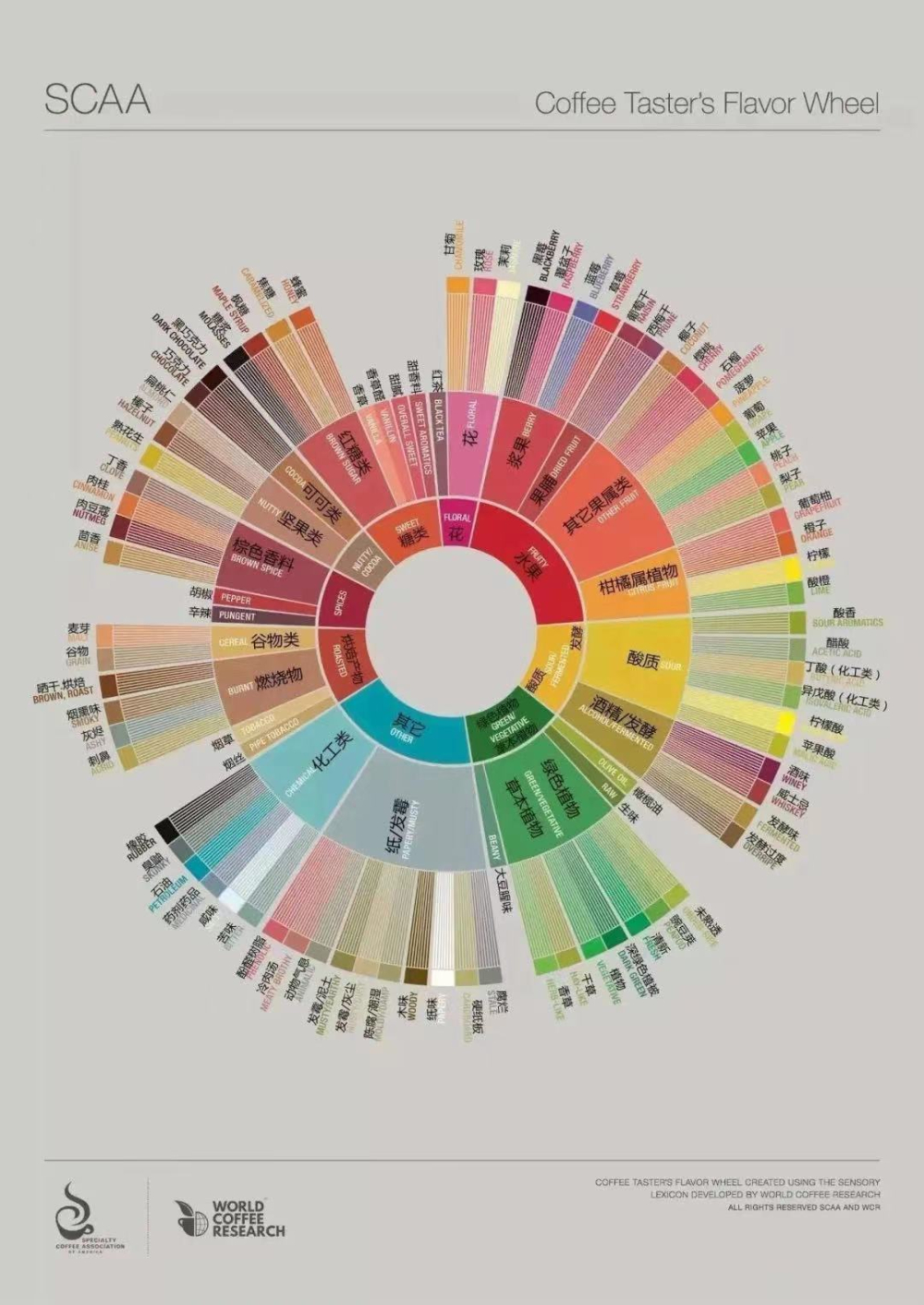
Why has Huakui coffee attracted so much attention? The reason is that the Huakui SOE launched by Luckin was simply too popular. Many consumers were drawn in to try it, and after drinking it found it smoother than coffee they had had before, with a special taste. Front Street Coffee would like to give everyone a bit of coffee education here: this special taste actually has a professional term — coffee flavor. Looking at the words alone, Huakui seems to be a bean that is "bursting with floral fragrance." But the actual situation is not like that. The floral notes of Front Street Huakui coffee are not particularly intense; instead, the fruity aromas are more prominent, such as passion fruit, strawberry, mango, jackfruit, citrus, and so on. The fruit aromas mentioned here are precisely common terms in coffee bean flavor descriptions, usually corresponding to the flavor spectrum on the right side of the SCAA Coffee Flavor Wheel.
Speaking of this, many people may ask: why does Huakui have fruity aromas? Was some kind of food additive added to this bean? Front Street can answer clearly: of course not. This is the flavor that the coffee bean itself carries. Front Street Huakui coffee beans are actually a coffee bean from Hambella, a sub-region of Sidama in Ethiopia. Normally coffee is named according to its producing region or origin. Whether Hambella is transliterated into English or expressed in Ethiopia's Amharic language, it has nothing to do with the words "Huakui," meaning "leader of flowers." There is a story behind this.
In the coffee world, there is one bean that is extremely famous and outstanding in quality, appearing year after year in world-class coffee competitions — that is Geisha coffee beans. It is a star variety that shot to fame in the 2004 Panama BOP competition. Its English name is "Geisha." When Taiwan introduced this bean, it was translated as "geisha," because Geisha is pronounced the same as the Japanese word for "geisha," and Taiwan's coffee culture trends were also learned from Japan. Later, when this bean entered the mainland, it was named "Guixia." The naming of Huakui has an important connection with the Geisha bean.
At the 2017 TOH green bean competition (the Taste Of Harvest), a green bean from the Hambella region of Sidama stood out with intense strawberry and cream aromas, taking the championship in that year's Ethiopian TOH natural group with a high score of 88.21. In the same year, barista Li Jianfei used this batch of coffee beans to compete in the World Coffee Brewing Championship, defeating many competitors using Geisha coffee, and won second place in the China region of the World Coffee Brewing Championship. The Beijing green bean merchant who introduced this Ethiopian coffee bean was very happy. This Ethiopian Sidama Hambella coffee bean had actually beaten the ever-victorious Geisha — wasn't that the leader of flowers? So it was named Huakui. After that, this Hambella coffee bean gradually won the favor of domestic coffee lovers under the name Huakui.
Now that you understand the origin of the name Huakui coffee and its rise to fame, I believe everyone is full of curiosity about this legendary bean. Of course, what you are probably most curious about is its flavor. We all know that coffee is essentially the fruit or seed of a shrub. After being discovered by humans and undergoing thousands of years of domestication and cultivation, it has become an agricultural product similar to rice or soybeans. It is consumed by roasting, grinding, and brewing, and has now become a refreshing, energizing beverage. Agricultural products are deeply influenced by terroir conditions such as variety, climate, and soil. By consulting materials, we at Front Street have compiled the terroir information of this region as follows:
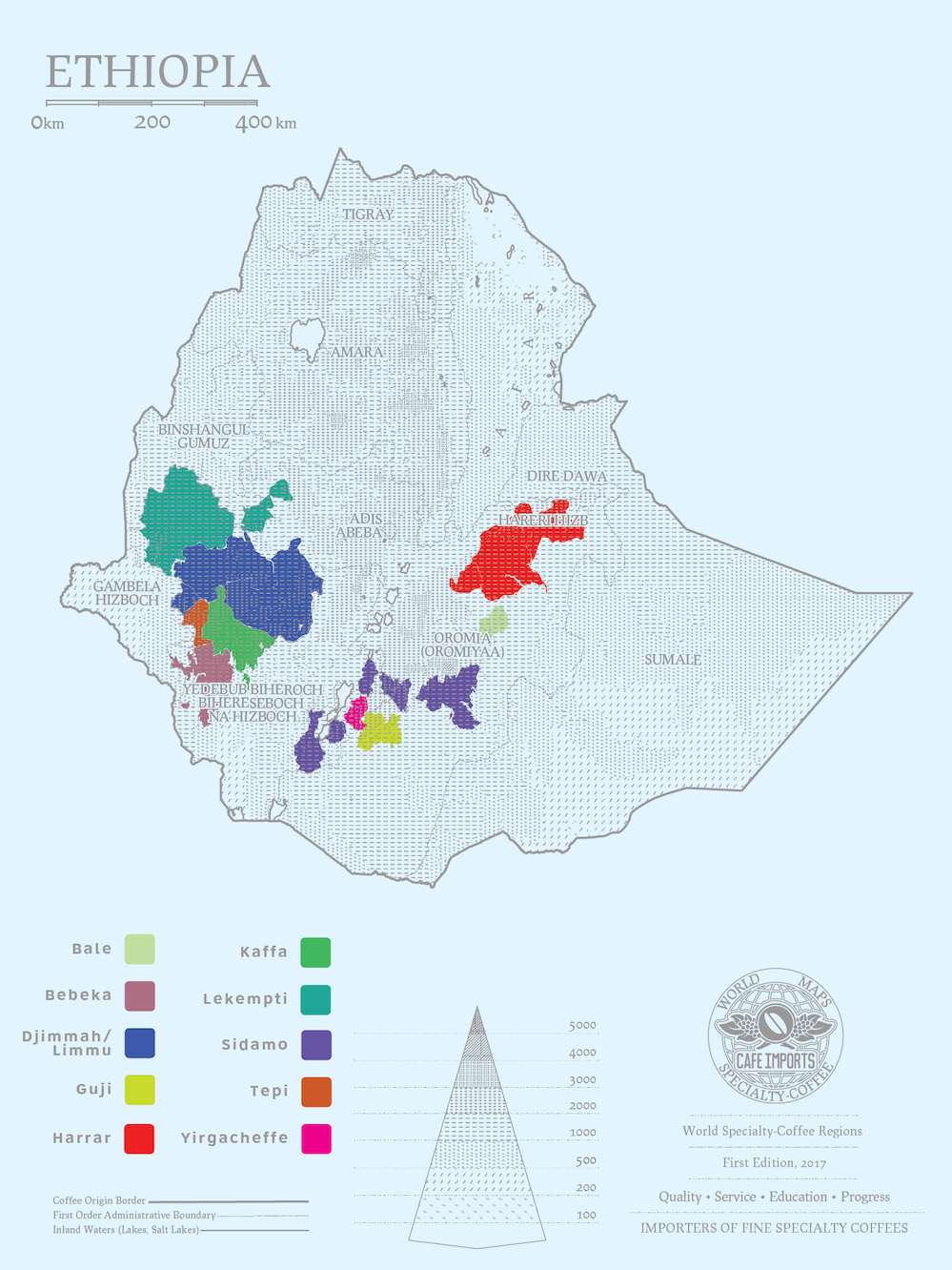
This Front Street Huakui coffee is produced in Guji, Ethiopia. This region is Ethiopia's largest coffee-producing region, and Front Street Huakui comes from one of its sub-regions, Hambella. As mentioned earlier, coffee flavor is affected by many factors. Even within the same region, different flavors can appear. Therefore, the coffee flavors of Sidama are very diverse, because different soil compositions, regional microclimates, and countless native coffee varieties create obvious differences and characteristics in the coffee produced by each town and area.
The Sidama region is located in southern Ethiopia. The local economy is mainly agricultural, and the coffee-growing areas are located around the Great Rift Valley. Hambella is administered by Ethiopia's southernmost administrative state, Oromiyaa. To the west, it faces Kochore, a sub-region of the Yirgacheffe region, across the mountains. To the east it borders Shakiso, to the south Uraga, and to the north Kercha. Shakiso, Uraga, and Kercha are all sub-regions of the Guji region.
According to statistics, there are about 20 processing stations in Hambella, distributed across different villages and estates in the sub-region, and differing in scale. DW Coffee Export, to which Huakui belongs, has a core production area in Hambella called Dimtu. Dimtu's annual coffee output is about 1,100 tons. Within the Dimtu area there are four estate processing stations: Buku Abel, Buku Saysay, Haro Soresa, and Tirtiro Goye. Among them, only the natural coffee produced and processed by Buku Abel is "Huakui." Therefore, we always see Huakui appearing together with Buku Abel .
The variety of Front Street Huakui coffee beans is heirloom. That is, the coffee trees have been rooted in Hambella for a long time, and the varieties are already difficult to screen and distinguish. Because they have grown in the same soil and water for a long time, the coffee flavor tends toward a similar regional flavor, so they are collectively called heirloom. Locals also name some more clearly differentiated varieties according to the characteristics of the coffee trees and coffee cherries. For example, the variety of small-bean Huakui is dega, referring to a type of tree that is short, has small leaves, is dense, and produces small coffee beans. The X.0 series is not so particular. In Huakui coffee beans, we can still find coffee beans of differing sizes.
In addition to terroir conditions, coffee, as this unique agricultural product, is also deeply affected by field management, post-processing, and other factors. In a narrow sense, Huakui coffee beans specifically refer to coffee beans produced and naturally processed at the Buku Abel processing station in Hambella. Of course, influenced by diversified market demand, washed Huakui coffee beans later also appeared, but we will not discuss that here for now.
Every year during the coffee harvest and processing season (December to January of the following year), the hillsides are covered with bright red coffee cherries. Coffee farmers are required to begin picking and natural processing only after the red cherries reach a sugar content of 30 or above. During the first two days of natural drying, the moisture of the red cherries needs to be maintained so that the fruit sugars can fully initiate the fermentation reaction. At the same time, the high-altitude geographical location allows the nighttime temperature at the processing station to drop to around 12 degrees Celsius, while avoiding overly high temperatures that would produce over-fermented odors. When the midday temperature is higher, the coffee farmers promptly provide shade to prevent the red cherries from being sunburned. At night, to prevent sudden rainfall, they are wrapped with thick plastic sheeting. In this way, the red cherries can ferment and dehydrate at a relatively low temperature.
After 18 days of natural processing, when the moisture content of the green coffee beans drops to about 13%, the sun drying is stopped. They are put into burlap sacks and placed in a warehouse under natural conditions of 12 to 22 degrees Celsius and 45% to 55% humidity for about 50 days of green bean resting and further dehydration. When the moisture content of the green beans reaches about 11%, they are transported to the processing station for hulling, sorting, and sale. Coffee beans refined through the natural process at the Buku Abel processing station have a unique strawberry-cream flavor.
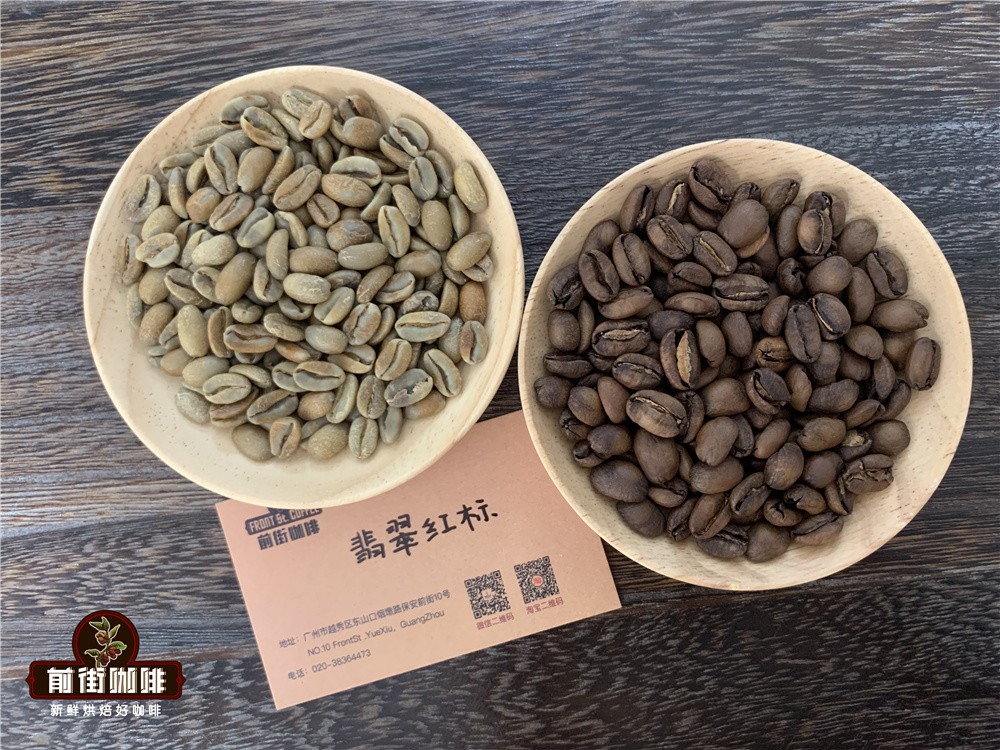
After Huakui coffee beans showed their brilliance in 2017, Chinese coffee people brought them in year after year, and we at Front Street Coffee were no exception. After 2017, Huakui coffee beans used the X.0 series to distinguish production seasons. For example, Huakui 2.0 was launched in 2018, Huakui 3.0 and 3.1 in 2019, and so on. Of course, friends familiar with Front Street Huakui will also notice that starting in 2020, this coffee bean from Hambella was divided into two types: Front Street Huakui 4.0 and Front Street Small-Bean Huakui (to avoid confusion with Arabica small bean varieties, the later Small-Bean Huakui dropped the words "small bean." You can place orders at Front Street stores or on Taobao to compare the differences between these two Sidama Huakui coffee beans, Front Street X.0 and Front Street Huakui coffee beans. The latter is clearly smaller in shape than the former, and the flavors are also quite different.).
As mentioned earlier, Huakui coffee beans first became famous in 2017 for their intense strawberry-cream flavor. But Front Street's baristas tasted flavors close to the 2017 Huakui in the 2018 and 2019 Huakui, though the body and aftertaste were not as good as the 2017 Huakui. Of course, as an agricultural product, coffee's flavor each year is affected by changes in the region's soil, climate, rainfall, and processing methods, and thus changes slightly. Front Street Coffee previously also wrote an article about the taste introduction of Front Street Huakui coffee . But Front Street also noticed that many coffee lovers who liked the 2017 Huakui flavor were puzzled by its changes. Where exactly is the problem?
Front Street Coffee retrieved stored samples of Front Street Huakui coffee beans and observed green coffee beans from the new production season. By comparing different batches of Huakui, this was more obvious in the 2018 and 2019 Huakui. Sometimes among ten sacks, a few sacks of similar small beans would appear. We then realized that the main source of the 2017 Huakui aroma was some particularly small-bean varieties among the Huakui coffee beans. Therefore, in 2019, Front Street fed this information back to the green bean merchant, and afterward the small-bean Huakui was separated out each year as its own category.
By this year (2024), Huakui still enjoys persistently high popularity and has also reached its 8th version, namely Front Street Huakui 8.0. Front Street extracted it through cupping, pour-over, cold brew, ice drip, SOE, and other methods, and found that its tropical fruit charm is especially prominent, with relatively high flavor complexity. It is a very worthwhile coffee to taste.
Brewing Suggestions
Front Street Coffee generally recommends using a Hario V60 dripper for pour-over brewing of light-roasted beans, using 15 grams of coffee, a coffee-to-water ratio of 1:15, a water temperature of 90–93 degrees Celsius, and a medium-fine grind size (which can be judged with China's No. 20 standard sieve, with a sieving rate of 80%). (For brewing parameters, you can scan the QR code on the coffee bean packaging.)
Next, use the three-stage extraction method for brewing. First, bloom with twice the amount of water as the coffee grounds, that is, 30 grams of water for 30 seconds. Then, pour in a slow stream in circles until 125 grams, at which point pause. When the water level drops to 1/3, continue pouring until 225 grams and stop. (Start timing from the beginning of the bloom.) The extraction time is 2'00".
After extraction, gently swirl, then divide into cups or pour into your preferred cup for tasting. Front Street Coffee recommends that everyone first smell it to experience the upfront aromatics of Front Street Huakui coffee beans, and then slurp to fully experience its flavor. Some friends may find the sound of slurping inelegant, but once you master it, you can feel the "blooming" sensation on the palate described by famous coffee experts.
Front Street Huakui smells of obvious melon and fruit aromas. On the palate it is a soft fruit acidity, smooth in texture, with flavors of passion fruit, jackfruit, strawberry, and berries. Front Street Huakui 5.0 has prominent citrus and berry flavors, with a slight tropical fruit note and an obvious juicy mouthfeel. I wonder which one you would prefer?
For professional coffee knowledge exchange and more coffee bean information, please follow Coffee Workshop (WeChat public account: cafe_style)
For more specialty coffee beans, please add the private WeChat of Front Street Coffee, WeChat ID: qjcoffeex
The above content is compiled by CoffeeHunters, a coffee news website.


