







How Did Brazil Become the Largest Arabica Producer?
Brazil is the world's largest coffee producer, holding more than thirty percent of the global market. In 2020 output reached roughly 63.4 million bags of 60 kg, about 37.4 percent of world supply, so any transport strike or extreme weather there moves international futures. Coffee arrived in Brazil in 1727 and was first grown on a limited scale for domestic use.
Demand grew after the American Revolutionary War, when coffee was declared a patriotic beverage in the United States, and again during the Civil War and the Great Depression, which reshaped the industry. Cultivation spread across six main producing states, including Bahia, Espirito Santo, and Minas Gerais. Brazilian coffee generally shows lower acidity, nutty and chocolate notes, and sweetness.
Brazil is the world's largest coffee producer, accounting for more than thirty percent of the global market share; any transportation strike or extreme weather event can move international coffee futures prices. This article traces the history of Brazilian coffee from its introduction in 1727 to the present, reviewing how the American Revolutionary War, the Civil War, and the Great Depression profoundly shaped Brazil's coffee industry, and introduces each of the six main producing states, including Bahia, Espírito Santo, and Minas Gerais. It also draws on Front Street Coffee's bean list to analyze the flavor profiles, processing methods, and brewing recommendations for two representative coffees—Brazil Red Bourbon Pulped Natural and Queen's Estate Yellow Bourbon Natural—helping enthusiasts gain a comprehensive understanding of the unique charm of Brazilian coffee.
Whenever a transportation workers' strike or extreme weather event occurs within Brazil, international green coffee prices tend to fluctuate accordingly; in 2021 alone, Arabica coffee futures prices more than doubled.
Brazilian coffee beans
In 2020, Brazil's coffee production was approximately 63.4 million bags (60 kg each), accounting for 37.4% of the global market. Once Brazil's output declines, global coffee futures prices react immediately.
Ethiopia is recognized as the birthplace of coffee, while Brazil's coffee cultivation began in 1727, initially on a limited scale and basically supplying only domestic consumption. The turning point came during the American Revolutionary War, when Washington, in order to break free from dependence on Britain, publicly defined coffee as a patriotic beverage. The number of coffeehouses across the United States surged rapidly, and the demand for imported coffee beans swelled accordingly, giving Brazil an important trade opportunity.
Brazilian coffee
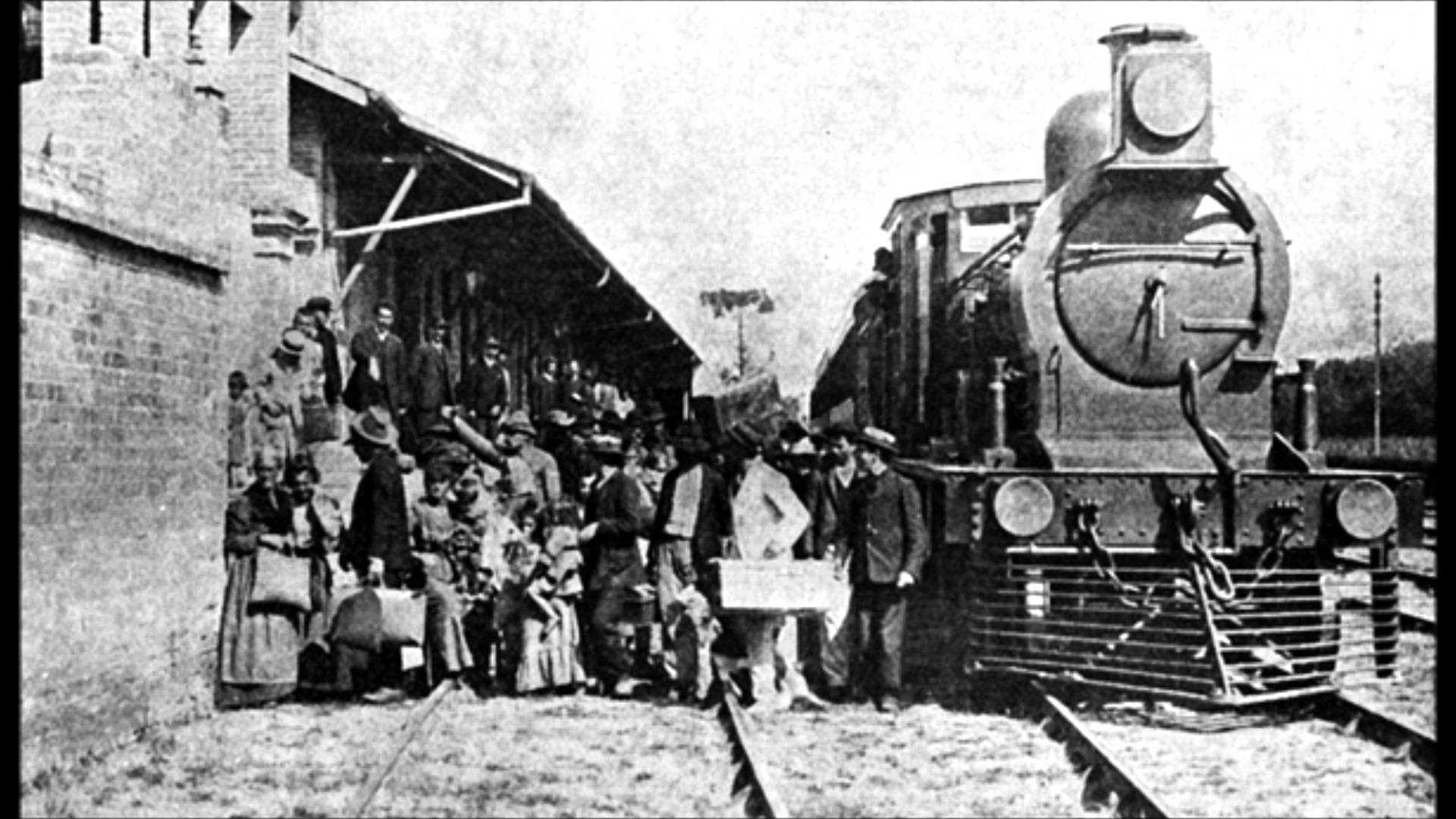
Entering the nineteenth century, Brazil's coffee planting area expanded rapidly, and by the mid-nineteenth century, coffee had come to account for half of Brazil's total exports. The coffee trade accumulated enormous wealth for Brazil and even spurred railway construction, enabling inland coffee estates to transport beans to ports more conveniently, while plantation scale continued to grow.
In the 1860s, coffee even became a military supply during the American Civil War.
Brazilian coffee
Demand surged, but the Typica variety had limited productivity, so Brazil introduced the higher-yielding Bourbon variety from Réunion Island. By the 1870s, Bourbon had risen to become the coffee variety with the largest planted area in Brazil.
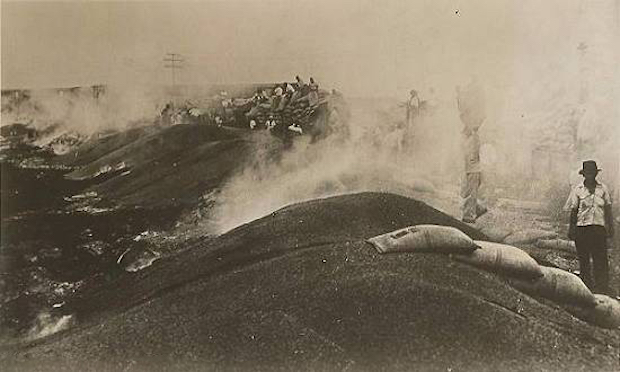
However, the good times did not last. In the early 1930s, the Great Depression broke out in the United States. At that time, Brazil's coffee production already accounted for about 80% of the world's total, and the United States, as Brazil's largest coffee buyer, could no longer afford import costs. Large quantities of Brazilian coffee beans piled up and could only be stored in warehouses. The larger the stockpile, the more severe the depreciation, and ultimately the Brazilian government had no choice but to burn 78 million bags of coffee.
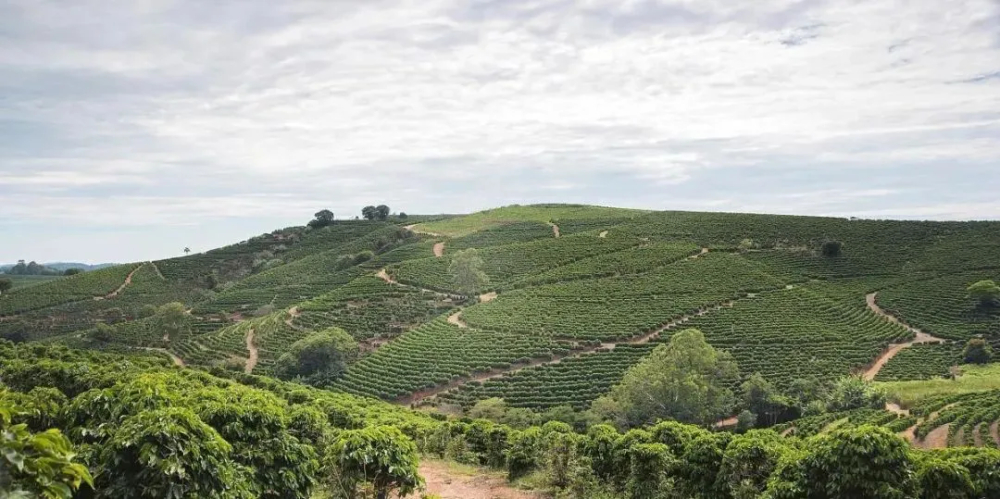
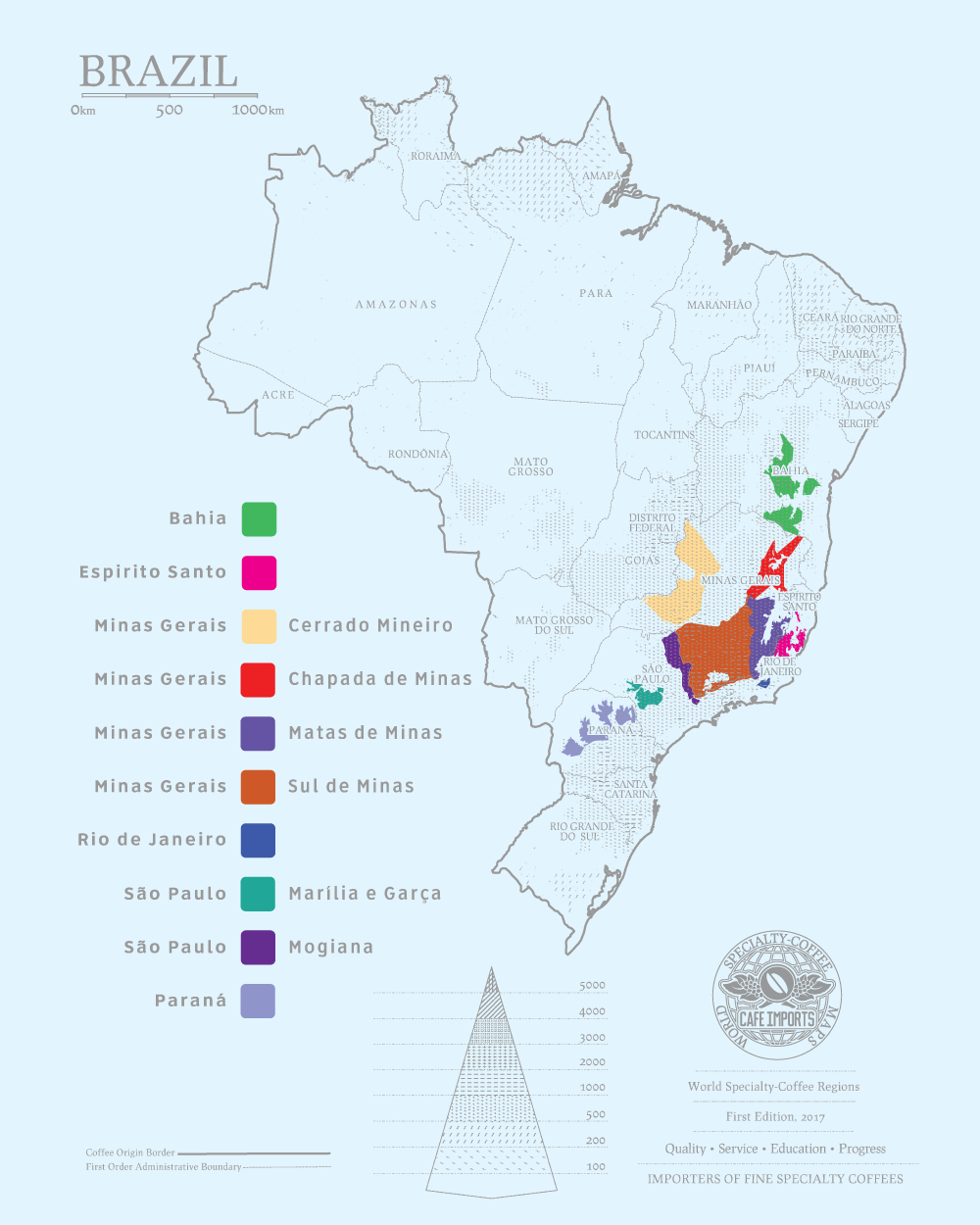
Brazil is truly a coffee giant; 17 of the country's 21 states produce coffee, but production is mainly concentrated in six states: Bahia, Espírito Santo, Minas Gerais, São Paulo, Paraná, and Rondônia.
The core differences among coffee-producing countries mainly come from differences in the soil conditions, altitude, and temperature of the farms where the coffee is grown.
Characteristics and taste of Brazilian coffee beans
They present lower acidity, prominent sweetness, and a smooth mouthfeel. On Front Street Coffee's bean list, there are only two coffees from the Brazilian producing regions: Brazil Red Bourbon and Brazil Queen's Estate.
Among them, Brazil Red Bourbon is listed in the everyday drinking bean series, which shows how much Front Street values this bean.
Front Street Coffee: Brazil Red Bourbon
Country: Brazil
Region: Cerrado, Minas Gerais
Altitude: 1,000 meters
Variety: Red Bourbon
Processing method: Pulped Natural
The pulped natural processing method can be seen as the prototype of honey processing. In 1990, Brazil hoped to increase coffee bean exports through the washed processing method, but the local climate was dry, water resources were scarce, and the investment cost of washing equipment was high, so Brazilians developed the pulped natural method.
This method, which first removes the skin and pulp and then retains part of the mucilage for drying, takes less time than the most traditional natural method and can effectively improve green bean quality and coffee flavor. Brazil's pulped natural experience also provided a good reference for some producing countries in the Americas that were short on funds and water resources; Costa Rica's honey-processed coffee is a typical example.
This Front Street Brazil Red Bourbon comes from the Cerrado region. Cerrado belongs to the main producing region of Minas Gerais, which accounted for about 40% of Brazil's total coffee production in 2020. Coffee in the Cerrado region is grown at altitudes between 800 and 1,200 meters. It is the first coffee-producing region in Brazil to obtain origin certification, and the area is dominated by large plantations.
The Brazil Pulped Natural Red Bourbon in Front Street's everyday drinking bean series presents rich nutty and chocolate flavors, with caramel-like sweetness, a soft and silky mouthfeel, and an overall very balanced profile.
There is another Brazilian Yellow Bourbon available for comparison in the Brazil producing region section of Front Street's bean list. The Brazil Yellow Bourbon on Front Street's bean list comes from Queen's Estate in the Mogiana region of São Paulo State. The Mogiana region of São Paulo has steep terrain, higher altitudes, a mild climate, and fertile red volcanic soil, making it easy to produce high-quality coffee beans.
Front Street Coffee: Brazil Queen's Estate
Region: Mogiana region, São Paulo State, Brazil
Estate: Queen's Estate
Altitude: 1,400 meters—1,950 meters
Variety: Yellow Bourbon
Processing method: Natural
In the process of cupping coffee beans from different regions, Front Street found that fertile soil is a necessary prerequisite for producing high-quality coffee beans. When soil fertility improves, coffee trees produce higher yields and have stronger disease resistance, which is especially crucial for growing Arabica varieties. Mineral-rich soil also has a significant positive impact on the flavor of healthy coffee cherries.
Queen's Estate has a planting area of 280 hectares, of which 200 hectares are planted with the Yellow Bourbon variety. After comparing Red Bourbon and Yellow Bourbon through cupping, Front Street found that Yellow Bourbon has more prominent sweetness, along with a faint lemon aroma, and a more intense fruity character. Scientific research has confirmed that the Yellow Bourbon variety contains more sugar than Red Bourbon because Yellow Bourbon has a thicker mucilage layer, and the mucilage layer also contains more saccharides.
Front Street's Queen's Estate Yellow Bourbon uses the natural processing method, taking this already exceptionally sweet Yellow Bourbon even further in sweetness. Because natural processing requires more labor, Queen's Estate adopts small-scale natural processing, spreading the coffee cherries evenly on African raised beds for drying to ensure quality, avoid undesirable fermented flavors caused by uneven turning, and prevent the cherries from touching soil and taking on an earthy taste.
After Front Street's roaster received this green bean carefully processed by Queen's Estate, in order to highlight the sweetness of Yellow Bourbon, the nutty character unique to Brazilian coffee, and the soft, full-bodied mouthfeel, a medium-dark roast was chosen.
When brewing this coffee, because the roast level is darker, Front Street recommends using a dripper with a slower flow rate, such as the KONO dripper. To avoid over-extraction caused by too slow a flow rate, the water temperature can be controlled at 88°C, and the grind size should be slightly coarser. At the same time, to obtain a richer layering, a three-pour method is recommended.
Dripper: KONO dripper
Water temperature: 88°C
Dose: 15 grams
Coffee-to-water ratio: 1:15
Grind size: 70% passing through a No. 20 sieve
First pour 30 grams of water and bloom for 30 seconds, then slowly pour in a circular motion with a small stream for the second pour until 125 grams, and when the water level in the dripper drops to halfway, gently pour the third pour until 225 grams. After the water in the dripper has completely dripped into the container below, remove the dripper. The total extraction time is about 2 minutes.
For more coffee bean information, please follow Coffee Workshop (WeChat public account: cafe_style)
For professional coffee knowledge exchange, please add WeChat ID: kaixinguoguo0925
The above content is compiled by CoffeeHunters, a coffee news website.


