







Why Yellow Bourbon Coffee Works in a Three-Pour Recipe
Yellow Bourbon coffee from Brazil's Queen's Farm is a medium-dark roasted bean that suits a three-stage pour-over. Grind medium, use a KONO dripper, keep water at 87 to 88°C, and pour in three stages to hold the sweetness and soft acidity that Bourbon grown at high altitude is known for.
Bourbon is one of the two base arabica coffee varieties, alongside Typica, and it reached Brazil around 1860 after being carried from Yemen to Bourbon Island. Its fruit is short and round and the beans are dense, so high-altitude lots show high sweetness and bright acidity, which a water temperature near 88°C helps balance.
Brazilian coffee has always held a classic status with its rich and balanced flavor, and Queen's Farm's Yellow Bourbon is a fine representative among them. From the perspective of Front Street, this article systematically sorts out the historical origins of the Bourbon variety and the unique characteristics of Yellow Bourbon, deeply introduces Queen's Farm's high-altitude cultivation and meticulous sun-drying process, and fully shares the pour-over parameters under medium-dark roasting—including the reasons for choosing the KONO dripper, the logic of grind size adjustment, 87–88°C water temperature control, and the three-stage pouring rhythm. Whether you want to recreate a cup of "Brazilian flavor" or hope to understand the extraction approach for medium-dark roasted beans, this guide can provide practical reference.
When it comes to Brazil, what first comes to most people's minds may be football, but for coffee professionals and enthusiasts, the first thing Front Street associates with it is coffee beans. Brazilian coffee belongs to the classic rich-flavor school and is known for its excellent balance. Today Front Street will explain how to brew the "Brazilian flavor."
Brazilian Yellow Bourbon Variety
By reviewing materials, Front Street learned that the Arabica coffee varieties in the world are composed of Typica and Bourbon, as well as their derived descendants. Among them, Bourbon and its descendants, which are popular in Central and South American countries, are spread across the globe, and in many countries they are still the main planted varieties, such as excellent varieties like Caturra.
The name Bourbon comes from Bourbon Island, namely Réunion Island off the east coast of Africa. In the seventeenth century, as a French possession, it was named Bourbon Island, and it was not renamed until the end of the eighteenth century. In the eighteenth century, the French introduced round coffee beans from Yemen to Bourbon Island, where they began to take root and grow, until 1860 when Brazil brought round Bourbon back to plant in its own country, and it subsequently spread to various countries in Central and South America, becoming the oldest mother variety of Latin American coffee.
The fruit of the Bourbon variety is short and round, and the coffee beans are high in density. Bourbon grown at high altitude has high sweetness and bright acidity. Like Typica, it is an old and excellent variety. Bourbon has better resistance to leaf rust than Typica, and its flavor is no inferior to Typica. The biggest thing Bourbon and Typica have in common is that they must have shade trees to block sunlight in order to grow well and develop flavor, so they have certain requirements for the growing environment.
For common Bourbon, from flowering to ripe fruit, the color gradually changes from green to slightly yellow, red, and finally fully mature dark red, so it is called Red Bourbon. There are also Bourbon varieties that do not turn red after maturity, but instead become the relatively rare yellow or pink, namely Yellow Bourbon and Pink Bourbon. Yellow Bourbon produced at high altitude has a delicate flavor and once repeatedly won top honors in Brazil's Cup of Excellence competition. Front Street's Queen's Farm coffee is selected from Yellow Bourbon coffee, produced in Brazil's Mogiana region.
Brazil Queen's Farm Coffee
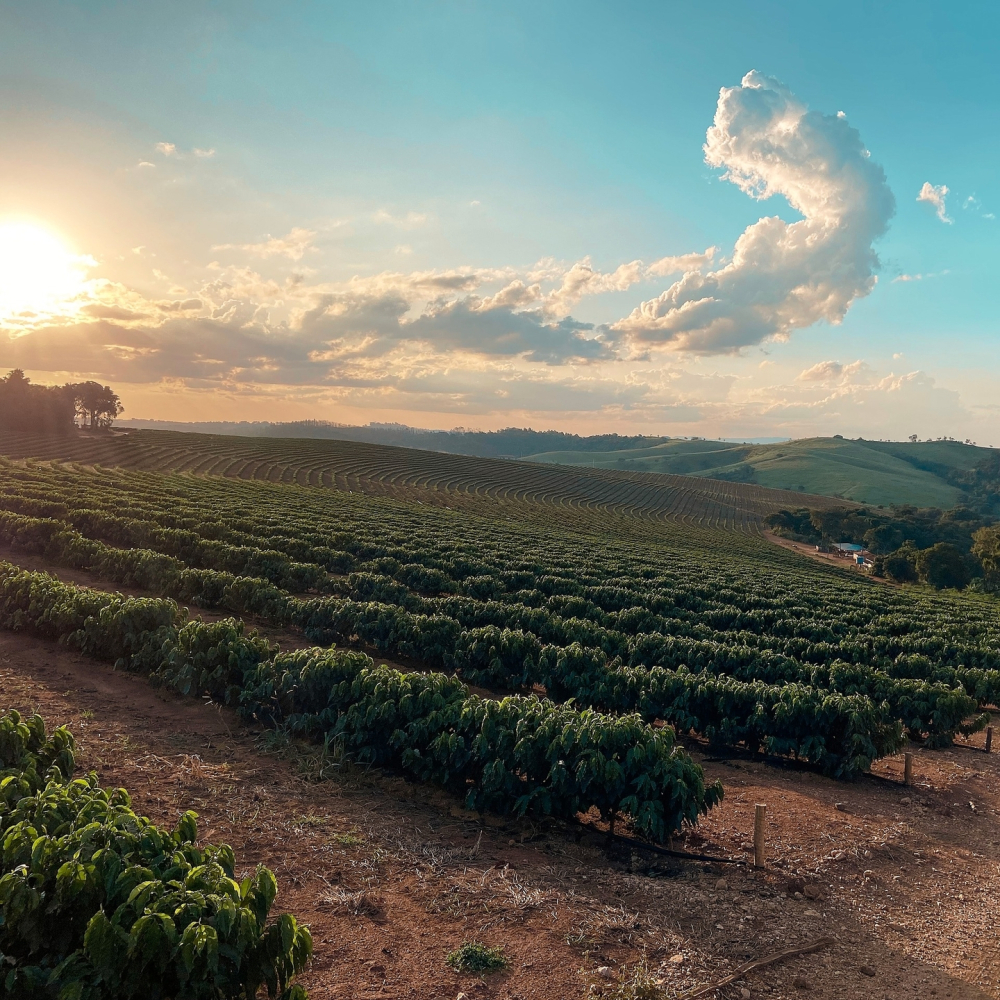
Traditionally, Brazilian coffee-producing regions that prioritize mass production mostly plant in flat areas at relatively low altitude, so the coffee produced has a milder flavor and is not outstanding enough. Queen's Farm (Fazenda Rainha) is a rare high-altitude farm in the area. The ideal hilly terrain plus just the right climatic conditions give the Yellow Bourbon coffee produced here a rich pectin layer, and the coffee's sweetness is higher.
Traditional sun-drying is to pour all the coffee fruit onto a concrete patio and expose it to the sun until dry. Because of the rough processing method, the coffee produced is prone to earthy and other off-flavors and an unpleasant over-fermented feeling. Before drying, Queen's Farm pours the fruit into a water tank and, through flotation, removes underripe fruit. In order to avoid producing earthy and fermented flavors, Queen's Farm spreads the coffee fruit on African raised beds throughout the entire process and arranges for staff to turn it regularly to reduce uneven heating, maintaining the coffee's cleanliness as much as possible.
Queen's Farm Coffee Pour-Over Reference
Front Street hopes to highlight Queen's Farm's classic regional flavor, namely a rich chocolate aroma, so Front Street uses a medium-dark roast. Through cupping, Front Street tasted that this Queen's Farm coffee has a very obvious sweetness, so in brewing it uses a three-stage pour, hoping to present more layers in the coffee.
Because coffee beans enter their best tasting period 4–7 days after roasting, after this time (about a month and a half after roasting) the coffee's aroma may already have been lost and some woody flavor may have developed. To avoid this situation, Front Street has mentioned in many articles that the most important thing is that Front Street only ships coffee beans freshly roasted within 5 days, so everyone can taste coffee with excellent flavor.
Dripper: Medium-dark roasted coffee beans mainly present a rich and rounded mouthfeel. In response to this characteristic, Front Street chooses the slower-flow KONO dripper for extraction. The upper part of the KONO is a smooth curved surface, and the lower part is one-third-length guiding ribs. This allows the filter paper to fit the dripper more closely, restricts airflow from going upward, and lets hot water only flow downward, forming a siphon-style extraction effect and allowing the coffee grounds' aromatic substances to be released more fully.
Grind size: Considering the darker roast level, the texture of the coffee beans becomes looser, and after grinding into powder it easily absorbs more water and releases more soluble substances, making it easy to bring out unpleasant miscellaneous bitterness such as wood. FrontStreet Coffee baristas will adjust the grind coarser so that the coffee particles are larger, reducing the situation of over-extraction. Here, use a medium grind (70-75% passing rate on China standard No. 20 sieve).
Water temperature: When brewing light-to-medium roasted coffee beans, Front Street uses a higher water temperature to release the aromatic substances of high-density coffee beans. But for medium-dark roasted Brazilian coffee, because it has undergone a longer caramelization reaction, if the same high-temperature hot water is used, the coffee easily presents a strong and burnt bitter taste. Appropriately lowering the water temperature can help us reduce a certain amount of bitterness. Front Street will use 87–88°C water temperature.
Coffee grounds will absorb about twice their own weight in water. Front Street generally uses 15 grams of coffee grounds, extracted at a 1:15 coffee-to-water ratio, finally yielding close to 200 ml of coffee liquid, that is, 1–2 servings.
Dripper: KONO dripper
Water temperature: 87–88°C
Dose: 15 grams
Coffee-to-water ratio: 1:15
Grind size: medium grind level (70% passing rate on China standard No. 20 sieve)
Use twice the coffee grounds' weight in water to wet the coffee bed, forming a dome and blooming for 30s, then pour in a small stream in circles from the inside out until 125g, then pause. Wait until the coffee bed drops to half the height of the dripper, continue pouring the third stage with the same fine stream until 225g, and after all the coffee liquid has filtered through, remove the dripper. The time is about 2 minutes.
The pour-over Brazil Queen's Farm coffee smells of lemon, nuts, and peanut aromas. On the palate it is very rich with nut, dark chocolate, and caramel flavors, with obvious sweetness and a creamy, silky mouthfeel, overall relatively rounded.
For professional coffee knowledge exchange and more coffee bean information, please follow Coffee Workshop (WeChat public account: cafe_style)
For more specialty coffee beans, please add the private WeChat FrontStreet Coffee, WeChat ID: qjcoffeex
The above content is compiled by CoffeeHunters, a coffee news website.


