







Why Does the Washed Coffee Beans Process Suit Yirgacheffe?
The Gotiti Cooperative sits in the Worka area at the southeastern end of Yirgacheffe and separated from the Worka Cooperative in 2012 with about 300 farmer members. It keeps to traditional washed and natural methods, and the washed lots deliver citrus and lemon acidity with jasmine floral notes and a clean, refreshing mouthfeel. Front Street roasts these beans to a medium-light level.
Because specialty coffee buyers now demand traceability, more single-origin lots have been identified, and Gotiti was among the earliest villages to break away on its own. Growing and processing knowledge carried over from Worka, so the coffee beans process stayed traditional. The beans suit pour-over, cold brew, and French press, and a three-pour method helps reproduce the bright pineapple and strawberry fruit at home.
The Gotiti Cooperative is located in the Worka region at the southeastern end of Yirgacheffe. It became independent from the Worka Cooperative in 2012 and has about 300 farmer members, and is regarded as a pure land of Yirgacheffe. Traditional washed and natural processing methods are still used here. The washed lots present bright acidity like citrus and lemon along with jasmine floral notes, with a clean and refreshing mouthfeel. Front Street's Gotiti coffee beans are roasted to a medium-light level and are suitable for pour-over, cold brew, French press, and many other methods. This article will outline Gotiti's regional background, Yirgacheffe's terroir conditions, the flavor advantages brought by washed processing, and share the specific brewing parameters and operating details of the three-pour method, helping coffee lovers reproduce a cup of bright, fruity Yirgacheffe at home.
The Gotiti Cooperative is located in the Worka region at the southeastern end of Yirgacheffe. It was originally just one component of the Worka Cooperative under the Yirgacheffe Coffee Farmers Cooperative Union (YCFCU). As the specialty coffee industry has placed ever higher demands on green bean traceability, more and more independent "single-origin" lots have been discovered one by one by coffee hunters around the world. It was against this backdrop that in 2012, Gotiti, with about 300 farmer members, formally separated from Worka and became an independent cooperative.
Gotiti Village is one of the earliest village areas to be separated out on its own. Many smallholder farmers were originally members of the Worka Cooperative, and their coffee cultivation and processing techniques are quite mature. The Gotiti Cooperative is hailed as the last pure land of Yirgacheffe, so the green bean processing methods it adopts also continue the traditional route, mainly washed and natural.
Product name: Front Street. Gotiti Cooperative Yirgacheffe Coffee Beans
Region: Ethiopia, Yirgacheffe
Variety: Ethiopian heirloom
Flavor: Bright fruity notes, including pineapple and strawberry, with prominent acidity
In the Worka region at the southeastern end of Yirgacheffe in Ethiopia, there is a mature coffee production team—the Gotiti Cooperative. This team is made up of about 300 farmer members, and the Yirgacheffe it produces has a lifted, bright flavor, which is why it was established as an independent cooperative in 2012.
Many smallholder farmers were also early members of the Worka Cooperative, so their production techniques are naturally beyond question. Front Street's Gotiti Cooperative coffee uses traditional washed processing. It does not have the heavy bitterness of traditional black coffee. Instead, it presents fresh, bright citrus and lemon acidity, accompanied by the fragrance of jasmine, making many coffee lovers fall in love at first sip.
Where is Yirgacheffe?
The town of Yirgacheffe is one of the highest-altitude production areas in Ethiopia. Most coffee trees are planted on highlands close to 2,000 meters, with the highest points reaching around 2,100 meters. The higher the altitude, the more ideal the growing environment for coffee trees, and the more prominent the flavor advantages of Arabica coffee beans. Lake Turkana, Lake Abaya, and Lake Chamo within the town bring abundant moisture. Here, mist lingers year-round, the seasons are like spring, breezes blow gently, and the climate is cool and humid, nurturing Yirgacheffe's unique floral and fruity aromas.
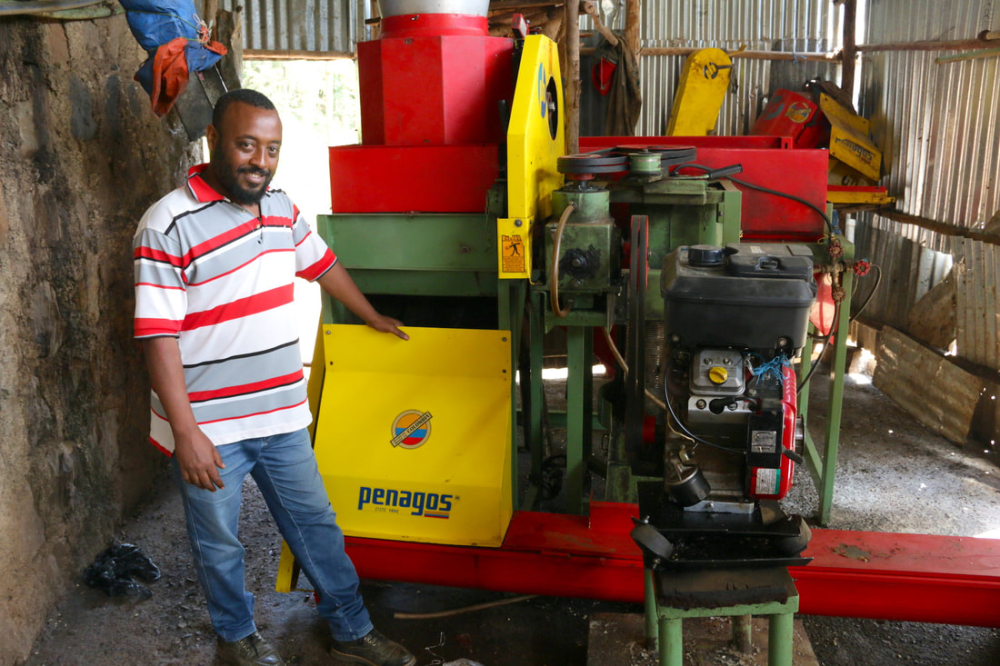
Unlike many specialty coffee beans that are processed on a large scale in an estate model, coffee in Ethiopia is mostly grown by individual smallholders, usually on about one hectare, with limited output, so it is sent to the town or nearby cooperatives for unified processing. Cooperative management can both improve coffee quality and bring farmers more stable income. When buying coffee beans, you will often see coffees named after cooperatives. They have already undergone post-processing, grading, and roasting, such as Gotiti, Worka, Konga, and Adado.
Why does washed Yirgacheffe have citrus and lemon acidity?
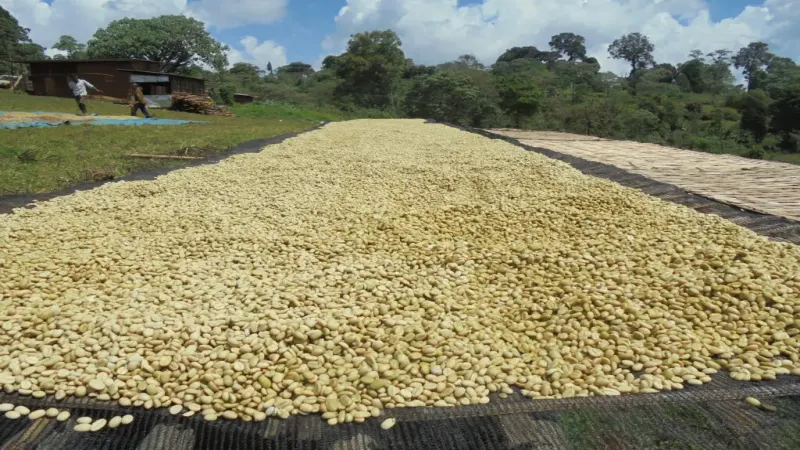
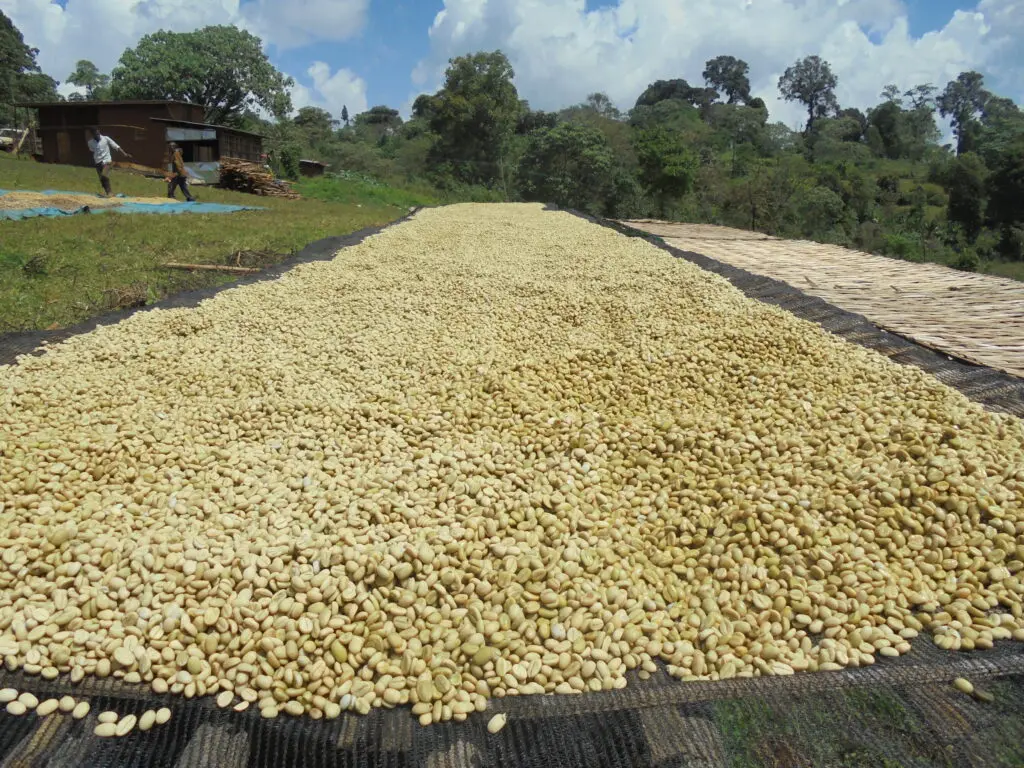
Traditionally, after farmers harvest the coffee cherries, they are placed directly on patios or spread on the ground and dried in the sun. When the moisture content of the coffee fruit drops to about 12%, it is sent for hulling and bagging. Coffee beans processed this way are prone to earthy flavors, over-fermentation, and rotten fruit notes.
In order to improve the defective flavors caused by sun-drying methods, Ethiopia introduced washed processing technology from Central and South America. The washing process includes multiple steps and can remove defective beans. In terms of flavor, it shows cleaner acidity and takes Yirgacheffe's aroma to an even higher level. So that curious coffee lovers can also taste the unique "Yirga flavor," Front Street has launched a washed Yirgacheffe as a flagship representative of Ethiopian coffee. It is roasted to a medium-light level, carries the classic Yirgacheffe flavor profile, and is suitable for pour-over, cold brew, French press, and many other brewing methods. It is very suitable for newcomers who want to get a light taste of the region's flavors.
Flavor characteristics of medium-light roasted Front Street. Gotiti coffee
Front Street believes that the biggest feature of Ethiopian coffee lies in its fruity acidity and floral aroma, and many coffee people praise it as a "fruit bomb." To highlight such explosive fragrance, the roast level naturally cannot be too dark, so Front Street uses a medium-light roast to showcase the coffee's fruity profile.
Cup flavor:
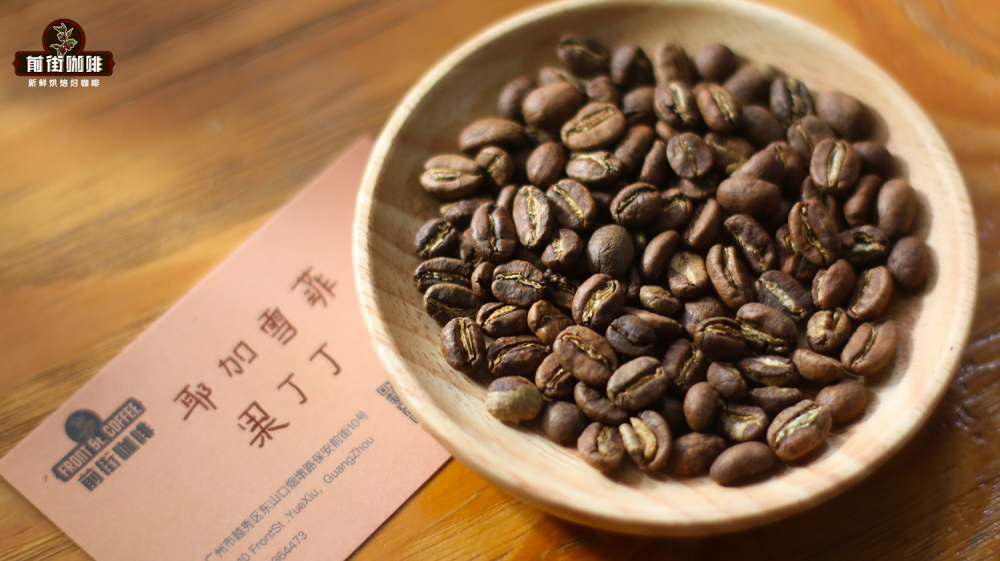
The dry aroma of Front Street. Washed Gotiti Cooperative coffee gives off fresh passion fruit, citrus, and berry acidity. The wet aroma is citrus and berries. On the palate there is citrus acidity, berry sweetness, as well as almond and tea notes, with a honeyed sweetness in the finish. It has a low body, bright acidity, and is clean and refreshing.
How should Front Street. Washed Gotiti be brewed to taste good?
Based on past brewing experience, Front Street recommends that beginners use the three-pour method. Three-stage extraction helps dissolve flavor compounds more fully during brewing, increases the layers of mouthfeel, and at the same time avoids over-extraction caused by too long a soaking time.
If using 15 grams of coffee grounds, with a coffee-to-water ratio of 1:15, the total water amount is 225 ml. The three pour amounts are: 30 ml, 95 ml, and 100 ml, and the weights shown on the scale are: 30 g, 125 g, and 225 g.
Here Front Street uses its own roasted washed Yirgacheffe Gotiti Cooperative coffee beans, paired with a Hario V60 dripper for brewing. The V60's spiral rib design allows the coffee grounds to degas better and maximizes the release and dissolution of aromatic acidic compounds. Because Yirgacheffe is lightly roasted, the coffee beans are harder in texture and require hot water at 92°C-93°C to bring out the floral and fruity notes in the coffee.
For grind size, Front Street recommends medium-fine grinding (78% passing through a Chinese standard No. 20 sieve), with a coarseness similar to fine granulated sugar. If the grind is too coarse, it cannot extract rich, rounded flavor compounds, and the brewed coffee will taste thin; if the particles are too fine, over-extraction is likely at high water temperatures, and the brewed coffee will easily taste bitter.
As for the brewing ratio, Front Street believes 1:15 to 1:16 are both fine. If you want a richer mouthfeel, use 1:15; if you want to feel the floral sweetness more clearly, use 1:16 to let the flavors spread out more.
First, place the folded filter paper into the dripper to fit snugly, pour 15 grams of ground coffee into the dripper, and tare the scale to zero.
For the first pour, add 30 g of water to bloom for 30 seconds. Start timing as you pour. Use a small stream from the center point and begin circling outward, making sure to wet the entire coffee bed.
After 30 seconds, begin pouring the second stage of 95 g of water with a slightly stronger but steady stream. The purpose is to lift the entire coffee bed. The stream should be poured vertically and evenly. At this point the scale shows 125 g, and the pour should be finished at about 55 seconds.
When the liquid level drops to halfway, begin pouring the third stage of 100 grams with a small stream in small circles. Try to control the stream so it does not circle too widely, as that can easily disturb the coffee bed and cause under-extraction. The final total water amount is 225 grams, and the drip completion time is about 2 minutes. After removing the dripper, swirl the coffee liquid in the server to mix it evenly, and then it is ready to taste.
Note! If the brewed coffee lacks aroma, tastes only sour, or even has a woody flavor, then it has most likely been stored too long. No matter what kind of coffee beans or what brewing method is used, freshness is a very important part. Generally, the best flavor period is within one and a half months. After more than two months, the aroma will be greatly reduced. All Front Street coffee beans are freshly roasted within 5 days, support 24-hour shipping, and provide comprehensive high-quality assurance.
The above content is compiled by CoffeeHunters, a coffee news website.


