







Why do geisha coffee beans cost so much?
Geisha coffee beans became famous after Hacienda La Esmeralda won the 2004 Panama BOP competition with a complex, distinctive cup. The variety traces back to Geisha Mountain in southwestern Ethiopia, was recorded in the Geisha forest in 1931, reached Kenya, Uganda, Tanzania and Costa Rica over the following decades, and arrived in Panama in 1970 through Don Pachi.
Early plantings were ignored because geisha had weak disease resistance and very low yield, so estates used it as a windbreak tree. Daniel Peterson, third-generation owner of Hacienda La Esmeralda, recognized the trees in 1998 and moved them to a higher-altitude plot. That scarcity, plus strict growing conditions and the red, green and blue label grading system, keeps prices high and explains the floral, fruity profile.
Geisha coffee quickly rose to fame after winning the 2004 Panama BOP competition, becoming a highly sought-after variety in the specialty coffee circle. Why is it so expensive? What exactly makes its flavor so special? And how should it be brewed to fully bring out its floral aroma and fruity acidity? From the perspective of Front Street Coffee, this article sorts through Geisha's origins and spread, its strict growing environment requirements, the natural processing flow, and Hacienda La Esmeralda's red, green, and blue label grading system, and also includes specific product information and pour-over parameter suggestions for Front Street's red-label Geisha, helping coffee lovers gain a more complete understanding of this legendary bean.
For more specialty coffee knowledge, please follow the WeChat official account: Front Street Coffee (FrontStreet Coffee)
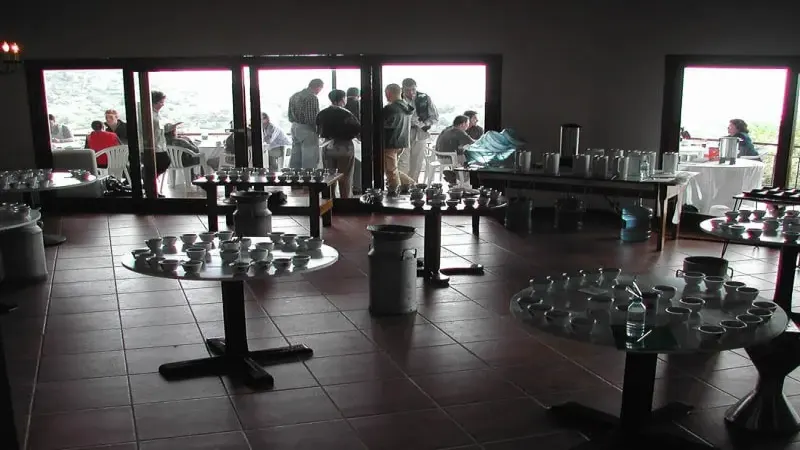
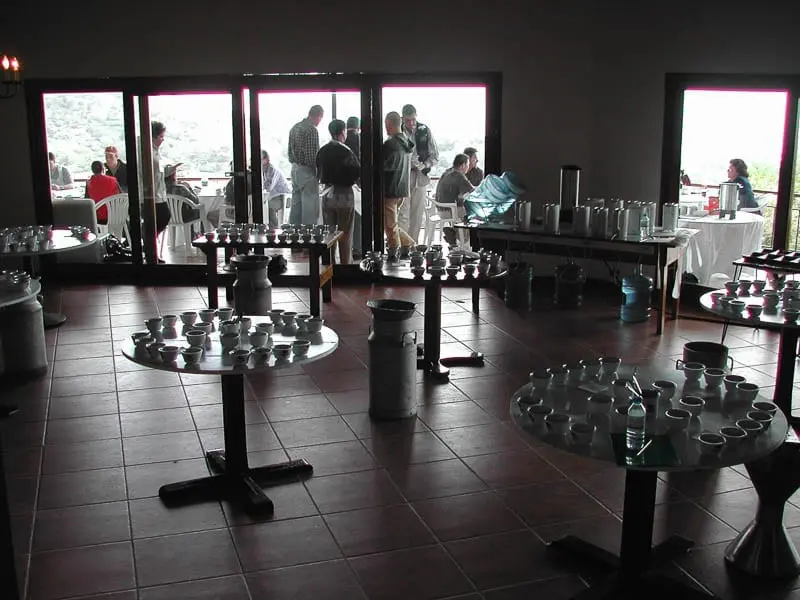
In 2004, Hacienda La Esmeralda sent Geisha coffee beans to participate in the Panama green bean competition BOP. In cupping, it showed a rich, complex, and unique flavor profile, winning the championship with an outstanding score, and from then on Geisha became an instant hit in the specialty coffee market. The price of Geisha coffee remains high, so in this article Front Street Coffee (FrontStreet Coffee) will talk about why Geisha is so expensive.
The Origin of Geisha Coffee
After Geisha coffee became famous in Panama, expert identification revealed that the Geisha variety came from Geisha Mountain in southwestern Ethiopia, Africa. According to relevant records, the Geisha variety was discovered in the Geisha forest in 1931, then sent to the neighboring Kenya Coffee Research Institute, introduced to Uganda and Tanzania in 1936, and also introduced to Costa Rica in 1953. It was not until 1970, in order to improve the genetic diversity and disease resistance of Panamanian coffee, that Mr. Don Pachi obtained Geisha seeds from the Costa Rican coffee research institution CATIE and brought them back to his coffee estate in Panama to begin planting.
In the early days, because Geisha had weak disease resistance and very low yield, it was not valued by estate owners at all and was merely used as a windbreak tree. It was not until 1998 that Daniel Peterson, the third-generation owner of Hacienda La Esmeralda, discovered the special qualities of the Geisha coffee trees and transplanted them to a higher-altitude area. In 2004, these coffee trees began mass production, and Daniel, who understood cupping, discovered the unique flavor of Geisha coffee. After consulting many experts, he decided to enter Geisha in the Best of Panama BOP, where it defeated many high-quality varieties and took that year's championship.
Geisha Growing Environment
Geisha coffee is very picky about its growing environment. It needs high altitude, cloud cover or shade from plants, cannot be directly exposed to the sun, and also requires fertile soil. The higher the altitude at which Geisha is grown, the longer the coffee fruit takes to mature, and the more complex and unique its flavor expression becomes.
Unlike other coffee varieties, the leaf system of the Geisha coffee tree is very thin, meaning the efficiency of photosynthesis is very low. Its root system is also very fragile, and the absorption of water and nutrients is very slow. Therefore, coffee yield is very low, and combined with the high-altitude growing environment, the fruit also matures relatively late. The yield of a single Geisha coffee tree is only half that of the Caturra variety, which is also one of the reasons Geisha is so precious.
Panama's Boquete producing region has an exceptional environment for growing Geisha. It has fertile soil from Baru Volcano, a unique microclimate formed by its high-altitude terrain, frequent cloud cover on the mountain, humid days, cool nights, and abundant rainfall, making it exceptionally suitable for Geisha coffee cultivation.
Processing Methods
Geisha coffee cherries need to be hand-picked when ripeness is most suitable, and the fresh green coffee beans must be processed immediately, with very precise timing control. This greatly tests the professional ability of the estate owner and workers, requiring judgment of the coffee fruit's optimal ripeness and strict control of green bean processing.
For naturally processed Geisha, estate workers first sort out defective beans from coffee cherries at just the right ripeness, evenly spread them in the courtyard to dry for 3-5 days, about 8 hours per day, with manual turning at regular intervals to avoid excessive fermentation under high temperatures. Depending on different weather and locations, once the coffee fruit reaches sufficient dryness, it is placed into a special drying machine and rotated for 72 hours. This helps maintain even drying and prevents negative flavors caused by heavy fermentation. After drying is complete, the pulp and husk are removed by machine. Every step requires strict and precise control to ensure the quality of each batch of Geisha coffee beans.
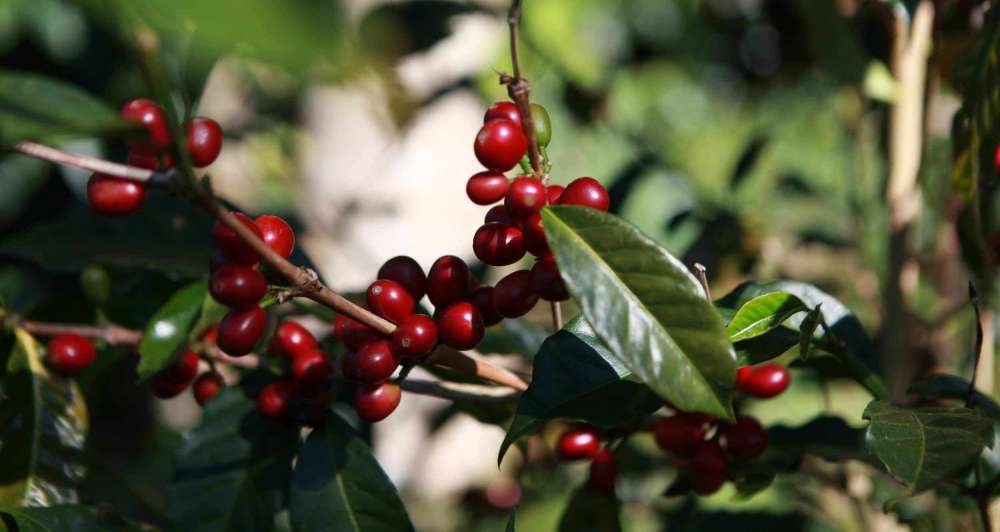
Hacienda La Esmeralda Geisha
When mentioning Geisha coffee, Front Street cannot fail to mention the famous Hacienda La Esmeralda. Hacienda La Esmeralda is not only the discoverer of Geisha's flavor, but also its promoter.
Hacienda La Esmeralda is the Palmira farm purchased by American banker Rudolph A. Peterson after his retirement in 1964. Initially it mainly operated a dairy business, and later his son Price resigned from his position as a doctor to help his father run it. In 1987, coffee trees of the Caturra and Catuai varieties were introduced, and the farm was named Hacienda La Esmeralda. In 1994, a wet processing plant was established and formal coffee production began.
In its early period, after Hacienda La Esmeralda acquired the Jaramillo estate with its superior environment, cupping revealed that Geisha's flavor was distinctive, so it began cupping other areas of the farm and dividing the planted plots according to altitude, which led to what we now commonly hear as red label, green label, and blue label.
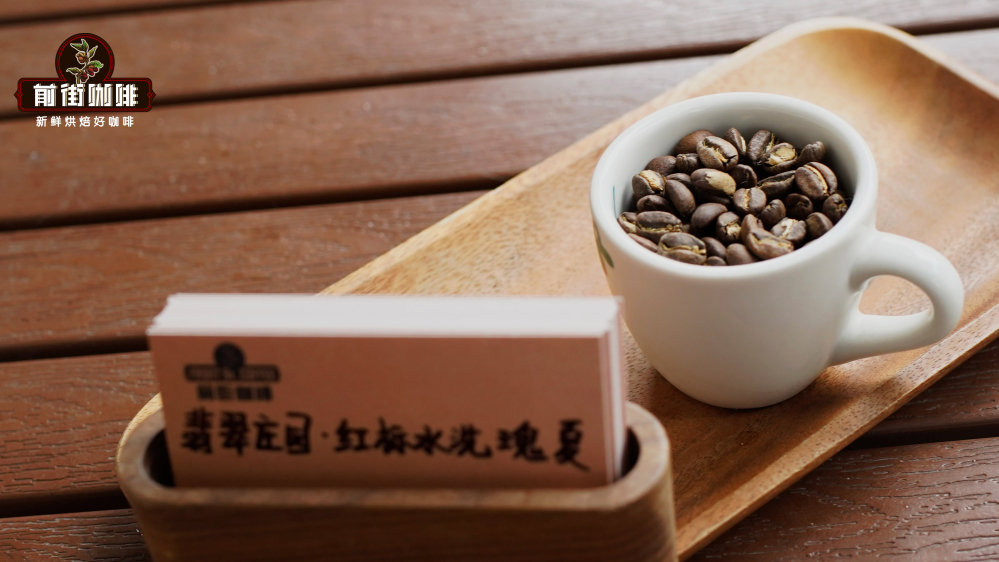
At present, Hacienda La Esmeralda has three sub-estates: El Velo, Cañas Verdes, and Jaramillo. Among them, specialty-lot Geisha coffee comes from plots in the Jaramillo and Cañas Verdes estates, and many auction-lot Geishas come from plots in the Cañas Verdes estate. The red-label Hacienda La Esmeralda offered by Front Street comes from the Mario plot in Cañas Verdes.
Front Street Coffee (FrontStreet Coffee): Red Label Geisha Coffee Beans
Producing Region: Boquete
Estate: Hacienda La Esmeralda, Cañas Verdes
Altitude: 1700+ meters
Variety: Geisha
Processing Method: Natural
Flavor: Lemon, honey, berries, orange peel, mango, cream, citrus
In lower-altitude growing environments, Geisha's flavor shows jasmine floral notes and citrus flavors. After comparative cupping, estate owner Daniel transplanted the Geisha coffee trees to higher altitude and divided them into different planting plots. Each batch from each plot is cupped and recorded, allowing buyers to trace the origin of the coffee batch. Geisha at high altitude is more challenging, and Hacienda La Esmeralda needs to tend each coffee tree more carefully. It was this move that made Geisha coffee's expression even more outstanding, with more complex flavor layers and prominent notes of intense floral aroma, citrus, peach, and bergamot, transforming it from obscurity into a representative of high-end specialty coffee. Front Street believes that Geisha coffee's excellence cannot be separated from the estate owner's years of effort and strict quality control.
Pour-over Reference
Because Front Street takes into account that different Geisha batches are grown in different environments, the roaster will make corresponding adjustments according to the characteristics of the coffee beans, but the main roasting direction is to highlight Geisha's floral aroma and fruity acidity, using a medium-light roast.
Generally, when brewing high-altitude hard beans, the flavor tends toward prominent acidity. A light roast does not change the internal structure of the coffee beans too much, so a higher water temperature and finer grind are needed for brewing, allowing more aromatic substances to be extracted.
For coffee with such a complex aromatic profile as Geisha, to better present its flavor and mouthfeel, Front Street recommends choosing fresh coffee beans. The coffees sold by Front Street are all freshly roasted within 5 days. Front Street knows the importance of coffee freshness, so it hopes customers receive coffee beans at their peak flavor period and can brew and drink them directly.
For brewing, Front Street uses staged extraction. After the coffee is ground, pour it into the filter paper, start pouring 30g of water from the center and bloom for 30 seconds, paying attention to keeping a steady small stream in circles from the inside outward throughout. For the second stage, pour 95g of water. When the coffee liquid has almost finished draining, begin pouring the third stage of 100g, and once all the coffee has filtered through, remove the dripper. The time is about 2 minutes, with an error margin of about 10 seconds either way.
After grinding, the red-label natural Geisha gives off an intense jasmine aroma. On the palate there are mango, berries, and tropical fruits, with a smooth, creamy mouthfeel, honey-like sweetness, and a mouth filled with floral notes and a lingering fruity tea finish.
The above content is compiled by CoffeeHunters, a coffee news website.


