






How Does Americano Coffee Differ from Pour-Over Coffee?
Pour-over coffee and americano coffee are not the same drink. Americano is espresso diluted with hot water, usually around 1:4 to 1:6, while pour-over is brewed by pouring water over ground coffee in a dripper. That means the americano keeps espresso's concentrated character, and pour-over shows the bean through a slower, gentler extraction. The coffee-to-water ratio is the main lever for strength in both.
Comparative brewing shows that a smaller ratio, such as 1:14, gives a stronger cup and a larger one, such as 1:18, a lighter cup; 1:15, or 15 grams of coffee to 225 grams of water, is a common starting point. For anyone moving from a how to use a drip coffee machine routine, the same principle applies. At Starbucks, pour-over can be requested for a specific single-origin lot, though availability varies by store.
Many people confuse pour-over coffee with Americano, but there are actually clear differences between the two in terms of brewing method and flavor presentation. This article starts from Front Street Coffee's brewing experiments to explore the actual impact of the coffee-to-water ratio on coffee flavor, and compares the patterns of change in coffee concentration and extraction yield under different coffee-to-water ratios. At the same time, it sorts out the definition and traditional ratio of Americano, and, combined with the practice of Front Street Sunflower Warm Sun Blend, explains how to find the Americano ratio suitable for a specific coffee bean, and compares the taste differences between espresso and Americano. Finally, it includes ordering ideas for Starbucks pour-over coffee.
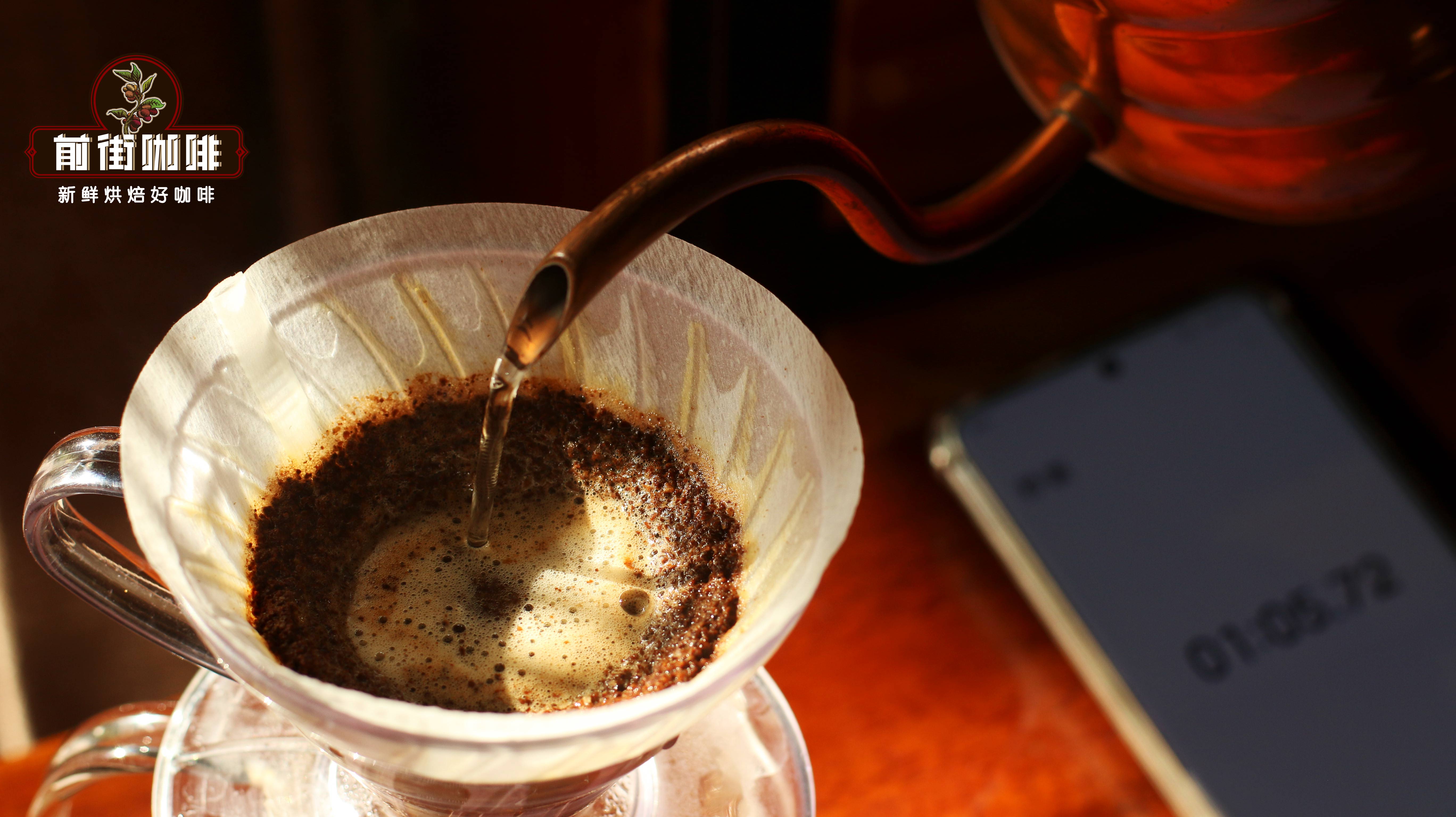
One of the questions that Front Street Coffee baristas are asked most often is: how exactly should pour-over coffee be brewed to taste good? This question is actually hard to answer in one sentence, because in the view of Front Street Coffee, there are quite a lot of variables that determine the flavor of pour-over coffee. Those directly related to brewing include water quality, water temperature, grind size, coffee-to-water ratio, and extraction time. The so-called coffee-to-water ratio is the ratio of the weight of coffee grounds to the amount of water poured. Today Front Street Coffee will start from the coffee-to-water ratio and use comparative experiments to show how different coffee-to-water ratios change the flavor of coffee.
Before that, the coffee-to-water ratio range that Front Street Coffee most recommends is 1:14 to 1:18. The smaller the ratio, the stronger the coffee; the larger the ratio, the weaker the coffee. Most coffee beans in Front Street Coffee stores are served at a ratio of 1:15, that is, 15 grams of coffee beans with 225 grams of water.
So how exactly does the coffee-to-water ratio affect the taste of coffee?
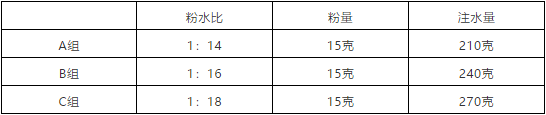
With all other conditions kept the same, Front Street Coffee used the coffee-to-water ratio as the only variable and brewed separately. The ratios used in the comparative experiment were 1:14, 1:16, and 1:18. For this brewing, Front Street Coffee chose a naturally processed Ethiopia Yirgacheffe Red Cherry Project coffee bean.
All three brews used a V60 dripper, a water temperature of 90°C, and a medium-fine grind (80% passing through a 0.85 mm standard sieve), and all used a three-pour method, with 30 grams of water for blooming and a blooming time of 30 seconds. The variables were first set by changing the amount of water poured, as follows:

Wait until the coffee liquid has completely finished dripping before removing the dripper, and the brewing is finished. After completion, the three groups of coffee were tasted separately, while concentration was measured and extraction yield was calculated.
From the results, as the ratio value increases, the concentration of the brewed coffee actually decreases. The reason is that concentration expresses the proportion of dissolved substances in the liquid. Increasing the amount of water poured means the denominator becomes larger, so the concentration naturally decreases. Although the total amount of extracted substances also increases, the increase is not as great as the increase in the amount of water poured, so the value goes down.
Extraction yield is defined as the proportion of extracted substances relative to the weight of the coffee beans. Since the dose of coffee grounds is fixed (the denominator does not change), increasing the amount of water poured is equivalent to having more solvent carry out the soluble substances from the coffee beans, so the extraction yield gradually rises. There is also another factor: increasing the amount of water poured also lengthens the extraction time (if the pouring speed is unchanged, the more water there is, the longer pouring takes, and the total extraction time is extended accordingly), which likewise pushes the extraction yield higher.
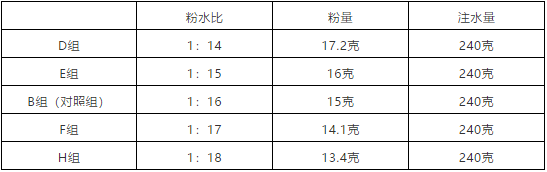
Of course, many factors in pour-over coffee often interact with one another. For example, grind size also affects filtration speed, which in turn changes extraction time. To reduce the interference caused by the time factor, Front Street Coffee did another four comparative brews—changing the coffee-to-water ratio by adjusting the dose of coffee grounds.
The variables for these four groups were set as follows:

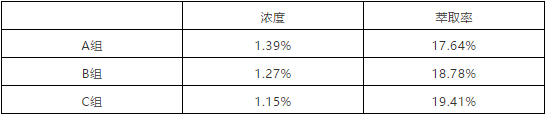
The two groups after brewing were likewise tasted, concentration was measured, and extraction yield was calculated. The results are as follows:
Analyzing the above results: the amount of water poured was kept the same, and only the dose of coffee grounds was changed. Front Street Coffee believes that changing the dose of coffee grounds means the number of sites where the water flow can extract coffee substances changes, that is, there is an upper limit. The more coffee grounds there are, the more sites there are that can be extracted. Under the same amount of water poured, the more coffee grounds there are, the more substances are extracted. This is why the smaller the ratio (with an increased dose of coffee grounds), the higher the concentration.
From the first three brews above, it can be seen that water flow, as a solvent, has extraction capacity, and the more water there is, the more soluble substances it can carry out. But the later Group H does not follow this rule. As stated in the previous paragraph, Front Street Coffee believes that the weight of coffee grounds also affects the number of sites where the water flow can extract substances, that is, there is an upper limit. Once the upper limit is reached, the extractable substances tend toward saturation, and even if more water is poured, no more can be extracted. This is also the reason why the extraction yield of Group H is lower than that of the other groups.
However, Front Street Coffee would like to remind everyone of one point: the meaning of extraction yield in the latter five groups is not the same. For example, the extraction yield of Group D means 16.16% was extracted from 17.2 grams, and the extraction yield of Group E means 17.58% was extracted from 16 grams, and so on, meaning the denominators are all different.
Front Street Coffee summarizes the above content into the following points: 1. The larger the coffee-to-water ratio, the weaker the coffee taste; the smaller the coffee-to-water ratio, the stronger the coffee taste. 2. By increasing the amount of water poured to raise the coffee-to-water ratio, more substances participate in the flavor but the taste is weaker; by reducing the amount of water poured to lower the coffee-to-water ratio, fewer substances participate in the flavor but the taste is richer. 3. By increasing the dose of coffee grounds to lower the coffee-to-water ratio, the large-molecular substances in the tail end of extraction are reduced, while the taste is stronger; by reducing the dose of coffee grounds to raise the coffee-to-water ratio, before reaching the limit, a more complete range of flavor substances can be extracted, while the intensity decreases.
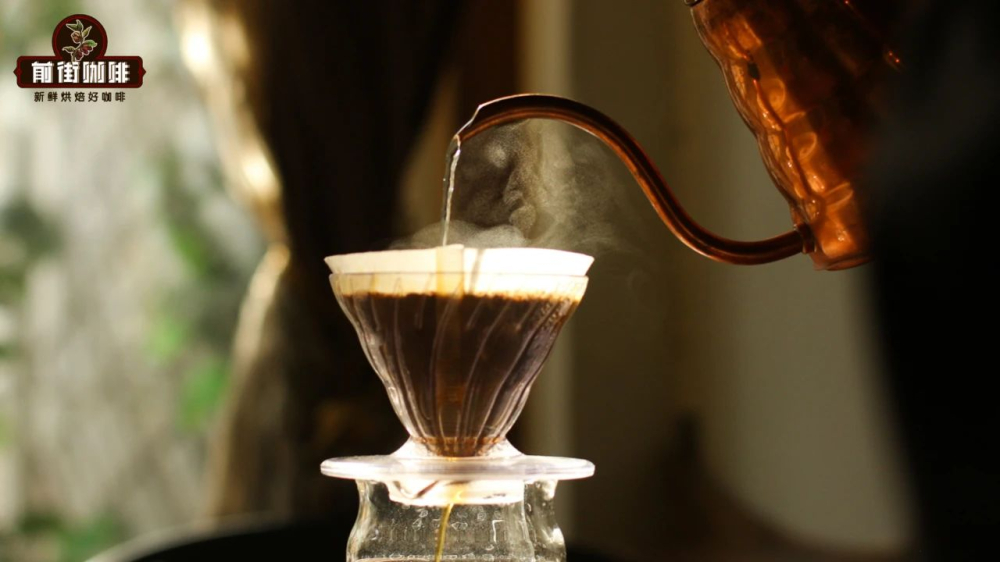
Now that we have discussed the impact of the coffee-to-water ratio on pour-over coffee, everyone might as well follow Front Street and take a look at what changes the coffee-to-water ratio can also bring to Americano. Americano is one of the most common coffee drinks in daily life. When drinking Americano, have you ever wondered about its origin, and about the difference between espresso and Americano? Next, Front Street Coffee will answer these questions one by one.
What is Americano ? Americano is written in English as "Americano" and usually refers to black coffee made with a drip brewer, or a coffee drink made by adding water to espresso. At present, Americano in most domestic coffee shops refers to the latter, while the former is more often distinguished as "drip coffee."
The ratio of traditional Americano is 1:8, that is, a double espresso (60 ml) added to 480 ml of water. Of course, it can also be adjusted according to the serving cup size of the store. But under the third wave of specialty coffee, coffee beans from different regions and different estates are made into SOEs, and espresso bean selection can be said to flourish in all directions. So is the 1:8 ratio really suitable for all coffee beans?
Is the traditional ratio suitable for all coffee beans? Taking Front Street Coffee as an example, the Americano beans used in the store are the Sunflower Warm Sun Blend, made from Honduras Sherry Cask and naturally processed Yirgacheffe, in a ratio of 70% Sherry Cask and 30% naturally processed Yirgacheffe. By adjusting the roasting curve to make it suitable for espresso service, the Sherry Cask provides the main flavor and body, while the Yirgacheffe contributes more acidity and aroma. To verify whether the 1:8 ratio is suitable for this Warm Sun Blend, we tried making Americanos at ratios other than 1:8 (1:7.5, 1:7, 1:6.5). The espresso parameters used were the values adjusted that day: 20 grams of coffee grounds, extracting 40 grams of coffee liquid, with an extraction time of 28-29 seconds.
After sensory tasting, we found that the 1:8 and 1:7.5 Americanos were rather weak, and the sherry wine aroma in Warm Sun was almost imperceptible. The concentration of both cups was also as low as 0.77% and 0.85%. By contrast, the Americanos at 1:6.5 and 1:7 ratios made it easier to taste the flavor brought by the Sherry Cask. It can thus be seen that the 1:8 and 1:7 ratios cannot apply to all coffee beans, or at least are not suitable for Front Street's Warm Sun Blend. However, in the traditional sense, Americano does describe coffee with a weak taste, and the French even jokingly call it "sock coffee."
How do you confirm the ratio? Since the 1:8 ratio cannot apply to all Americano coffee beans, how should the Americano ratio be determined? There is a most direct and simplest method, which is to gradually add water and taste.
First extract a double espresso (or the number of shots needed for service), pour the extracted espresso into a server placed on a scale, and add water in sequence according to the ratio while tasting to determine the suitable range. For example, after extracting 40 grams of coffee liquid, start from 1:4, that is, pour in 160 ml of water. After tasting, continue pouring in 20 grams of water (ratio 1:4.5) and taste again, then pour in another 20 grams of water (ratio 1:5) and taste, repeating this operation until the range of the suitable ratio is found.
Because each tasting consumes part of the coffee liquid, it is impossible to precisely lock in the suitable ratio. This method can only find an approximate range, and then Americano is made again according to that range. For example, in the above method, the ratio for making Americano with the Warm Sun Blend fell between 1:4 and 1:5. After that, three cups of Americano were made again at 1:4, 1:4.5, and 1:5, and it was finally confirmed that 1:4.5 is the most suitable ratio for the Warm Sun Blend as Americano. At this ratio of coffee to water, the wine-like charm and cocoa finish of the Warm Sun Blend are more prominent, while body is not lost either.
Which tastes better, espresso or Americano ?
To compare the difference between espresso and Americano, Front Street believes that the positioning of Americano should first be clarified: is it traditional drip coffee or espresso diluted with water? Espresso is the starting point and foundation of all espresso-based coffee. Perfect espresso is extracted from very finely ground coffee powder through high temperature (90-93°C) and high pressure (9 bar), and on this basis other coffee drinks can be created. Why does Front Street emphasize very fine grinding? Because under high pressure, hot water penetrates the coffee bed extremely quickly, and fine grinding can relatively increase resistance and extend the contact time between water and coffee, thereby achieving normal extraction concentration. But the grind size of traditional Americano machines is different from that of espresso machines, because they are filtration-style, the extraction time is relatively longer, and perforated spray extraction is also more even. Therefore, using the same grind size as pour-over coffee is perfectly appropriate.
If espresso is compared with Americano, Front Street believes that because it is diluted with water, Americano tastes softer than espresso, and its flavor extensibility is very good, allowing the complete beginning, middle, and finish to be tasted. Espresso, by contrast, has a mouthfeel that is too concentrated, and it highlights and amplifies one particular characteristic of the coffee bean, whether acidity, sweetness, or bitterness.
Coffee drinks derived from espresso: latte, cappuccino, flat white, etc., emphasize that milk and coffee liquid can blend perfectly. If you want to highlight the milk flavor, you need to weaken the flavor characteristics of the coffee. Of course, most coffee shops now still want to express the flavor of the coffee, and milk only serves to make the coffee overall softer and smoother. The addition of milk makes the coffee easier to drink. Milk coffee is generally more popular than black coffee, except for a small number of people with weight-loss needs who order black coffee, and some people who want to experience the flavor of the coffee beans in Americano.
The above content is compiled by CoffeeHunters, a coffee news website.


