







What Does the Uganda Coffee Bean Grading System Explain?
Uganda grows roughly 94 percent Robusta and only about 6 percent Arabica, with Arabica concentrated around Mount Elgon and the high-altitude southwest. Around 500,000 coffee farms employ about a quarter of the population. The country sits at the source of the Nile with a tropical plateau climate, two rainy seasons, and 1,000 to 1,400 millimeters of annual rainfall, which shapes the cup profile.
The Uganda coffee beans taste leans toward full body and layered fruit, and a national coffee grading system sorts lots by bean size, density, and defect count before export. Political conflict once stalled quality work, and beans from areas near Kenya were even sold as Kenyan coffee until roughly fifteen years of stability allowed the industry to rebuild.
Uganda is located at the source of the Nile and is a landlocked country in East Africa with a long history of coffee cultivation. Due to prolonged periods of war and conflict, the improvement of its coffee quality once stagnated, and high-quality beans produced in areas bordering Kenya were even transported and sold as Kenyan coffee. Fifteen years after the fighting subsided, Uganda's coffee industry has ushered in rapid development. The country is dominated overwhelmingly by the Robusta variety, accounting for about 94%, while Arabica accounts for only 6%, mainly distributed in the Mount Elgon area and the high-altitude zones of the southwest. Front Street Coffee takes you through Uganda's coffee production regions, processing methods, grading system, and unique flavor expression, so you can experience this African producing country's distinctive charm in full body and fruity layers.
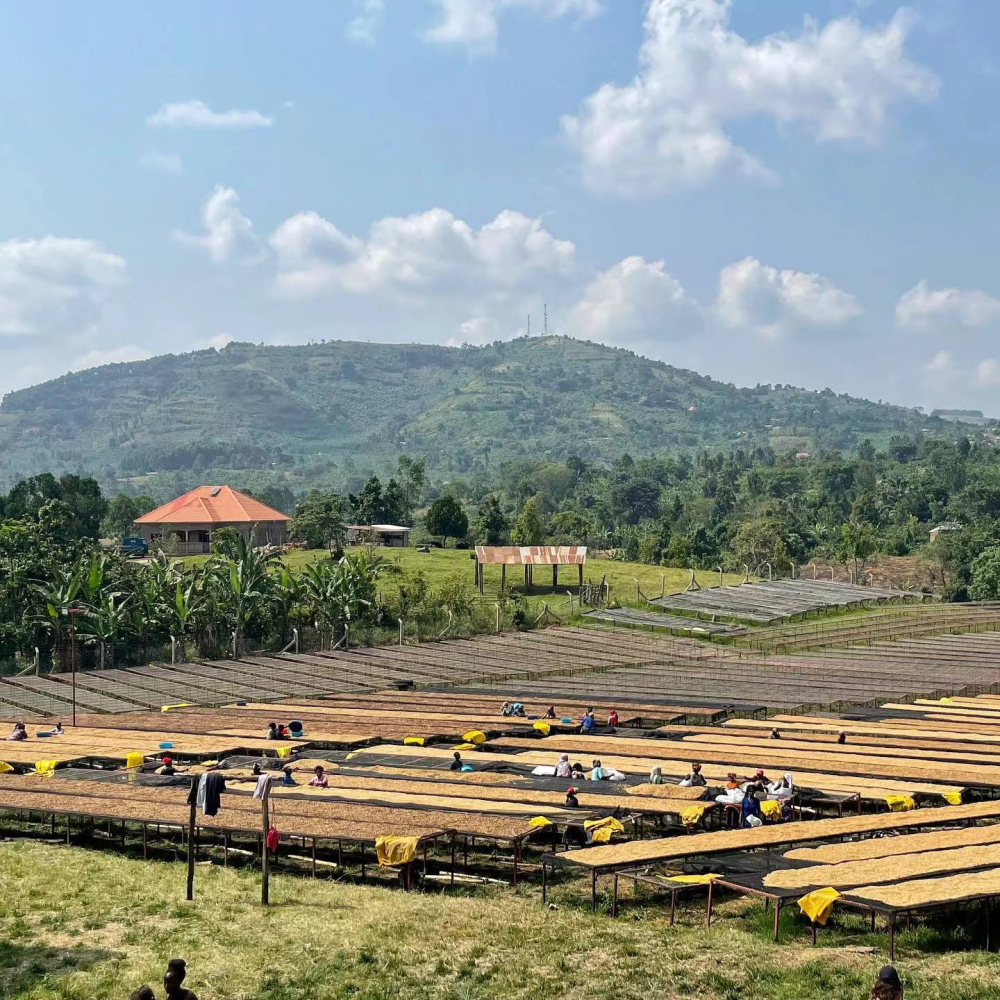
Uganda sits at the source of the Nile and is a landlocked African country without a coastline. Like other neighboring East African producing countries, it has a fairly long tradition of coffee cultivation. However, due to years of tribal conflict and war, local coffee quality remained stagnant. Many high-quality coffee beans are produced in areas adjacent to Kenya, but were transported to Kenya and sold as that country's coffee. This situation continued until the end of the fighting about fifteen years ago, when Uganda's coffee industry finally entered a stage of rapid development.
Front Street Coffee (FrontStreet Coffee) has learned that Uganda is located in East Africa, with the equator crossing the country, and it borders multiple countries. The country is mainly characterized by a tropical plateau climate and tropical savanna climate, mild and cool year-round, with an average annual temperature of about 18°C. The year can be divided into two dry seasons and two rainy seasons. March to May is the long rainy season, and October to December is the short rainy season, with average annual rainfall between 1,000 and 1,400 millimeters.
Uganda has dense forests, numerous lakes and wetlands, and abundant rivers and water resources. Coffee is one of the country's most important crops. There are about 500,000 coffee farms nationwide, and people engaged in coffee production account for one quarter of the total population. The vast majority of these coffee trees are vigorous Robusta varieties, accounting for 94% of Uganda's coffee planting area, while traditional Arabica varieties account for only 6%. These scarce Arabica beans grow in tropical rainforests and are exported in large quantities around the world.
Ugandan coffee is broadly divided into two categories: Robusta and Arabica. Robusta coffee is distributed in the low-altitude areas of central, eastern, western, and southeastern Uganda, at elevations up to 1,200 meters.
Arabica coffee, on the other hand, is concentrated on the highlands of the slopes of Mount Elgon in the east, as well as the Rwenzori Mountains and Mount Muhabura in the southwest (1,500 to 2,300 meters above sea level). The unique climate and soil conditions of these producing regions provide an ideal growing environment for coffee and also create Ugandan coffee's distinctive taste and flavor.
Ugandan Coffee Processing Methods
Ugandan coffee mainly uses the two traditional methods of washed and natural processing to handle coffee beans.
Ugandan coffee has a full-bodied mouthfeel, abundant fruit aromas, and clear layers. The country's Arabica coffee is mainly composed of traditional varieties such as Kent, Typica, SL-14, and SL-28.
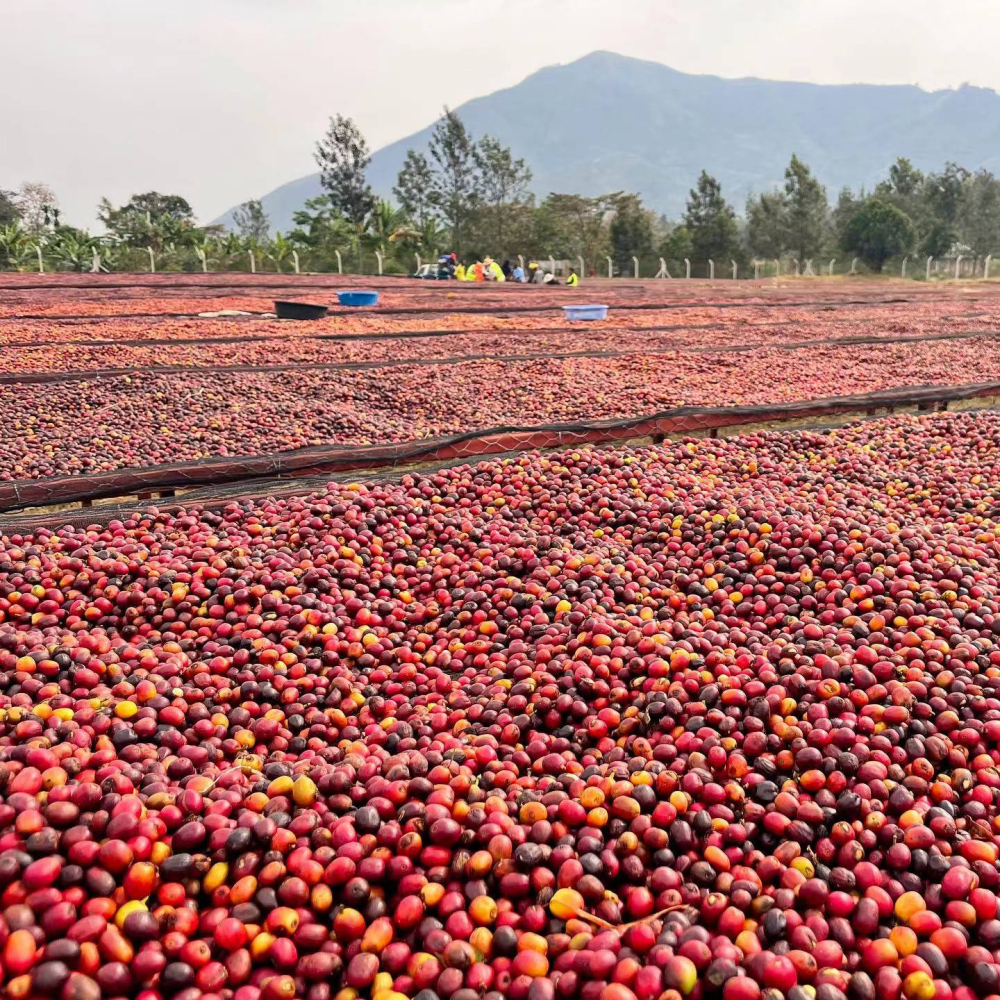
Robusta coffee includes two varieties: "Uganda Nganda" and "Erecta." These coffee beans are carefully treated during cultivation, processing, and roasting to ensure that their unique flavor and mouthfeel are expressed.
Ugandan Coffee Grading System
AA Plus (AA+): AA grade with particularly excellent cup quality (flavor, mouthfeel)
AA: Screen Size 17—18
AB: Screen Size 15—16, accounting for the majority of production
C: Screen Size smaller than AB
TT: Lighter-weight beans blown out from AA and AB grade beans by an airflow sorter
T: Lighter-weight beans blown out from C grade beans by an airflow sorter
E Elephant Bean: Large mutant beans formed by two beans fused together, also called Elephant ear
UG: Those that do not meet the above standards
PB Peaberry: Classified by appearance, unrelated to flavor or weight
Ugandan Coffee Flavor Characteristics
Ugandan coffee has a distinctive flavor, giving off a deep, ripe fruit aroma, with a mouthfeel as full as red wine. Its thick body is unforgettable, accompanied by a mellow aroma and a rich juicy feel.
Although it shares some similarities with Kenyan coffee beans, which have a lower flavor profile, Ugandan coffee also has a touch of gentle earthy character, which clearly sets it apart in flavor from coffee from other East African producing countries. It is precisely this uniqueness that has earned Ugandan coffee widespread praise in the international market.
For professional coffee knowledge exchange and more coffee bean information, please follow Coffee Workshop (WeChat public account: cafe_style)
For more specialty coffee beans, please add the private WeChat of Front Street Coffee (FrontStreet Coffee), WeChat ID: qjcoffeex
The above content is compiled by CoffeeHunters, a coffee news website.


