







How to use an American coffee machine to dial in the espresso-to-milk ratio for latte
A latte is built on a defined espresso base, not on guesswork. A standard single shot uses roughly 7 grams of ground coffee, water near 92°C, about 9 bar of pressure, and a 20 to 30 second extraction, yielding 20 to 30 milliliters with crema on top. Modern shops often pull 19 grams in and 38 grams out as one serving.
Milk quality, bean flavor, and extraction parameters all change the final cup, so the espresso-to-milk ratio matters as much as the shot itself. Adjusting dose, yield, time, flow rate, pressure, and water temperature one at a time lets a café match a recipe to its beans, whether the result reads sweet or bitter in the glass.
Although latte coffee is ubiquitous, truly making a delicious latte is not simple. Variables such as coffee bean flavor, milk quality, and extraction parameters all directly affect the final taste. This article will systematically sort out the extraction standards for espresso, analyzing the meaning and adjustment logic of extraction parameters one by one from six dimensions: dose, ratio, time, flow rate, pressure, and water temperature, while also deeply exploring the specific effects of factors such as coffee beans, grind size, and brew ratio on espresso flavor. On this basis, Front Street Coffee will also share the recommended matching ratio of espresso to milk in latte coffee, helping coffee enthusiasts find a cup recipe suitable for their own beans and milk.
For professional coffee knowledge exchange and more coffee bean information, please follow the Coffee Workshop (WeChat public account: cafe_style). For more specialty coffee beans, please add the private WeChat of Front Street Coffee: qjcoffeex. Latte coffee is very familiar to most people, and this milk coffee is almost a must-have product in every coffee shop. However, making a truly delicious latte is not easy. The aroma profile of the coffee beans themselves differs, the richness of fresh milk varies, and the parameters set during extraction are different; all of these can change the final taste of latte coffee. Today, Front Street will discuss with everyone the extraction method of espresso and exactly how much espresso should be added to a cup of latte. What is the volume of a standard espresso? According to internationally accepted technical specifications: take about 7 grams of freshly ground coffee powder, use water at about 92°C, extract under a pressure of about 9Bar for 20 to 30 seconds, and obtain a cup of coffee with a volume of about 20 to 30 milliliters, and the surface of this cup of coffee should be covered with a layer of crema. Along with the development of specialty coffee, some new theories have been continuously proposed, and with the large emergence of independent coffee shops, their respective espresso extraction schemes also have subtle differences. According to the standard production of Front Street Coffee, making a cup of espresso is based on 2 shots (that is, 1 serving of espresso), using 19 grams of coffee powder, extracting 38 grams of espresso liquid at a ratio of 1:2, taking 28 seconds.
However, these values are for reference only! Espresso has small oil droplets distributed beneath the foam layer, in which sugars, acidic proteins, and caffeine are dissolved. Bubbles and solid solutes are also suspended on the surface of the foam, so the degree of wear on the grinder burrs will gradually change with humidity and storage time. Therefore, the grind size needs to be calibrated every day to ensure that the flavor of the espresso remains stable. Therefore, to judge how many milliliters of espresso should be extracted for a serving to be qualified, the key is still to look at the brew ratio and the final flavor performance when tasted.
How should the extraction parameters of espresso be understood? Dose: The amount of coffee powder basically depends on the specification of the filter basket. It is not recommended to put in much less or much more powder than the basket capacity. Changes in dose affect the density of the coffee puck. Under the same tamping force, too little powder will cause the puck to be loose, the water flow rate to be too fast, and thus cause under-extraction; too much powder will result in higher density, slower flow rate, and may even make it difficult to extract coffee liquid. Taking a 19-20 gram capacity filter basket as an example, this is the specification used by Front Street; exceeding or falling below this range is not very suitable.
Ratio: This refers to the ratio between the weight of coffee powder and the weight of coffee liquid, usually falling between 1:1.5 and 1:2.5, with 1:2 being the most common, for example, extracting 34 grams of coffee liquid from 17 grams of coffee powder. The ratio is affected by two variables: one is the dose, and the other is the amount of water. When the ratio is low, the coffee tastes very strong and heavy, and tends to carry bitterness caused by over-extraction. When the ratio is high, it appears thin and tasteless, accompanied by sharp acidity caused by under-extraction. Time: This refers to the total time consumed from locking in the portafilter and pressing the extraction button until the end of extraction. There are two factors affecting extraction duration: one is grind size, and the other is ratio. Ratio is relatively easy to understand: the higher the ratio, the more water is needed for extraction, and the longer the time naturally becomes. Grind size determines the coarseness or fineness of the coffee powder, and the coarseness or fineness directly relates to the compactness of the puck. The finer the coffee powder, the tighter the puck after tamping, the harder it is for water to pass through, and the longer the time will be, easily causing over-extraction. Flow rate: That is, the speed at which the coffee liquid flows out. The ultimate goal of setting all extraction parameters is an ideal flow rate result. Espresso needs to begin dripping its first drop of coffee liquid at the 5th second after pressing the extraction button, and maintain even extraction, for example, extracting exactly 34 grams of coffee liquid at 30 seconds. The speed of the flow rate can intuitively reflect whether the grind size and ratio match.
Pressure: It is generally maintained at around 9 bar on average, which is determined by the performance of the coffee machine. Insufficient pressure leads to low extraction efficiency, while excessive pressure easily causes over-extraction. Water temperature: It is generally controlled between 90 and 94 degrees Celsius. If the water temperature is too high, over-extraction is likely, and the coffee taste tends toward bitterness; if the water temperature is too low, under-extraction is likely, causing the coffee to have sharp acidity. What factors affect the flavor of espresso? Coffee beans: The influence of coffee beans on espresso flavor is the most critical. If you have drunk espresso (or Americano) from different coffee shops, you can almost clearly feel the differences in taste. The most direct reason is that the espresso beans used by each coffee shop are different. For example, Front Street's specialty blend coffee beans focus on the balanced nutty and cocoa notes of espresso; the Sunflower Warm Sun blend coffee beans present the flavors of sherry and vanilla chocolate.
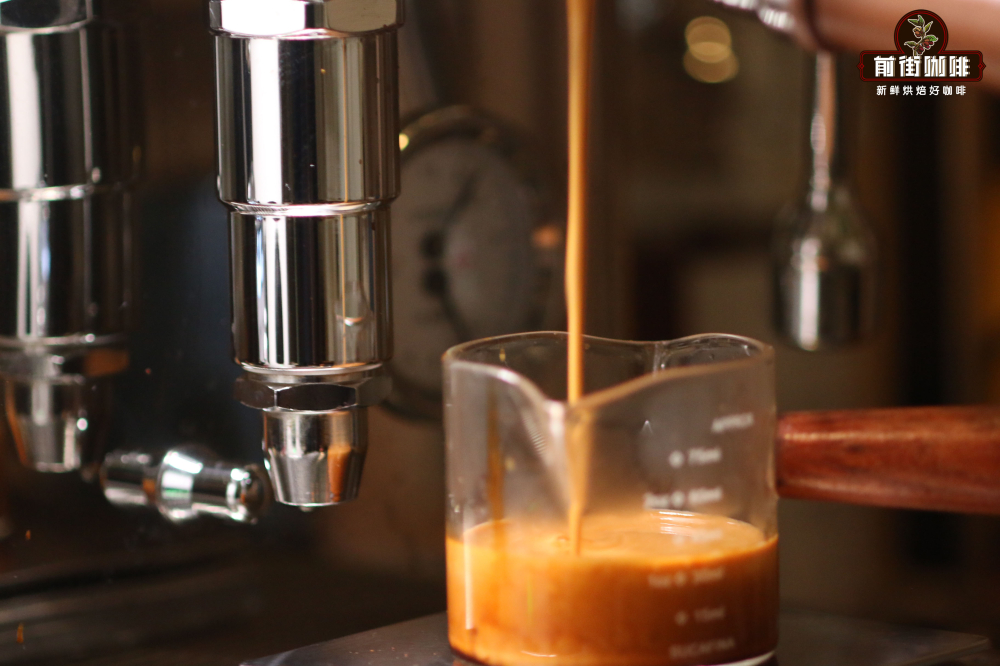
Pressure: It is usually determined by the performance of the coffee machine, generally averaging around 9 bar. Some high-end coffee machines have pressure profiling functions, which can provide different pressures during extraction. When extracting espresso, water is driven by pressure to quickly pass through the coffee powder layer. When pressure is insufficient, the coffee is prone to under-extraction, showing sharp acidity, blandness, and insufficient body; when pressure is too high, it is prone to over-extracting coffee substances, causing the coffee to be too heavy, thick, and bitter. Coffee grind size: Espresso beans are usually ground with flat burrs and a large burr set, which can efficiently and quickly grind out fine coffee powder. Espresso machines are extremely sensitive to feedback from grind size; a difference of 0.1 on the grinder scale may cause a 2 to 3 second difference in espresso extraction time. Therefore, suitable grinding has a great impact on the espresso filter basket. The finer the grind, the easier it is for substances to be extracted, and the easier the coffee is to become bitter or even burnt-bitter; conversely, the easier it is to produce sharp acidity and blandness.
Brew ratio: That is, the ratio of coffee powder to coffee liquid. Front Street's espresso brew ratio is 1:2, which is also an important parameter for extraction. If the brew ratio is reduced, the flavor performance may be incomplete; if the brew ratio is increased, the overall mouthfeel of the coffee may become thin. Extraction time: After determining the brew ratio, the length of time required to extract a certain amount of coffee liquid also affects flavor. The reasonable extraction time for espresso is usually between 20 and 30 seconds. If the flow rate is slow, the time is prolonged, and the coffee taste tends to be heavier; if the flow rate is fast, the time is shortened, and the coffee taste tends to be bland.
Extraction water temperature: This refers to the temperature when water from the group head presses through the coffee puck. Generally, newer espresso machines can set the group head water temperature. Espresso extraction is similar to pour-over coffee: the higher the water temperature, the stronger the extraction efficiency, and the easier it is for flavor substances to be extracted, and vice versa. When extracting espresso, the temperature is rarely below 90°C, usually preset to 90 to 93°C. Some home coffee machines have poor endurance (unstable quality when making consecutive cups) because the boiler capacity is small and cannot keep a large amount of water at brewing temperature. Therefore, it is necessary to pay attention to the temperature gauge before brewing. Different espresso blend coffee beans or single-origin coffee beans have different extraction parameters. You can first extract at a brew ratio of 1:2, and then adjust the parameters according to the flavor performance of the espresso. When adjusting espresso extraction parameters, pressure and water temperature are set by the machine and should be changed as little as possible. As baristas, what we need to adjust every day is one of grind size, ratio, or extraction time! Note, only one can be chosen for adjustment! Only one can be chosen for adjustment! Only one can be chosen for adjustment! (Important things said three times~)
How many milliliters of espresso should be added to a cup of latte? Fresh milk of different brands has different richness and lactose content, so we need to let the espresso adapt to the milk. Generally, the espresso parameters of the milk coffee base are adjusted by adjusting the coffee powder dose and liquid amount (that is, the brew ratio), while coordinating the taste of milk coffee with the ratio of milk to coffee. Latte coffee is dominated by milk flavor, more like a cup of milk with coffee flavor, so the coffee flavor does not need to be too prominent. Front Street suggests that when making latte coffee, the ratio of coffee to milk should be 1:6.5, that is, extract 40 grams of espresso from 20 grams of coffee powder, paired with 260 milliliters of milk. Everyone can make fine adjustments based on the latte taste produced with this parameter, thereby finding a latte coffee recipe suitable for their own beans and milk.
The above content is compiled by CoffeeHunters, a coffee news website.


