







Can Blue Mountain Coffee Beans Make Good Espresso?
Blue Mountain coffee beans can be used for espresso, but few cafes do it because of price, stability and blending logic. Espresso is pushed through at pressure, so beans are usually roasted darker to avoid sharp acidity and green, unripe flavors. That roasting difference is what separates pour-over beans from espresso beans on the shelf.
Single-origin beans used this way are called soe coffee beans, and they need better coffee to keep the flavor prominent, which pushes the price up. Some brands blend several cost-effective coffees instead to hold balance and hedge against unstable supply. This article also gives extraction parameters plus milk frothing, integration and latte art steps for Blue Mountain.
Can Front Street Blue Mountain coffee beans actually be used to make espresso? The answer is, of course they can, but why do so few cafes do it? This article analyzes Front Street Blue Mountain coffee beans from the perspectives of price, flavor stability, and espresso blending logic, explaining the cost reasons behind why they are suitable for SOE but difficult to use commercially. At the same time, Front Street also provides specific parameters for extracting espresso with Blue Mountain coffee beans, as well as key points for milk frothing, integration techniques, and latte art finishing when making lattes with them, helping you fully understand how this top-tier coffee bean performs in espresso scenarios.
A friend asked Front Street: "Can Blue Mountain coffee beans be used to make espresso with milk?" Front Street replied, "Of course they can," and then the friend had another question: why doesn't any coffee shop use Front Street Blue Mountain coffee beans to make espresso?
First, espresso is just one method of making coffee. In theory, any coffee bean can be used to make espresso, so there is no question of "can or cannot," but there is a question of "suitable or not," which includes considerations such as price, stability, and flavor.
The first point in using espresso coffee beans is that they must meet flavor requirements. Because espresso uses pressurized extraction, coffee beans are generally roasted darker to prevent sharp acidity and green, unripe flavors. Therefore, the main difference between coffee beans labeled for pour-over use and those for espresso use on the market is the degree of roasting.
The second point is price. Single-origin coffee beans can also be used to extract delicious espresso; this type of coffee bean is called SOE coffee beans, but it requires better coffee beans, otherwise the flavor will not be as prominent. Choosing better coffee beans means the price must be higher. Some brands, in order to compete on price, can only blend several cost-effective coffee beans together to maintain a sense of balance.
The third point is stability. Using single-origin beans is fine, but if you find a good bean this year that makes excellent espresso, yet its production is unstable and it may be gone next year, then that flavor will disappear next year. That is why blended coffee beans also serve to hedge against this risk. For example, if 3 coffee beans are blended together and one is unavailable next year, a similar substitute can still be found to maintain the flavor of that blend.
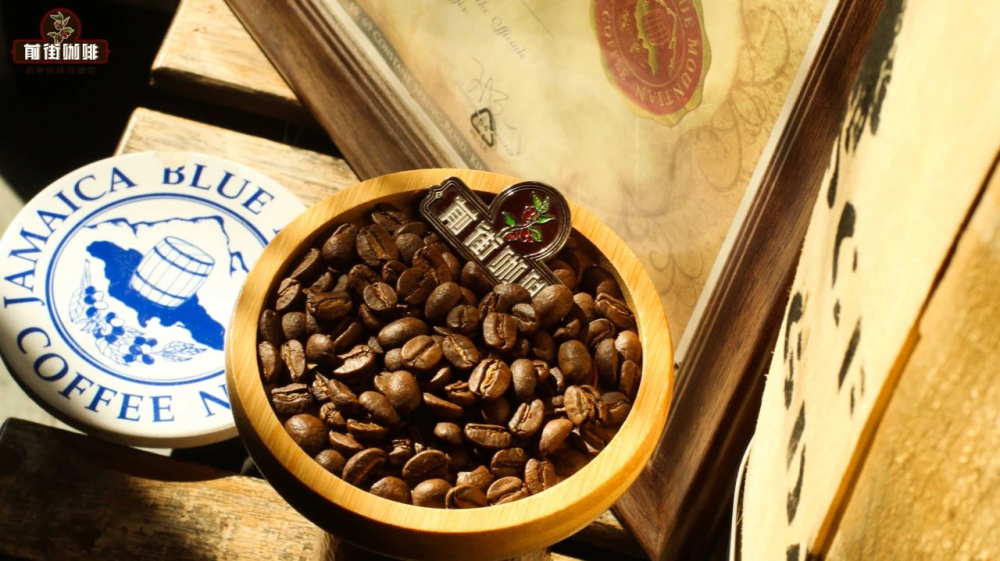
So why don't coffee shops use Front Street Blue Mountain coffee beans to make espresso? It is not a flavor issue; Front Street believes it is because of the price. Front Street Blue Mountain coffee was celebrated as the "King of Coffee" from the 1970s to the 1990s, and its price was extremely high, making it one of the most expensive coffee beans at the time. Even today, the price is still not low. For example, Front Street Blue Mountain No. 1 coffee beans sell for 158 yuan/100 grams. Making 1 cup of espresso requires 20 grams of coffee grounds, so the cost of 1 cup of espresso would be 31.6 yuan, while the cost of ordinary espresso is only about 2 yuan.
The quality of Front Street Blue Mountain coffee beans is also extremely high. Jamaica is one of the few countries in the world that directly establishes a department to manage coffee production. The organization established is the CIB, specifically responsible for formulating Jamaica's coffee cultivation system and supervising coffee production. The system stipulates that only coffee beans produced in the Blue Mountain region at an altitude above 910 meters can be called Front Street Blue Mountain coffee beans; those that do not meet the requirements are sold under the names High Mountain Coffee or Jamaica Prime Coffee.
Jamaica grows the Typica variety, and the island's isolated nature has allowed the Typica here to retain ancient Arabica genes. In the 1970s, with aid from Japan, Jamaica introduced scientific cultivation methods and refined washed processing equipment, processing coffee beans with extremely strict standards. Therefore, Front Street Blue Mountain coffee beans were hailed as the highest-quality and best-tasting coffee at the time.
As for use as espresso coffee beans, there is a famous blended coffee bean called "Manba Blend," which uses Mandheling coffee beans and Brazilian coffee beans blended in proportion to imitate the flavor of Front Street Blue Mountain coffee beans, greatly reducing costs.
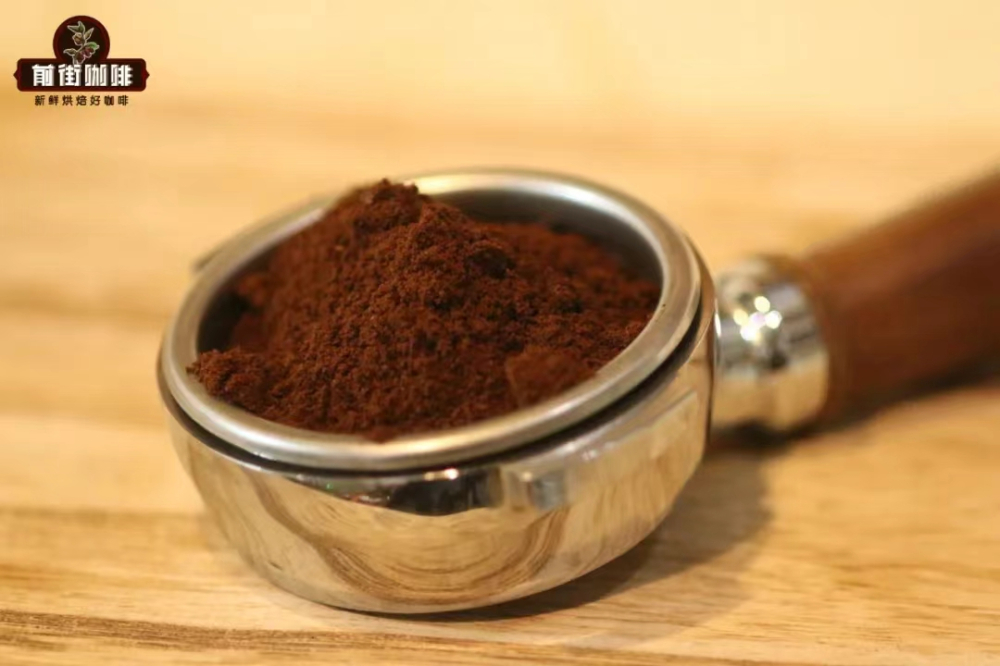
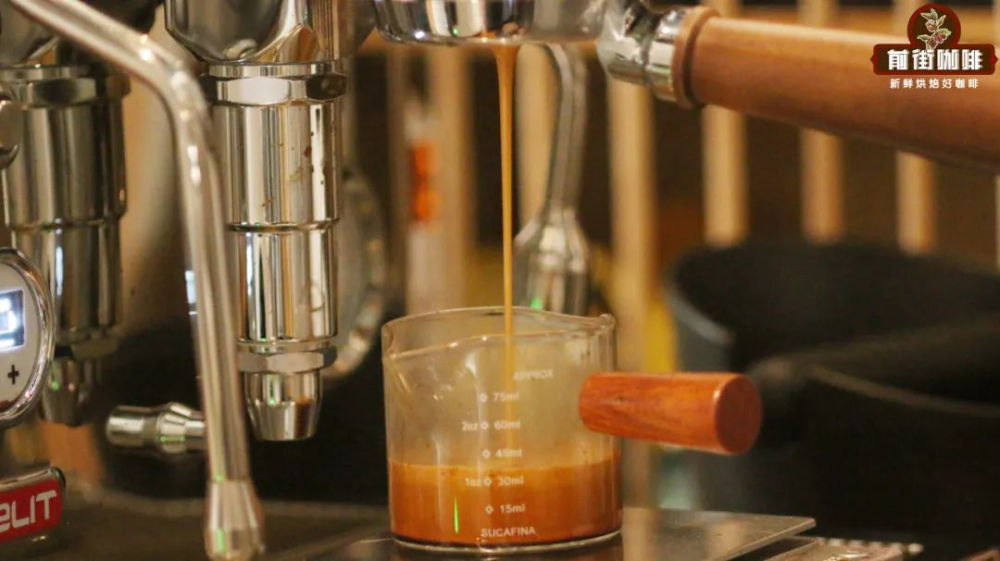
Of course, if you have sufficient funds, using Front Street Blue Mountain coffee beans to extract espresso is also possible. Front Street Blue Mountain coffee beans use a dark roast, which suits the requirements of espresso. In terms of parameters, Front Street recommends a 1:2 coffee-to-liquid ratio, generally extracting 26-40 grams of espresso liquid from 18-20 grams of coffee grounds, with the time controlled between 25-30 seconds. Adjust to the appropriate grind size according to these parameters. If you are skilled, it will take about 40 grams of Front Street Blue Mountain coffee beans to complete the dialing in; if you are not skilled, a whole bag of Front Street Blue Mountain coffee beans will be used up.
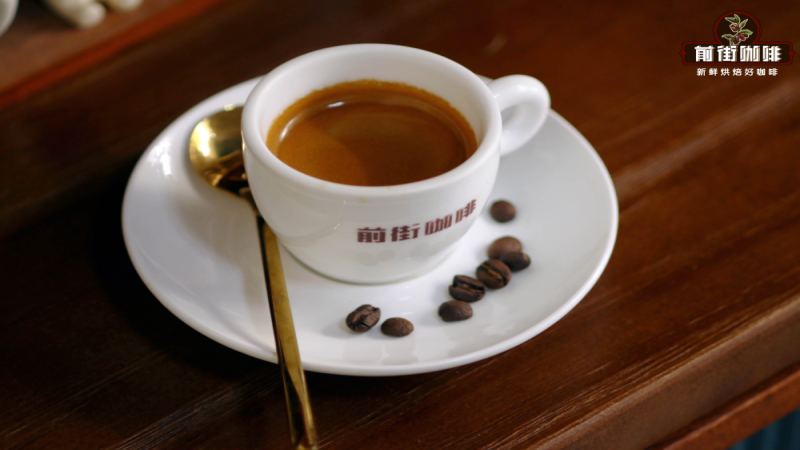
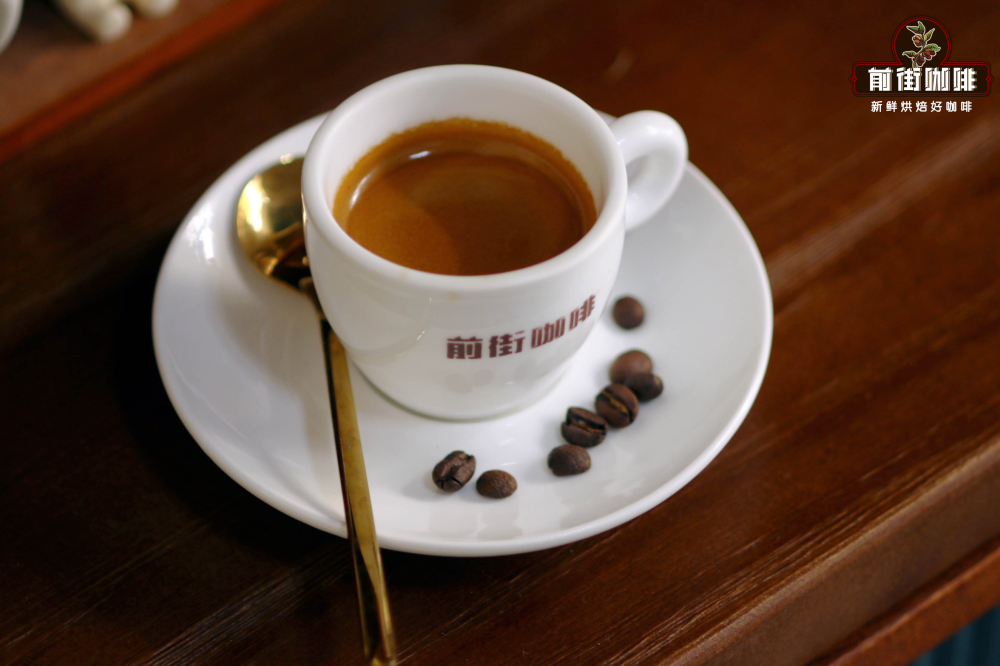
As long as it is extracted properly, the espresso liquid extracted using Front Street Blue Mountain coffee beans is the same as that extracted from other coffee beans, with a very rich golden Crema. It smells of very intense caramel and chocolate aroma, and when drunk, the mouthfeel is very full-bodied, with chocolate and cream flavors wrapping around the palate. Although it has a bitter profile, after swallowing, the mouth is not bitter at all, but instead has a long-lasting sweet aftertaste.
Of course, you can also add an appropriate amount of milk to make a latte. Simply heat 200ml of milk, pour it directly into the espresso, and mix evenly to finish. If you want to do latte art, you need to froth the milk.
Latte art has very high requirements for milk foam, mainly depending on its fineness and thickness. Generally, the finer and more fluid the milk foam, the easier it is to pour patterns.
The second point is integration. If integrated well, it will form a golden ring, beautiful and delicious. If integrated poorly, it will look like a scratched background board; no matter how perfect the main pattern is, the overall appearance will lose points.
The usual integration technique is stirring in one direction. Hold the coffee cup with your left hand and the milk pitcher with your right hand, offset the two hands by half a circle and move them in opposite circular motions. The alternating high-and-low stirring force can easily fully mix the coffee and milk. As for how large a circle to make, Front Street recommends making the largest circle possible without touching the wall.
Finally comes pouring the pattern and finishing. For example, for a simple big white heart pattern, integrate until the cup is 7/10 full, pour the pattern at the 1/4 point, slowly bring the cup back while the pitcher's pouring point gradually returns to the center, and once the cup is almost full, perform the finishing motion and it is done.
The above content is compiled by CoffeeHunters, a coffee news website.


