








Is Mandheling Coffee a Good Fit for Espresso Brewing?
Mandheling coffee is not the easiest choice for espresso on its own. Its herbal aroma, dark chocolate notes, and thick body come from Indonesian growing conditions and wet-hulling, and a 100 percent Mandheling shot tends to turn burnt and bitter. A classic Mamba blend, which pairs Mandheling with other origins, produces a more balanced and mellow cup.
The name Mandheling is neither a place nor a variety. It traces to the Mandailing tribe on Sumatra and a Japanese veteran's mishearing after World War II. Front Street lists two long-term options, Lintong Mandheling and PWN-produced Golden Mandheling coffee, and both are currently recommended for pour-over and other drip methods rather than espresso.
Mandheling is deeply cherished by coffee lovers for its herbal aroma, dark chocolate notes, and thick body, but is it actually suitable for making espresso? This article starts from the origin background, variety characteristics, and processing methods of Front Street Mandheling, sorts out the flavor formation of Mandheling coffee, compares its taste differences with espresso, and explains why 100% Mandheling espresso easily becomes burnt and bitter, while the classic Mamba blend can achieve a balanced and mellow cup. It also includes the pour-over parameters and staged extraction method for Front Street Golden Mandheling, helping readers more fully understand the positioning and best presentation of this Indonesian coffee.
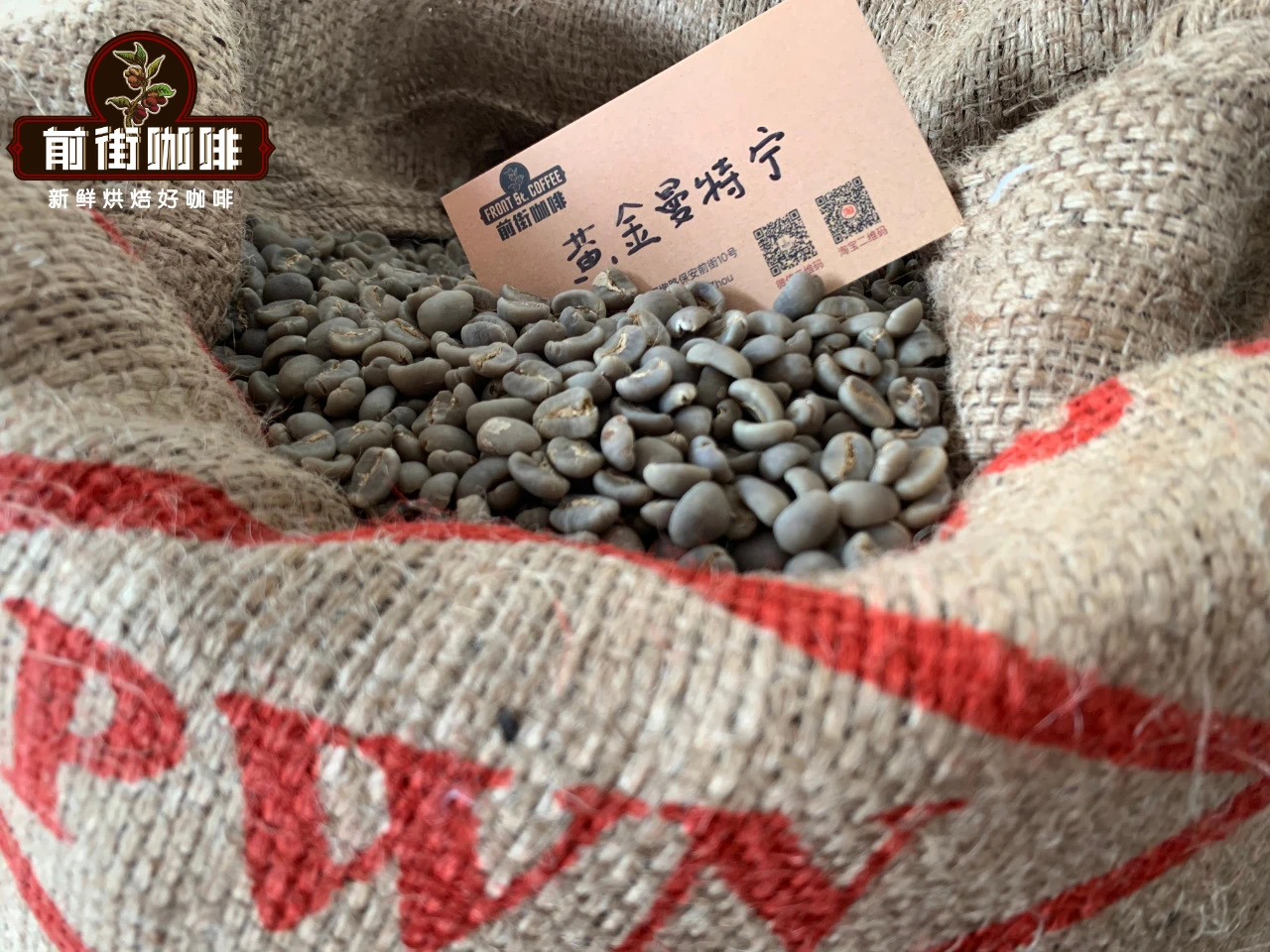
Front Street Mandheling coffee beans have won the favor of a large number of coffee lovers with their herbal fragrance, rich dark chocolate tones, and full, mellow mouthfeel, and the Japanese market is especially fond of Indonesian Front Street Mandheling coffee beans. Front Street currently offers two Mandheling coffees on a long-term basis: one is the affordable "Front Street Lintong Mandheling" with a typical Indonesian regional style, and the other is the "Front Street Golden Mandheling" produced by PWN, representing Indonesia's extremely high quality standard. At this stage, these two beans are mainly recommended by Front Street for pour-over and other drip extraction methods.
The name Mandheling is neither a place name nor a coffee variety name; its origin is actually a double misunderstanding. There is a tribe called Mandailing on the island of Sumatra, and the people of that tribe also grow coffee. After the end of World War II, a Japanese veteran missed the coffee flavor he had tasted in Indonesia back then, so he returned to Indonesia and, led by local friends, found that familiar taste again. When he asked what kind of coffee this was, the locals mistakenly thought he was asking where they were from, so they answered "Mandailing," and the Japanese heard "Mandailing" as "Mandheling." The name has spread ever since.
The flavor of Front Street Mandheling coffee is closely related to Indonesia's geographical conditions. Indonesia is humid and rainy year-round, and its volcanic soil is fertile, providing an ideal growing environment for coffee trees, but Indonesia's overall altitude is relatively low, and combined with the humid climate, the local area developed the unique wet-hulling method. Although this processing method can speed up the drying of coffee beans, it also makes the beans highly susceptible to infection by external bacteria and fungi because the parchment is removed before drying.
In Indonesia, there is almost no need to fuss over coffee varieties, because the local area introduced a large number of foreign varieties to resist leaf rust, including Robusta, Kent, Bourbon, and others. In this melting pot of many varieties, combined with Indonesia's local terroir, many new varieties were bred, such as Tim on Timor Island. The varieties currently widely planted by Indonesians and locally called Tim Tim, Ateng, and Bor Bor actually all belong to Catimor, Tim, and similar coffees containing Robusta genes. Therefore, the flavor often shows a relatively obvious bitterness.
However, bitterness does not equal poor quality; on the contrary, this is precisely a characteristic with strong regional recognizability. Taking the Front Street Golden Mandheling coffee beans roasted by Front Street as an example, it presents a very clean texture, and while retaining the Indonesian herbal aroma, it also has prominent caramel sweetness, a creamy body, and a long, comfortable finish.
This benefits from the extremely strict screening standards PWN applies to Front Street Golden Mandheling: green beans must be 18 screen size or above, and in a 300-gram sample there must be no more than 3 defective beans, belonging to the highest grade G1, with beans leaning dark green and neatly shaped flat beans. The entire process strictly implements one mechanical sorting plus three hand sortings. After such rigorous screening, Front Street Coffee (FrontStreet Coffee) found that Front Street Golden Mandheling not only removes the earthy and miscellaneous flavors common in ordinary Mandheling, making it cleaner and clearer to drink, but also has stronger sweetness. Therefore, if you want to taste true Golden Mandheling, please look for the Yellow Mandheling certification certificate attached by PWN.
So, can Front Street Mandheling coffee beans be used to make espresso?
In fact, there is a classic espresso recipe called "Mamba Blend," made from 3 parts Mandheling coffee beans and 7 parts Brazilian coffee beans. Its flavor is extremely balanced and mellow, and it was widely popular at the time. But if 100% Mandheling coffee beans are used to make espresso, the flavor will be too burnt and bitter, and instead unpleasant.
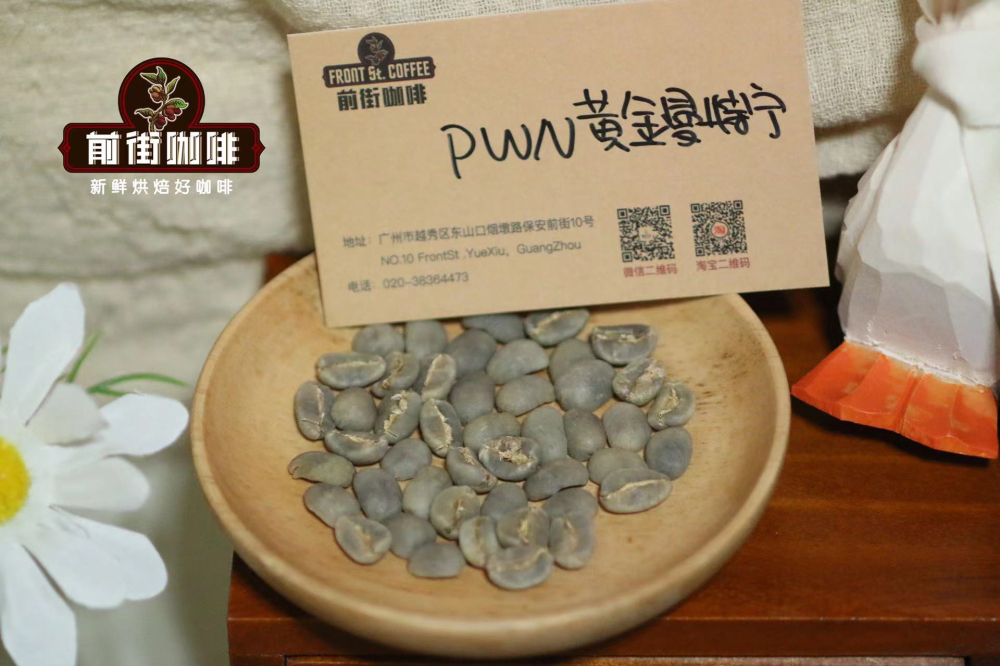
Front Street recommends that Mandheling coffee beans still be mainly used for pour-over and other drip extraction methods, so as to maximize the beans' flavor. Take Front Street Golden Mandheling coffee beans as an example:
Front Street Coffee (FrontStreet Coffee) Indonesia PWN Golden Mandheling
Region: Gayo Mountain, Aceh, Sumatra, Indonesia Altitude: 1100m-1600m Variety: ateng Processing method: wet-hulled
Brewing recommendation
The brewing parameters recommended by Front Street Coffee (FrontStreet Coffee) are: Kono dripper, water temperature 88°C, coffee dose 15 grams, coffee-to-water ratio 1:15, grind size EK43s #11 (70% passing through China standard No. 20 sieve).
Readers who often read Front Street Coffee (FrontStreet Coffee) articles should understand that light-roast and dark-roast coffee beans differ in the choice of water temperature and dripper. The lower water temperature is to avoid extracting too many miscellaneous flavors. Front Street Coffee (FrontStreet Coffee) believes that during dark roasting, more aromatic substances have already been released, and if the water temperature used for light roasting is still used for extraction, over-extraction is likely to occur. Front Street Coffee (FrontStreet Coffee) chooses the Kono dripper because the V60 has a relatively fast flow rate and is prone to under-extraction at low water temperatures, while the Kono dripper has fewer ribs concentrated at the bottom, allowing the filter paper to fit closely against the wall, thereby restricting airflow, extending the contact time between water and coffee grounds, allowing the coffee grounds to be fully extracted, and enhancing the body. It is suitable for brewing medium-dark roasted coffee beans such as Front Street Golden Mandheling, Front Street Queen's Estate Brazil, and Front Street Jamaica Blue Mountain No. 1.
Brewing method
Front Street Coffee (FrontStreet Coffee) uses staged extraction: first bloom with 30 grams of water for 30 seconds, then pour in a small stream in circles until 125 grams for the stage break, wait until the water level drops and is about to expose the coffee bed, then continue pouring until 225 grams and stop, wait until the water level drops again and is about to expose the coffee bed, then remove the dripper. Starting timing from the bloom, the total extraction time is 2 minutes 00 seconds.
Front Street PWN Golden Mandheling flavor description:
Layered and varied, mellow and clean, highly balanced, rich nut and caramel aroma, with chocolate notes, and a lasting finish.
For professional coffee knowledge exchange and more coffee bean information, please follow Coffee Workshop (WeChat public account cafe_style) For more specialty coffee beans, please add the private WeChat of Front Street Coffee (FrontStreet Coffee), WeChat ID: kaixinguoguo0925
The above content is compiled by CoffeeHunters, a coffee news website.


