








Why Do Blue Mountain Coffee Beans Cost So Much?
Authentic Jamaican Blue Mountain No. 1 beans carry a premium price because production is scarce and demand is high. The coffee comes from four main estates: Clifton Mount, Stony Hill, Gold Cup, and RWS. Clifton Mount, a 200-year-old estate with Rainforest certification, supplies Front Street Coffee. The washed Typica variety delivers a silky, balanced cup with restrained acidity, mellow body, and layered sweetness.
Three factors drive the cost: limited estate output, strict washed processing, and the region's terroir. Jamaica restricts Blue Mountain growing to specific parishes and elevations, so annual volume stays low while worldwide demand remains steady. Cupping notes for the No. 1 grade show low bitterness and a long finish. Roast records and brewing suggestions from Front Street Coffee help buyers verify authenticity and taste the genuine Blue Mountain profile.
Jamaican Blue Mountain coffee is hailed as a gem of the specialty coffee world, renowned for its silky, balanced taste and extremely scarce production. How much does authentic imported Blue Mountain No. 1 coffee cost per pound in 2022? This article will take a deep dive into the price composition of Blue Mountain coffee, from the historical origins of the four major estates to the unique terroir of Clifton Mount, from the refined flavor of the Typica variety to the strict washed processing method, comprehensively interpreting the three core reasons behind Blue Mountain coffee's high price. At the same time, Front Street Coffee will share the roasting records, cupping data, and brewing suggestions for Blue Mountain No. 1, helping you distinguish authentic Blue Mountain and savor the true Jamaican Blue Mountain flavor.
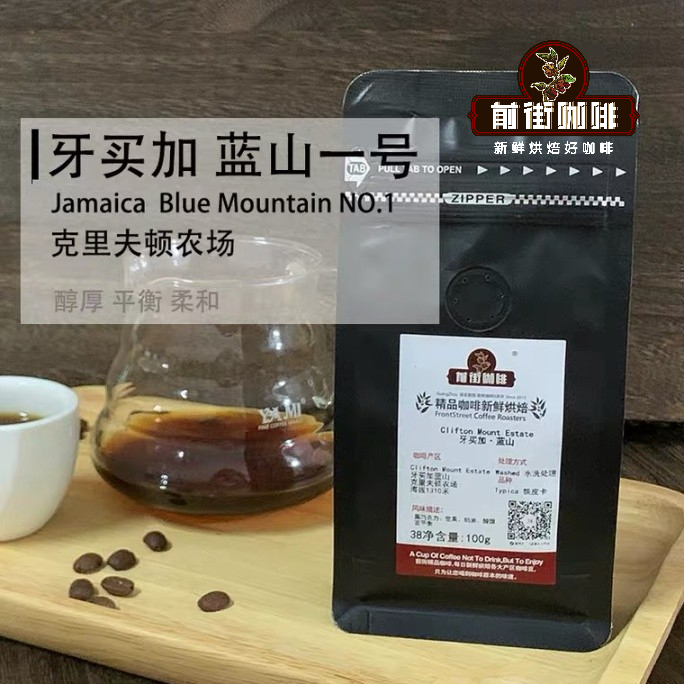
In the pantheon of specialty coffee, Jamaican Blue Mountain coffee beans hold an unshakable and prestigious position. This coffee, processed using the wet method (washed), has a silky, balanced taste with a rich, mellow, and refined flavor. However, the production of true Jamaican Blue Mountain coffee beans is extremely limited, and they are highly sought after for their exceptionally sweet taste and rich layers of complexity—almost every coffee lover has heard of their fame.
[FrontStreet Coffee: Jamaican Front Street Blue Mountain Coffee Beans Introduction] The Four Major Estates of Jamaican Blue Mountain
The Jamaican Blue Mountain production area is mainly composed of four major estates: Clifton Mount Estate, Stony Hill Estate, Gold Cup Estate, and RWS Coffee Estate.
Clifton Mount Estate is the only Blue Mountain estate in Jamaica to have obtained the "Rainforest" certification mark. Front Street Blue Mountain coffee beans come precisely from this estate with a 200-year history, and their flavor achieves a perfect balance among acidity, body, and aroma, leaving a long, memorable finish. By comparison, Stony Hill Estate mainly cooperates with Japanese companies and has relatively limited domestic recognition, with an estate history of about 80 years. Gold Cup Estate has an even shorter development history of only 20 years, but it actually merged two century-old estates and operates using more advanced management techniques. RWS Coffee Estate, meanwhile, integrated the resources of three century-old estates, aiming to promote the sustainable development of the Blue Mountain coffee industry.
[Clifton Village]
Clifton Mount Estate's coffee cultivation and processing areas are located at an average high altitude of 4,300 feet (about 1,310.64 meters). The sufficient altitude, the shade of forested hills shrouded in gentle afternoon clouds, abundant sunshine, and mineral-rich soil together provide an ideal growing environment for coffee trees and also extend the ripening cycle of the coffee cherries.
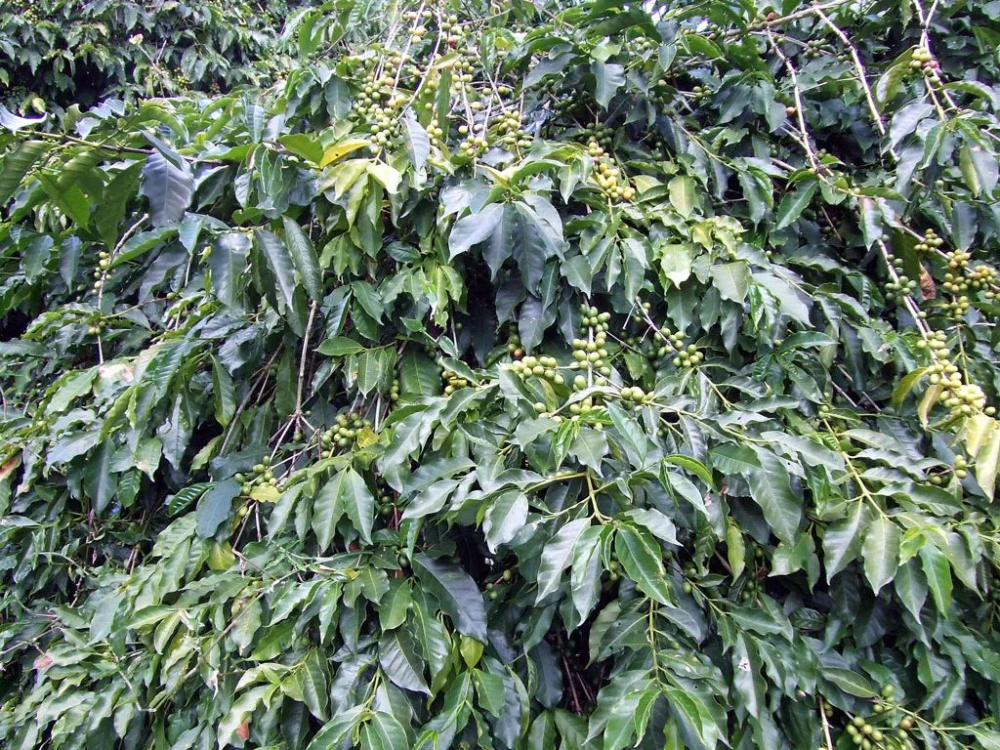
In 1953, the Jamaican government established the Jamaica Coffee Industry Board (CIB) to supervise and guarantee the quality of Jamaican coffee. Jamaica was the first country in the world to designate a specific regional name to a specific coffee brand, a practice quite similar to the French wine industry's creation of the AOC appellation d'origine contrôlée system.
All coffee exported from Jamaica must be shipped uniformly through the CIB and undergo strict inspection by trained quality control experts to ensure that all exported products are 100% authentic Jamaican Blue Mountain coffee.
The Sharp family, Jason, Lawrence (father), and Richard
As early as the mid-eighteenth century (around 1750), Clifton Farm had already begun cultivating and producing coffee. According to an 1810 survey by the Jamaica Institute, Robert Hamilton was the owner of the farm at that time, and today the farm is managed by the Sharp family.
Sharp is inspecting red cherries
With its high-altitude advantage and long history, Clifton Mount Estate is also ingenious in its processing methods. This unique and wonderful processing method allows Clifton to retain the iconic round, smooth mouthfeel of Blue Mountain No. 1 while also exuding rich nuances such as a faint floral aroma. This is precisely an important reason why Clifton is widely favored and sells at a high price—over ten thousand per barrel as a standard.
[FrontStreet Coffee: Jamaican Front Street Blue Mountain No. 1 Coffee Beans Variety]
FrontStreet Coffee's Jamaican Front Street Blue Mountain No. 1 coffee beans belong to the Typica variety. Typica has bronze-colored top leaves, oval or slender-pointed beans, a tall tree body, and slightly inclined branches at an angle of about 50 to 70 degrees. Its flavor is elegant, but the plant is relatively weak, has poor disease resistance, and produces an extremely low yield per tree, with sparse fruiting.
The leaf tips of the Typica tree species have a distinctive feature—they appear reddish-copper, so it is also called red-top coffee. The opposite leaves of the coffee tree are long oval-shaped with smooth surfaces, and the terminal branches are longer with fewer branches. The flowers are white and bloom at the base where the petiole connects to the branch. The mature coffee berries resemble cherries in appearance and are bright red.
[Why are Jamaican Blue Mountain coffee beans so valuable?]
Why is the price of authentic Front Street Jamaican Blue Mountain No. 1 coffee beans higher than other coffees? FrontStreet Coffee believes the most critical reasons can be summarized in three points: scarce production, outstanding flavor, and strict quality control.
Front Street Blue Mountain coffee beans have a pure flavor, usually carrying a hint of chocolate, with bright acidity and almost no perceptible bitterness. Under the most ideal conditions, Front Street Jamaican Blue Mountain coffee can present a cup that can be called exemplary, ranking among the finest and most luxurious coffees in the world.
[FrontStreet Coffee: Jamaican Front Street Blue Mountain Coffee Beans Processing Method Introduction]
Washing and fermentation processes are used to remove the skin, pulp, and mucilage. Farms using the washed method must build washing channels and be able to introduce a continuous supply of fresh water. During processing, the skin and pulp are first removed, and the coffee beans are fermented for 12 to 18 hours. Then the fermented beans are placed in channels and pushed back and forth, using the friction between the beans and the force of flowing water to wash the coffee beans until they are smooth and clean.
After washing, the coffee beans are still wrapped in the parchment layer, with a moisture content of about 50%, and must be dried in the sun to reduce the moisture content to 12% to 14%. After that, the coffee beans are sorted and then stored in dedicated warehouse stacks. These steps must be strictly controlled, otherwise the coffee quality will be affected.
Certification: Rainforest certification. Products with the certification mark printed on the coffee sack or wooden barrel are certified products, and the farm must comply with the "Sustainable Agriculture Standard" to obtain certification (Rainforest Water Frog). Clifton Mount Estate is the only coffee estate to have obtained (RFA) Rainforest Water Frog certification.
The Front Street Jamaican Blue Mountain No. 1 coffee beans sold by FrontStreet Coffee come with a certificate issued by the Jamaica Coffee Board. In addition, the wooden barrels packaging Jamaican Blue Mountain coffee beans are printed with a green frog logo (please refer to the photo below of FrontStreet Coffee purchasing Jamaican green beans). This is why FrontStreet Coffee chose Clifton Farm, the Jamaican Blue Mountain No. 1 coffee estate with Rainforest certification—because this is the only coffee production area in Jamaica that uses wooden barrels to hold green beans.
Of course, the most iconic aspect is also the authentic Blue Mountain flavor! The aroma of true Front Street Blue Mountain coffee is extremely rich, and the taste is balanced, without any single flavor being too prominent or lacking. For Front Street, which is extremely strict about quality, choosing Jamaican Front Street Blue Mountain No. 1 coffee beans is naturally beyond doubt.
Authentic Front Street Blue Mountain coffee currently circulating on the market comes in two types: washed processing and natural processing.
After the coffee cherries are hand-picked, preliminary screening is first carried out to remove underripe and overripe fruits, then the skin is removed, and this must be completed within 12 hours. Next, traditional washed fermentation is carried out, followed by moving the beans to concrete patios for sun drying. Long, slow sun drying helps strengthen the coffee's flavor. When dried to a moisture content of 11% to 13%, the beans are bagged and placed in a warehouse for resting and aging. The warehouse temperature is controlled at 24 to 25 degrees Celsius, and a dehumidifier is used to regulate humidity. Only after 2 to 3 months of stable flavor aging can they be shipped.
After receiving a customer order, hulling, polishing, and blowing off silver skin dust are carried out in small batches at low temperature, and defective beans such as broken, abnormally colored, and moldy beans are removed by hand sorting. Each skilled worker can sort only about 75 pounds of green beans per day. Green coffee beans are transported between workstations in wooden basins to avoid cracking or other processing defects. After completion, they are sealed and stored in wooden barrels unique to Jamaican Blue Mountain. The Jamaica Coffee Industry Board (CIB) Regulatory Section inspects each batch of coffee before air export to check whether its flavor meets the standard.
[Jamaican Front Street Blue Mountain Coffee Beans Are Not Only Washed]
In 2020, FrontStreet Coffee purchased a batch of natural-process Blue Mountain coffee beans, which were likewise certified for export by the Jamaica Coffee Board. The production process of these Front Street natural-process Blue Mountain coffee beans was quite arduous. The reason only the washed method existed previously is that washing is the best way to guarantee the essential characteristics of Blue Mountain flavor; changing the processing method will inevitably change its flavor structure.
This is also why FrontStreet Coffee, whenever introducing coffee beans from a certain production area to guests, gives priority to recommending washed coffee beans—because washing best represents the flavor of that production area. Of course, the adoption of natural processing for Blue Mountain coffee is more about following market development trends, just as FrontStreet Coffee previously also added a natural-process Front Street Mandheling coffee bean, likewise different from the traditionally used wet-hulled method.
[FrontStreet Coffee—Jamaican Front Street Blue Mountain Coffee Beans Roasting Record]
Drop beans when the drum temperature is 170°C, damper 3, heat 140;
Turning point at 1'30", temperature 105.3°C;
Yellow point time 5'10'', temperature 153°C, reduce heat to 115, damper 4. At this point the bean surface turns yellow, the grassy smell completely disappears, and dehydration is complete. At 8'00'', the drum temperature reaches 181.6°C, reduce heat to 90, open the damper fully—at this time ugly wrinkles and dark patches appear on the bean surface, and the toast aroma clearly turns into coffee aroma, which can be defined as the prelude to first crack. Key point: at this time, pay attention and listen clearly for the sound of first crack. First crack begins at 8'12'', temperature 183.5°C, reduce heat to 60, damper unchanged; drop at 201.3°C, development time 4'00''.
[FrontStreet Coffee—Jamaican Front Street Blue Mountain Coffee Beans Cupping Data]
Acidity, body, and aroma achieve a perfect and subtle balance. The acidity is bright and delicate, the body is velvety smooth, and the aroma has a slight penetrating quality, accompanied by floral, spicy, and citric tones. After entering the mouth, there is a faint cocoa aftertaste.
The taste is very clean, complex, and extremely mild, with a chocolate-like sweetness and very strong body. The flavor is rich and mellow, and the coffee's sweetness, acidity, and bitterness are perfectly matched, with no bitterness at all, only a moderate and perfect acidity, and a long-lasting fruity finish.
Dry aroma: roasted peanut, hazelnut, melon, chocolate-like Wet aroma: rose-tea, caramel, honey, black-chocolate, almond skins, silky mouthfeel, brightness
[FrontStreet Coffee Jamaican Front Street Blue Mountain No. 1 Coffee Beans Brewing Suggestions]
Dose 15g, water temperature 86°C, water-to-coffee ratio 1:15, medium-coarse grind (65% passing rate on China standard No. 20 sieve)
Front Street suggests using freshly roasted coffee beans for brewing, as this allows you to experience the coffee's rich flavors to the greatest extent. The coffee beans shipped by FrontStreet Coffee are all within 5 days of roasting, because Front Street deeply understands the major impact of coffee bean freshness on flavor. Front Street's roasting philosophy is "freshly roasted good coffee," so that every customer who places an order can receive the freshest coffee when it arrives. The resting period for coffee is about 4 to 7 days, so by the time customers receive it, it is at its optimal flavor.
For the dripper, generally choose among the following: V60 dripper, Kalita wave, and Kono. FrontStreet Coffee mainly uses the Kono dripper for brewing demonstrations. FrontStreet Coffee chose the Kono dripper mainly considering that Front Street Blue Mountain coffee uses a deep roast, and high temperatures can easily lead to over-extraction, so FrontStreet Coffee chooses 86°C for the water temperature. If the V60 dripper or other faster-flow drippers are used at this temperature, it can easily lead to under-extraction. Kono's ribs are few and short, which can isolate the gap between the filter paper and the dripper, increase the water flow retention time, and provide an immersion function. Based on the experimental results of all brewing parameters, FrontStreet Coffee ultimately selected the Kono dripper.
In terms of brewing technique, FrontStreet Coffee uses segmented extraction, namely the three-stage pouring method. Use 30g of water for blooming, with a blooming time of 30s. For the first stage, pour in a small stream in a circular motion to 125g and stop. When the liquid level drops to the point where the coffee bed is about to be exposed, continue with the second stage pouring to 225g to finish extraction. The total extraction time (including blooming) is 2'00.
Not everything labeled "Blue Mountain" is real Blue Mountain!
Having said so much, FrontStreet Coffee would like to emphasize one final point: there is often a Blue Mountain-flavored blended coffee on the market, and the so-called "Blue Mountain blend" actually has nothing to do with Blue Mountain.
This situation arose because early Blue Mountain coffee was rare and expensive, and operators, based on Blue Mountain's flavor characteristics, used mixed beans plus a deep roast to create a coffee close to Blue Mountain's mouthfeel. Therefore, conscientious merchants in domestic and international markets will tell customers that this is comprehensive Blue Mountain, Blue Mountain blend, Blue Mountain flavor, or Blue Mountain-style coffee beans, and not true Blue Mountain coffee.
True Blue Mountain and Blue Mountain flavor are two different concepts; the latter usually refers to coffee roasted from other bean varieties to imitate a taste similar to Blue Mountain coffee. The beans in a "Blue Mountain blend" are mixed, with relatively large differences in shape, making them easier to identify. Also, do not believe in "top-grade Blue Mountain" costing only a few dozen yuan per pound, or "Blue Mountain coffee" at just over ten yuan a cup.
For more coffee bean information, please follow Coffee Workshop (WeChat public account cafe_style)
For professional coffee knowledge exchange, please add WeChat ID kaixinguoguo0925
The above content is compiled by CoffeeHunters, a coffee news website.


