







How do you choose beans for cold brew drip coffee?
Cold brew drip coffee works better with a blend than a single bean. Two or more beans layered together give the slow, cold extraction more depth: one bean can carry fruit and wine-like notes, another adds creaminess and chocolate, so the finished brew tastes rounder after its refrigerated fermentation.
A working recipe blends two beans at a 1:1 ratio, uses a coffee-to-water ratio of 1:12, and drips about seven drops every ten seconds through a cold brew tower, then ferments in the fridge for two days. Ice and water go in the top at 1:1, and pre-infusion, filter paper placement, and even tamping all affect the result.
Still craving a refreshing glass of coffee after autumn arrives? Cold brew drip might just be the ideal choice. It uses low-temperature ice water for a long, slow extraction, followed by refrigerated fermentation, so astringent compounds are less likely to be released, giving the final brew a fuller body and a gentle fermented aroma. This time, Front Street Coffee takes winey notes, fruity tones, and creaminess as its theme, selecting Front Street Honduras Sherry and Front Street Mega Black Honey, blending them at a 1:1 ratio, with a coffee-to-water ratio of 1:12, seven drops every ten seconds, and two days of refrigerated fermentation, to create a cold brew drip coffee with floral notes, the sweet-tartness of strawberry and blueberry, and flavors of vanilla and liqueur chocolate. Below, we'll share this blending approach in full, along with key details such as pre-infusion, placing the filter paper, and tamping the grounds, for coffee lovers' reference.
Although autumn has already arrived, enjoying a glass of iced coffee in this season still feels quite delightful. So the question follows: what beans should be chosen for making cold brew drip coffee? Front Street Coffee usually doesn't use just a single bean, but rather pairs two or more beans. Today, Front Street Coffee will talk about our blending approach.
Cold Brew Drip Coffee
This is a coffee that slowly develops through time. We know that coffee brewed at different water temperatures tastes different, and in a low-temperature environment, the astringent compounds in coffee are less easily dissolved out.
Using ice water for a long extraction, then refrigerating it to ferment afterward, the slightly fermented cold brew drip coffee carries a faint fermented aroma, and its mouthfeel becomes fuller.
How should cold brew drip coffee be made?
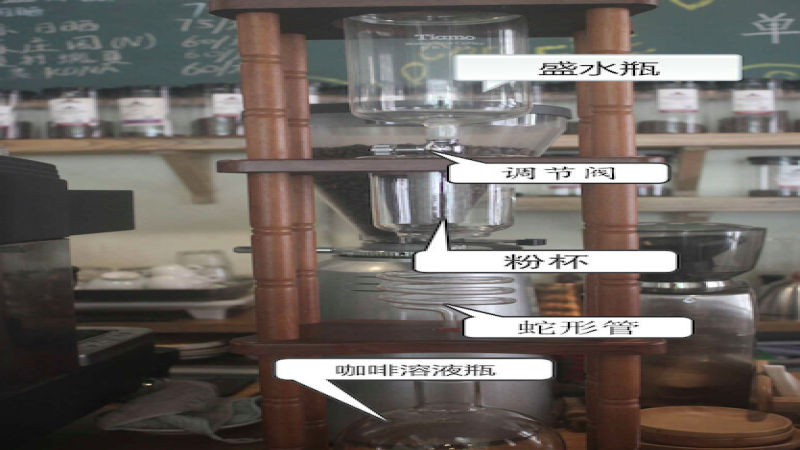
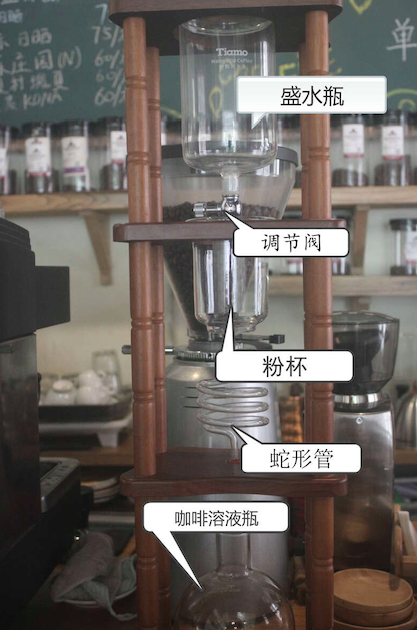
Actually, making cold brew drip coffee isn't complicated, but first you need a cold brew drip tower.
The top layer of the cold brew drip tower is for holding ice cubes and water, with an ice-to-water ratio of 1:1;
The middle layer is for holding coffee grounds, with the ratio of coffee grounds to the ice-water mixture kept between 1:10 and 1:12;
The bottom is the carafe that collects the coffee.
Bean Blending Approach for Cold Brew Drip Coffee
We've finished introducing what cold brew drip coffee is and how to make it. Next, Front Street Coffee will share how to select coffee beans and how to blend them.
Before selecting beans for making cold brew drip coffee, it's best to first decide on a theme: what flavor profile do you want this pot of cold brew drip coffee to present? Which tone do you want to highlight?
This time, Front Street Coffee wants to make a pot of cold brew drip coffee with winey notes, fruity tones, and creaminess. So in choosing beans, Front Street Coffee picked 【Front Street Honduras Sherry】 and 【Front Street Mega Black Honey】.
【Front Street Honduras Sherry】 is a coffee bean processed with whiskey sherry casks. Freshly picked coffee cherries are first finely washed, then placed into whiskey oak barrels that previously aged sherry for low-temperature fermentation of 30 to 40 days, with the temperature kept at about 15 to 20°C, after which they are shade-dried. This processing method gives the beans a rich winey aroma and flavors of vanilla and cream, with a relatively balanced overall performance.
However, using only this single bean to make cold brew drip would inevitably seem thin. So Front Street Coffee added another bean, 【Front Street Mega Black Honey】.
【Front Street Mega Black Honey】 uses black honey processing. Honey processing gives the beans a faint fermented aroma, with a flavor between natural and washed, and relatively balanced overall. This bean has a slight fermented winey aroma, along with flavors of strawberry and raisin.
The main tones of 【Front Street Honduras Sherry】 and 【Front Street Mega Black Honey】 are actually quite close, both leaning toward winey notes, so pairing them together won't make the coffee taste uncoordinated due to overly large flavor differences; 【Front Street Honduras Sherry】 is balanced overall, with flavors leaning toward vanilla and cream, while the fruity tones in 【Front Street Mega Black Honey】 can precisely make up for what 【Front Street Honduras Sherry】 lacks in flavor.
Front Street Coffee blends 【Front Street Honduras Sherry】 and 【Front Street Mega Black Honey】 at a 1:1 ratio, with a ratio of coffee grounds to the ice-water mixture of 1:12, dripping at a speed of seven drops every ten seconds, and after dripping is complete, refrigerating it to ferment for two days.
Flavor: it drinks with floral notes, the sweet-tartness of strawberry and blueberry, and flavors of vanilla and liqueur chocolate!
What should be noted when making cold brew drip coffee?
① After pouring the grounds into the coffee chamber, remember to level the surface of the grounds, and you can also lightly press the grounds, but remember not to press too hard. Because the weight of the tamper itself is already enough, and the purpose of tamping is only to level the grounds, not to compact them. If you don't tamp, water will easily float up the coffee bed as soon as it's poured in; but if you press too hard, the water won't go down, and channeling is likely to occur.
② Remember to place a piece of filter paper on the surface of the grounds. The tension of the filter paper allows water to distribute evenly; without filter paper, long-term dripping will dig a pit into the coffee bed.
③ Remember to perform "pre-infusion," which is similar to the blooming process in pour-over. It can improve extraction effectiveness and consistency of the final product. If you start cold brew dripping directly, it may cause uneven extraction of the coffee bed, with some coffee grounds over-extracted while other coffee grounds don't participate in the extraction.
④ After making it, don't rush to drink it. You can pour the coffee into a sealed glass bottle, then put it in the refrigerator to ferment for at least one night, allowing the coffee flavors to meld together, for a better mouthfeel and easier drinking.
The above content is compiled by CoffeeHunters, a coffee news website.


