








How Does Typica Coffee Shape Papua New Guinea Beans?
Papua New Guinea built its coffee reputation on Typica, introduced from Jamaica in 1931, which is why its beans are nicknamed "Little Blue Mountain." Bourbon arrived from Kenya by 1950, followed by Mundo Novo and Caturra from Brazil in 1962. Island growing conditions and this variety lineage give the coffee its mild, balanced profile.
Government encouragement of open cultivation expanded the industry through the 1970s and 1980s, and a 1975 frost that damaged Brazil's crop further stimulated Papua New Guinea plantings. Today estates such as Bird of Paradise combine this arabica variety base with a triple washed fermentation process, shaping the cup's clarity and structure.
Although Papua New Guinea is not the most dazzling name in the coffee world, it has earned the nickname "Little Blue Mountain" by virtue of its variety lineage similar to Jamaica Blue Mountain and its superior island growing conditions. This article, from the perspective of Front Street Coffee, traces the introduction history, variety composition and growing environment of Papua New Guinea coffee, and provides an in-depth introduction to the characteristics of the Typica variety and the region's unique triple washed fermentation process. The article will also share the Bird of Paradise Estate coffee beans introduced by Front Street Coffee, covering origin background, roasting curve, cupping data and brewing parameters, offering coffee lovers a comprehensive view of the terroir charm of this island coffee.
When it comes to Blue Mountain coffee, most people first think of Jamaica. But when it comes to the "Little Blue Mountain" coffee beans produced in Papua New Guinea, Front Street Coffee believes many coffee lovers are still relatively unfamiliar with them. In this article, Front Street Coffee will talk about the characteristics and the story behind Papua New Guinea coffee beans.
The Planting History of Papua New Guinea Coffee Beans
According to Front Street Coffee's understanding, Papua New Guinea introduced Typica coffee trees from Jamaica in 1931. At that time, Papua New Guinea was a British colony, and Britain had ruled Jamaica for nearly 300 years, where the most iconic coffee was the Typica-variety Blue Mountain coffee. In addition, Australia had friendly relations with Britain, so it was only natural for Papua New Guinea to introduce Typica. This is precisely why Papua New Guinea coffee beans are called "Little Blue Mountain" coffee beans.
By 1950, Papua New Guinea introduced Bourbon coffee varieties from Kenya. Coincidentally, Kenya was also a British colony at the time. Driven by government encouragement of open cultivation, the coffee industry grew substantially in the 1970s and 1980s.
In 1962, Papua New Guinea introduced Mundo Novo and Caturra from Brazil, and coffee bean quality has since made a great leap forward. So even though the frost of 1975 destroyed most of Brazil's coffee crop, it stimulated the development of Papua New Guinea coffee. The government funded the establishment of about 20 hectares of coffee plantations in rural areas, increasing the penetration of coffee cultivation in the local economy, and by 1990 annual output had reached 1 million bags.
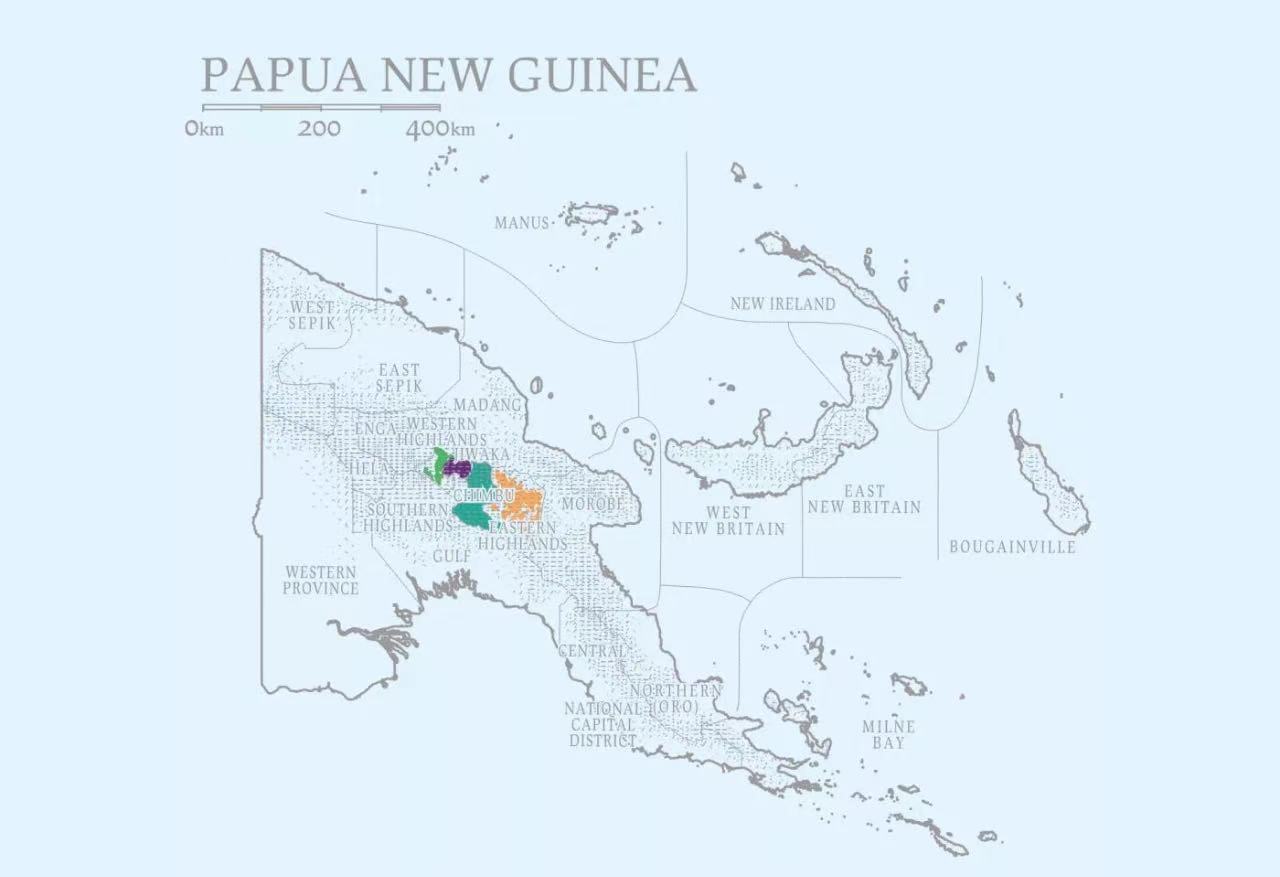
This is also one of the reasons why everyone can now access single-origin coffee beans from Papua New Guinea.
The Growing Conditions of Papua New Guinea Coffee Beans
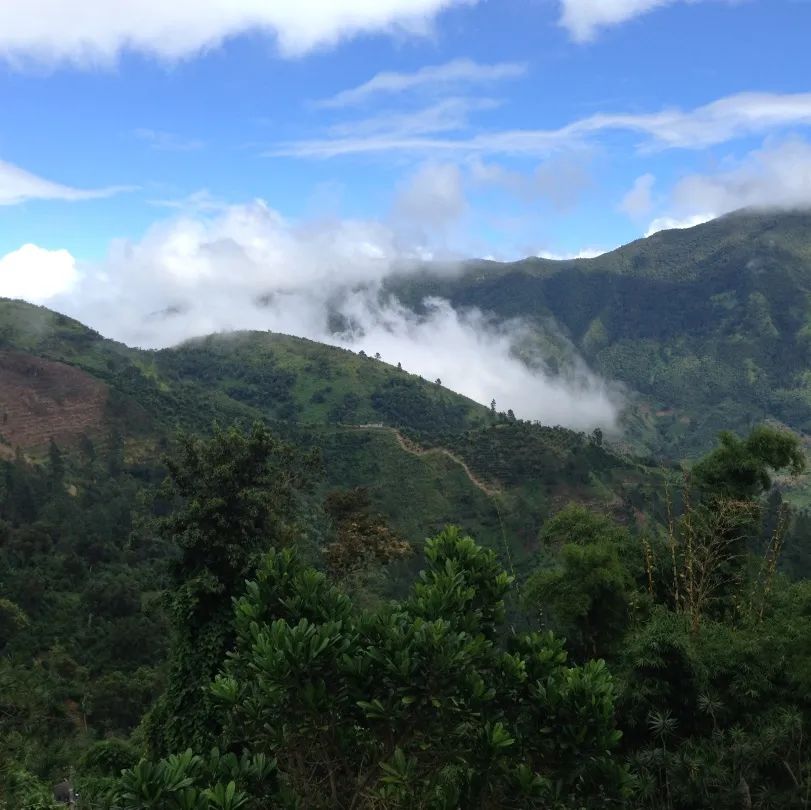
According to Front Street Coffee's understanding, Papua New Guinea is adjacent to Indonesia, and coffee is the only cash crop in the local highlands, with more than 2 million smallholder farmers in the country making a living from coffee. The coffee produced is mainly distributed in mountainous areas at elevations of 1,500 to 1,900 meters, where the scenery is picturesque, with abundant rainfall and volcanic soil, making it very suitable for growing high-quality Arabica coffee beans.
Moreover, the vast majority of the country's territory lies on the island of New Guinea, with a straight dividing line splitting the island into east and west halves, the west belonging to Indonesia and the east belonging to Papua New Guinea. Because the name is too long, it is generally shortened to "Papua" or its English abbreviation "PNG". In addition, another reason Front Street Coffee calls its coffee beans Little Blue Mountain is that Papua New Guinea's growing environment, altitude and rainfall are very similar to Jamaica Blue Mountain.
And the Typica introduced from Blue Mountain can also quickly adapt to the environment of the island of New Guinea, so in terms of both variety and the island-type environment, it is truly worthy of the name Little Blue Mountain. Papua New Guinea's coffee-growing region (6 degrees south latitude) is closer to the equator than Blue Mountain (about 18 degrees north latitude). However, through cupping, Front Street Coffee found that its flavor, upon careful tasting, is still slightly different from Blue Mountain; Papua coffee's flavor has an added sweet-and-sour note of dark fruit.
Papua New Guinea Coffee Bean Varieties
Front Street Coffee's previous articles have often mentioned that what forms the flavor of a coffee bean is the producing region (growing conditions, soil, climate, etc.), the coffee bean variety and the coffee bean processing method. In the above, Front Street Coffee also mentioned that the reason Papua New Guinea coffee beans are called Little Blue Mountain coffee beans is that the coffee bean variety used in the country is the Typica variety introduced from Blue Mountain. So what are the characteristics of Typica coffee beans?
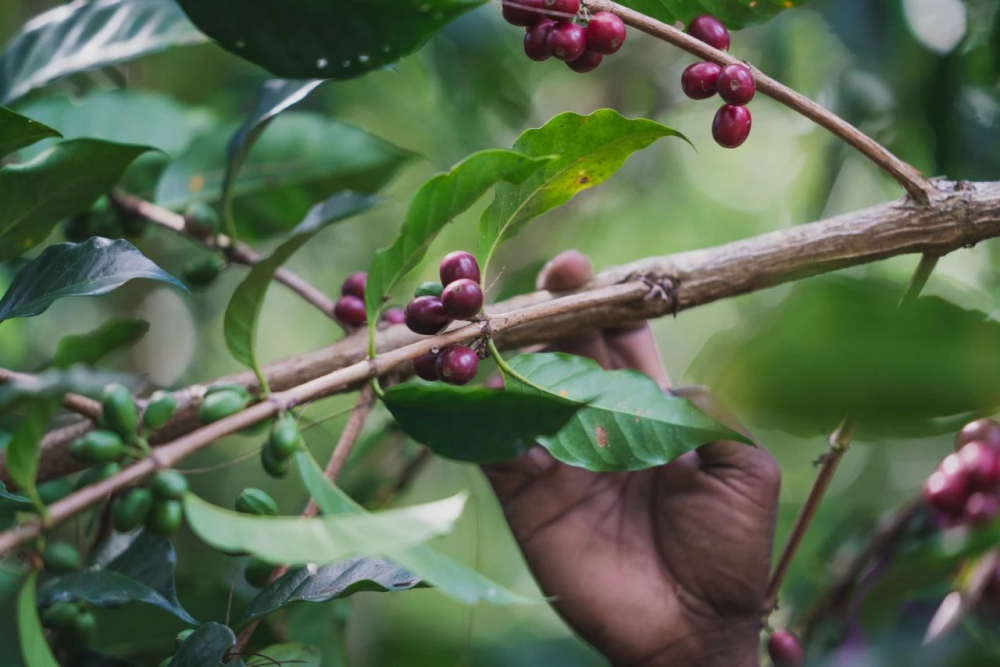
Typica Coffee Beans
Typica is the most classic high-quality Arabica variety, and many commercial improved varieties today are derived from it. Typica coffee beans have excellent flavor expression and are recognized as a specialty coffee variety, but their yield is extremely low and they are susceptible to rust disease, requiring more labor for management. Typica coffee beans originated in Ethiopia and southeastern Sudan and are the most widely cultivated coffee variety in the Western Hemisphere. The plant is relatively robust but not tolerant of light; the top leaves of Typica are red-bronze in color, hence the name red-top coffee.
Papua New Guinea Coffee Bean Processing Method
Seasoned coffee lovers know that one of the biggest characteristics of Blue Mountain coffee beans is the use of the washed processing method, which makes the coffee beans' flavor cleaner and their mouthfeel more refreshing. It is the processing method that best showcases a coffee bean's flavor, and it is also Front Street Coffee's favorite coffee bean processing method. So according to Front Street Coffee's understanding, Little Blue Mountain coffee beans also use the washed processing method, but Papua New Guinea's local washed processing differs from the washed processing methods of Central and South America. The process is as follows:
Papua New Guinea coffee beans undergo triple washed fermentation, each soak lasting about 24 hours, with clean water changed to control the coffee's flavor; after washing, the green beans have their husks removed and are then graded. This finely crafted post-processing method brings the coffee itself a bright and delicate fruity acidity, with a clean and lingering sweet mouthfeel.
The above is what Front Street Coffee has compiled regarding the characteristics and story of Papua New Guinea coffee beans and the favorable natural conditions for Papua coffee cultivation. Now Front Street Coffee will share a coffee bean that Front Street Coffee has introduced from Papua New Guinea with everyone!
Front Street Coffee: Papua New Guinea Bird of Paradise Coffee Beans
Estate: Bird of Paradise Estate Variety: Typica Altitude: 1,600-1,800 meters Processing method: Washed
Bird of Paradise Estate
The coffee beans introduced by Front Street Coffee come from the Sigri Bird of Paradise Estate in Papua New Guinea, and the origin of this estate's name is related to Papua New Guinea's culture. According to Front Street Coffee's understanding, the people of this country regard the beautiful bird of paradise as a bird of freedom and happiness, a "gift from the gods".
The Typica coffee beans of Sigri Bird of Paradise Estate, like the migration of birds, traveled a long way from Jamaica Blue Mountain to Papua New Guinea to be cultivated, carrying the same-root lineage as Jamaica Blue Mountain. This Blue Mountain lineage is also a point of attention for Papua New Guinea Bird of Paradise coffee beans today. When Front Street Coffee sources each coffee bean, it hopes it has unique characteristics and does not want different beans with the same flavor. This is also why Front Street Coffee spends a great deal of time selecting beans and adjusting roasting parameters, among many other steps. A coffee bean may have similarities with other coffee beans, but it must also have differences.
According to current records, the Wahgi Valley is home to more than 160 different species of birds, among which the Bird of Paradise Estate alone has 90 species of birds roosting there, including the national symbol of Papua New Guinea—the bird of paradise—making it truly a paradise for birds. Hence Sigri Estate also acquired the name Bird of Paradise Estate. In addition, the estate was established in 1950 and has existed for more than 60 years, making it a pioneer of the local coffee industry. Bird of Paradise Estate is located in the Waghi Valley in Western Highlands Province, at an altitude of about 1,500 meters, with mineral-rich volcanic soil, a cool climate, fertile soil and abundant rainfall.
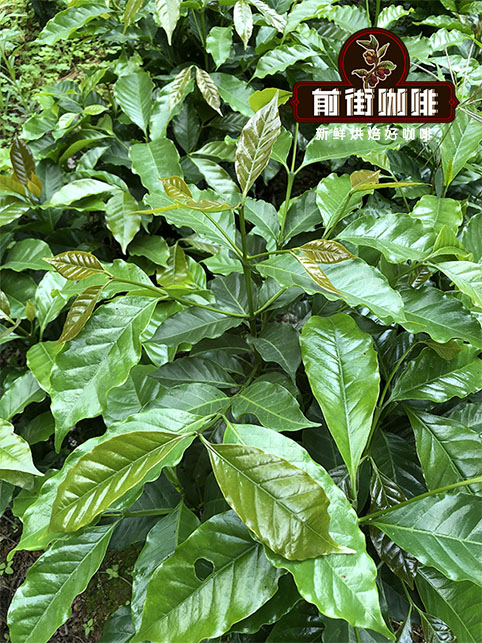
At the same time, according to Front Street Coffee's understanding, Bird of Paradise Estate also places great emphasis on ecological protection. To protect the soil and water sources, it refuses to use pesticides and insecticides, caring for the ecology and the nearby birds. Bird of Paradise Estate has for many years adhered to a high-standard cultivation and processing system. During the harvest season from April to September each year, only fully ripe red coffee cherries are hand-picked, achieving a perfect balance of acidity and sweetness in the coffee cherries.
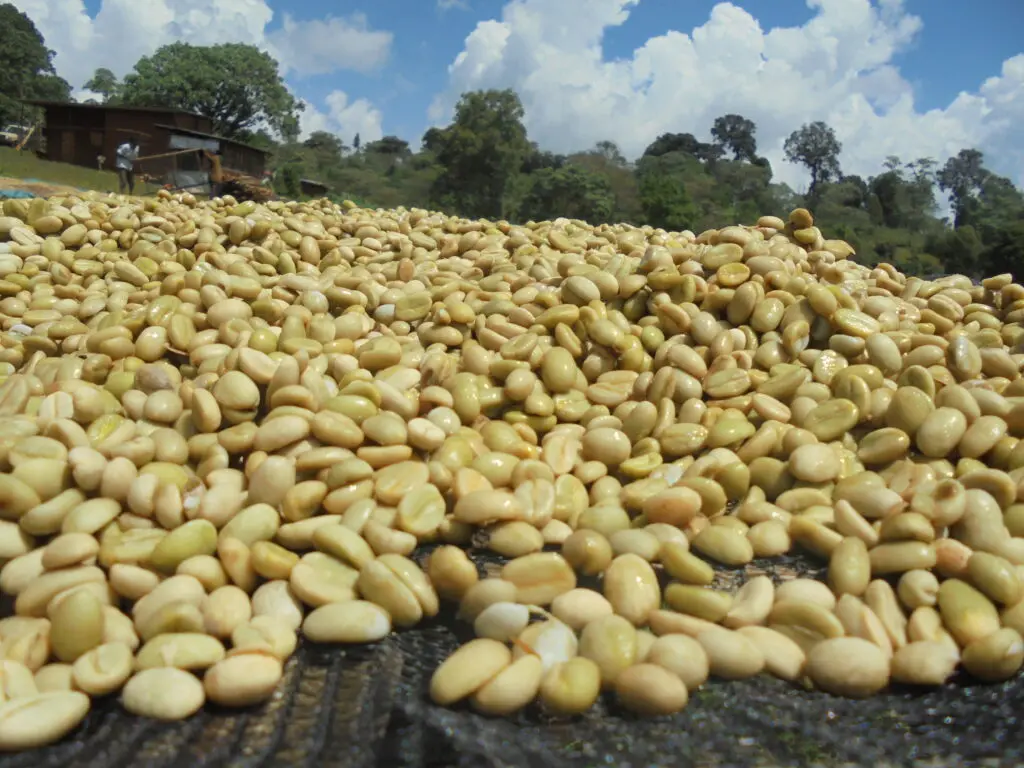
Therefore, Front Street Coffee believes that the coffee beans produced by Sigri Estate absolutely live up to the name Bird of Paradise. Moreover, Front Street Coffee has observed that the green coffee beans of the 2020 harvest are plump and emerald green with an excellent appearance. This is also one of the reasons Front Street Coffee chose this Bird of Paradise Estate coffee bean—it values the estate's strict production chain, which is what ensures the quality of the coffee beans.
The above is what Front Street Coffee has compiled about the story of this coffee bean. Before launching each new coffee bean, Front Street Coffee conducts a large number of roasting and brewing experiments. Now Front Street Coffee will share with everyone the roasting curve and brewing parameters that best bring out this coffee bean's flavor.
Front Street Coffee Papua New Guinea Coffee Bean Roasting Curve
Front Street Coffee recommends using a medium roast, because Typica is a low-density green bean. In order to highlight its inherent refreshing acidity and fruity aroma, the focus will be on adjusting the heat after the first crack. Charge the roaster when the drum temperature reaches 170°C, set the airflow to 3, heat to 140°C, with a turning point at 1'36"; when the temperature reaches 140°C, open the airflow to 4; roast until 6'25'' at 151°C, when the bean surface turns yellow, the grassy smell completely disappears and dehydration is complete; at 176°C lower the heat to 110;
change the airflow to 4; at 180°C lower the heat to 90, the bean surface shows ugly wrinkles and dark spots, and the toasty bread smell clearly turns into coffee aroma, which can be defined as the prelude to first crack. At this point raise the heat to 183.5°C, and at 10'08'' first crack begins, with the airflow fully open; at 188°C reduce the heat to 60, with the airflow fully open (adjusting the heat must be done very carefully—not so low that there is no cracking sound—and the rate of temperature rise after first crack should be controlled within 6°C). First crack development time is 3'00", and the beans are dropped at 198.5°C.
Front Street Coffee Papua New Guinea Coffee Bean Cupping Report
Front Street conducts cupping within 8-24 hours after the sample coffee beans are roasted. The cupping bowls generally used by Front Street Coffee baristas are 200ml ceramic bowls, marked with 150ml and 200ml scale lines. Following SCAA standards, the water's TDS is around 150ppm; too low a TDS easily causes over-extraction, while too high a TDS affects the mouthfeel and easily causes under-extraction. The water temperature used for cupping is 94°C. The grind size is controlled so that the pass-through rate of a No. 20 standard sieve (0.85mm) is 70%-75%. Ratio: 11 grams of coffee grounds plus 200 milliliters of hot water, i.e. 1:18.18, so that the extracted concentration falls exactly within the golden cup range of 1.15%-1.35%, with a steeping time of 4 minutes.
Dry aroma: Caramel, citrus Wet aroma: Spices Flavor: Citrus, nuts, cocoa, soft fruit acidity, balanced sweet-and-sour
Front Street compared Bird of Paradise coffee beans with Jamaica Blue Mountain through cupping. Bird of Paradise coffee beans have a faint spice note that Jamaica Blue Mountain coffee lacks, and their balance of acidity, sweetness and bitterness is somewhat close to Jamaica Blue Mountain, but not as full-bodied as Jamaica Blue Mountain.
Front Street Coffee's Tips for Brewing Papua New Guinea Coffee Beans
Front Street Coffee recommends using a Kono dripper, because its ribs are few and located at the lower end, allowing the filter paper to cling to the dripper to limit airflow, thereby slowing the water flow and increasing the contact time between water and coffee grounds, using soaking to extract more coffee substances and enhance the full-bodied mouthfeel. Choose a water temperature of 88°C, a relatively low brewing temperature, to avoid extracting too many off-flavors from the coffee beans during brewing, because the darker the coffee beans are roasted, the more off-flavors increase accordingly.
Dripper: Kono Coffee Dose: 15g, coffee-to-water ratio: 1:15 Grind size: BG6w (75% pass-through rate on No. 20 sieve) Water temperature: 89°C
Front Street Coffee uses staged extraction: Bloom with 30 grams of water for 30 seconds, then pour in a small stream in a circular motion until 125 grams for the staged pour; when the water level drops and is about to expose the coffee bed, continue pouring until 225 grams and stop; when the water level drops and is about to expose the coffee bed, remove the dripper. (Timing starts from the beginning of the bloom.) Extraction time is 2'00".
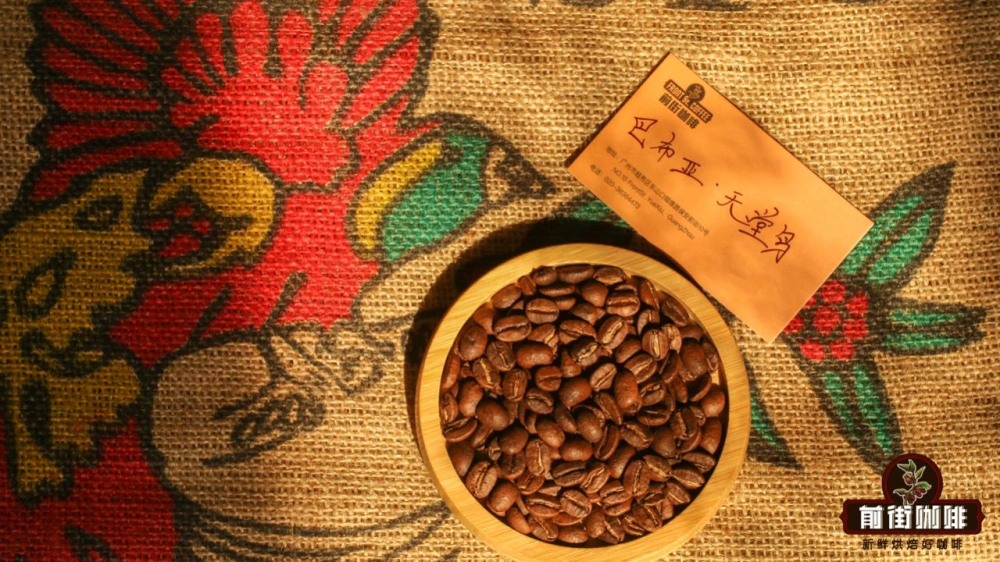
Brewed flavor: Toasty bread sweetness, nutty sweetness, a sweet-and-sour note brought out by slight fruit acidity forming a nice layered feel, and a rather distinctive spicy sweetness in the aftertaste. It tastes rich and balanced, with a sweet note and bright acidity, and a fruit-like aroma.
The above content is compiled by CoffeeHunters, a coffee news website.


