







What Shapes the Coffee Aroma of Barrel-Fermented Honduras Beans?
Front Street Honduras Lychee Orchid is a Caturra and Catuai blend from the Moka Estate in the Marcala region, processed in brandy barrels. The barrel fermentation gives the bean its vinous, fruit-forward character. Terroir, variety, processing, and roast all feed into the final cup, and processing plays the most decisive role in steering coffee aroma toward those wine-like notes.
Honduran coffee-growing areas sit at roughly 1,500 meters, conditions that support the bean's flavor base. Washed processing tends to bring clean, bright acidity, while natural processing adds sweetness and body; barrel fermentation sits apart from both. The article outlines three brewing routes, French press, pour-over, and espresso, to draw out the vinous charm.
The flavor profile of coffee is determined by the combined effects of terroir, varietal characteristics, processing methods, and roasting techniques. Among these, the processing method has a particularly critical influence on the final flavor direction—washed processing brings clean and bright acidity, while natural processing imparts fuller sweetness and body. In recent years, barrel fermentation processing has garnered widespread attention in the specialty coffee scene thanks to its distinctive vinous notes. On the Front Street Coffee bean list, Front Street Honduras Lychee Orchid is a representative work that uses brandy barrel fermentation processing, originating from the Moka Estate just like the Sherry barrel coffee beans from the same region. This article will systematically analyze the flavor code of this bean from varietal background, processing technique, roasting curve to cupping performance, and share three brewing methods—French press, pour-over, and espresso—to help coffee lovers fully unlock its unique vinous charm.
In exploring coffee flavors, it is not difficult to find that the final taste of a cup of coffee is shaped by the terroir of its origin, varietal characteristics, green bean processing methods, and roasting techniques. Each of these stages exerts varying degrees of influence on the flavor direction, and the processing method plays an especially profound role. For example, washed coffee is known for its cleanliness and bright acidity, while natural processing tends to bring more pronounced sweetness and a fuller body.
Speaking of processing techniques that have been refreshingly novel in recent years, barrel fermentation is perhaps one of the most representative. In the product line of Front Street Coffee, there is a coffee bean—Front Street Honduras Lychee Orchid—that undergoes brandy barrel fermentation processing. This bean shares the same origin as another Front Street Sherry barrel coffee bean under Front Street Coffee, both hailing from the Moka Estate in Honduras.
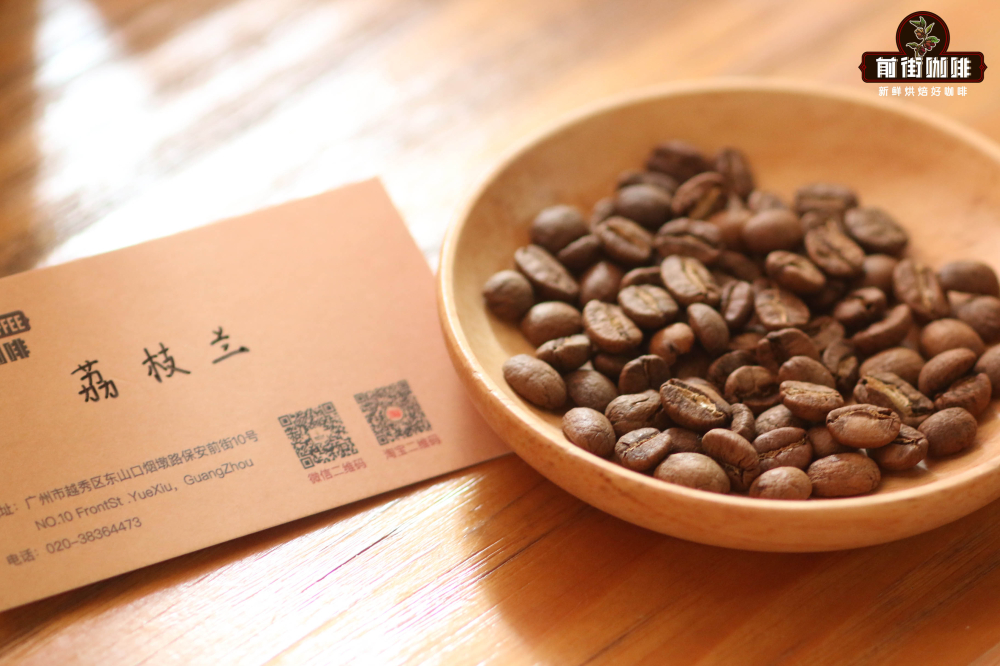
Front Street Honduras Lychee Orchid Coffee Beans
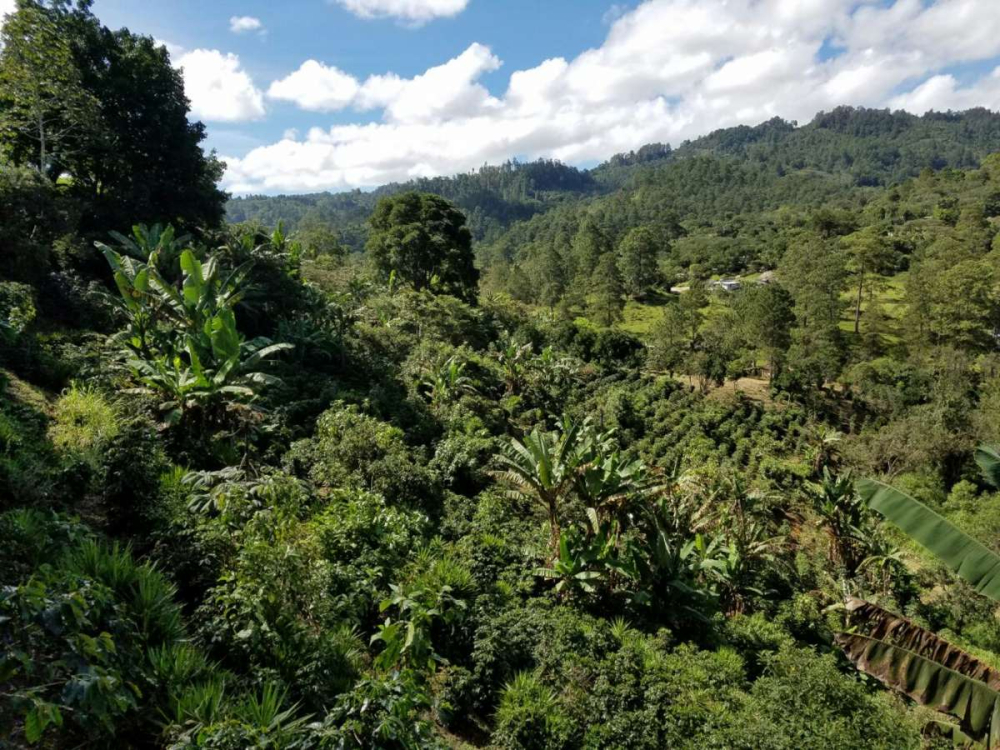
The Moka Estate is located in the Marcala region of Honduras. The average altitude of coffee-growing areas in Honduras is about 1,500 meters, providing quite ideal conditions for coffee cultivation. The flavor foundation of Front Street Lychee Orchid comes from its Caturra and Catuai varietal combination. Caturra is a natural mutation of Bourbon, inheriting Bourbon's flavor genes while possessing higher productivity; Catuai is a cross between Caturra and Mundo Novo, with excellent disease resistance. Both varieties are quite common in American origins, combining fine Bourbon-lineage flavors with good yield performance.
Beyond the variety, the most distinctive characteristic of Front Street Lychee Orchid comes from its brandy barrel fermentation processing. After the coffee cherries are harvested, they undergo meticulous washing immediately to remove the skin and pulp, after which the parchment beans are placed in barrels for low-temperature fermentation, with the temperature maintained between 15 and 20 degrees Celsius, and a fermentation period lasting 30 to 40 days. The fermented coffee beans also need to be sun-dried to reduce their moisture content to around 11%. This processing procedure lays the unique barrel flavor foundation for Front Street Lychee Orchid.
Moving into the roasting stage, when Front Street Coffee roasts this Front Street Lychee Orchid, the beans are charged at 220 degrees Celsius, the air damper is set to 4, the gas is set to 200, and the turning point appears around 1 minute 30 seconds. When the drum temperature rises to 140 degrees Celsius, the air damper is adjusted to 6, at 151 degrees Celsius the gas is lowered to 120, and at 176 degrees Celsius it is further lowered to 80. At about 8 minutes 28 seconds, wrinkles and dark streaks begin to appear on the bean surface, and the toasty bread aroma clearly shifts toward coffee aroma, which can be regarded as a prelude to first crack. First crack begins at 9 minutes 15 seconds, the air damper is adjusted to 8 (adjusting the gas requires extra caution to avoid completely silencing the cracking sounds), and after first crack, development proceeds for 2 minutes 10 seconds, with the beans finally dropped at 195 degrees Celsius.
Front Street Coffee typically conducts cupping 24 hours after roasting is completed. The immersion extraction of cupping helps us more comprehensively grasp the characteristics of a bean, so Front Street Coffee also frequently uses cupping to calibrate roasting curves and store quality control. When cupping Front Street Lychee Orchid, upon slurping, one can immediately capture clear notes of liqueur chocolate, cream, honey, and refreshing fruit acidity, naturally evoking associations with lychee.
In terms of brewing methods, Front Street Lychee Orchid actually has quite a few options, and Front Street Coffee recommends the following three most common brewing methods.
Regardless of which brewing method is used, Front Street recommends using freshly roasted coffee beans for brewing, so as to experience the coffee's rich flavor layers to the greatest extent. The coffee beans shipped by Front Street Coffee are all batches within 5 days of roasting, because Front Street deeply understands that freshness has a decisive impact on flavor. The mission of Front Street roasting is "freshly roasted good coffee," ensuring that every customer who places an order receives their coffee in the freshest condition. The resting period for coffee is about 4 to 7 days, so by the time customers receive it, it is exactly in the optimal flavor window.
Recommendation One
French Press
Let's start with the French press, the representative of immersion extraction. Front Street Coffee frequently recommends the French press because its immersion extraction principle makes it highly forgiving to operate, with almost no reliance on technique.
When brewing Lychee Orchid with a French press, Front Street Coffee recommends using 15 grams of coffee beans, a coffee-to-water ratio of 1:15, and a coarser grind size—using the ek43s grinder as reference, Front Street Coffee's baristas would choose setting 11. Pour the ground coffee into a preheated French press, add hot water at 94 degrees Celsius, steep for 4 minutes, then press down the plunger and pour out the coffee.
The Front Street Lychee Orchid brewed with a French press has a flavor closest to its cupping performance, with a base note of vinous aroma and dark cocoa, soft acidity, while the French press's metal filter brings an extra oily mouthfeel to the coffee.
Recommendation Two
Pour-over Coffee
Pour-over coffee is the most commonly used brewing method in Front Street Coffee's daily operations. When preparing Front Street Lychee Orchid, Front Street Coffee's baristas choose a v60 dripper, use 15 grams of coffee beans, control the grind size at 80% passing through a No. 20 sieve, with a coffee-to-water ratio of 1:15, meaning a total water volume of 225 grams. The water temperature is 90 degrees Celsius, and the entire brewing process uses three-stage pouring: the first stage pours 30 grams of water for blooming, with a blooming duration of 30 seconds; the second stage pours up to 125 grams, with a 10-second interval; the final stage pours the remaining water up to 225 grams. Once the coffee liquid has finished filtering, remove the dripper at about 2 minutes to end extraction.
The drip extraction of pour-over, combined with the conical structure of the v60 dripper chosen by Front Street Coffee, can enhance the coffee's layering. The Front Street Lychee Orchid brewed by pour-over has a more complex mouthfeel, with lychee-like fruit aromas, liqueur chocolate notes, and rich layers interweaving.
Recommendation Three
Espresso
In addition to the immersion-extraction French press and the drip-extraction pour-over, pressure-extracted espresso is also very suitable for expressing Front Street Lychee Orchid. Espresso made from single-origin coffee beans is what we call SOE.
After multiple rounds of adjustment, Front Street Coffee's baristas ultimately settled on extracting 36 grams of coffee liquid from 18.5 grams of coffee grounds, with an extraction time of 20 seconds and a grind size of 0.5 on the ek43s. Unlike the previous two brewing methods, the espresso made from Front Street Lychee Orchid, due to its low coffee-to-water ratio and high concentration, has a more intense flavor on the palate, with medium-high acidity, medium-low sweetness, moderate bitterness, a milk-like viscous mouthfeel, and a lingering finish filled with abundant fermentation notes and vinous aroma.
For professional coffee knowledge exchange and more coffee bean information, please follow Coffee Workshop (WeChat public account: cafe_style)
For more specialty coffee beans, please add the private WeChat of Front Street Coffee, WeChat ID: kaixinguoguo0925
The above content is compiled by CoffeeHunters, a coffee news website.


