







How Does Blend Coffee Differ From Single-Origin Mandheling?
Espresso beans are blend coffee, mixing six to eight beans from multiple origins and varieties, and they underpin drinks such as latte, cappuccino, and americano. Mandheling is a single-origin coffee listed on its own. The difference lies in both the beans and how they are brewed, not in one simple variable.
Espresso comes from the Italian word for fast, and pressure emulsifies the oils and proteins in the coffee, producing a syrup-like liquid topped with ochre-red crema. Mandheling is instead judged on its origin background, flavor profile, and history, with its own roasting, grinding, and brewing parameters for single-origin preparation.
Walking into a café, you'll often see espresso and Mandheling coffee listed side by side on the menu. Under the former, there are usually further subdivisions such as latte, cappuccino, and americano, while the latter is typically presented on its own. What exactly is the difference between these two coffees? Is it a difference in coffee bean varieties, or in the brewing methods? This article will start with the composition and extraction principles of espresso blend beans, then take a deeper look at the origin background, flavor characteristics, and historical origins of Front Street Mandheling, and finally outline the roasting, grinding, and brewing key points for single-origin Mandheling, helping coffee enthusiasts clarify the essential differences between the two.
Between espresso and Mandheling, what kind of difference actually exists? Friends who frequent cafés will notice that some drinks on the menu are categorized as espresso, while others are separately labeled as Mandheling. In slightly larger shops, the espresso section will further list options such as latte, mocha, cappuccino, and americano, while under Mandheling there is usually no subdivision at all. Today let's talk about what espresso actually is, what Mandheling is, and whether the difference between them lies in the coffee beans used or in the brewing method.
Espresso
The word Espresso comes from Italian, and its original meaning is "fast," because the entire process of making espresso and handing it to the customer is extremely quick.
So-called espresso beans, in short, are espresso blend beans, meaning coffee beans from multiple origins and multiple varieties mixed together. Generally speaking, an espresso blend consists of six to eight different coffee beans. The espresso, latte, cappuccino, and other drinks we consume daily are all made from espresso blend beans, among which latte and cappuccino also add espresso and whole milk.
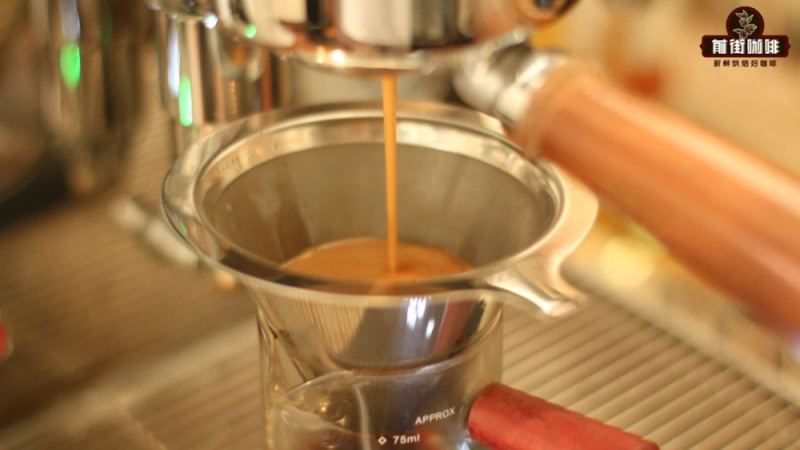
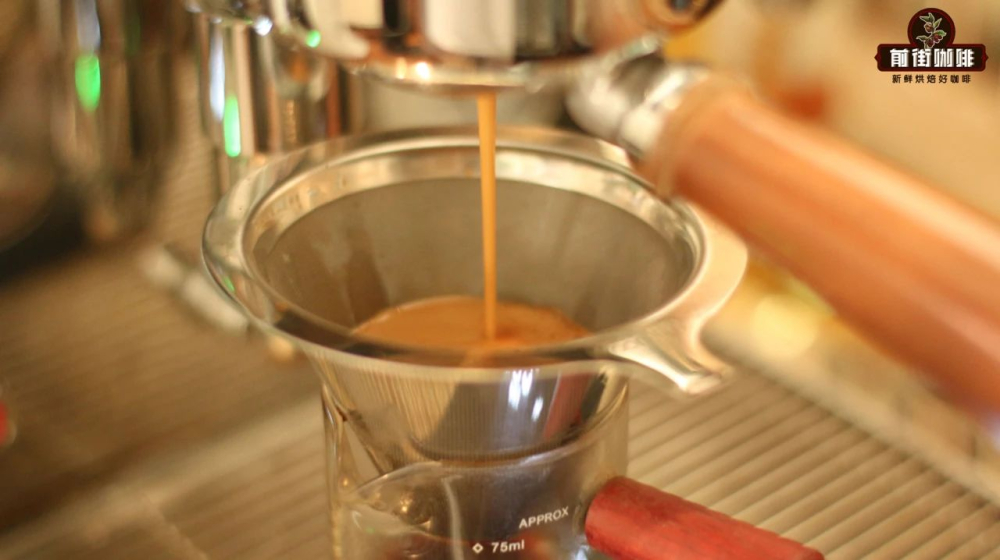
No coffee can be as rich and full-bodied as authentic Italian espresso. Precise pressure allows constant-temperature water to emulsify the oils and proteins naturally present in the coffee fibers, ultimately forming a syrup-like liquid, with intense flavors slowly spreading across the tongue, sweeping through the entire palate, and lasting for dozens of minutes. Under careful and precise operation, a layer of ochre-red, fine, soft crema appears on the surface of the coffee, and this is exactly the highest realm that many Italian baristas tirelessly pursue.
Espresso beans have a rich and heavy taste, while the flavor of single-origin coffee beans and specialty coffee beans mainly comes from the aroma of the fruit itself, and different origins produce different tastes. The key reason espresso beans and Mandheling coffee beans are different is that the former are blended from multiple kinds of beans. Some may say, "Blending? Just pour several kinds of coffee beans together and mix them evenly, and that's it." In reality, though it seems simple, perfectly integrating several kinds of beans is by no means easy. Behind making a delicious cup of espresso blend coffee is the blender's deep understanding of coffee beans, precise scientific calculation, and years of persistence. Just as a painter mixes pigments to create a magnificent painting, espresso beans are the artwork created by the blender.
The combination and proportions of the blend must be based on the characteristics of coffees from around the world, combined with green bean processing methods and different roasting levels, ultimately producing a finished product suitable for the general public. Blend beans use coffee beans with distinctive characteristics, avoiding the stacking of varieties with similar flavors. After highlighting the main flavor, only after repeated testing of hundreds of proportions and countless experiments is a blend coffee for the general public finally born.
Front Street Mandheling Coffee
Front Street Mandheling Coffee comes from Sumatra, Indonesia, in Asia, and is also known as "Sumatra coffee." Its flavor is extremely rich, sweetly fragrant, purely bitter, and full-bodied, with a slight hint of sweetness and faint acidity, and a long finish after drinking. Most coffee enthusiasts choose to drink it as a single origin, but it is also an indispensable variety when blending mixed coffee.
Origin
The gentleman among coffees — Sumatra Mandheling. Mandheling grows in highland mountainous areas at an altitude of 750 to 1,500 meters and is a premium coffee bean, symbolizing a noble spirit of resilience and the ability to pick things up and let them go. It represents masculine energy, and drinking it feels exhilarating, unrestrained, and sweeping like galloping across the world; this taste captivates many men.
Life becomes full of achievement and pride because of Mandheling... The world becomes full of sunshine and love because of Mandheling. Perhaps just as life is great because of ideals, and life is extraordinary because of practice. Front Street Indonesia Mandheling always uses the most unique bitterness to express its most unique sweetness, just like life itself. At first taste, we may be taken aback by it; no matter how much sugar is added, that bitterness cannot be concealed, yet we cannot control our mad obsession with the captivating aroma it gives off, like thorns beside fresh flowers, keeping us clear-headed and self-aware.
The bitterness of Mandheling will not annoy you; instead, it will make you more clear-headed. Before you encounter true pain, Mandheling is just an ordinary bitter-tasting beverage, just a liquid to keep you alert, just a tool to make you pause your steps; it cannot yet sense your grievances. But many people are madly obsessed with the bitterness of Mandheling, as if poisoned and unable to quit. If you want to know why, they will smile and tell you: "Because love is refined from bitterness." The charm of Mandheling — Mandheling's lively slight acidity mixed with the richest aroma lets you easily experience the lively element within its gentle richness; its outstanding taste has bewitched many admirers.
In the 17th century, the Dutch first introduced Arabica seedlings to Ceylon (today's Sri Lanka) and Indonesia. In 1877, a large-scale disaster struck the Indonesian islands; coffee rust disease destroyed almost all coffee trees, and people had to abandon the Arabica they had cultivated for many years and instead introduce disease-resistant Robusta coffee trees from Africa. Today Indonesia is a major coffee-producing country. Coffee production areas are mainly in Java, Sumatra, and Sulawesi, with Robusta accounting for 90% of total output. Sumatra Mandheling, however, is a rare Arabica type. These trees are planted on mountain slopes between 750 meters and 1,500 meters above sea level, and the mysterious and unique Sumatra variety gives Mandheling coffee a rich aroma, full body, strong taste, and a slight chocolate and syrupy note.
Characteristics
Front Street Indonesia Mandheling has a very rich flavor — fragrant, bitter, and full-bodied, with a little sweetness. Because Mandheling coffee beans themselves do not have an acidic character, generally even with special brewing methods, Mandheling coffee beans as a base do not produce an unpleasant sour and astringent taste when kept warm for a long time or made into iced coffee.
After roasting, the beans are quite large; the green beans are brown or dark green, with a special caramel-like aroma and a mellow, rich taste.
Preparation
As a high-quality coffee variety, Mandheling coffee is drunk as a single origin by most coffee lovers. Of course, it is also an indispensable ingredient for other types of coffee. Single-origin preparation
Roasting: After coffee beans are roasted, they can only maintain freshness for 1 to 7 days, after which they begin to lose flavor, leaving only bitterness without a mellow taste. Therefore, roasting them yourself can ensure the freshness of the coffee beans.
Traditional roasters are drum-type. This roasting method has a stewing characteristic, which makes the coffee beans' flavor more mature and the body fuller. A household drum roaster can roast half a pound of coffee beans at a time, and one roasting session (including cooling and discharging the beans) takes about 21 to 25 minutes. If you want a dark roast, you only need to increase the time. When using it, simply put in the green beans, set the roast level, and press the start button; from roasting to cooling, the roaster can complete everything automatically.
Grinding: In order to blend with water, coffee makes its greatest sacrifice — being shattered to pieces. Before brewing coffee, the beans must be ground into fine particles to increase the contact area between water and coffee so that the delicious flavors can be extracted. In fact, the grinder is more important than the coffee machine. At present, most people choose a "burr grinder" because it can quickly and steadily grind uniform coffee grounds. The operation of a burr grinder is very simple. Generally speaking, it has two setting functions: one is to set the grind degree, and the other is to set the grinding time. The grind degree is mostly expressed in Arabic numerals; the smaller the number, the finer the grind. There is a funnel-shaped hopper on top of the grinder to hold the unground beans, and below is a drawer used to collect the ground coffee. When choosing to buy a grinder, you should pay attention to its power, usually between 70 watts and 150 watts; the higher the better. A grinder with higher power grinds faster, the coffee grounds stay among the burrs for a shorter time, and it is more able to produce lower-temperature coffee grounds.
Brewing: To brew a good cup of coffee, besides having fresh coffee grounds and water with slightly higher hardness, of course you also need a set of brewing tools that feel comfortable to use. Commonly used coffee machines mainly have three brewing types.
Drip type: Pour water over the coffee grounds and let the coffee liquid pass through a cloth filter or paper filter at the speed of natural falling into the container. Basically, this method does not soak the coffee grounds; it simply lets hot water pass slowly through the coffee grounds. Drip brewers and electric coffee machines both belong to this category. They are the simplest brewing tools and can brew clean coffee with a bright color.
Immersion type: Put the coffee grounds into a pot, soak them in hot water for several minutes, then filter out the coffee grounds with a cloth filter or mesh filter to form a liquid coffee. Siphon pots, French presses, Belgian coffee makers, and Vietnamese coffee makers all belong to immersion-type brewing tools. They all have a soaking process, thereby forming a more complex taste.
High-pressure type: Use pressurized hot water to penetrate tightly tamped coffee grounds, producing a thick cup of coffee. Tools of this type include moka pots and espresso machines.
Quick brewing method: An espresso machine can be used for a relatively quick coffee brewing method. An espresso machine can continuously extract several cups of coffee. The high pressure during brewing can emulsify and dissolve the oils and colloids in the coffee beans, and the essence in the beans is fully extracted through pressure, making the brewed coffee stronger in concentration and better in taste and aroma.
Summary:
From the above, we can see that espresso refers to the general term for coffee made using an espresso machine, and it also includes many categories, with the espresso beans used being diverse and varied, while Mandheling coffee specifically refers to coffee beans from Sumatra, and its brewing method and drinking method can vary from person to person and are not limited to espresso machines. This is the difference between espresso and Mandheling!
The above content is compiled by CoffeeHunters, a coffee news website.


