







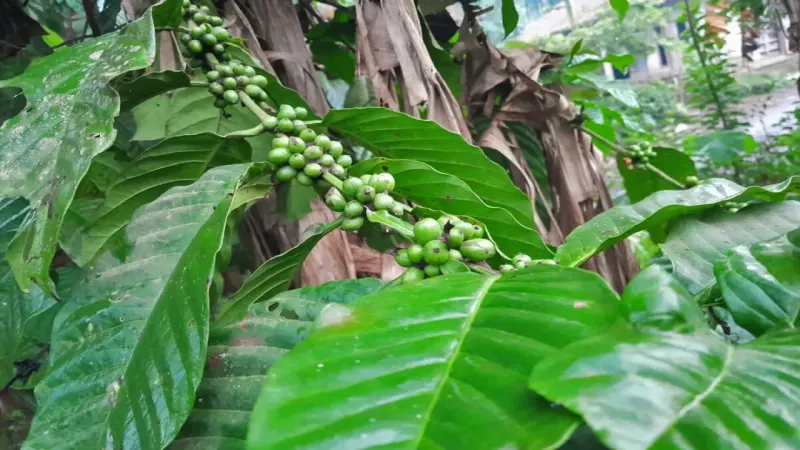
How Do Robusta Coffee Beans Differ From Arabica?
Robusta and arabica beans differ mainly in where they grow and how they taste. Arabica generally needs altitudes above 800 meters and has weak resistance to pests and disease, while robusta grows below 800 meters and tolerates heat, extreme weather, and disease far better. That hardiness is why robusta can be farmed on a large scale in Vietnam, Brazil, and India.
In the cup, robusta's lower growing altitude already limits how rich its flavor can become compared with arabica beans. Robusta is widely used in Vietnamese coffee, and the article also covers Catimor, a hybrid of the two species, along with Vietnamese brewing methods. Vietnam, Brazil, India, and even Hainan in China grow robusta.
Front Street Coffee is often asked: Why can Robusta be grown on a large scale in places like Vietnam? Don't all coffees need high altitudes? What does it actually taste like? Vietnamese coffee is brewed with Robusta, so why doesn't it taste bad? In this article, Front Street will take a systematic look at Robusta coffee beans. From a botanical perspective, Robusta and Arabica differ significantly in growing conditions and resistance to disease and pests, and these differences directly affect the flavor in the cup. The article will also introduce Catimor, a hybrid of the two, and explain Vietnamese coffee brewing methods, helping enthusiasts fully understand Robusta's value and characteristics.
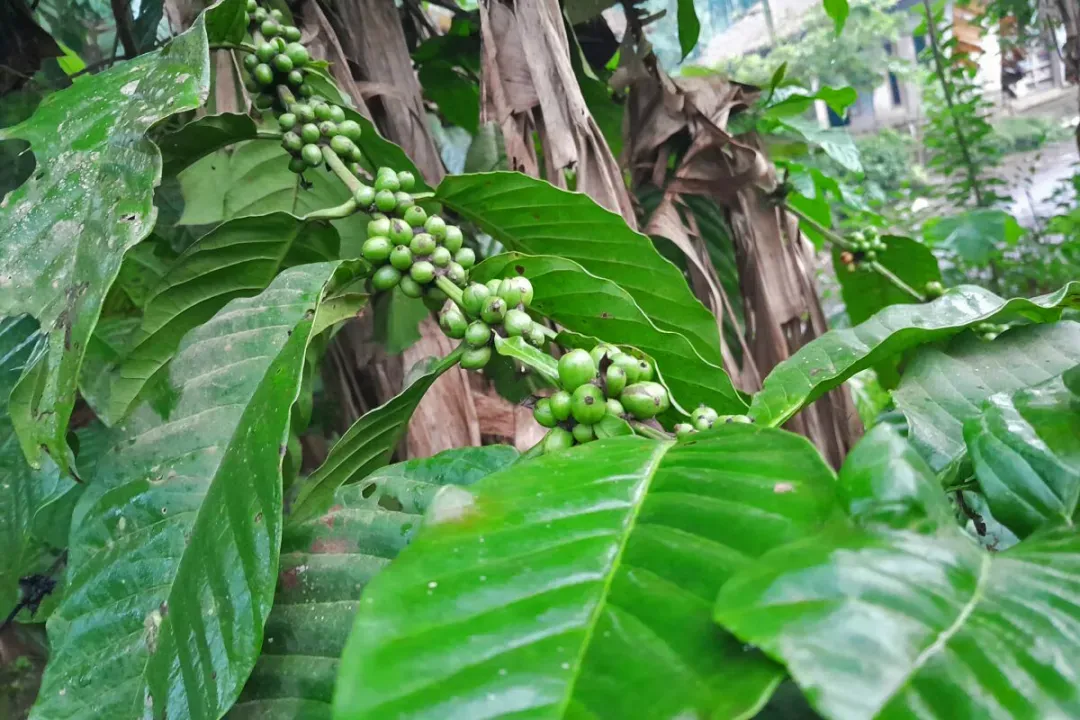
Front Street Coffee is often asked why Robusta coffee beans can be widely grown in places like Vietnam. Don't coffee beans all need altitude to grow? How does Robusta coffee taste? I've heard that coffee brewed in Vietnam is all Robusta, so why isn't it bad? In this article, Front Street will talk about Robusta coffee beans.
Q1: What is the essential difference between Robusta and Arabica?
Although Arabica and Robusta both grow in the coffee belt: between 45 degrees north and south latitude, we often say that Arabica is grown at altitudes above 800 meters, Arabica has high requirements for growing conditions and weak resistance to pests and diseases. Robusta is grown at altitudes below 800 meters, Robusta has extremely strong adaptability and strong resistance to pests and diseases. Here two issues arise: resistance to pests and diseases, and adaptability to the environment.
Growing conditions: The global coffee growing belt lies between the tropics of Cancer and Capricorn, and Robusta is no exception. But Robusta's growing conditions are not as demanding as Arabica's. Robusta can grow at lower altitudes and higher temperatures. It grows faster than Arabica and has higher tolerance for extreme weather conditions. Robusta is widely grown in Vietnam, Brazil, India and other countries. Among them, Hainan in China also grows Robusta. Front Street Coffee often says that if you want a cup of coffee with rich flavor, you need good coffee varieties and high growing altitudes, so leaving aside other factors, in terms of growing conditions alone, the altitude at which Robusta is grown already means its flavor cannot be as rich as Arabica's.
Disease resistance: We generally know that Arabica has 44 chromosomes, while Robusta has 22 chromosomes; generally speaking, the more chromosomes, the higher the complexity of the genes and the more advanced the plant, but Arabica is self-pollinating, while Robusta is cross-pollinating. And pollination involves genetics. Usually, plants obtained through cross-pollination are of higher quality—offspring produced by cross-pollination possess the genetic traits of two parent plants and are therefore likely to develop new characteristics that help them survive in changing environments. So self-pollinating Arabica is quite fragile, and in the process of continuous reproduction its genes become increasingly uniform (without the participation of foreign genes). Therefore, if certain diseases appear (such as leaf rust), they may wipe out all the coffee carrying the same gene. Robusta's strength lies in its ability to continuously change its genes to adapt to the environment.
Pest resistance: Robusta's caffeine content is 2.7%-4%, twice that of Arabica. Caffeine, as a plant's natural pesticide, can protect it from most insects. For humans, caffeine is the most widely used psychoactive drug in the world, while for nature it is a natural insecticide that can paralyze insects that eat caffeine-containing plants. This is also why Robusta's caffeine content is several times higher than Arabica's. Natural selection and survival of the fittest—this is precisely the core idea of Darwin's "On the Origin of Species." Q2: Is Robusta's flavor performance very poor? Robusta has higher contents of caffeine, amino acids and chlorogenic acid. Chlorogenic acid is the source of bitterness, so Robusta inherently lacks the ethereal aroma unique to Arabica beans, and is instead replaced by a fuller, deeper mouthfeel, along with flavors such as walnut, peanut, hazelnut, wheat and grain, and may even show a pungent earthy taste.
Q3: Is there a hybrid of Robusta and Arabica?
Yes! At this point Front Street must bring out their hybrid—Catimor. Catimor is a combination of Arabica and Robusta. Robusta has good resistance to leaf rust and rich oils, high yield and easy cultivation. After hybridizing with the Arabica variety Typica, Catimor has 25% Robusta genes. It improves resistance to leaf rust, retains rich oils, and at the same time has some of the rich taste of the original Typica variety. Through cupping Catimor coffee beans, Front Street Coffee found that it retains Arabica's gentle acidity and Robusta's full-bodied flavor characteristics.
Q4: Why isn't Vietnamese coffee bad?
Because the flavor extracted from Robusta through a Vietnamese drip filter is quite intense and not suitable for drinking directly, locals add condensed milk and milk to the coffee. With the help of condensed milk, the coffee also does not turn out bad. So how is Vietnamese coffee brewed?
First pick up the press screen of the Vietnamese drip filter, put in 10g of medium-fine ground Robusta coffee powder, then place the press screen on top and press gently, then pour in 100ml of 94°C water. After dripping is complete, remove the filter cup, add condensed milk, milk and ice cubes, and it is ready.
For more specialty coffee beans, please add the private WeChat of Front Street Coffee, WeChat ID: kaixinguoguo0925
The above content is compiled by CoffeeHunters, a coffee news website.


